Englishman Lionel Jupp (1878-1951) first arrived in China in 1895 and settled in Shanghai where he worked for S Moutrie, the musical instrument manufacturers and sellers who operated all over China, Japan and South East Asia (see previous posts on Moutrie here). He served in the volunteer Second British Brigade that was organised over concerns about the Boxers in 1900.
Jupp was also a great self-promoter and willing to comment to the newspapers on just about anything – tariffs!, Japanese aggression in 1910 etc. At some point he moved north and took over the management of the Empire Theatre, Tientsin (Tianjin)* and the Pavilion Theatre in Peking (which was, I think, actually a cinema). He then left China and went to America in 1917 where he publicly announced he was joining the British Army to fight in the First World War.
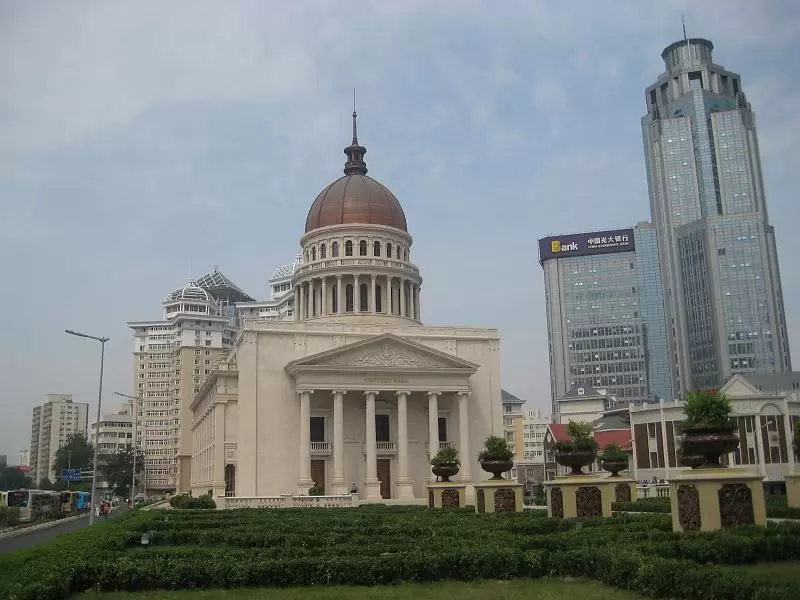
*The original Empire Theatre was destroyed by fire in 1921, rebuilt and is now the Tianjin Concert Hall – see below at bottom
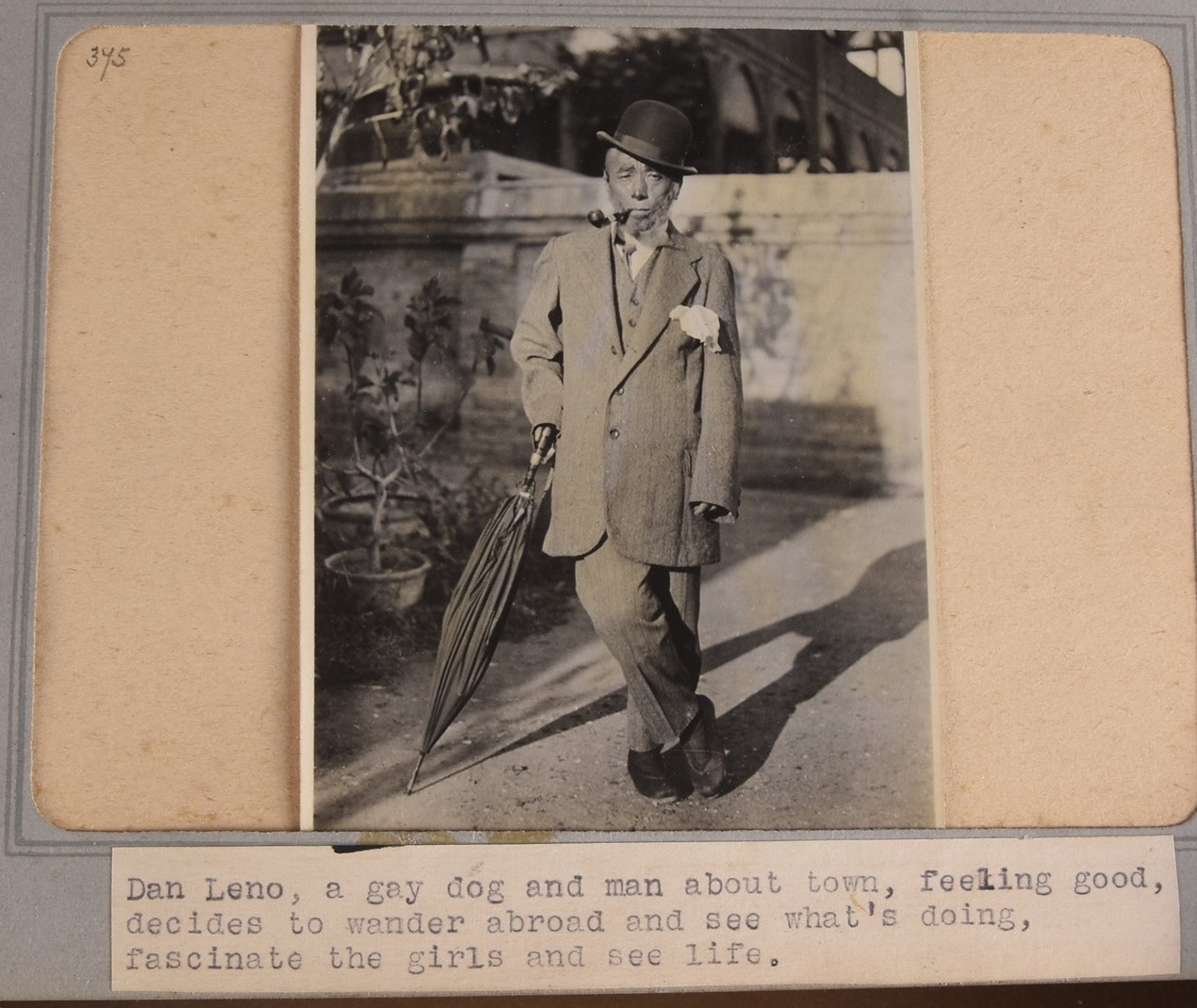
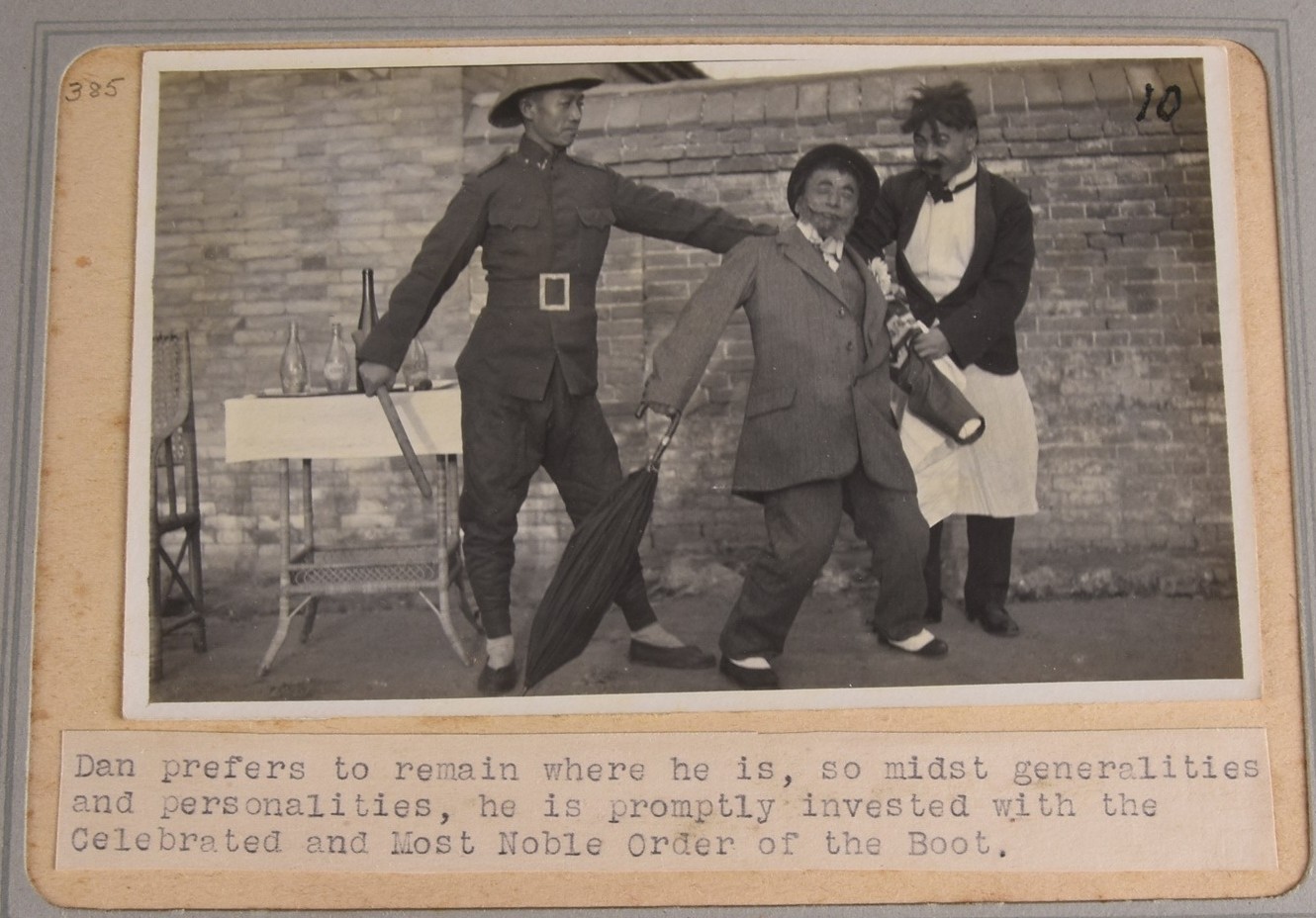
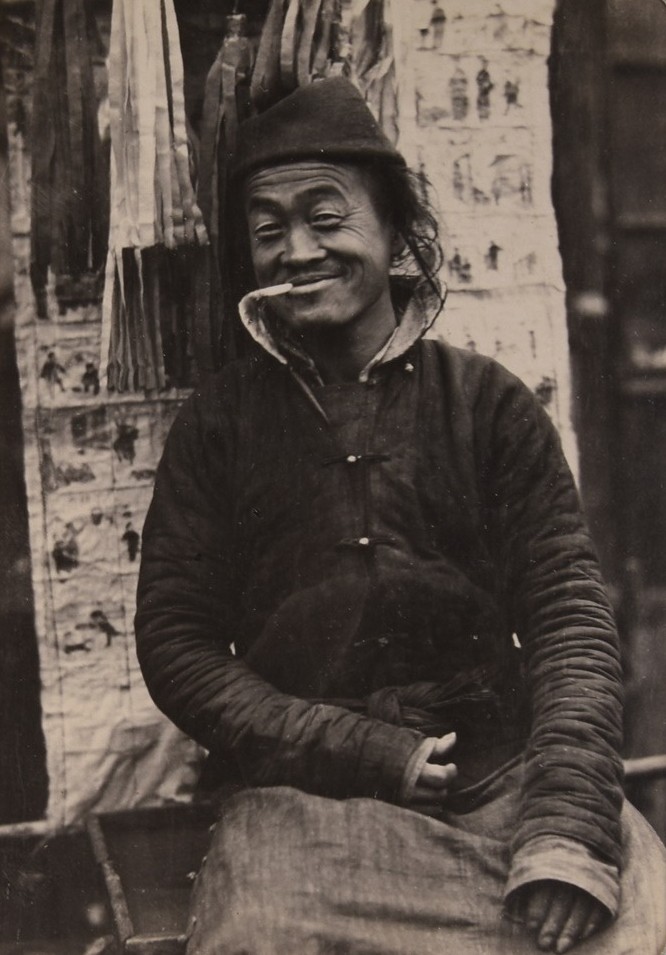
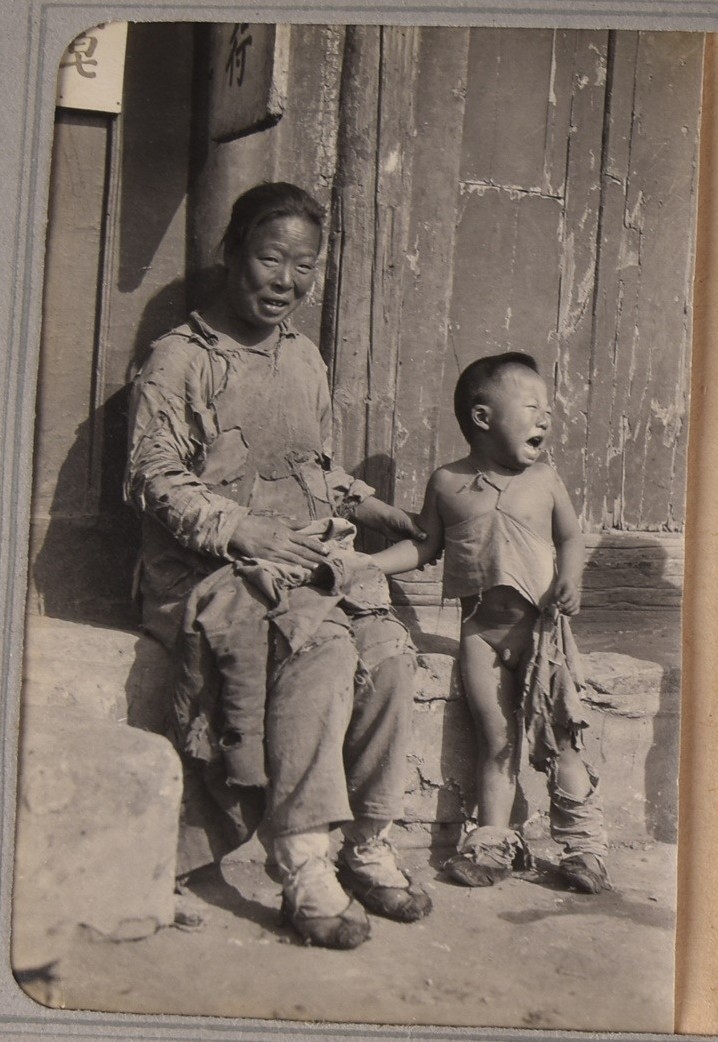
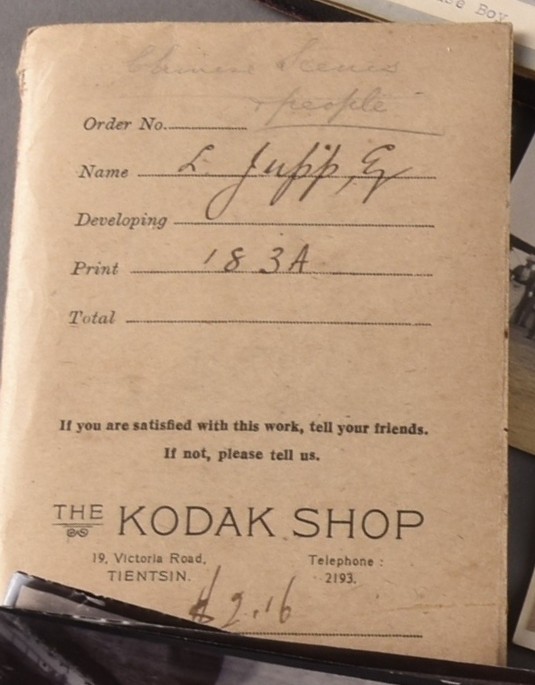
While in Tientsin he also took up photography and made the slightly eccentric posed photos using his Chinese household staff below…. I assume some were used to promote the theatres or for amateur theatrical as they were posed as famous British music hall characters – Dan Leno – or in slapstick style japes. Jupp was the Secretary and Treasurer of the Tientsin Amateur Dramatic Club in the early 1920s when these photos were taken. And also below what appear to be some studies of street people in Tientsin (where the photos were developed at the Kodak Shop…).
Jupp retired and left China in 1924 after nearly 30 years in China (less WW1)
The Tianjin Concert Hall, formerly the Empire Theatre (1922)
I’ll be at the Essex Book Festival on Sunday 29th June, 12,00pm to tell story of Wallis Simpson’s controversial year in China, 1924-1925. The event will be in the amazing Layer Marney Tower near Colchester, built as a statement house by Henry, 1st Lord Marney, Henry VIII’s Lord Privy Seal, in the 1520s.
But I find wherever I got to talk there’s a Wallis link – Baltimore (born there), DC (lived there), NYC (partied there), Hong Kong (lived there too), Shanghai (of course), Beijing (lived there as well) and of course London. I’ve blogged before on Wallis’s links to Felixstowe in Suffolk (here, and I’m speaking there on the 28th) but what about Essex?
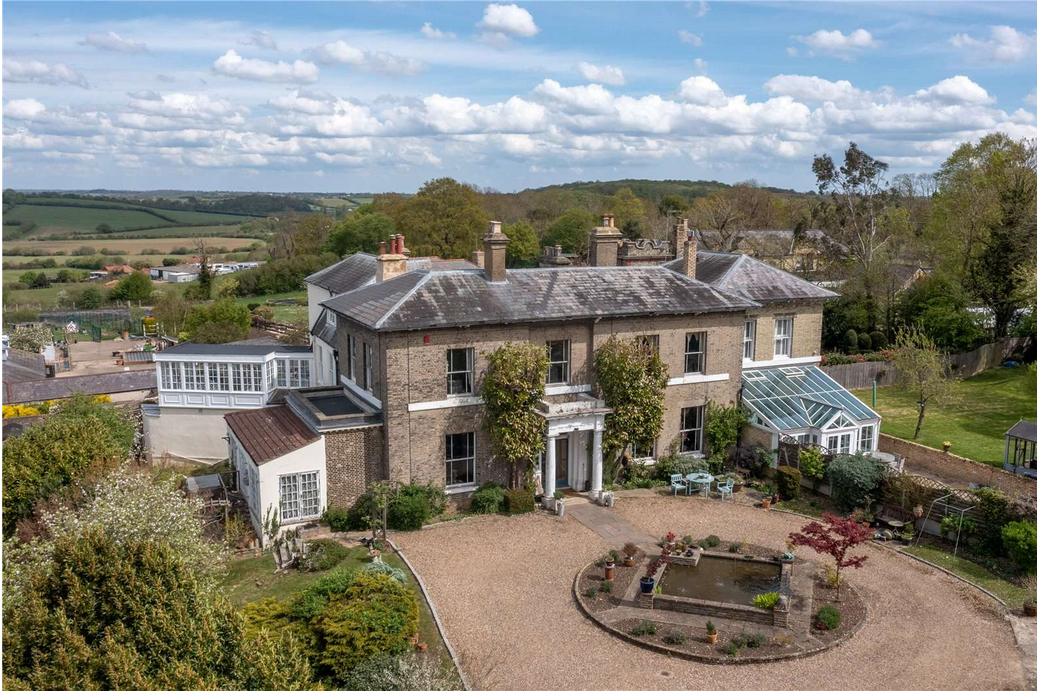
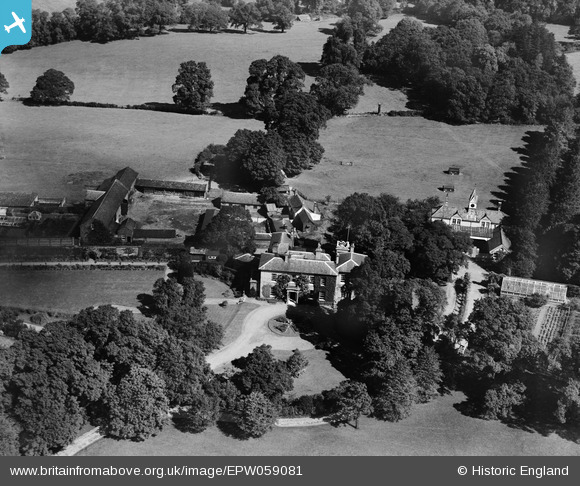
Well apparently one of the Prince of Wales’s little bolt holes with Wallis was Monkhams Hall, near Waltham Abbey in Essex, owned by one of Edward’s equerry’s. Sadly it’s been hacked up into apartments now (and is now private, which doesn’t matter as the interiors have all been thoroughly sterilized aesthetically) now but back then the house, built in 1824, was approached along a private, tree-lined driveway that eventually revealed a three winged stately home with gardens and an ornate fish pond.
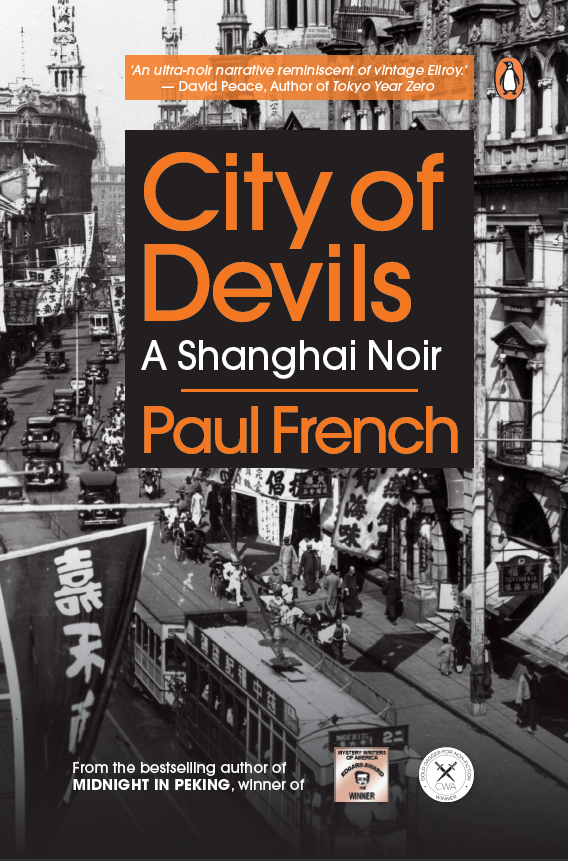
This coming Saturday (June 21, 2025 – 2pm), it’s the City of Devils tour with Historic Shanghai….
Based on my book City of Devils: A Shanghai Noir, you’ll be taken on a walk through the places and traces of the wild and wonderful story of Jack Riley, Joe Farren, and interwar, underworld Shanghai.
To get you in the proper frame of mind, here‘s Historic Shanghai’s 2020 interview with me on City of Devils, all about gangsters, Old Shanghai’s soundscape, rumor and gossip, and reading recs.
Wow! Some people take on big projects!! A World History Encyclopedia!! And here’s my interview with them…. here (and if you can’t find time to read, there’s an audio link too….
The Open House Festival takes place throughout August in Bangor, near Belfast, Northern Ireland.
More than just a festival… It’s a month long music and arts festival in August and the vintage-themed Seaside Revival Festival on Bangor seafront but we also recently opened our very own multi-purpose venue, The Court House. In addition, we promote one-off shows in Belfast on a year round basis and as we are an independent non-profit arts charity, any surplus generated from these events is used towards our community projects.
I’ll be talking Wallis in China on August 9th (click here for details and tickets) at the beautiful Court House in Bangor (below)…
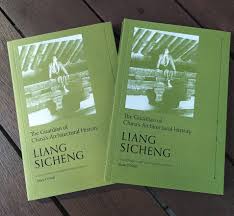
Mark O’Neill will talk about his book ‘Liang Sicheng – The Guardian of China’s Architectural History’. Liang Sicheng ( 梁思成) was the Father of Architecture in China. During the 1930s and 1940s, he and his wife travelled to more than 200 counties in the interior and found 2,738 ancient buildings. The two discovered the richness and diversity of China’s architectural heritage and, through their books and drawings, made them available to the world, both Chinese and non-Chinese.
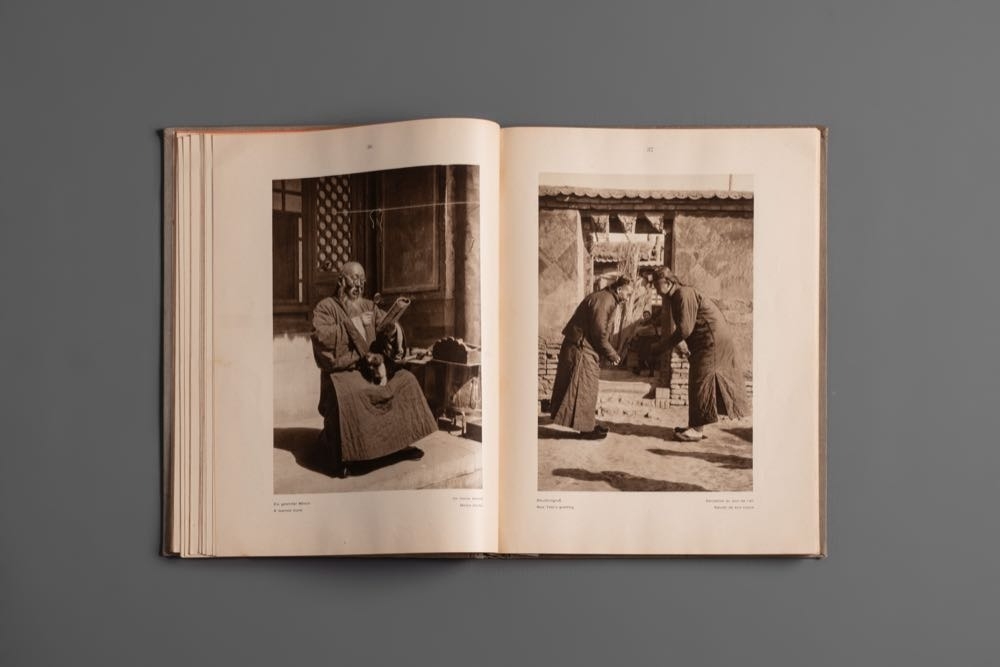
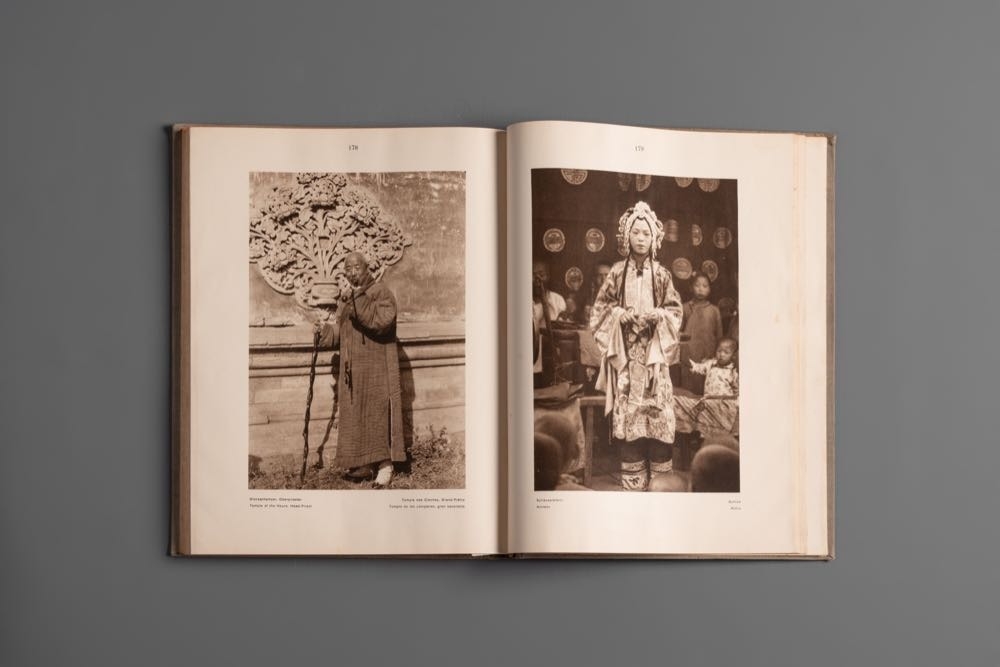
Photographer Heinz von Perckhammer, Peking, 1928, Published by Albertus-Verlag GmbH of Berlin with a foreword by Arthur Holitscher (Hungarian playwright, novelist, essayist and travel writer)….