Shanghai Power has the Answer to Your Tired-Cross Problem
Posted: December 31st, 2011 | No Comments »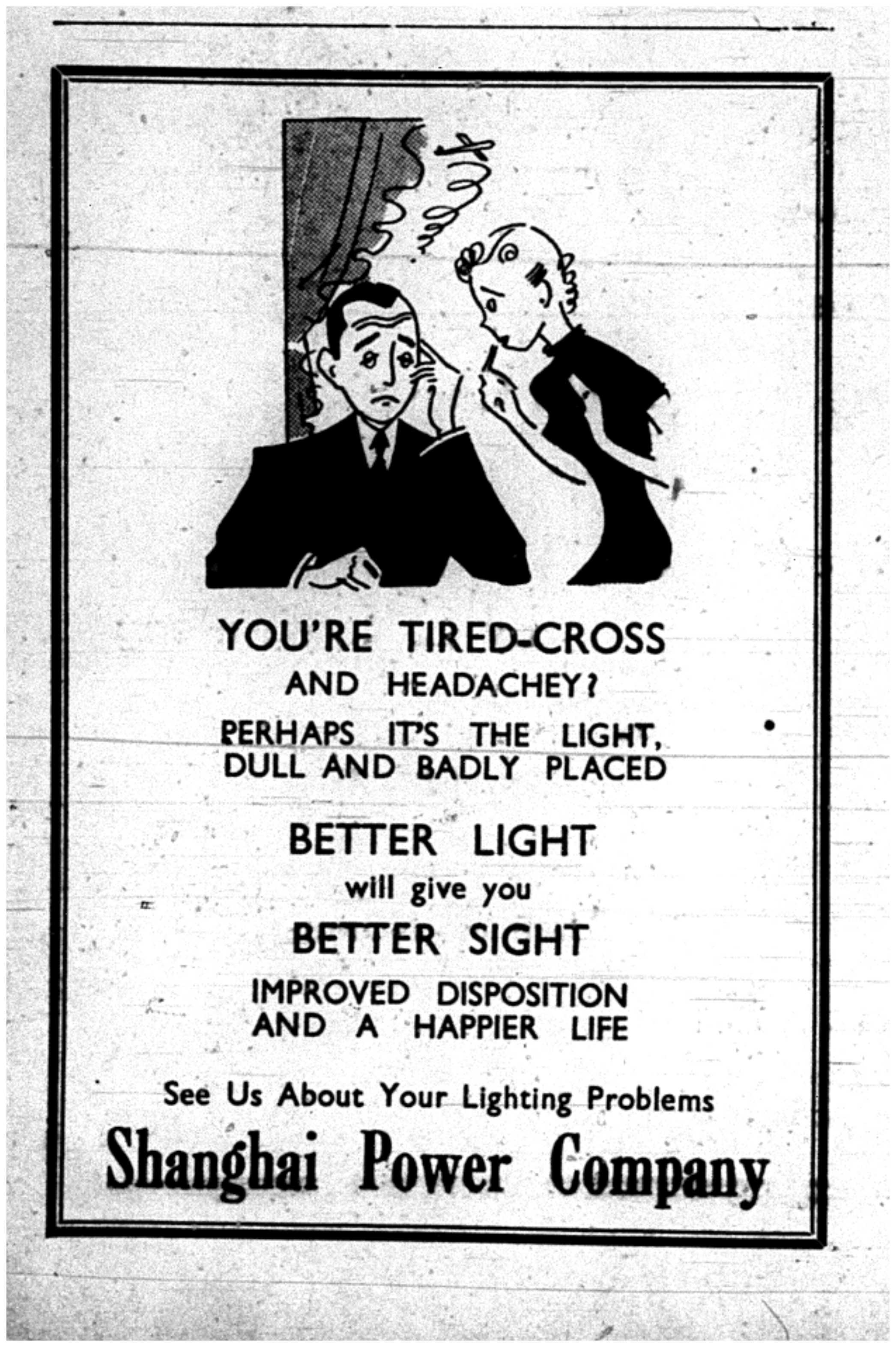
All things old China - books, anecdotes, stories, podcasts, factoids & ramblings from the author Paul French
…and the rest shout the Greek chorus off-stage led by me!
Though, as I commented the other day, Wen Jiabao’s comments about the poor state of heritage and preservation in China were a classic example of too little, too late, they have at least allowed, for a brief moment I would expect, Xinhua to vent a little. So according to a small article in the China Daily, “More than 25 percent of heritage sites in China are in “poor” and “relatively poor” condition”. More extremely conservative statistics about the disaster that is heritage and preservation in China in the article.
The BBC has some more reporting on the report from the State Administration for Cultural Heritage (a ministry that can truly be said to be unfit for purpose!!).
Rudyard Kipling was born in Bombay on December 30th 1865 – which is an excuse for me to post this postcard I came across recently of his former house at Rottingdean in Sussex. Kipling’s Rottingdean home is not as well known as his later residence at Batemans in Burwash, East Sussex which is now a well maintained National Trust property and a good day out. Kipling lived in Rottingdean earlier, between 1897 and 1902. It still exists, you can go and see it – more details here.

OK, here’s what I thought worth reading in non-fiction this year (I’ve only listed books I’ve actually read as there’s a ton I wanted to but ran out of time). Again, no order of preference, just the order they came to mind:
The Hare with Amber Eyes – Edmund de Waal – OK, probably a 2010 book but I read it early last year and fell for it in a big way as millions of others have
Charles Dickens A Life – Claire Tomalin – a doorstopper but if Dickens doesn’t deserve a doorstepper bio every decade or so then who does?
Red Plenty: Inside the Fifties Soviet Dream – Francis Spufford – more Soviet kitsch than you can shake a stick at
The Possessed: Adventures with Russian Books and the People Who Read Them – Elif Batuman – the funniest non-fiction book of the year (her New Yorker articles on things Turkey are also excellent) by a wide mile
Karaoke Culture – Dubravka Ugresic – probably only former Yugoslavians living in Amsterdam can produce crtitical social commentary like this
Edgelands: Journeys into England’s True Wilderness – Michael Symmons Robert and Paul Farley – The Edgelands, we know them so well yet ignore them for the most part – here they are praised and revered
St Pancras Station – Simon Bradley – give in, it’s the most gorgeous railway station in the world
The Good, the Bad and the Multiplex – Mark Kermode – I don’t watch many films, I don’t care that much about the film business but Kermode is eminently listenable to on Radio5 Live and now on the page too
Stet and Somewhere Towards the End – Diana Athill – it took me a long time to give in and read Athill. I’m glad I have found her now
The Temptress: The Scandalous Life of Alice, Countess de Janze – Paul Spicer – Can’t quite move on from the White Mischief, Happy Valley thing – it keeps on being fascinating
Arguably – Christopher Hitchens – I think I had read all of these essays, some multiple times, elsewhere. But given the loss of Hitch this year they were all worth re-reading and remain state of the art
Stalin Ate my Homework – Alexi Sayle – a very funny autobio and a great recreation of life on the hard left in Merseyside after the war
Subterranean Railway: How the London Underground was Built and How it Changed the City Forever – Christian Wolmar – Grew up on the Tube and so books about it appeal to me
The Blitz: The British Under Attack – Juliet Gardiner – Gardiner is a great historian of the 30’s and war; it’s the anniversary of the Blitz and it remains a moment in British history it is now so hard to reallty appreciate the horror of – this book does a good job of recreating the fear, terror and genuine Blitz spirit (not quite the same as the mythical spirit)
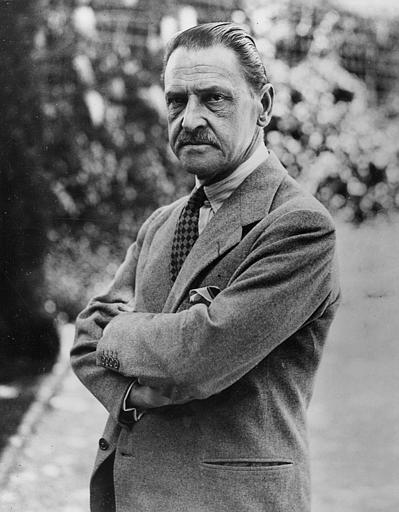
The Secret Lives of Somerset Maugham – Selina Hastings – at last, a bio of Maugham worth reading
And here’s the great man himself – W Somerset – who, for all his style, had something of the retired prize fighter about him:
Listed simply because they’re books that deserve to be noted, praised and spread around to more readers hopefully (I’ve included a few that are a couple of years old but I only got round to reading this year). Have probably missed loads but just flicked through my Kindle and these jumped out as good reads this year that weren’t Penguin Modern Classics, old stuff from more than a few years ago, that stuff that gets read and re-read (so no Greene, Conrad, Hamilton or Orwell) or are, eeerr, by me!:
In no particular order but all books I thought excellent this year (Germany for some reason featured in many in one way or another quite by accident I think)
All That I Am – Anna Funder – my best read of the year by a long way; based on the true story of the German anti-Nazi refugees who came to London in the 1930s
The Secret History of Costaguana – Juan Gabriel Vasquez – excellent book about both the history of Panama and Joseph Conrad from the Spanish-based, Colombian author
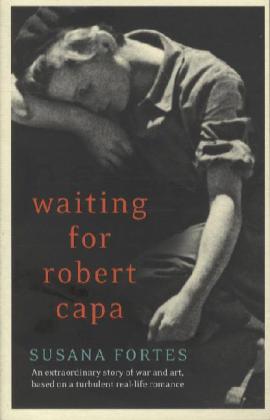
Waiting for Robert Capa – Susana Fortes – great short novel about the refugee German photographer Gerta Pohorylle and her time in France and Spain in the 1930s with the great Hungarian photographer Robert Capa.
The Paris Wife – Paula McLain – a great story of 1920s Paris a told through the eyes of Hadley Richardson, Hemingway’s first wife.
Breath – Tim Winton – I’d long wondered what all the fuss was Down Under about Winton but this surf novel shows he is worth all the praise that’s heaped on him.
Jamrach’s Menagerie – Carol Birch – a wonderful tale spreading from the Ratcliffe Highway to the Far East.
The Prague Cemetery – Umberto Eco – the master returns and this novel of anti-semitism and the horrible types who perpetrated it is a difficult read but a tour-de-force
Soldiers of Salamis – Javier Cercas – a great novel of the Spanish civil war and a modern day Spanish quest to understand the country’s fractious history.
The Sense of an Ending – Julian Barnes – I blow hot and cold on Barnes but this perfectly crafted novel had me blowing hot.
Half Blood Blues – Esi Edugyan – a truly unique novel even for someone like me who’s read just about everything on the 1930s; the use of slang and detail were superb.
Far To Go – Alison Pick – I was expecting a standard run of the mill Kinder Transport novel but this was great in terms of twists and being a bit different.
Snowdrops – AD Miller – a gripping Greene-esque read that was a one sitting experience for me.
The Fat Years – Chan Koonchung – great to see that irony and dystopia exists in Chinese writing too
The Map of Time – Felix J Palma – a tome travel steam punk adventure from Jack the Ripper’s London. Not my usual fare but satisfying in and of itself – apparently it’s the first in a trio.
Blackout and All Clear – Connie Wilson – two novels about time travel back to the Blitz – even if you don’t like sci-fi (and I’m no great fan) the plot is great and the descriptions of wartime London are superb.
Whatever – Michel Houellebecq – I was loathe to include this as there’s so much I don’t like about Houellebecq and his writing and am annoyed that he appears to be the flag bearer for French writing in translation. However, like Bret Easton Ellis’ American Psycho (back in 1991!) however appalled you are sometimes there are stunning scenes that linger in the memory.
The Maintenance of Headway – Magnus Mills – an almost perfect little book about buses, bus timetables and bus drivers!! Sometimes genius comes in strange packets!
The Imperfectionists – Tom Rachman – another lovely little package of a novel about an ex-pat newspaper in Rome – brilliantly observed and wonderfully written.
At the Chime of a City Clock – DJ Taylor – Taylor is hit and miss I find but this one is a loving homage to 1930s writers such as Hamilton and Orwell and well executed.
The End of Everything – Megan Abbott – reminded me Donna Tartt’s The Secret History in many ways and Eugenides’ The Virgin Suicides. Abbott emerges from noir writing as a great contemporary novelist I think.
The Trinity Six – Charles Cumming – good enough spy story and page turner for anyone, like me, who laps up Cambridge Spies anything!
The Report – Jessica Francis Kane – retelling of the Bethnal Green tube disaster during the war that’s quite affecting and gripping.
A few pulps I’ve liked this year – David Downing’s “Station” series was excellent and his Potsdam Station, the latest, is by far the best and a superb recreation of 1945 Berlin. Lynda La Plante’s Anna Travis series continues from strength to strength – this year I caught up reading Silent Scream, Deadly Intent and Blind Fury (Bloodline is now out as the latest) – all excellent. Neil Cross’s Luther novel The Calling was great as was series 2 on TV. Mukoma Wa Ngugi’s Nairboi Heat was a great crime novel set in hot, hot Africa while Martin Cruz Smith’s Three Stations saw Arkady Renko back in cold cold Moscow. Denise Mina’s The End of the Wasp Season was an unexpected pleasure that required concentration (it’s not really pulp at all but great literature) and lifts her up a rung on the literary ladder. This year it seemed austerity Britain was in – I loved Gordon Ferris’s Danny McRae Glasgow post-war series as well as Craig Russell’s Lennox series (slightly better) also set in post-war grimy Glasgow while Elizabeth Wilson’s War Damage and her earlier The Twilight Hour were both excellent recreations of post-war London. Peter James’s Dead Man’s Grip (the 7th Roy Grace novel) marked him as the best ordinary-middle-aged-British-copper writer (and there’s loads) at the moment. Finally, I don’t think there’s anything particularly new out but I discovered Graham Hurley’s great DI Joe Faraday series set in Portsmouth this year and have been lapping them up.
As I say there’s probably some I’ve forgotten – I’ll leave you with Susana Fortes’ cover as it was a favourite image of mine this year:
Passed through Melbourne at the start of December (so better post this before the month ends!!) and found a few spare hours to pop into the Museum of Chinese Australian History down in the city’s Chinatown on Cohen Place off Little Bourke Street. It’s one of those museums that ranges from great to dire depending on what you’re looking at. The basement is an interesting exhibit – Finding Gold – on the Chinese who came to Australia during the Gold Rush – Hong Kong to Melbourne in 60 days on a British ship. The cabins and the moving floor along with the voice recordings are pretty good and atmospheric, I have to say, as are the reconstruction of a mining camp with Cantonese Opera tent, lottery vendor (sponsored by the awful Tattersall’s fruit machine parlours company!!) and temple.
On the upper floors there are some good displays about Chinese-Australian life – the long slow march to equality for the community and some lovely old artifacts. However, there is a rather shameful display of modern China with maps of China that don’t feature Taipei as a capital, Taiwan as a province etc etc – all sponsored by the nasty local Confucius Institute that spread Beijing’s view of the world. Shame on the University of Melbourne and the Victoria State Government Department of Education and Child Development for being involved in this distortion that pushes Beijing’s view of Chinese history and geography – the taxpayers of Victoria deserve something a little better I would suggest. The government and academia in Melbourne should be smarter than to allow the unquestioningly pro-Beijing CI and their hard core no debate anti-Taiwan attitudes into an otherwise well balanced museum. Of course those that know still exist in Melbourne’s Chinatown – see the SYS statue below.
Still all worth an hour if you’re passing.
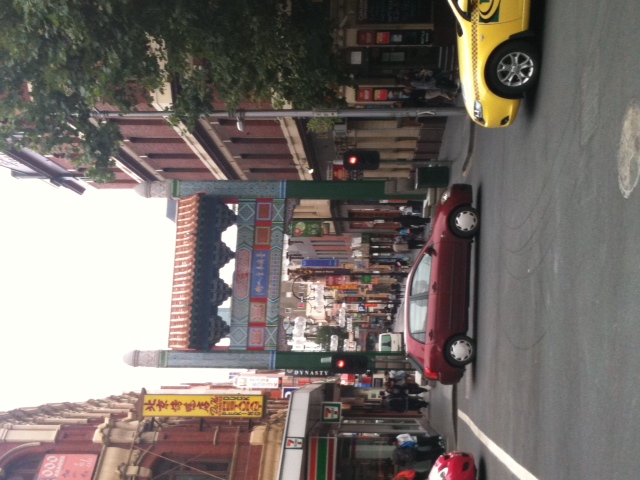 Little Bourke Street and Melbourne’s Chinatown
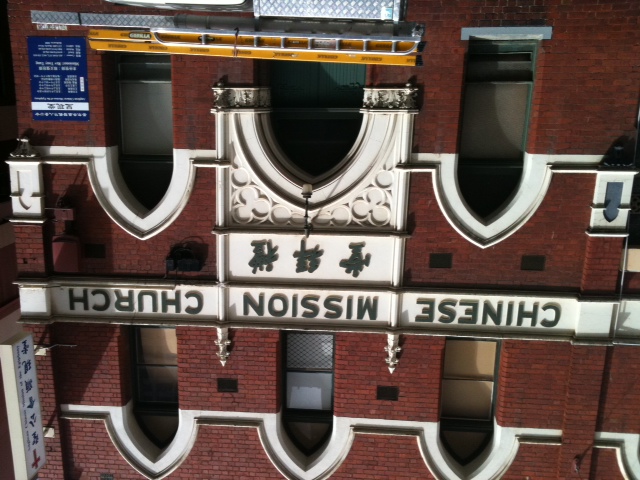 The Chinese Mission Church on Little Bourke Street
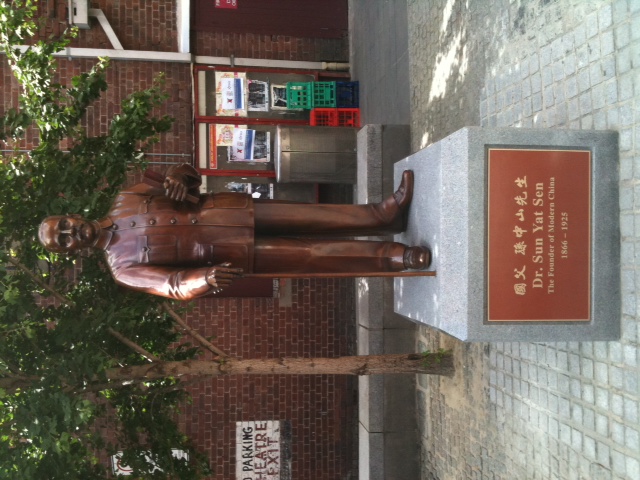 SYS in Melbourne
Edited by May Holdsworth and Christopher Munn
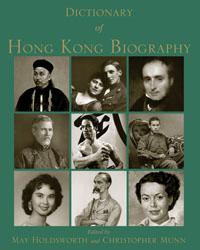
Hong Kong’s history is rich in colourful characters and fascinating life stories. This illustrated dictionary collects in one volume a lively cross-section of the personalities who have made the city the cosmopolitan place it is today. The cast of characters includes men and women from different parts of the world, diverse cultural traditions and all walks of life. The great and the good are here: governors, admirals, film stars, taipans, writers, revolutionaries and other famous names. But there are surprises too: long-forgotten movers and shakers of their day; ordinary folk who illustrate some aspect of Hong Kong history; gangsters and scoundrels – even a few eminent failures. In short, the Dictionary is a kaleidoscope through which Hong Kong’s many faces are revealed.
This collection of more than 500 specially commissioned entries is the first dictionary of lives spanning the whole of Hong Kong history. Ninety contributors, including prominent academics, journalists and other experts, have crafted entries.
May Holdsworth’s books include Foreign Devils: Expatriates in Hong Kong, and The Palace of Established Happiness: Restoring a Garden in the Forbidden City. Christopher Munn is the author of Anglo-China: Chinese People and British Rule in Hong Kong, 1841- 1880.
“Hong Kong has always had its full measure of remarkable people. Both saints and sinners, they have come from all the ethnic groups in Hong Kong’s ebullient population. What has been missing is an accessible record of who these people are and what they did. Their stories will now come to life again in the Dictionary of Hong Kong Biography and, let us hope, be joined by new entries in the years to come.â€
— David Wilson (Lord Wilson of Tillyorn), Governor of Hong Kong, 1987-92
“A painstakingly researched and engagingly written collection of vignettes of the characters, good and bad, who made Hong Kong. It has tremendous scope and gripping detail, making it a very timely scholarly resource as well as a delightful treasure trove of the city’s past.” — Frank Dikötter, author of Mao’s Great Famine: The History of China’s Most Devastating Catastrophe, 1958–1962
Tea…what is more associated with China than the great brew? Barbaric and philistine coffee drinkers leave the room now please. However, should you be of an English persuasion and like your tea from a bag with some milk and sugar then the modern day Lipton’s tea bag available in China is a pathetic imitation of a real tea bag I think you will find. However, Lipton’s was not always such a crap tea company, that only happened later after Unilever bought them. In the old days, not that long after old Thomas Lipton himself had died in 1931, the brand was still associated with good product rather than the dust off the factory floor it is now as anyone who has been forced to buy their lousy black tea bags in China recently will, I’m sure, concur.
(BTW: I will point you in the direction of a very early post on this blog about my own very weak link with Mr Lipton – here)
