Hong Kong Heritage Podcast (RTHK3) – Hong Kong’s Architectural Legacy of ‘Delayed Modernism’ #2 – the Buildings
Posted: April 11th, 2022 | No Comments »A quick recap of the 6 buildings especially noted in my RTHK3 Hong Kong Heritage podcast…
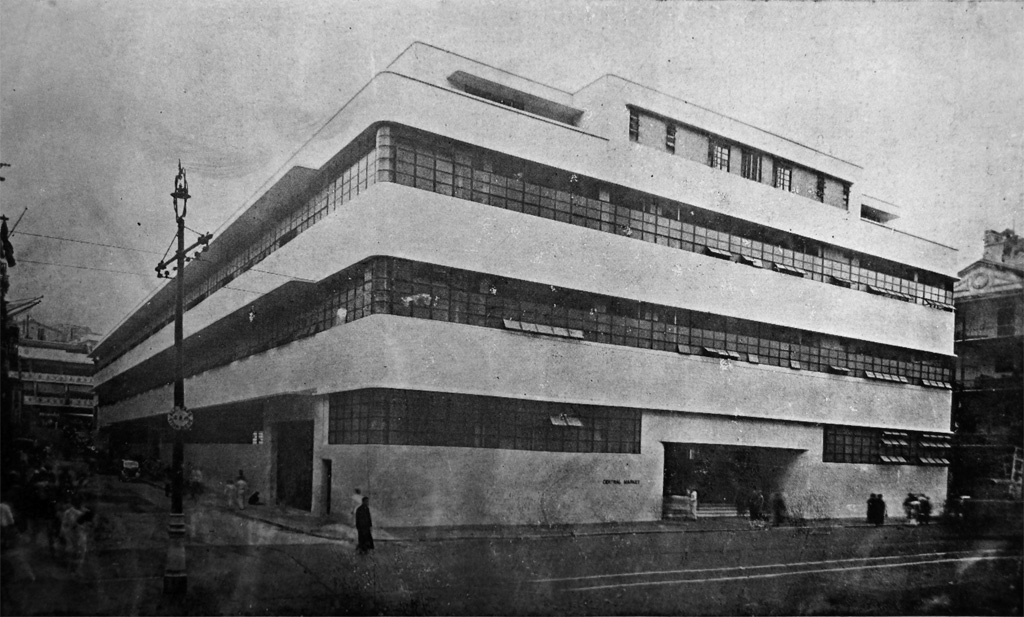
Central Market (1939)
The first modern indoor market in Hong Kong and a combination of an earlier streamline modern aesthetic with the slightly later functionality of the Bauhaus and completed in 1939. And the first female public toilet in Hong Kong apparently. Interestingly built by the colonial authorities to replace a Victorian structure so quite advanced of them. Similarly so the Old Wanchai Market.
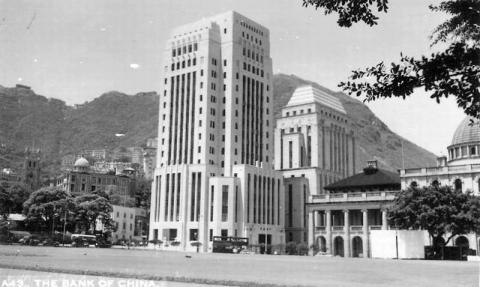
Bank of China (1951)
Right in the heart of Central this is a classic 1930s modernist building of which Shanghai or Tokyo could claim many, but HK only a handful. But it was built post-war, 1951. But it is a pure 1930s building. It was done by the Shanghai firm, moved to Hong Kong, of Palmer and Turner who did the HSBC building on the Shanghai Bund and many other prominent buildings really creating what many see as the “Shanghai Style” – but twenty/thirty years earlier. ‘Delayed Modernism’! The building also matches Palmer & Turner’s design a couple of years later for the Bank of China building in Singapore.
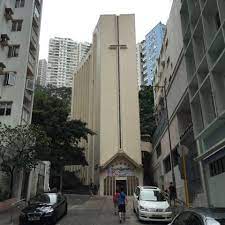
North Point Methodist Church (1961)
A great example of ‘delayed modernism’. Designed in 1961 by the architect Robert Fan Wenzhao. Great modernist influences – primarily Corbusier’s 1954 chapel of Notre Dame du Haut in Ronchamp, France. But what’s really interesting is that this is a Robert Fan building, a Shanghai born/trained and working architect who embraced all aspects of modernism moving over the late 1920s and 1930s through art deco to a localised form of Chinese deco (in tandem with his sometime colleague the Chinese-American architect Poy Gum Lee) to, later, embrace the influences of the Bauhaus, Brutalism and Corbusier. He moved to Hong Kong in 1949 and this was his most overtly modernist commission in the colony.
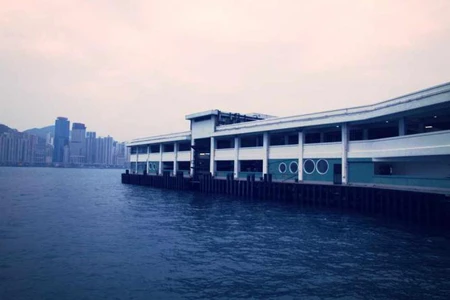
Hung Hom Ferry Pier (1979)
Another fine example of ‘delayed modernism’ in 1979, though following the pattern of previous ferry terminals at Central and Tsim Sha Tsui. Superb Streamline Moderne lines. The once wonderful The 3rd generation Central Pier at Edinburgh Place was the model – designed by local Chinese architect, Hung Yip Chan for the Architectural Office (AO) of the Hong Kong government. Demolished 2007.
Of course without ‘delayed modernism’ we’d never have got it – nowhere would have done a Streamline Moderne pier in 1957! Hung Yip Chan was born in 1921 – basically the year modernism began, so we got a beautiful pier, and template for others, but he was basically an old fogey in architectural fashion terms! Interesting the 4th generation Central Piers (7&8), as with all the other piers along that strip, are a reversion to a sort of faux classical design and are mock-Edwardian with a clock tower, electric bells (Saints preserve us!) and the piers having Greek inspired doric columns.
Hong Kong Jockey Club Shatin Clubhouse (1985)
PMQ and Central Market show a sort of ‘delayed Brutalism’, the tail end of modernism. Almost HK catching up through the 1960s-1980s. It’s an egalitarian aesthetic that doesn’t always sit well with hyper-capitalist HK except for official barracks and markets, a couple of uni buildings such as the Science Centre at HKU (by Hong Kong Brutalist architect Szeto Wai I think), but no housing. The Shatin Clubhouse (British architect Jon Prescot) though elitist, is fabulous and the exterior ‘greening’ of it works very well. But still 1985 – 30 years after Brutalism emerged in Europe. The recent interior refurbishment is somewhat questionable – totally ignoring the raw materials, textured surfaces, simple silhouettes and geometric shapes that are the hallmarks of Brutalist interior design. Inevitably it’s flash trash bling-bling that feels very late 80s/early 90s. But the facade remains breath-taking.
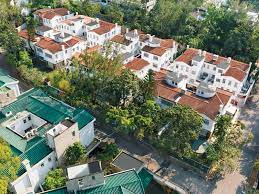
Kadoorie Hill (junction of Argyle Street and Waterloo Road in Kowloon) (1930s)
Hong Kong has very few surviving, and indeed never really had, many modernist homes from the 1930s. Again perhaps as a result of being a British colony and lacking international tastes until after the war. Kadoorie Hill is an exception because it was originally a private residence and built by a family exposed to Shanghai styles. Still one of Hong Kong’s best kept secrets. Originally bought the land in 1931 to build a British-style “Garden City”.
Leave a Reply