How Qingdao’s Post-Great War Economy Tanked Thanks to the Eton Crop and the Decline of the Boater
Posted: April 20th, 2022 | 1 Comment »An interesting anecdote from John Stericker’s memoir A Tear for the Dragon (1958) regarding the economy of Tsingtao (Qingdao) and Chefoo (Yantai). I’ll let him tell it. He is referring to the time around World War One and just after as the Japanese took control of Tsingtao from the Germans and, in Europe, flappers emerged and saloon cars became common…
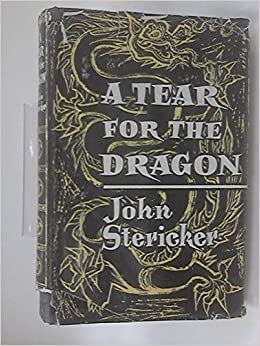
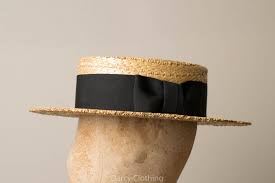
‘…men’s fashions, even more than those of women, affected the poor people of this part of the China coast because most of the straw-braid that to make up the ubiquitous straw boater of the Edwardian era came form Tsingtao and Chefoo. As millions of men began to discard the boater for the felt hat, or no hat at all, the straw-braid trade faded out of existence. Again, as the automobile progressed from being a wind-blown open vehicle propelled by a petol engine, and developed into an almost draught-proof saloon, so did the populatiry of hair-nets begin to fade. Their fate was further sealed by the introduction of the Etopn crop, the bob, and the shingle. Prior to that time, in every dingy cottage and home, Chinese women and children, applying their numble fingers, and drawing from their own tresses, were tying millions of knots in hair nets.’
This is fabulous!