Mekong Review Nov 2021-Jan 2022: Writing China – A British Fascination, Lived and Imagined…
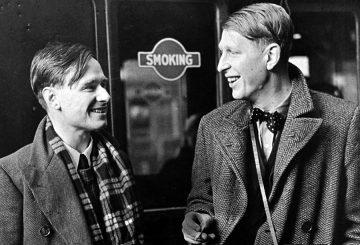
Posted: November 4th, 2021 | No Comments »The new Mekong Review Novemeber 2021 (issue 25) edition is out now (online globally, by subscription and in various shops) – the best publication still standing on Asian current affairs, writing and culture. As somewhat of a respite to the region’s currently rather dark politics they asked me to write about Britain’s interwar fascination with China, the English Big Beast writers who went, and those who didn’t but still thought about China…
A little flavour….
“Between the two world wars, British interest in China was probably at its height. Swift, comfortable ocean liners connected London, Liverpool and Southampton with Shanghai, Tianjin and Hong Kong. London theatregoers thrilled to the orientalism of Oscar Asche’s musical Chu Chin Chow and Hsiung Shih-I’s play Lady Precious Stream. Anna May Wong arrived from Los Angeles to be photographed in the old London Chinatown of Limehouse and then star as the dishwasher turned dancer Shosho in Piccadilly (1929), written by the prolific bestselling author Arnold Bennett. Chinese restaurants became fashionable—T.S. Eliot, Ford Madox Ford and the Sinologist Arthur Waley met often at the New China Restaurant on Regent Street. Regulars at the Shanghai Restaurant on Soho’s Greek Street in the 1930s included the poet William Empson (later to teach at Peking University) and Ezra Pound (known then largely for his 1915 collection of translated classical Chinese poetry, Cathay). China was seemingly everywhere: the Royal Academy’s International Exhibition of Chinese Art in 1935 was packed; there was an outpouring of support for Nationalist China after the Japanese attacks of 1937 and near mass hysteria at the arrival in London Zoo of the first pandas in Britain. China, Chinoiserie, all ‘things’ and ‘matters’ Chinese were, to use contemporary parlance, ‘having a moment’.”
Leave a Reply