The Bulldozing of Kowloon’s St George’s Court – Yet Another Hong Kong Heritage Tragedy
Posted: May 9th, 2026 | No Comments »A sad little tale of Hong Kong and heritage. It’s trite to say, but sadly Hong Kong property developers only really care about money. They have absolutely no interest in heritage or architectural history, and that disappointingly also includes Kadoorie Estates.
When I started planning my “Kowloon Tong: Art Deco and Hidden Heritage in Hong Kong” walking tour for VoiceMap (https://voicemap.me/tour/hong-kong/kowloon-tong-art-deco-and-hidden-heritage-in-hong-kong) the aim was to revisit the art-deco classic architecture of Kadoorie Hill, the Braga Circuit and along Prince Edward Road West. Most of the highlights of that walk still exist (so please do download it!), but in the couple of years since I started work on it we have learnt that the beautiful shophouses around Yuen Ngai Street and Flower Market Road, off Prince Edward Road West, are under threat as the dreaded Urban Renewal Authority is planning a sanitised indoor flower market which would eradicate many of these structures.
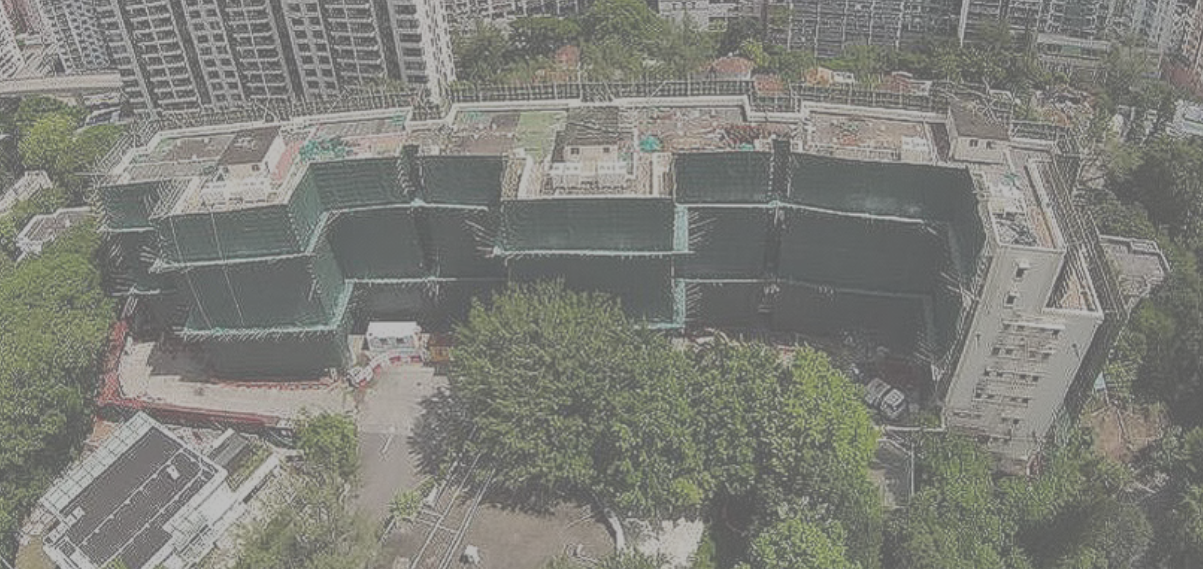
But by far the biggest and most significant loss to Kowloon’s heritage, courtesy of Kadoorie Estates, has been St George’s Court – now totally bulldozed and gone.
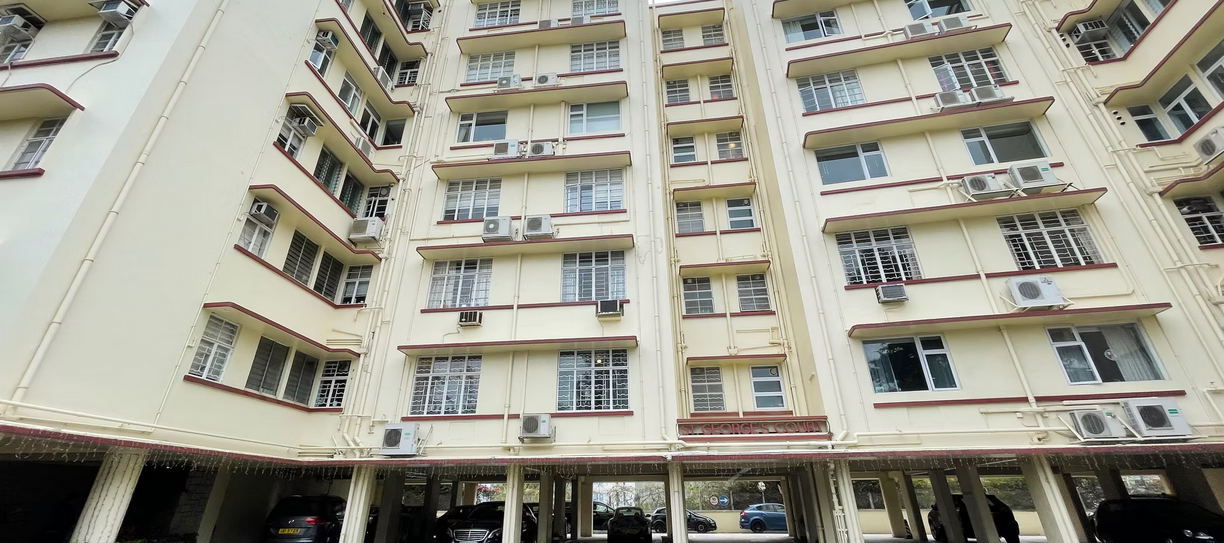
Among the houses and villas of Kadoorie Avenue and the Braga Circuit St. George’s Court, once at #81-85 Kadoorie Avenue, was an ultra-modern post-war apartment building. Though completed in 1956, it displayed elements of a slightly earlier Art Deco as well as Modernism and the more on-trend Bauhaus tradition which was relatively popular in post-war Hong Kong. Some have used the term “delayed modernism” to describe the later use of modernist architectural styles in Hong Kong. You can see it with several ferry piers, the Central Market for instance.
The indented structure of St. George’s Court was essentially a single six-story block with 39 residential units, the individual flats being typically between 1,500-3,000sqft and all included multiple bedrooms, bathrooms, a kitchen, and maid’s room. They all had Crittall window frames and forward and side-facing rooms with sizeable verandas as well as a car park reflecting more widespread car ownership in Hong Kong after the war. The upper floors originally gave a view over the nearby residential area of Ho Man Tin. The apartments were originally marketed to executives and young families with some financial means. The complex was fully occupied shortly after completion, such was its instant popularity in the 1950s.
And now it is gone…Tragic.

Leave a Reply