All things old China - books, anecdotes, stories, podcasts, factoids & ramblings from the author Paul French

The Fishing Fleet: Husband-Hunting in the Raj – and then, if unsuccessful, on to Shanghai!

Posted: July 17th, 2012 | No Comments »

Anne de Courcy’s new book, The Fishing Fleet, takes the fascinating subject of those women who came to India looking for husbands are striking out back home in England. I won’t retell the whole story here as the book sounds worth reading and there’s an excellent review here in the Guardian with some pictures too. A little China add-on (and I don’t know if de Courcy mentions this) but in the early part of the twentieth century there was a similar shortage of marriageable white females in Shanghai to keep all the young Griffins working there under control and away from the temptations of the whorehouse or, God Forbid!!!, the Chinese! However, the women that arrived in Shanghai then had already struck out in England, India and had maybe, following the shipping lines, also failed to secure a husband in Ceylon, Rangoon, Penang, Port Swettenham, Kuala Lumpur, Singapore and Hong Kong before arriving on the Bund. They were, rather cruelly, known as the “empty bottles” by the time they got to China; not that some didn’t eventually find themselves a man and become the duchesses of Shanghailander society eventually.
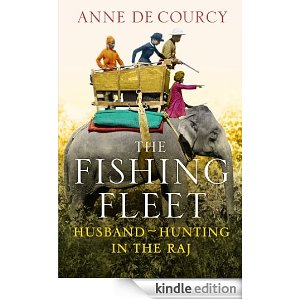
From the late 19th century, when the Raj was at its height, many of Britain’s best and brightest young men went out to India to work as administrators, soldiers and businessmen. With the advent of steam travel and the opening of the Suez Canal, countless young women, suffering at the lack of eligible men in Britain, followed in their wake. This amorphous band was composed of daughters returning after their English education, girls invited to stay with married sisters or friends, and yet others whose declared or undeclared goal was simply to find a husband. They were known as the Fishing Fleet, and this book is their story, hitherto untold.For these young women, often away from home for the first time, one thing they could be sure of was a rollicking good time. By the early twentieth century, a hectic social scene was in place, with dances, parties, amateur theatricals, picnics, tennis tournaments, cinemas, gymkhanas with perhaps a tiger shoot and a glittering dinner at a raja’s palace thrown in. And, with men outnumbering women by roughly four to one, romances were conducted at alarming speed and marriages were frequent. But after the honeymoon life often changed dramatically: whisked off to a remote outpost with few other Europeans for company and where constant vigilance was required to guard against disease, they found it a far cry from the social whirlwind of their first arrival.Anne de Courcy’s sparkling narrative is enriched by a wealth of first-hand sources – unpublished memoirs, letters and diaries rescued from attics – which bring this forgotten era vividly to life.

Anne de Courcy is a well-known writer and journalist. In the 1970s she was Woman’s Editor on the LONDON EVENING NEWS and in the 1980s she was a regular feature-writer for the EVENING STANDARD. She is also a former feature writer and reviewer for the DAILY MAIL.


Leave a Reply