Saturday, August 14, 1937 – that summer Shanghai was expecting to be hit by a typhoon of ‘violent intensity’. The typhoon passed, but what did strike Shanghai was a man-made typhoon of bombs and shrapnel that brought aerial death and destruction such as no city had ever seen before. The clock outside the Cathay Hotel stopped at 4.27 p.m. precisely as the first bombs landed on the junction of the Nanking Road and the Bund; the second wave of explosions struck the dense crowds outside the Great World amusement centre in the French Concession. Bloody Saturday reconstructs the events of that dreadful day from eyewitness accounts. Read my Penguin Special on the events of that day – amazon.co.uk or amazon.com
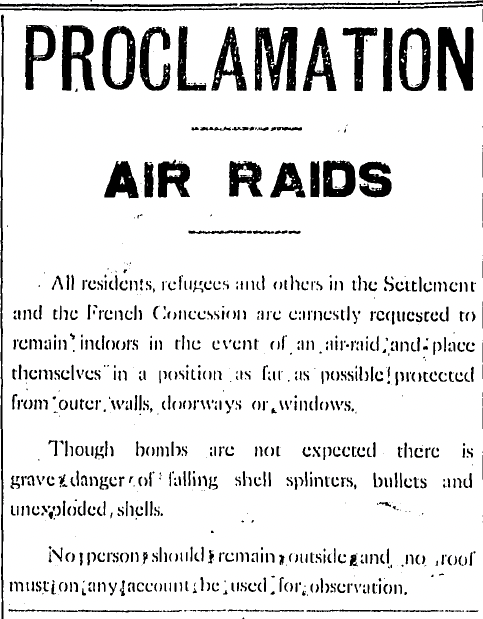
A few days before Bloody Saturday with the Japanese shelling Chapei (Zhabbei) and Paoshan (Baoshan) from their cruisers on the Whangpoo (Huangpu) and artillery in Hongkew (Hongkou) and Yangtszepoo (Yangpu) the authorities of the foreign concessions issued a joint procolomation on what to do in the evantuality of air raids.
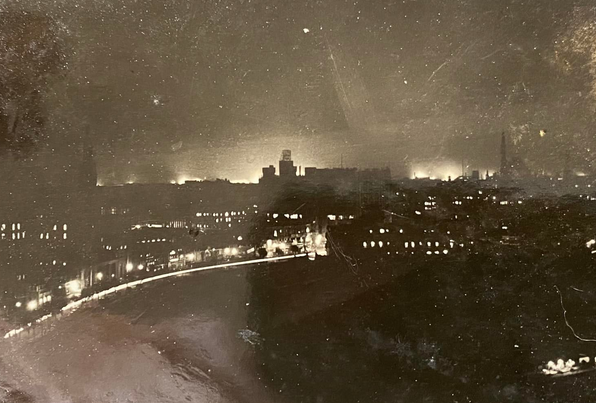
Chapei on fire, August 1937, as seen from the Bund
This week we revisit Jan Morris’s elegiac portrait of Hong Kong: Epilogue to an Empire, reflection on its history & (a decade before the handover) consideration of its potential futures…click here
Just a quick post to note – Seiji Shirane’s Imperial Gateway: Colonial Taiwan and Japan’s Expansion in South China and Southeast Asia, 1895–1945 (Cornell University Press) is currently free on kindle – don’t know for how long – click here for amazon.co.uk (I think all the other amazons as well).
In Imperial Gateway, Seiji Shirane explores the political, social, and economic significance of colonial Taiwan in the southern expansion of Japan’s empire from 1895 to the end of World War II. Challenging understandings of empire that focus on bilateral relations between metropole and colonial periphery, Shirane uncovers a half century of dynamic relations between Japan, Taiwan, China, and Western regional powers. Japanese officials in Taiwan did not simply take orders from Tokyo; rather, they often pursued their own expansionist ambitions in South China and Southeast Asia. When outright conquest was not possible, they promoted alternative strategies, including naturalizing resident Chinese as overseas Taiwanese subjects, extending colonial police networks, and deploying tens of thousands of Taiwanese to war. The Taiwanese—merchants, gangsters, policemen, interpreters, nurses, and soldiers—seized new opportunities for socioeconomic advancement that did not always align with Japan’s imperial interests. Drawing on multilingual archives in six countries, Imperial Gateway shows how Japanese officials and Taiwanese subjects transformed Taiwan into a regional gateway for expansion in an ever-shifting international order.
Thanks to generous funding from the National Endowment for the Humanities Open Book Program and its participation in TOME (Toward an Open Monograph Ecosystem), the ebook editions of this book are available as Open Access volumes from Cornell Open (cornellpress.cornell.edu/cornell-open) and other repositories.
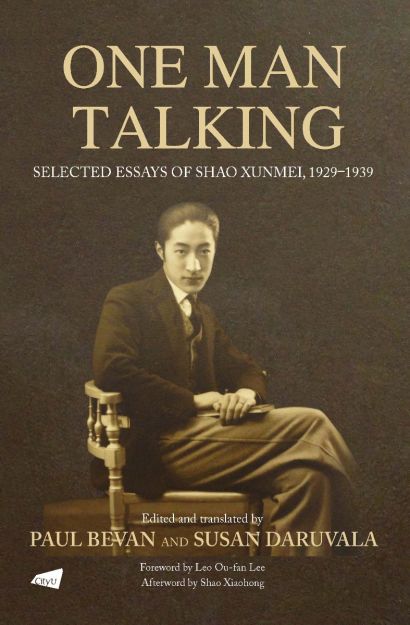
Shao Xunmei, poet, essayist, publisher, and printer, played a significant role in the publication and dissemination of journals and pictorial magazines in Shanghai during the 1920s and 1930s. His poetry has been translated by several prominent scholars through the years, but remarkably few of his essays have received the same attention, and this is the first collection of his prose writings to be published in English. Shao has been described by a phalanx of scholars as the most seriously underestimated modern cultural Chinese figure. This collection of his writings joins several recent publications that aim to raise Shao’s literary and historical profile. It will appeal to a broad swathe of readers interested in the transnational and transcultural dimensions of twentieth-century experience that have become so important for contemporary scholarship.
The essays in this book, some of which were selected by the writer’s daughter, Shao Xiaohong, include long essays such as “One Man Talking” and “A Year in Shanghai” as well as several shorter essays on subjects as diverse as the caricatures of Miguel Covarrubias, woodblock printing, and pictorial magazines — all of which were published in Shao’s own magazines. Although his essays may be less well known than those of other writers of the same period, without his unique and valuable contribution, the literary, artistic, and poetic worlds of twentieth-century Shanghai would have been very different indeed.
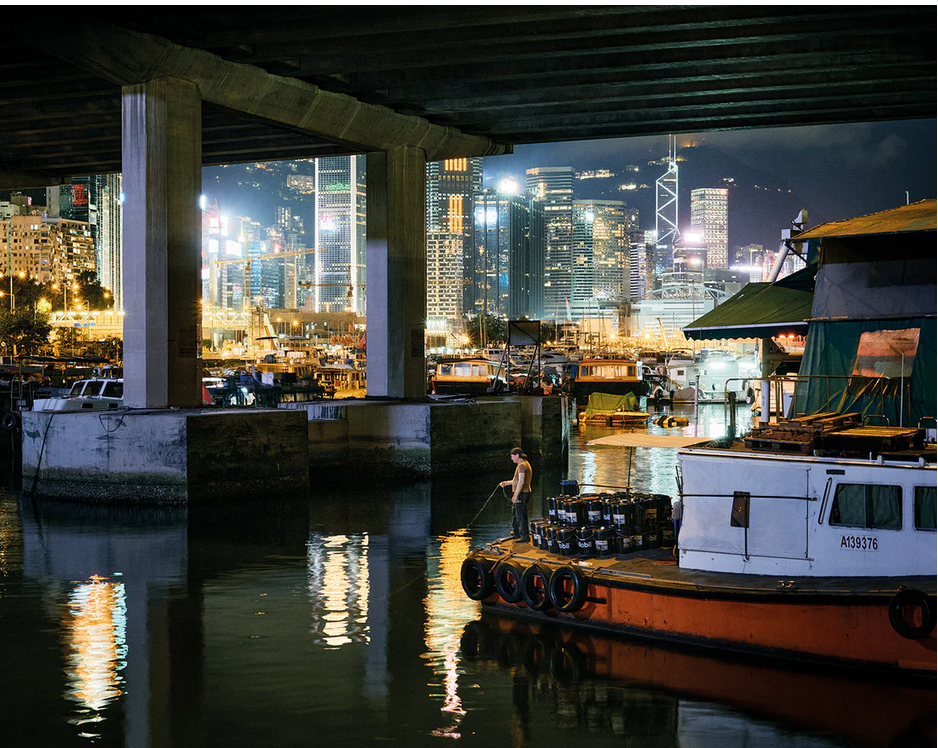
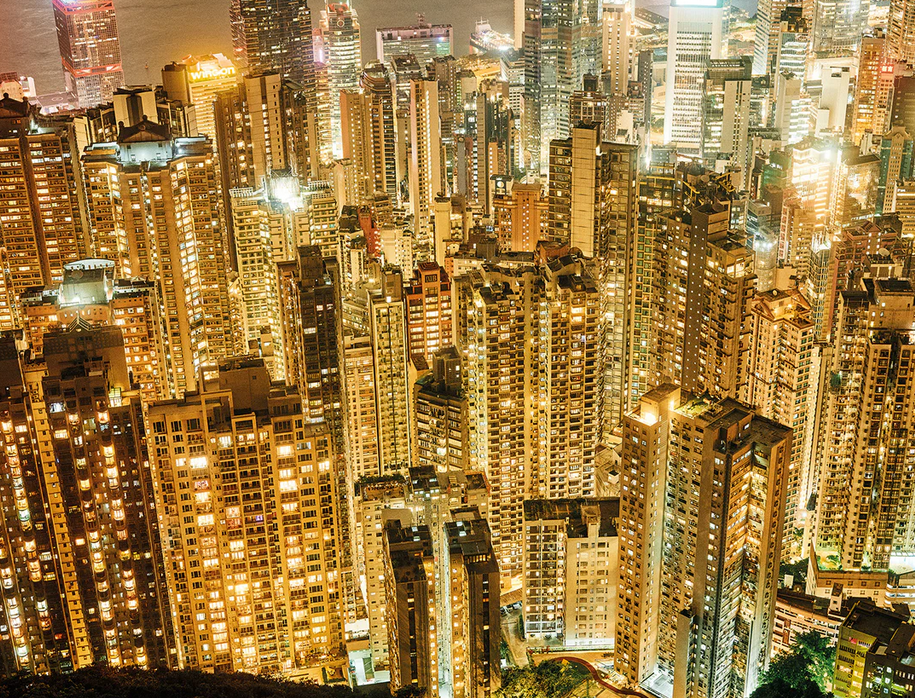
In May 2021, Wong Chung-Wai left Hong Kong with his family to begin a new life in the UK. During the six months prior to their departure he had wandered the city alone using his camera to create an imprint of those things he could not take with him. Now available from Gost Books here
Wong Chung-Wai is a Photographer and Filmmaker. He studied Digital Visual Design and has worked in the film industry for more than 15 years as a production manager, location manager and scriptwriter. In 2021 he was shortlisted for the Emerging Artist Award in the Lucie Scholarship Program. His work has been featured in It’s Nice That, Creative Boom, F-STOP Magazine, Noice Magazine and Abridged Magazine.
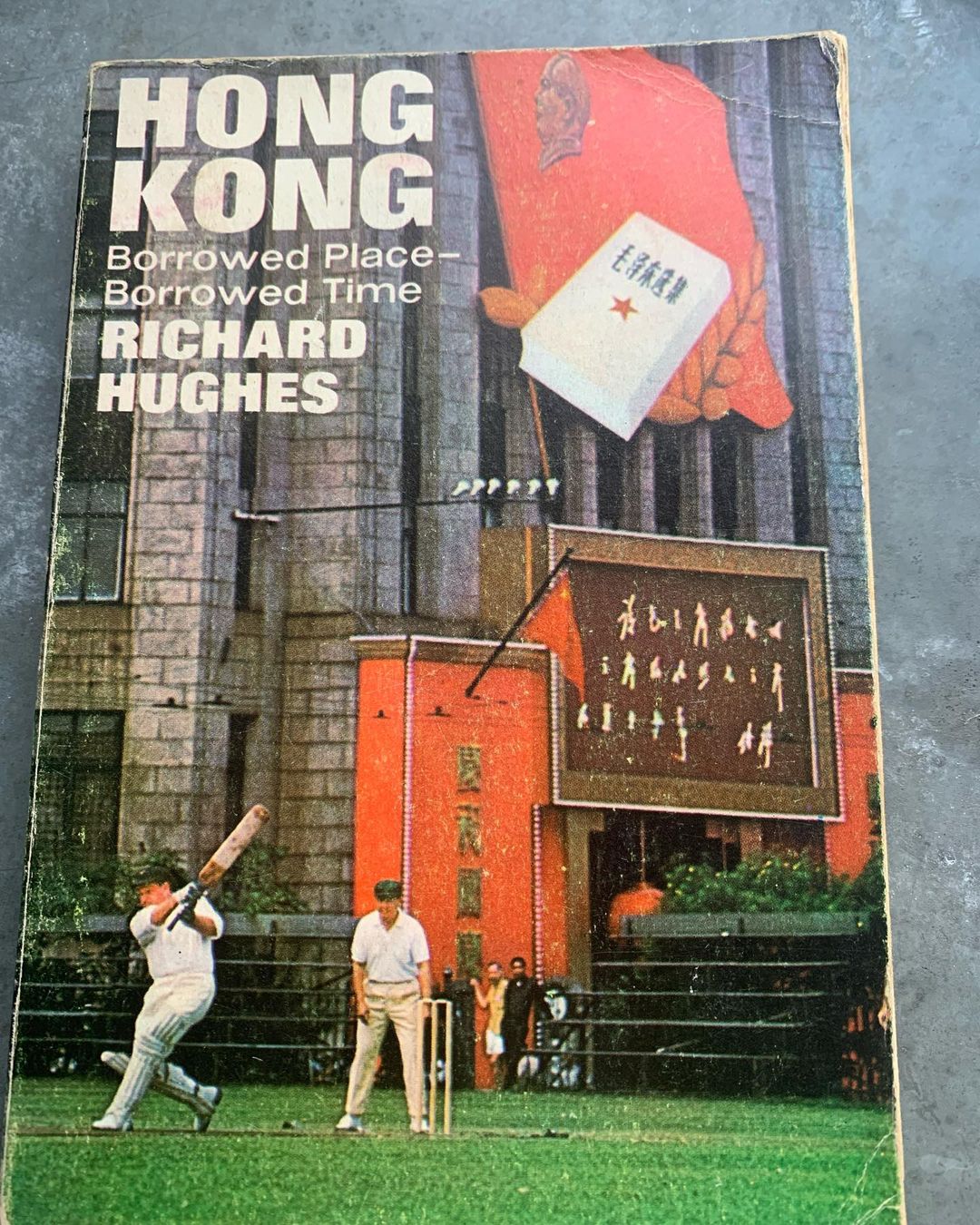
I happened to take Richard Hughes’s Hong Kong: Borrowed Place, Borrowed Time (1988) off the shelf the other day. A great cover, an interesting read. But I’m indebted to Stephen Hutcheon (who follows me on instagram as Lewgus – I am oldshanghaipaul by the way and do feel free to follow for old China images every day) who informs me that the gentleman swinging for a six there in the excellent cover photo is the late Cathay Pacific pilot Captain Charles “Chic” Eather.
Eather was himself an author – a lot more on that and his ife here
Anyway, worth putting out there for any future historians coming across the superb photo on the cover of Hughes’s book.
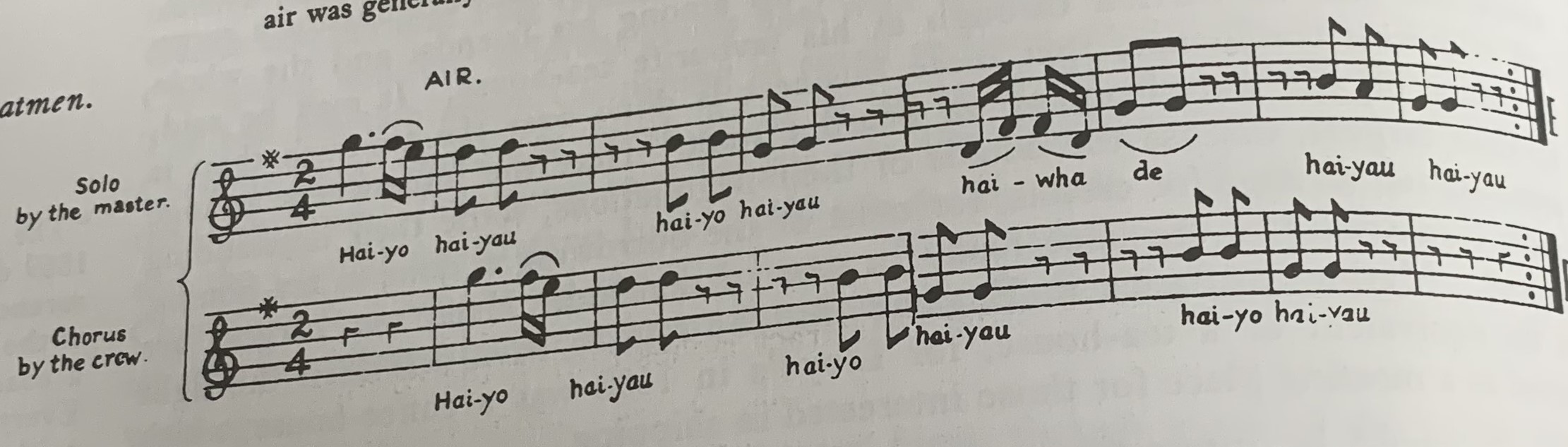
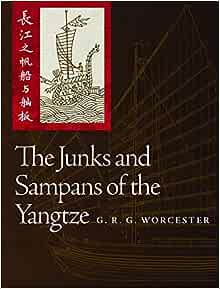
Reprinted in the “Junkman”, GRG Worcester, formerly of the Chinese Imperial Maritime Customs, in his magesterial study The Junks and Sampans of the Yangtze (1971)… Feel free to sing along….
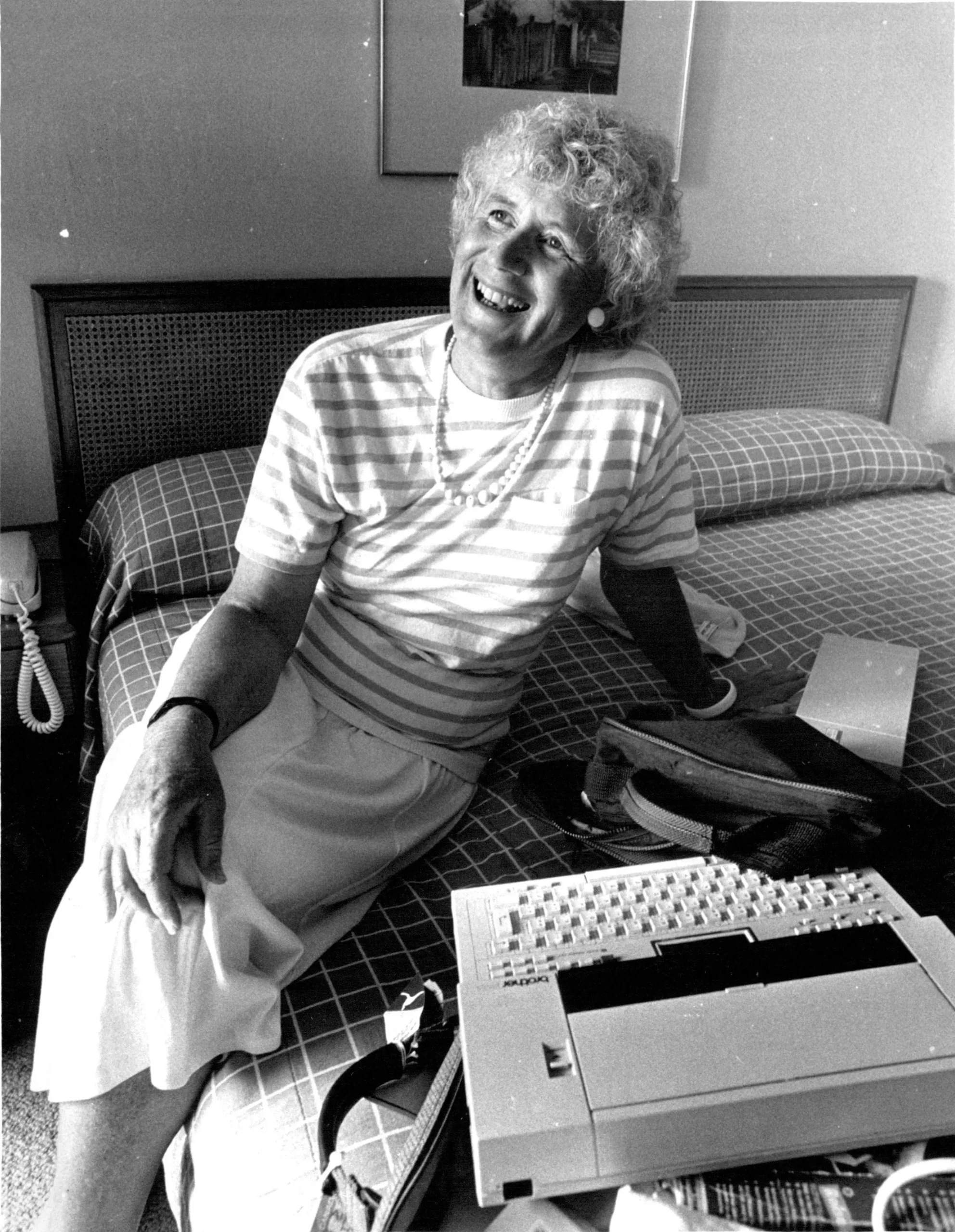
Last week I blogged about how a picture in Jan Morris’s 1988 book Hong Konghas me wondering. There is Dick Hughes (the model for le Carre’s Old Craw in The Honourable Schoolboy (1977) and Fleming’s Dikko Henderson in the Bond novels). With him was a man who pops up in many photos of Hong Kong and, I think, most famously in the David Llyod shot of the view from the toilets at the old HK FCC at Sutherland House (now demolished – though made famous as a scene inThe Honourable Schoolboy. See the post for more here….
So thanks to Geoff Wade in Canberra who spotted that it is the prolific author and journalist David Bonavia, former writer on China, Far Eastern Economic Review, Foreign Correspondent with The Times(London) and author, among many other books of The Chinese: A Portrait(1980). I should have known this as I constantly refer to his great study of the Warlords.