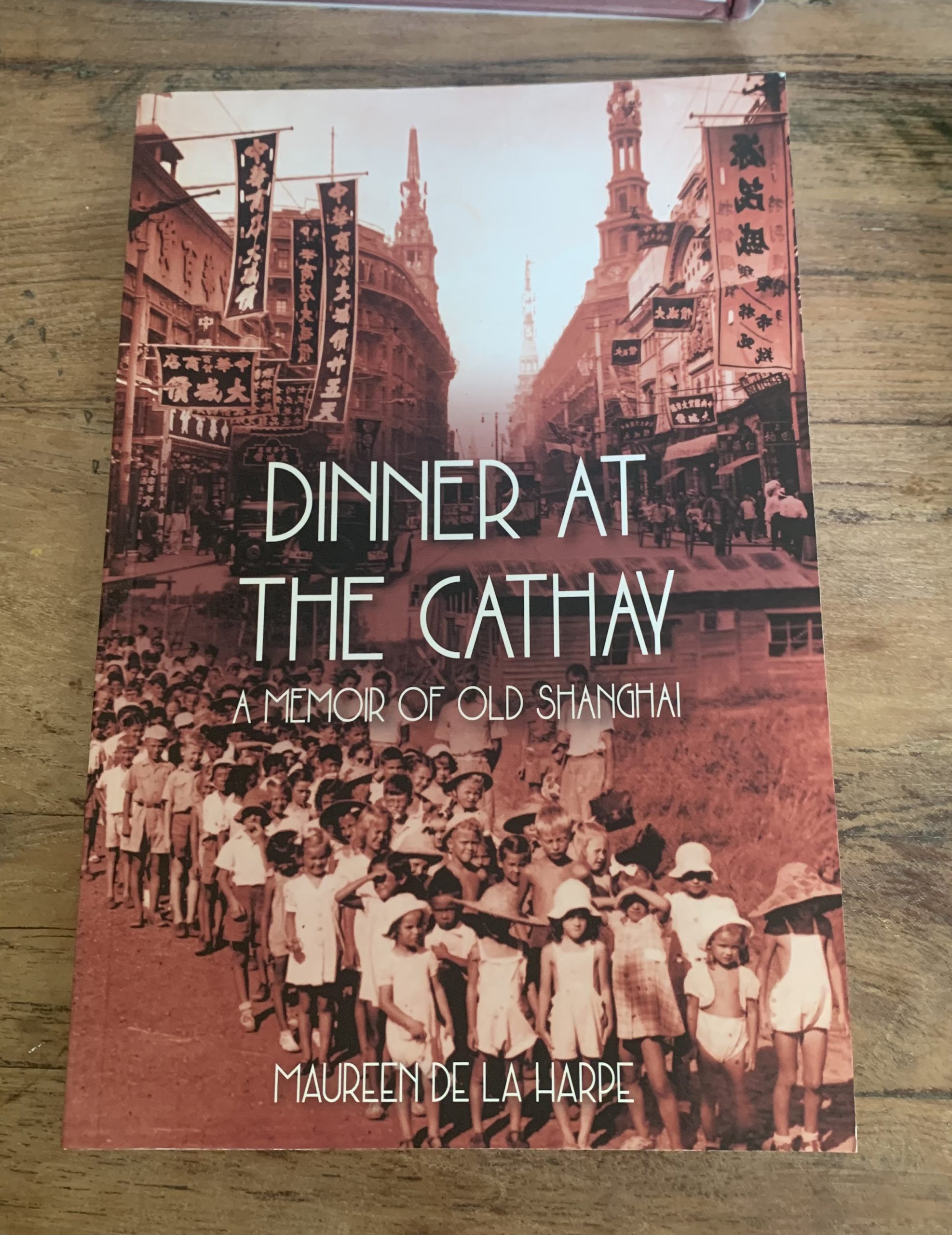
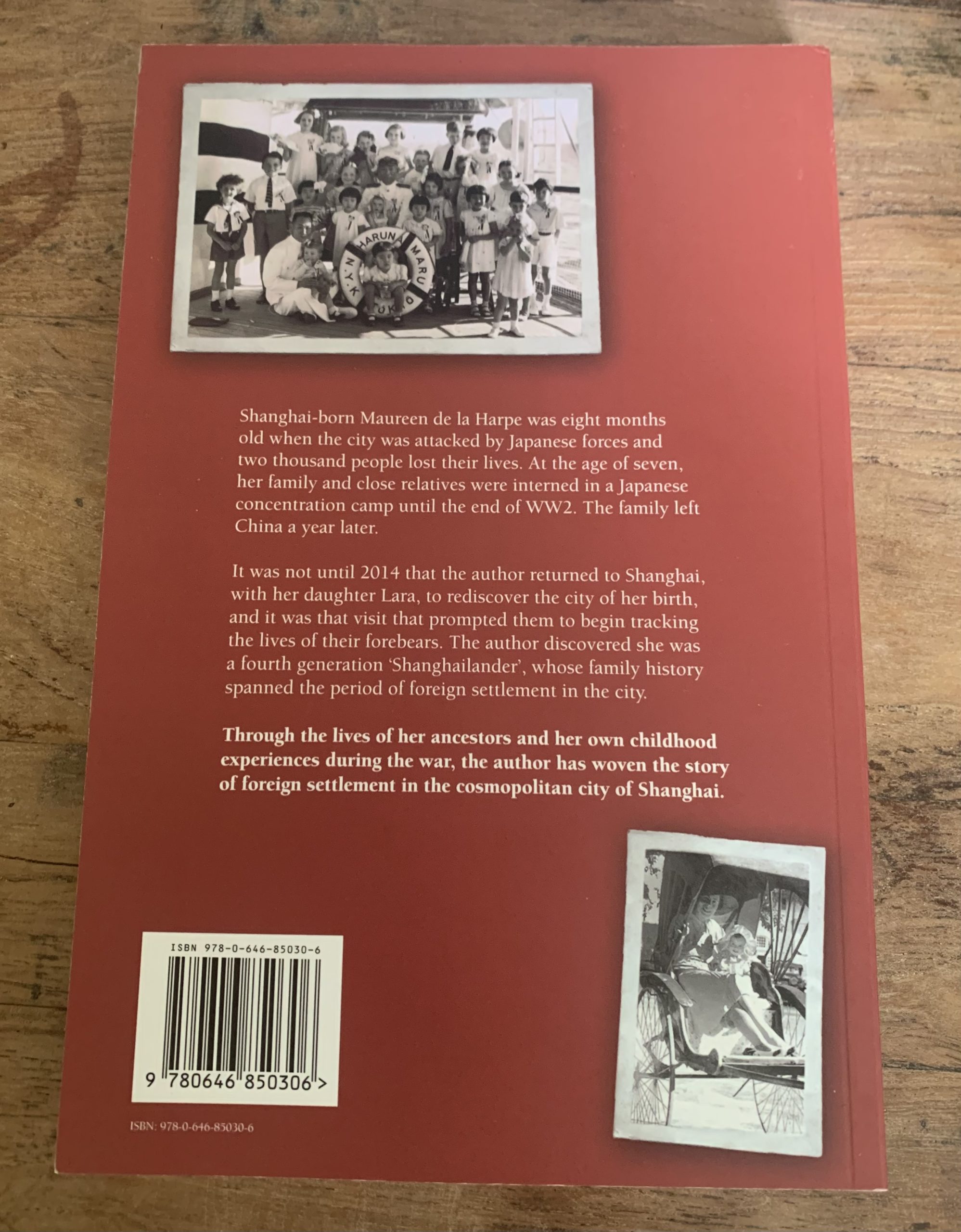
Many thanks to Maureen (and Lara) de la Harpe for sending a copy of their fascinating Dinner at the Cathay. Lots of good Shanghai detail and the family were interned at Lunghwa. Available on amazon etc….
Ker Gibbs was president of the American Chamber of Commerce in Shanghai for many years, focusing on US-China relations and business issues facing American companies operating in Asia. Before that, he worked for a number of large US corporations in China, including Boston Consulting Group, Apple and Disney, and also advised Chinese companies such as Alibaba and Baidu. Currently, he is an Executive in Residence at the University of San Francisco and is a member of the National Committee on US-China Relations.
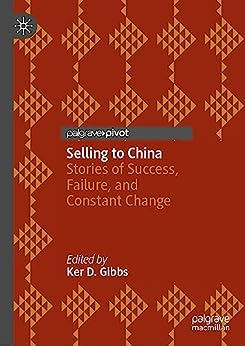
Now, Ker has edited a collection of essays on doing business in China – a collection that often demonstrates that it is the business community that currently understands China best in this time of tensions between Beijing and the West. Selling to China: Stories of Success, Failure and Constant Change(Palgrave) brings together a host of US and Chinese experts to discuss various sectors – from legal to social media, sports to logistics. Expert contributors include senior executives from Wunderman, Procon Pacific, Chrysler, 3M, EF Education First in China and law firm Hogan Lovells.
Paul French caught up with Ker for the China-Britain Business Council magazine Focus to discuss why businesspeople can be great diplomats, how business can cut through the current tensions, and where the commercial world of China might be in the future. Click here…
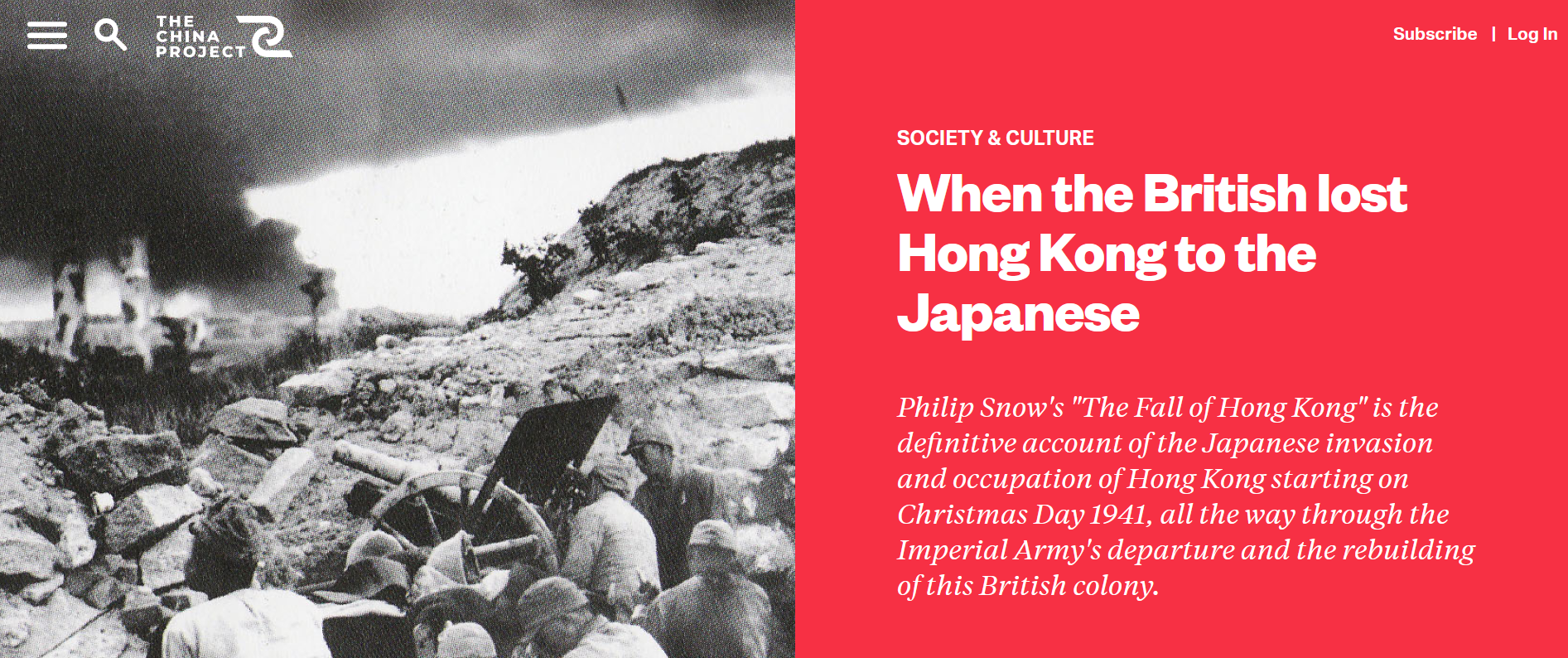
Book #32 – Philip Snow’s The Fall of Hong Kong is the definitive account of the Japanese invasion and occupation of Hong Kong starting on Christmas Day 1941, through the Imperial Army’s departure and the rebuilding of this British colony.
If you’ve found it bit hard of late to pick up a copy of Simon Napier-Bell’s iconic tale of how he took Wham! to China it’s back out in a new edition – I’m Coming to Take You to Dinner….and it’s hilarious, and it tells some great tales of mad China, mad Brits, how to and how not to do business….
“A veteran manager of groups like the Yardbirds, Napier-Bell was just about ready to retire when Wham! fell into his lap…those interested in what goes on backstage and behind the scenes will find Napier-Bell’s stories worthwhile and entertaining.” –Publishers Weekly A gossipy, rollicking music memoir about bringing Wham! to communist China in the ’80’s–now, in paperback London, 1983. Pop impresario Simon Napier-Bell has had enough. Tired of managing groups, and sick of the constant grief at home, with his two ex-boyfriends bickering and bleeding him dry, he’s ready to give up the music business for good. But before he gets the chance, he falls in love with a new passion: a dynamic young duo, George and Andrew, jointly called Wham!. Soon, he finds himself offering to arrange for Wham! to be the first-ever Western pop group to play in communist China – a masterstroke of publicity which, in one swift move, would make them one of the biggest groups on the planet. What follows is an exciting and unpredictable globe-trotting adventure in the company of a cast of petulant pop stars, shady businessmen and a confusion of spies, students and officials, as Napier-Bell edges closer to inadvertently becoming one of the first Westerners to break down the walls of communist China. As one reviewer put it, “some of it reads like a big, gay Bond thriller.”
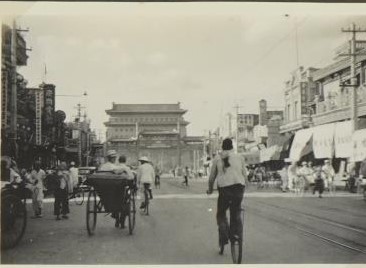
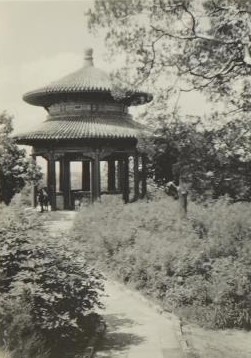
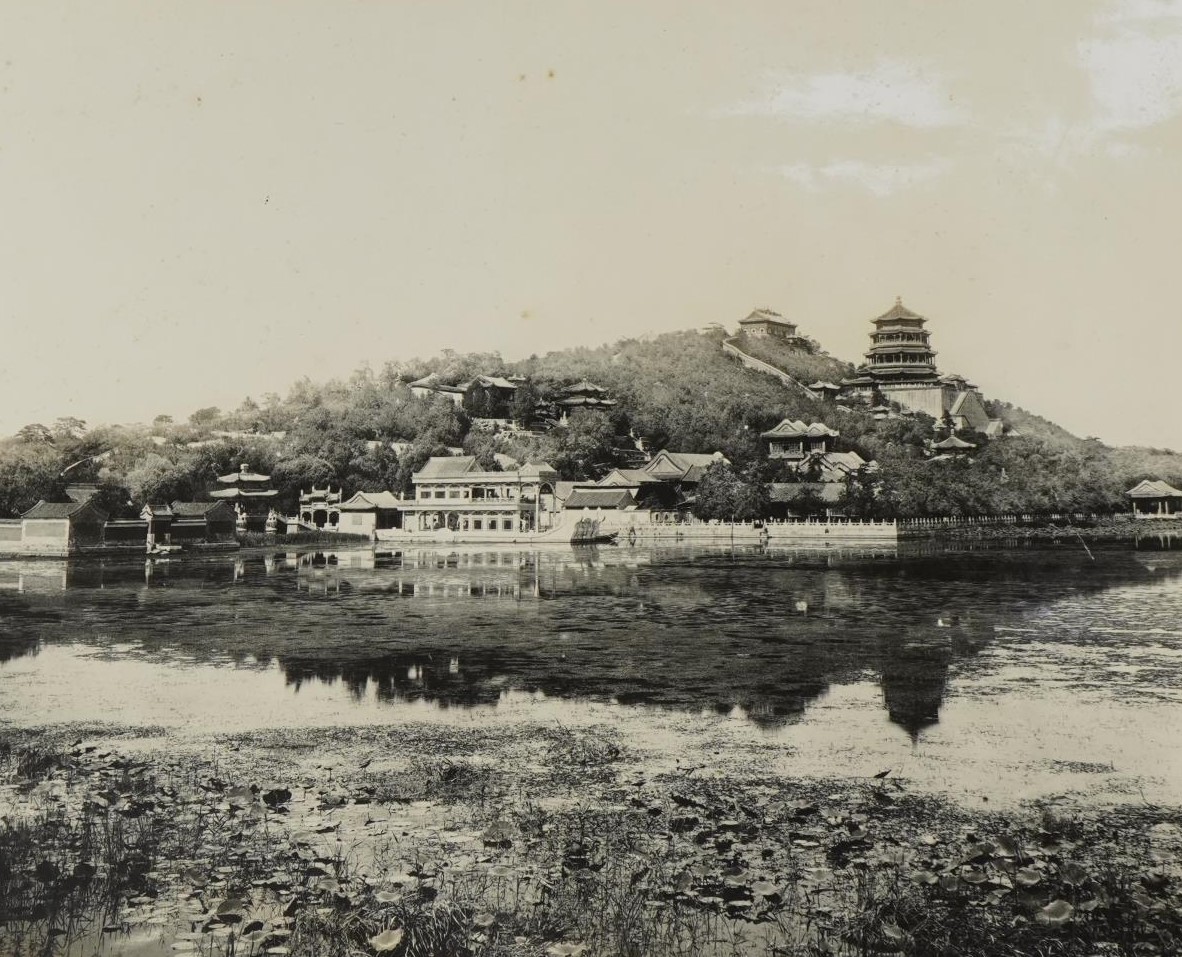
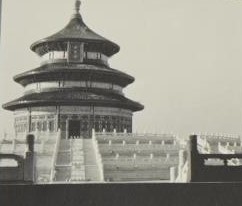
Contiuing Manning’s photos of Peking…he took these general shots during his stay in the mid-1930s while serving with HMS Dragon at the Royal Navy China Station…
Royal Navy Lieutenant J S Manning served in the 1930s on HMS Dragon (built in Glasgow in 1917, scuttled off Normandy after D-Day, 1944). HMS Dragon headed for the China Station around 1933, though its tour was brief and she was soon reassigned to the America and West Indies Station in 1935. Still Lieutenant Manning, clearly a keen amateur photographer, did get to see Hong Kong and Peking and take some photos. I’ll post them over the next few days while I’m in the road travelling to the Edinburgh International Book Festival. Today…. Manning’s photos of the Forbidden City…
Saturday, August 14, 1937 – that summer Shanghai was expecting to be hit by a typhoon of ‘violent intensity’. The typhoon passed, but what did strike Shanghai was a man-made typhoon of bombs and shrapnel that brought aerial death and destruction such as no city had ever seen before. The clock outside the Cathay Hotel stopped at 4.27 p.m. precisely as the first bombs landed on the junction of the Nanking Road and the Bund; the second wave of explosions struck the dense crowds outside the Great World amusement centre in the French Concession. Bloody Saturday reconstructs the events of that dreadful day from eyewitness accounts. Read my Penguin Special on the events of that day – amazon.co.uk or amazon.com
Almost eighteen months after Bloody Saturday, in December 1938, American newspapers ran a series of reminiscences of the events with US 4th Marines stationed in Shanghai at the time with accompanying photographs of the devastation of that day…