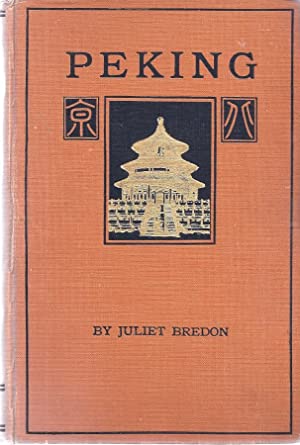
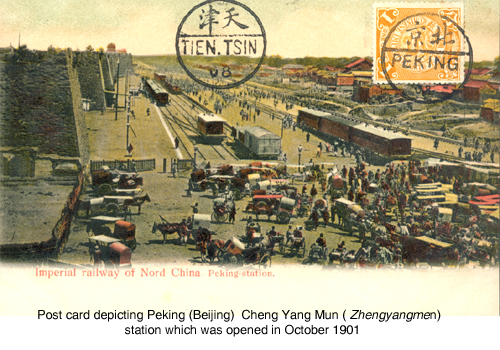
Big news in 1920 – a vegetarian restaurant opened in Peking….Juliet Bredon was so excited she added a footnote to her book Peking (1920) noting its opening…(of course it was not the first restaurant to serve this sort of food, but probably the first to attract foreign interest…)
‘A newly opened vegetarian restaurant is one of the novelties of the capital. Not only is every vegetable known to China prepared there, but these vegetables are served in imitation of practically every known meat dish. At a recent feast given in this place, 27 different varieties of Chinese food were served. The roast duck consisted of a preperation made of bean curd; fried eels were the rind of a certain kinf od melon cooked in vegetable oils; vegetable pork and beef were found to consist of bamboo shoots and mushrooms, and so on, the novelty of the entertainment being that the vegetables not only tasted like the various meat dishes but were moulded to look them also.’
A relatively rare example of Kowloon-side art-deco. Built by a Belgian construction company in the 1930s, this cluster of 16 pre-war buildings was designed as ‘Modern Flats’ for middle-class families at the time with shophouses and an arcade at street level. Some were demolished and redeveloped after the war, leaving only ten remaining buildings, and hence the gap inbetween some that disturbs the full length flow of the building. Therefore the numbering of the pre-war cluster is 190-204 and 210-212 Prince Edward Road West
The roads were named after Prince Edward in 1922 after he visited the construction of this road, later Edward VIII (later The Duke of Windsor), after his visit to Hong Kong. In the 1930s, Prince Edward Road was extended to the area of Ngau Chi Wan.
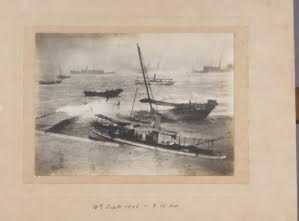
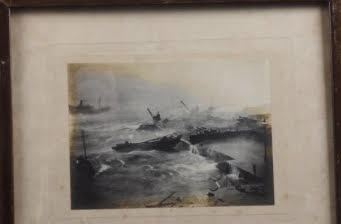
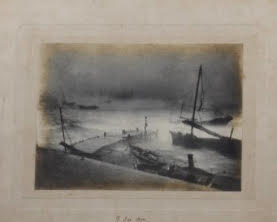
On the 18 September 1906 Hong Kong was walloped by a tropical cyclone . The natural disaster caused property damage exceeding a million pounds sterling, affected international trade, and took the lives of around 15,000 people: about 5% of the then Hong Kong population (a total of 320,000 people).
Early days of photography but one keen amateur took some photos (sadly not great quality in these images) time stamped at 9:15am, 9:30am and 9:45am…
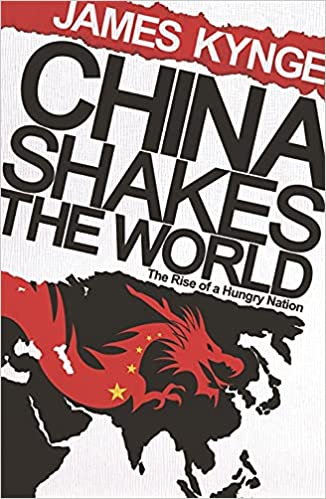
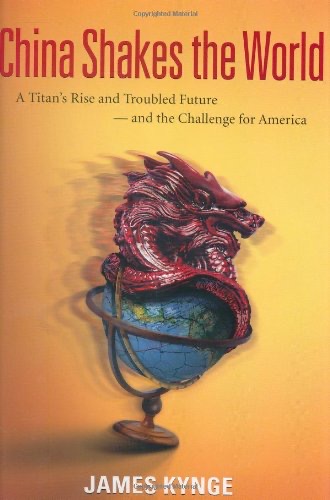
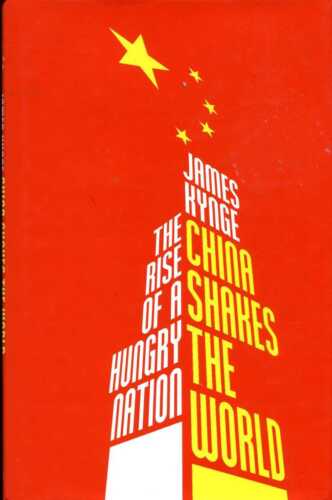
This week on The China Project Ultimate China Bookshelf we start a look at some books that provided early ‘scorecards’ in the wake of massive change – book #13 is Financial Times journo James Kynge’s China Shakes the World (2006)…click here to read…
Worth remembering Kynge was writing it in 04-05 when exports rose 35%, imports 36%, FDI was $64bn & GDP growth peaked at 11.4%. That was world shaking.
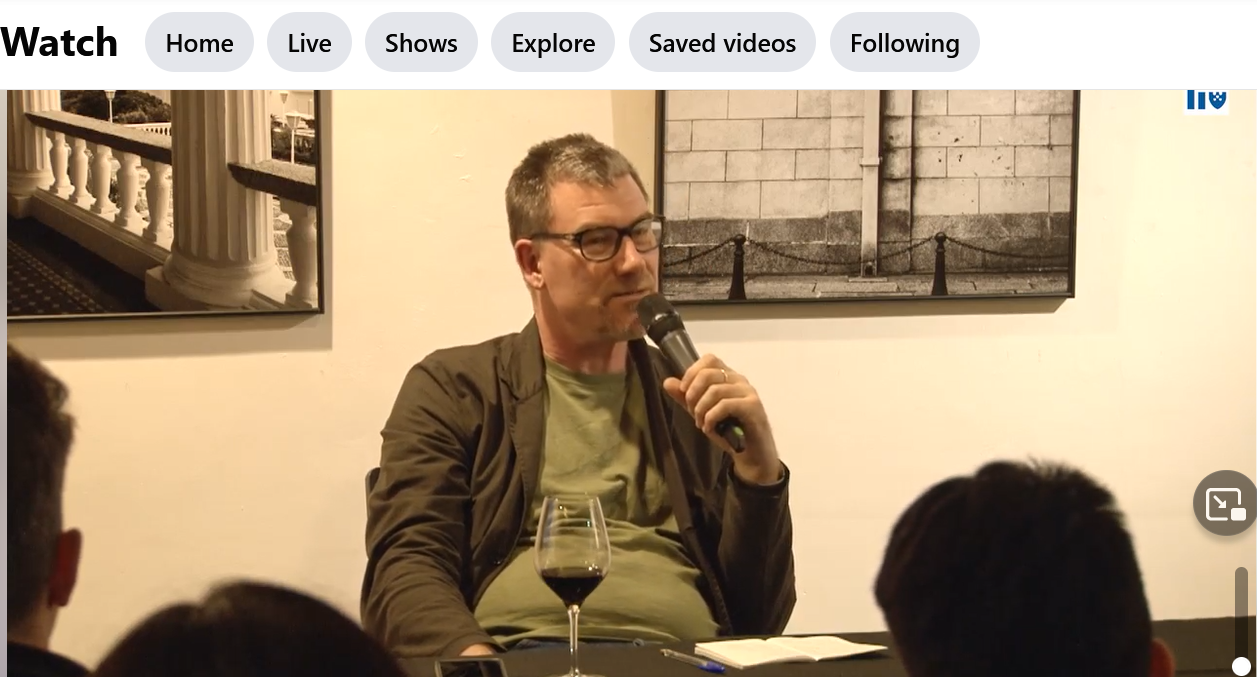
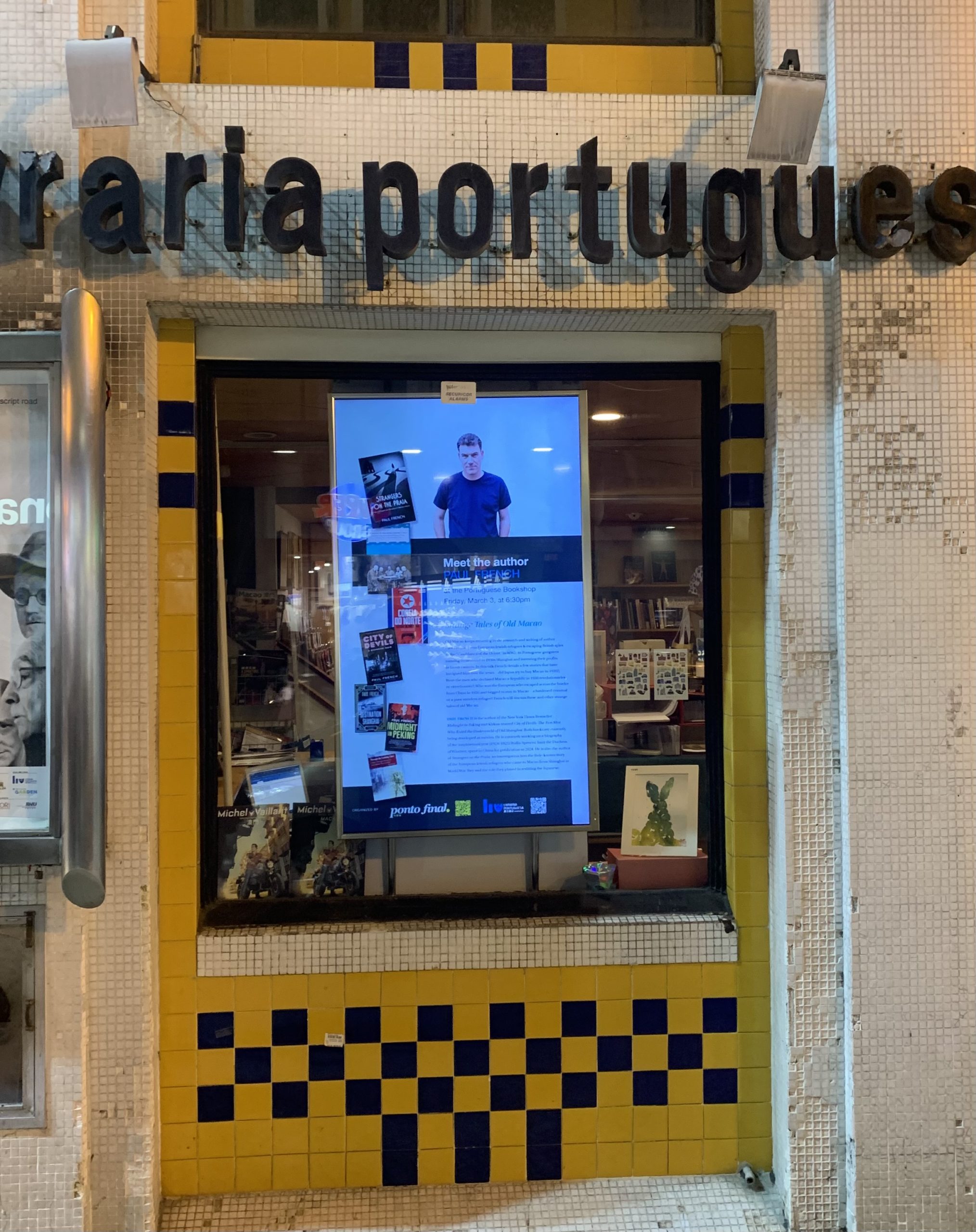
Old Macao keeps recurring in the research and writing of author Paul French. From European Jewish refugees & escaping British spies in the “Casablanca of the Orient” in WW2, to Portuguese gangsters running contraband to 1930s Shanghai and investing their profits in lavish casinos. In this talk French details a few stories that have intrigued him over the years – did Japan try to buy Macao in 1936?; Were the men who declared Macao a Republic in 1930 revolutionaries or extortionists?; Who was the European who escaped across the border from China in 1956 and begged to stay in Macao – a hardened criminal or a poor stateless refugee? French will discuss these and other strange tales of old Macao. Click here to watch…
Paul French is the author of the New York Times Bestseller Midnight in Peking and Kirkus-starred City of Devils: The Two Men Who Ruled the Underworld of Old Shanghai. Both books are currently being developed as movies. He is currently working on a biography of the inspirational year (1924/1925) Wallis Spencer, later the Duchess of Windsor, spent in China for publication in 2024. He is also the author of Strangers on the Praia, an investigation into the little-known story of the European Jewish refugees who came to Macao from Shanghai in World War Two and the role they played in resisting the Japanese.
The prize-winning writer launches her new memoir next Thursday April 13th.
This event will take place in the British Library Entrance Hall. It will be simultaneously live streamed on the British Library platform. Tickets may be booked either to attend in person (physical) or to watch on our platform (online) either live or within 48 hours on catch up. Viewing links for the online version will be sent out shortly before the event.
The online version of this event will be live captioned.
Xiaolu Guo launches her new memoir Radical, a playful, provocative and original take on striving for a life of her own. She is joined in conversation by writer and translator Lauren Elkin.
Xiaolu brings her experience of living in different continents into all her books: from rural and urban China, to London, Europe, and now New York, where she spent a year, away from her husband and child, separated by place and language, and from people.
Radical is a memoir about being an outsider and the desperate longing to connect. It is also a dictionary and an ardent love letter; an archive of an artist’s search for creative freedom and an attempt to find a space between her fascination with Western culture and her nostalgia for Eastern landscapes.
Followed by a book signing.
This event accompanies the British Library’s free exhibition Chinese and British.
Half price tickets available for Members, Students, Under 26s and other concession groups.
Xiaolu Guo was born in China. She published six books before moving to Britain in 2002, where in 2013 she was named as one of Granta’s Best Young British Novelists. Her books include: Village of Stone, shortlisted for the Independent Foreign Fiction Prize; A Concise Chinese-English Dictionary for Lovers, shortlisted for the Orange Prize; and I Am China. Her memoir Once Upon a Time in the East won the National Book Critics Circle Award, was shortlisted for the Costa Biography Award and the Rathbones Folio Prize 2018. It was a Sunday Times Book of the Year. Her most recent novel A Lover’s Discourse was shortlisted for the Goldsmiths Prize 2020.
Xiaolu has directed several award-winning films including She, A Chinese, and documentaries about China and Britain. She was a judge for the Booker Prize in 2019, and is currently a visiting professor at Columbia University in New York.
Lauren Elkin is a writer and translator, most recently the author of No. 91/92: a diary of a year on the bus and the UK translator of Simone de Beauvoir’s previously unpublished novel The Inseparables. Until recently based in Paris, her earlier Flâneuse: Women Walk the City was a finalist for the 2018 PEN/Diamonstein-Spielvogel Award for the Art of the Essay, a New York Times Editor’s Choice and a Notable Books of 2017, a Radio 4 Book of the Week, and a best book of 2016 by the Guardian, the Financial Times, the New Statesman, and the Observer. Her next book, Art Monsters: Unruly Bodies in Feminist Art is published in July 2023.
If you’re attending in person, please arrive no later than 15 minutes before the start time of this event. We are committed to the safety of our event bookers. Find out how we are welcoming you to the Library safely.
The British Library is a charity. Your support helps us open up a world of knowledge and inspiration for everyone. Donate today.