Some Clever Listerine Advertising from 1924
Posted: March 27th, 2023 | No Comments »Listerine’s advertising from American newspapers in 1924 playing on their success (reputedly) in China and some Chinas tropes


All things old China - books, anecdotes, stories, podcasts, factoids & ramblings from the author Paul French
Listerine’s advertising from American newspapers in 1924 playing on their success (reputedly) in China and some Chinas tropes
Peng Ying-chen’s Artful Subversion: Empress Dowager Cixi’s Image Making looks fascinating… Especially interested as I wrote a piece last year on Cixi and her American portraitist Katharine Carl for the South China Morning Post weekend magazine… (click here)

Empress Dowager Cixi (1835–1908), who ruled China from 1861 until her death in 1908, is a subject of fascination and controversy, at turns vilified for her political maneuvering and admired for modernizing China. In addition to being an astute politician, she was an earnest art patron, and this beautifully illustrated book explores a wide range of objects, revealing how the empress dowager used art and architecture to solidify her rule.
Cixi’s art commissions were innovative in the way that they unified two distant conceptions of gender in China at the time, demonstrating her strength and wisdom as a monarch while highlighting her identity as a woman and mother. Artful Subversion examines commissioned works, including portrait paintings and photographs, ceramics, fashion, architecture, and garden design, as well as work Cixi created, such as painting and calligraphy. The book is a compelling study of how a powerful matriarch at once subverted and upheld the Qing imperial patriarchy.
nnn
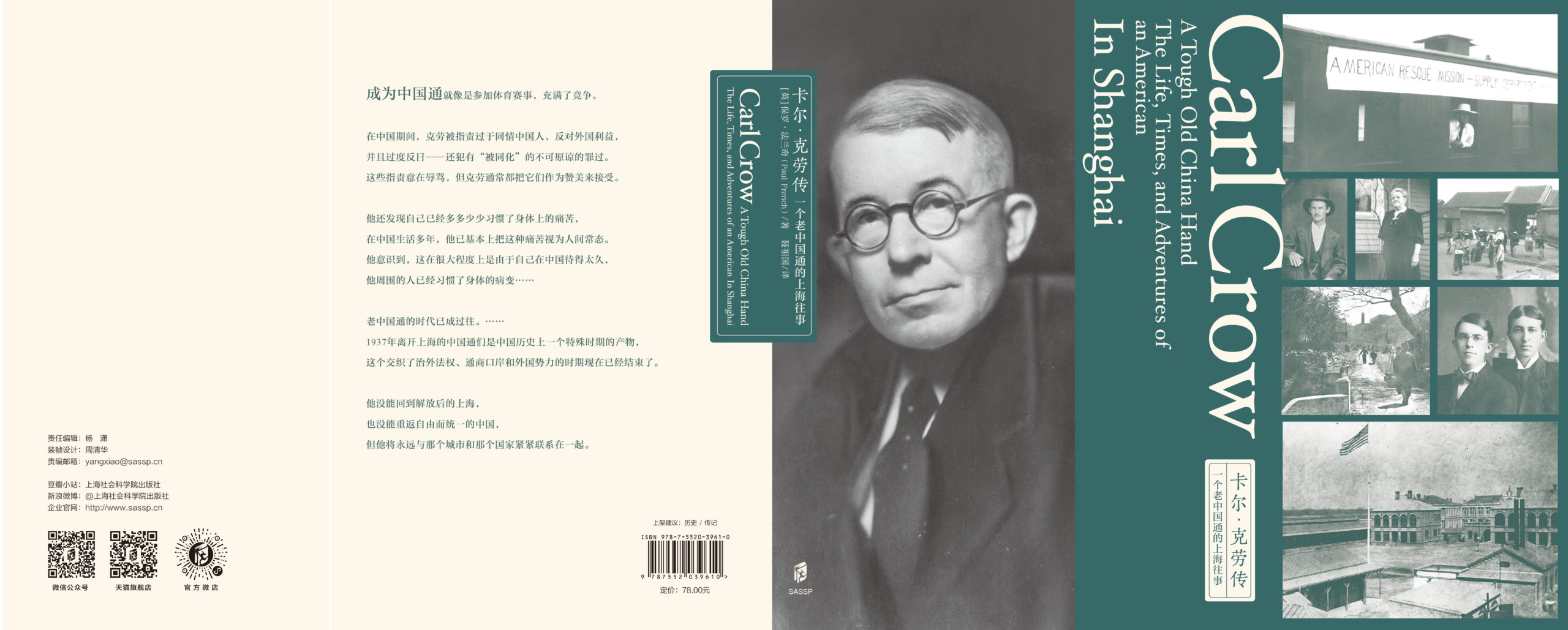
A sneak peek cover reveal – the Chinese edition of my biography of American ad man in Shanghai Carl Crow (Hong Kong University Press), A Tough Old China Hand, is out later this year from Shanghai Academy of Social Sciences Press….
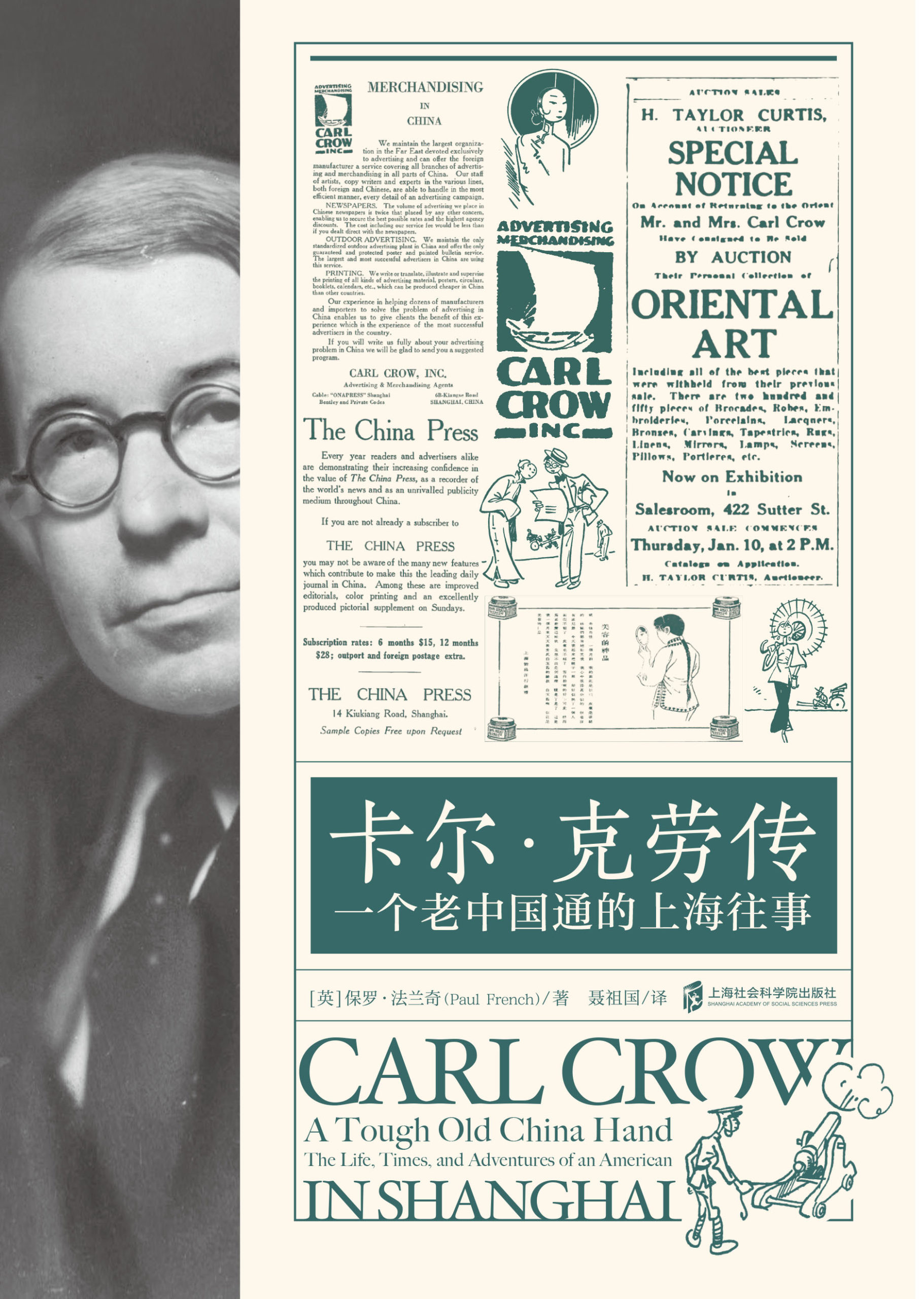
And a nice reverse flap of old adverts….
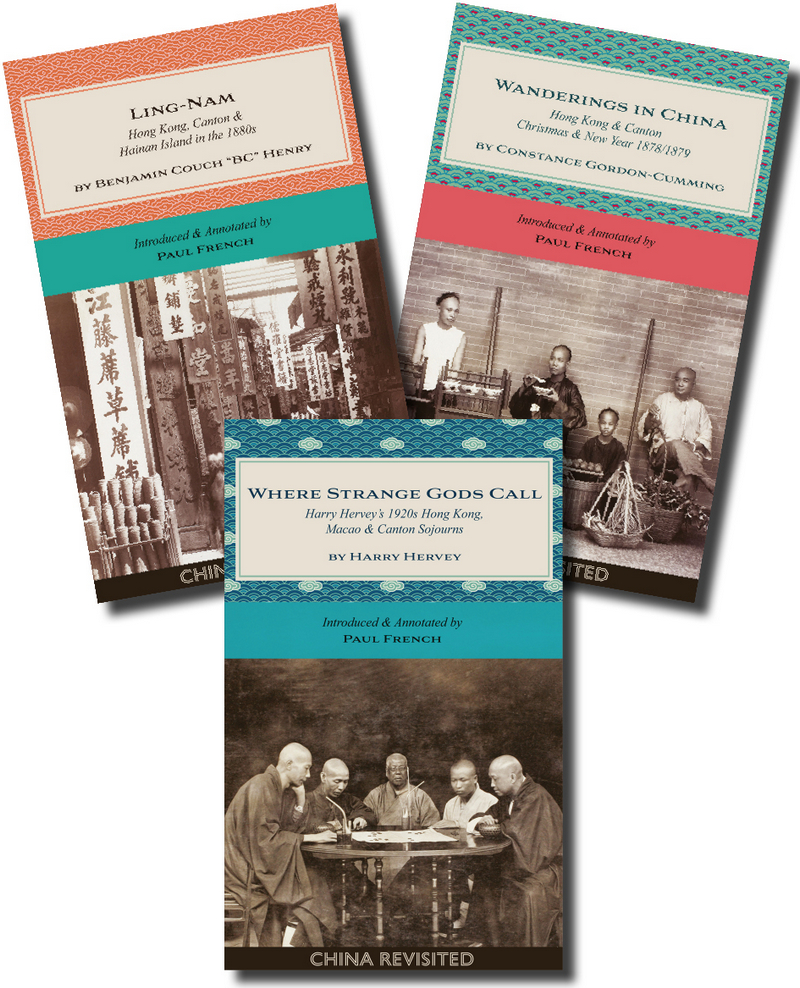
A video from the Royal Asiatic Society China of my talk on the launch of the China Revisited Series (from Blacksmith Books and avalable here) and a discussion with historian Jeremiah Jenne on rediscovering “lost” travel writing on China…click here to watch
China Revisited – Recovering Lost Travel Writing
China Revisited is a new series of rediscovered travel writing on China from the Victorian, Edwardian, and Interwar periods from local independent publisher Blacksmith Books. Each book is abridged, introduced and annotated by historian and author Paul French. The series aims to “recover” largely forgotten and invariably dismissed works that often perpetuate the cliches and stereotypes of their authors and times. Yet often the writing reveals moments in China’s history, providing snapshots of a country now forever changed. And problematic as these texts can be they do show us the terms of engagement and preoccupations of both westerners and Chinese in the nineteenth and first half of the twentieth centuries. This presentation looks at the first three books in the series and asks how we can best appreciate and understand these historic works through the lens of the second decade of the twenty-first century.
Heads Up – Thu, 30 Mar 2023 18:00 – 19:00 BST – Leeds University
Doing business in China right now can feel like an almost impossible task. Through Paul French and his Ultimate China Bookshelf, we can gain a better reading of the past and take away lessons that increase the chances of success in the future.
This will be a hybrid event. Register here to attend the talk in-person at the University of Leeds.
Working with The China Project former Shanghai businessman, historian and writer Paul French is building the Ultimate China Bookshelf – bookmarking titles that have stood the test of time and highlighting the wisdom in their pages.
The idea, apart from recovering some great books on China, is to help us all avoid over emphasis on the immediate specifics of the commercial landscape and think about:
how we can benefit from a collective memory of past experiences of foreign business in China, how we can indulge usefully in nostalgia,
how various administrations have formed the environment for foreign business,
how China’s current official narrative concurs and/or diverges from ours as foreign businesspeople.
Join us for a talk that will deliver practical recommendations as well as commentary on broader questions related to how we think about China. Details of how to attend/sign in here
Mar 28, 5:30 p.m.
Location: Vassar, Class of 1951 Reading Room, Main Library
A Multimedia Lecture by Musicologist Sophie Fetthauer, PhD of the University of Hamburg, Germany
Dr. Fetthauer’s lecture tells the little-known story of how over 400 Jewish refugee musicians from Europe during World War II were integrated into the cafés, nightclubs, and ballrooms of Shanghai, the so-called “Paris of the East.” The bars and restaurants in the Hongkou Ghetto, where most of these Jewish refugees settled, acquired the nicknames “Little Vienna” and “Little Berlin.”
Dr. Fetthauer is a scholar of musicology from the University of Hamburg, Germany, who has researched and authored numerous publications on music and musical life in the Third Reich focusing on biographies, institutional history, displaced person camps, and remigration, with a special focus on Jewish musicians in exile in Shanghai during World War II.