Join our panel of experts as they explore the long history of the Chinese people in Britain.
This is an online only event hosted on the British Library platform. Bookers will be sent a viewing link shortly before the event and will be able to watch at any time for 48 hours after the start time.
This event will be live captioned.
The Chinese presence in the UK goes back much further than many realise.
Our panel of experts and historians come together to explore this long history – from the first recorded presence in the 1600s, to trade during the 17th and 18th centuries, and from the Opium Wars, to the Chinese communities now calling Britain Home.
Footballer Frank Soo & author Ling Shuhua
Dr Hao Gao is Senior Lecturer in Imperial and Global History at the University of Exeter. He is a historian of British imperialism in Asia, China in global history, particularly the encounters between the British and the Chinese empires in the eighteenth and nineteenth centuries. Dr Gao is the author of Creating the Opium War and various research articles in both English and Chinese journals, including History, Historical Research, Journal of Imperial and Commonwealth History, and Britain and the World. He currently serves as the University’s Academic Director for the UK-China Humanities Alliance (UKCHA).
Julia Lovell is professor of modern China at Birkbeck, University of London. Her most recent book is Maoism: A Global History. She has translated many works of Chinese fiction into English, including for Penguin Classics Monkey King: Journey to the West and The Real Story of Ah Q and Other Tales of China: The Complete Fiction of Lu Xun. She co-curated the 2023 British Museum exhibition ‘China’s Hidden Century’.
Dr William Poole is a Tutor in English at New College, Oxford, where he is also Senior Tutor and Fellow Librarian. He is an expert in early modern literary, intellectual, and scientific history, and has interests in both early modern and modern education
Dr Anne Witchard is Reader in English Literature and Cultural Studies at the University of Westminster. She is the author of Lao She in London which situates the Chinese writer as a central figure of transcultural modernism, influenced by the collision of Chinese and British literary traditions. Other publications include, England’s Yellow Peril: Sinophobia and The Great War, and as a co-editor, Chiang Yee and his Circle: Chinese Artistic and Intellectual Life in Britain, 1930–1950. She is currently working on a book tracing Sino-British circuits of cultural exchange in the early twentieth century with a focus on performativity and dance.
Frances Wood studied Chinese at the universities of Cambridge, Peking and London. She was head of the Chinese collections in the British Library until retirement and her books include Did Marco Polo Go To China?, the Blue Guide to China, The Silk Road, No Dogs and Not Many Chinese: Treaty Port life in China 1843-1943 , Betrayed Ally: China in the Great War and The Diamond Sutra.
The British Library is a charity. Your support helps us open up a world of knowledge and inspiration for everyone.Donate today.
Details
Name:
The Chinese in Britain: A Long History
Where:
Online
When:
Thu 9 Mar 2023, 19:30 – 20:45
Price:
From £2.50 – £5 Members’ priority booking opens 31 January, general sale 1 February
Heads Up – I’ll be giving this workshop in Hong Kong on Sat, 11 March 2023, 13:00 – 14:30 HKT
The growth and popularity of family history means more people than ever are looking to use archives that reveal stories from China in the nineteenth and twentieth centuries.
Self publishing, podcasts, blogs and websites mean so many more unique and valuable histories are appearing. But how to go about finding the illusive details of trips, sojourns and lives in China?
Paul French, who has successfully recreated any number of old China stories from Beijing true crime to Shanghai high society to lost artist lives and hidden gangster underworlds reveals some of the tricks to tracking down those seemingly lost to history.
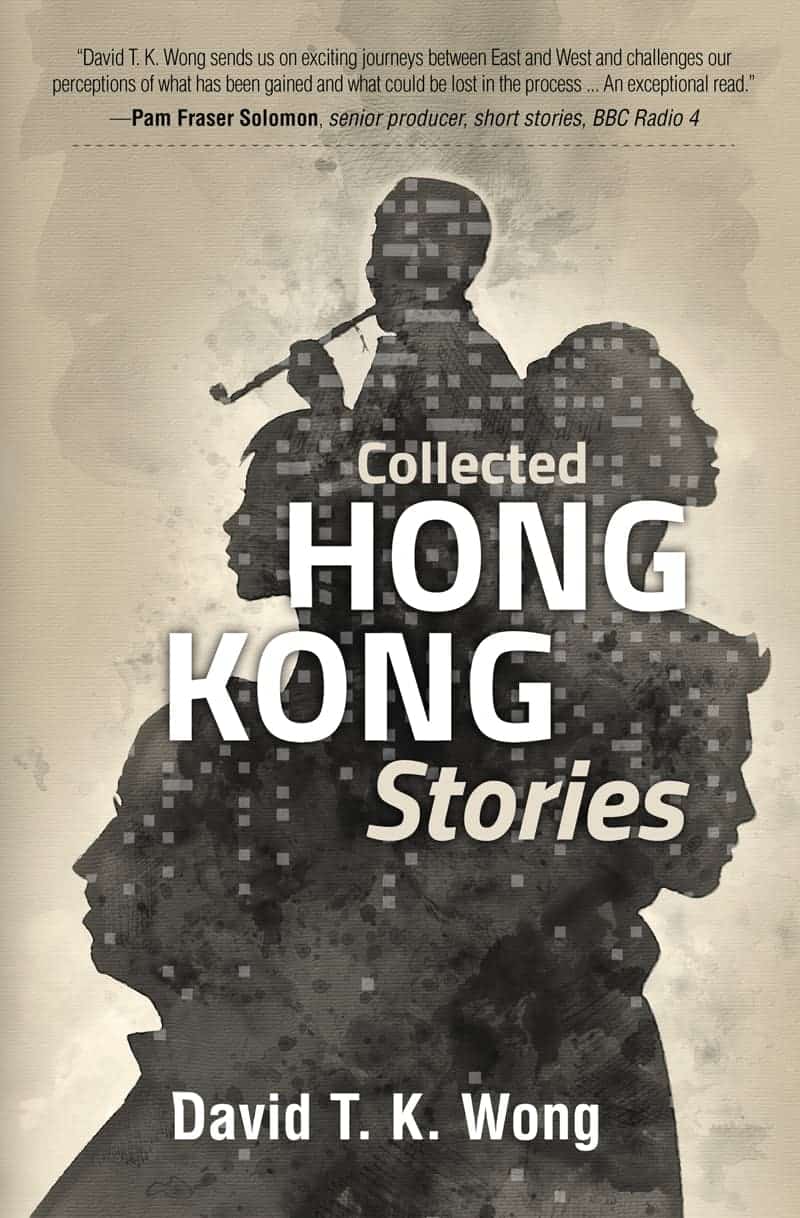
For an arresting mosaic of the great and complex metropolis known as Hong Kong – and an insight into what the people of the city live by and die for – a reader need look no further than the Collected Hong Kong Stories of David T. K. Wong.
Wong, a native son of this once British Crown Colony and now Special Administrative Region of China, has drawn upon his own experiences as a journalist, educator, government official and businessman to assemble a range of memorable characters for his tales. They range from barmen to labourers, from jockeys to expatriate bureaucrats, from scholars to tycoons, and each is infused with insights into the collective soul of the edgy, anomalous and perplexing place he finds himself.
These 18 stories are carefully crafted in the grand tradition of O. Henry, Maugham and Saki. Each has been individually published in a magazine or broadcast over radio in Britain, the United States, Hong Kong or elsewhere. They can be dipped into and savoured separately or feasted upon all in one go. Either way, the result can only be satisfying.
“David T. K. Wong is an exceptionally fluent writer whose compelling stories cover a wide range of themes. His talent sparkles, inveigles and mesmerizes.” – Sylvia Tankel, Editor of Short Stories International
Maurice Collis’s Foreign Mud (1946) is book 8 on my Ultimate China Bookshelf for The China Project. Click here.
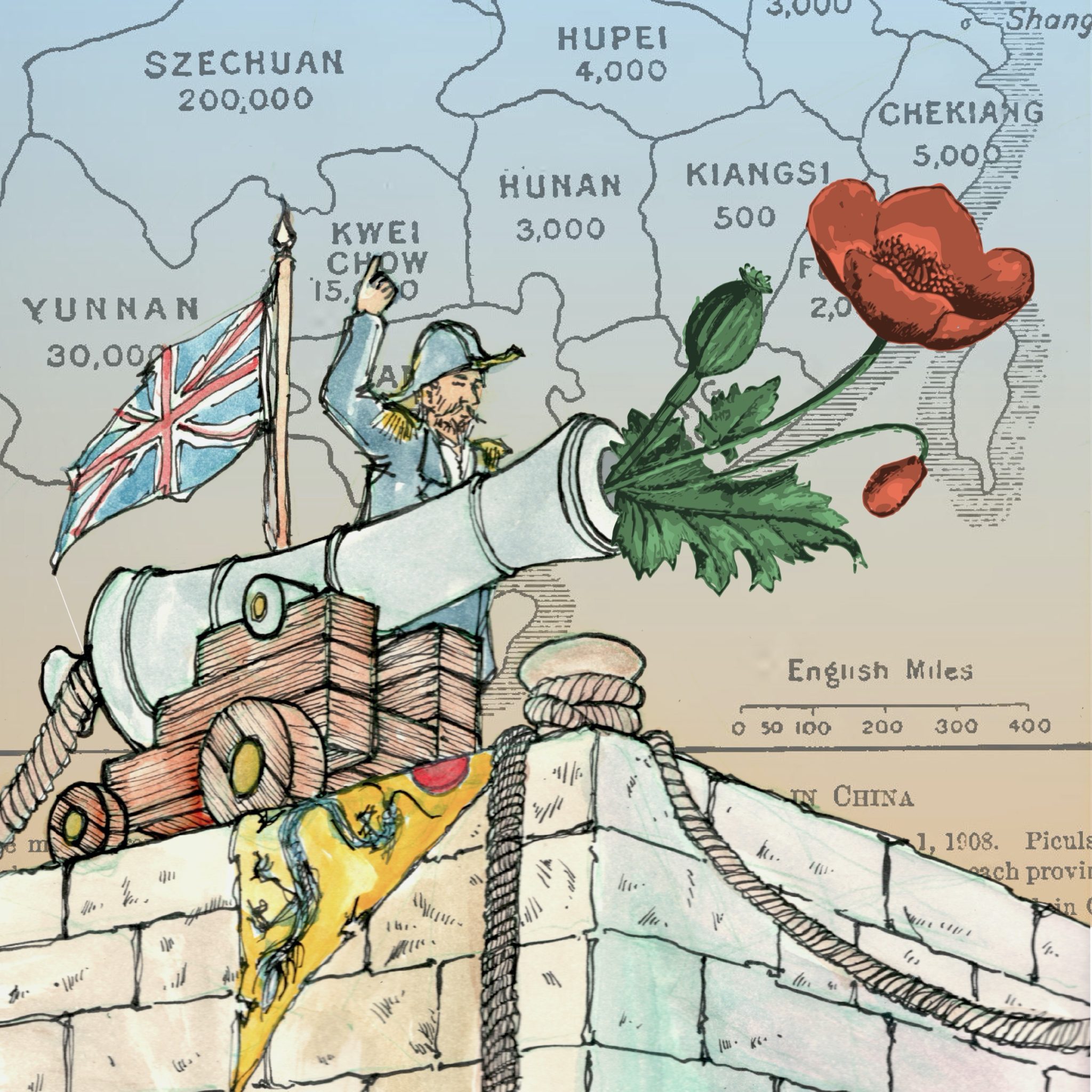
It’s essentially a historical recreation of the events (or “imbroglio,” as the British press often referred to it) surrounding the illegal trade of opium in Canton during the 1830s and the Opium Wars.
To understand China’s “outrage” and subsequent negotiating stances in trade disputes, we all need to understand the original — and nastiest — trade dispute of them all: the Opium Wars.
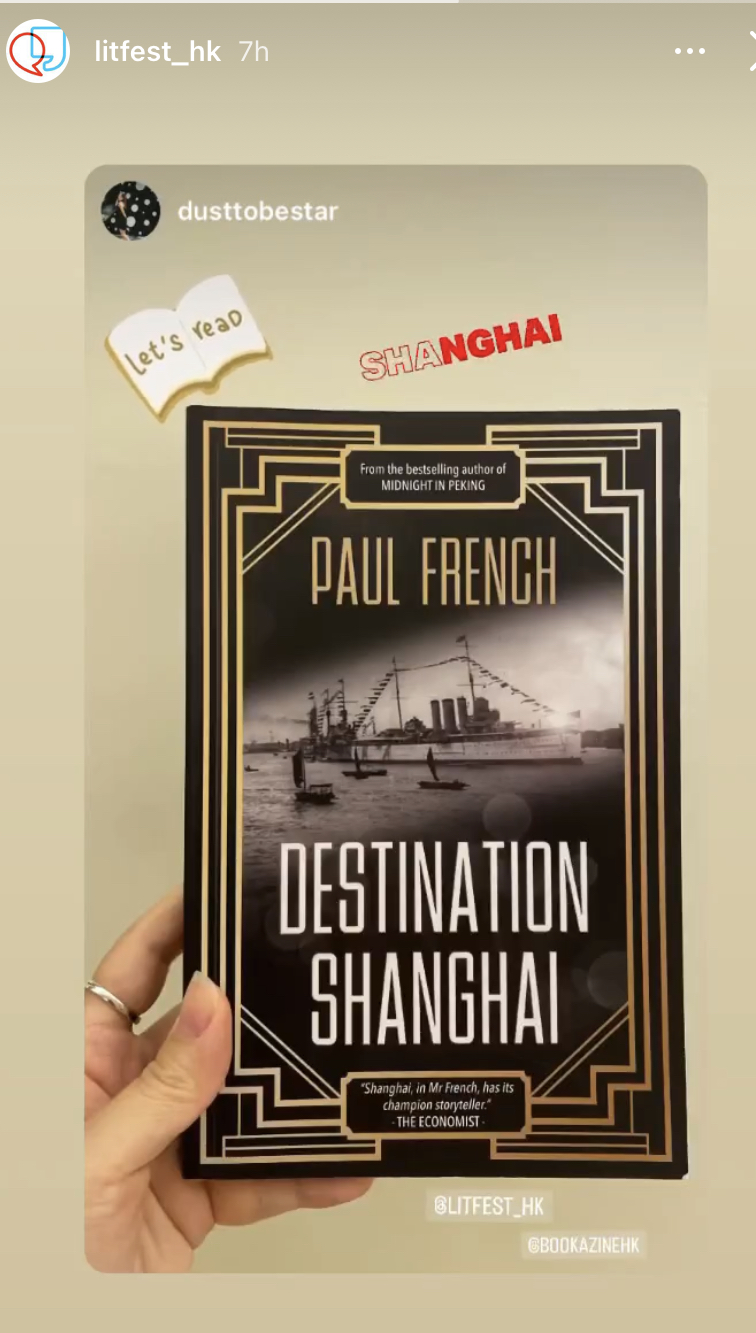
Just noting that my Destination Shanghai & Destination Peking collections (from Blacksmith Books of Hong Kong) are on the amazons as kindles for UK£5.99/US$7.99 (& you can’t expect indie publishers to do much better than that despite the ever downward price push of ebooks)
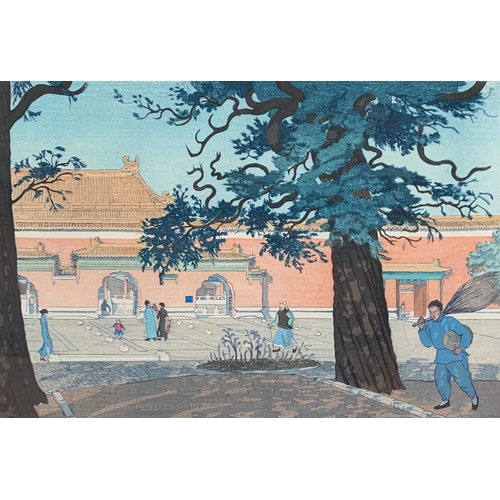
A Katharine Jowett painting that came up for auction recently (estimated at £400-600) I had not seen before – Forbidden City, Peking, 1935 – For more on Jowett see my article on her from the South China Morning Post last year (here)…
A candid, rollicking literary travelogue from a pioneering New Yorker writer, an intrepid heroine who documented China in the years before World War II. The blurb below, by the way, is from the RAS Shanghai (you may very well agree, I could not possibly comment, as Francis Urqhart used to say….)….
Deemed scandalous at the time of its publication in 1944, Emily Hahn’s now classic memoir of her years in China remains remarkable for her insights into a tumultuous period and her frankness about her personal exploits. A proud feminist and fearless traveler, she set out for China in 1935 and stayed through the early years of the Second Sino-Japanese War, wandering, carousing, living, loving and writing.
Many of the pieces in China to Me were first published as the work of a roving reporter in the New Yorker. All are shot through with riveting and humanizing detail. During her travels from Nanjing to Shanghai, Chongqing, and Hong Kong, where she lived until the Japanese invasion in 1941, Hahn embarks upon an affair with lauded Chinese poet Shao Xunmei; gets a pet gibbon and names him Mr. Mills; establishes a close bond with the women who would become the subjects of her bestselling book The Soong Sisters; battles an acquired addiction to opium; and has a child with Charles Boxer, a married British intelligence officer.
In this unflinching glimpse of a vanished world, Hahn examines not so much the thorny complications of political blocs and party conflict, but the ordinary – or extraordinary – people caught up in the swells of history. At heart, China to Me is a self-portrait of a fascinating woman ahead of her time.
Author, historian and Fellow of the Royal Asiatic Society, Uther Charlton-Stevens, will talk with writer Paul French about his book Anglo-India and the End of Empire. Learn about the lives of luminaries from mixed communities of European and Asian descent that existed throughout Asia as a result of western colonial trading systems.
Anglo-Chinese Eurasians such as businessman Sir Robert Hotung in Hong Kong, identified himself as Chinese despite his generous support of fellow Eurasians. In contrast, India’s Eurasians, known as Anglo-Indians, almost always saw themselves as more British than Indian. Yet famous examples Merle Oberon and Boris Karloff hid their Anglo-Indian roots, enabling them to rise to fame. Hear their stories for the first time in this riveting session.
Uther Charlton-Stevens is an author, historian and Fellow of the Royal Asiatic Society. His latest book, Anglo-India and the End of Empire, was released by Hurst Publishers in London and Oxford University Press in New York towards the end of 2022. Rights to the South Asia edition have been sold to HarperCollins India. Charlton-Stevens grew up in Hong Kong before returning to the UK to study at the University of Oxford and the London School of Economics. His writing draws inspiration from the stories told to him in childhood by his Anglo-Indian grandmother, including of her time as an officer in the Women’s Auxiliary Corps in India during the Second World War.
Historian Paul French was born in London and lived and worked in Shanghai for many years. He has contributed to many publications around the world, including the China Economic Quarterly and The Guardian and has written various books about China. His novel Midnight in Peking was a New York Times bestseller, and this and his most recent book, City of Devils: A Shanghai Noir are currently being developed as movies. He is a regular contributor of long-reads to the South China Morning Post weekend magazine and broadcasts often on RTHK3. He is currently working on a biography of the year that Wallis Warfield Spencer, later the Duchess of Windsor, spent in China (1924/1925) for publication in 2024.