Fimmaker Robin Lung, who made the fantastic Finding Kukan documentary a few years ago, has a new project.
Robin has made a a short documentary I produced on photojournalist Nancy Bannick and her effort to preserve Honolulu’s Chinatown in the face of devastating urban renewal projects in the 1960s and 70s, will premiere at the Hawaiʻi International Film Festival on November 12 at 2pm at the Honolulu Museum of Art’s Doris Duke Theater. It will also be available to stream online November 14-27. NANCY BANNICK: SAVING HONOLULU’S CHINATOWN is part of a terrific slate of films in HIFF’s “Looking Back” series that features another Chinatown short by Kimberlee Bassford, a short on the history of Kapaʻa town on Kauaʻi, and a tribute to the late photographer Corky Lee. The four films should generate really great discussion afterwards, so I hope you can join me at the theater. If not you can access all of the films online with a virtual HIFF ticket or online pass. Be sure to check out the full program at HIFF because there are wonderful Hawai’i made films that are sure to interest many of you.
Chloe Gong’s Foul Lady Fortune is a rare beast – very readable Shanghai 1930s-set YA fiction.
From the #1 New York Times bestselling author of These Violent Delights comes the first book in a captivating new duology following an ill-matched pair of spies posing as a married couple to investigate a series of brutal murders in 1930s Shanghai.
It’s 1931 in Shanghai, and the stage is set for a new decade of intrigue.
Four years ago, Rosalind Lang was brought back from the brink of death, but the strange experiment that saved her also stopped her from sleeping and aging – and allows her to heal from any wound. In short, Rosalind cannot die. Now, desperate for redemption for her traitorous past, she uses her abilities as an assassin for her country.
Code name: Fortune.
But when the Japanese Imperial Army begins its invasion march, Rosalind’s mission pivots. A series of murders is causing unrest in Shanghai, and the Japanese are under suspicion. Rosalind’s new orders are to infiltrate foreign society and identify the culprits behind the terror plot before more of her people are killed.
To reduce suspicion, she must pose as the wife of another Nationalist spy, Orion Hong. Although Rosalind finds Orion’s cavalier attitude and playboy demeanour infuriating, she is willing to work with him for the greater good. But Orion has an agenda of his own, and Rosalind has secrets that she wants to keep buried. As they both attempt to unravel the conspiracy, the two spies soon find that there are deeper and more horrifying layers to this mystery than they ever imagined.
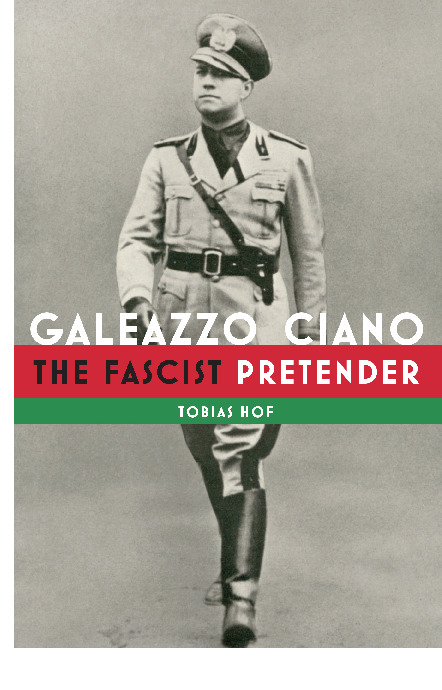
An interesting little anecdote I came across in Tobias Hof’s Galeazzo Ciano: The Fascist Pretender, the bio of Mussolini’s son-in-law, Foreign Minister and, between 1930 and 1933, Consul in Shanghai.
Apparently Ciano had been able to do many favours to the radio pioneer Marconi before going to Shanghai. Radio and telegram links bewtween Italy and China were not great and lagged behind those to Britain and America. Mussolini wished to regularly hear from his daughter Edda (Ciano’s wife and pregnant in Shanghai) while also wanting news of deals Ciano was doing to sell Italian aircraft and munitions to China. So Marconi was called upon to seriously upgrade radio communications between Rome and Shanghai. It was such a big deal the New York Times, in 1932, reported that Il Duce was now able to talk to his duaghter in far away Shanghai (click here)
Jennifer Dobbs’s book Lost in China is the true story of two Anglo-American children separated from their parents in China during World War II, and their unforgettable journey to America a year later. The Dobbs family lived in Shanghai in the late 1930s, where the children spoke Mandarin and Jennifer rode to school in a rickshaw. As war progresses, the family travels to heavily bombed Chungking, through mountains harboring bandits, and on the dangerous Burma Road. When their mother and father fly to Hong Kong on a short trip and get caught up in the Japanese attack, the Dobbs children are left parentless, with no idea when their parents will return—or if they are even still alive.
For a year, the children remain in Western China, and the two are separated when John is taken to stay with another family, where he survives a near-drowning incident. Finally, after spending a month traveling three-quarters of the way around the world via the US military’s World War II ferry routes, they reunite with their mother in a rain-swept, deserted airfield in Washington, DC—and face a shocking discovery about their father. Lost in China is both a riveting firsthand account of a family broken apart in World War II China and a daughter’s tribute to her beloved father.
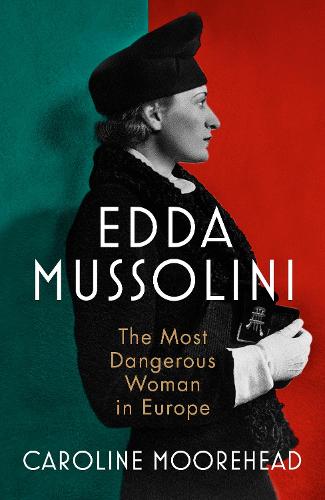
A fascinating little historical detail from Caroline Moorehead’s jbiogust published biography of Edda Mussolini (wife of Count Galaezzo Ciano, the former Italian Consul to Shanghai). In late 1943 after the Armistice of Cassibile signed on 3 September 1943 between the Kingdom of Italy and the Allies resulting in Italy joining the Allies and what the Germans believed to be the betrayal of Germany by Italy, Count Ciano and Edda fled to Germany – Munich to be precise. There, they thought, Hitler would provide them with identities and smuggle them out to South America. They did take new passport photos – Ciano, with a fake moustache, was told he would be an Argentinian of Italian descent. Edda was to have a new life as “Margaret Smith”, an English woman born in Shanghai. As Edda had loved their time in Shanghai (though not Ciano’s constant womanising) she might just of got away with it – though her resemblance to her father might have been an issue!
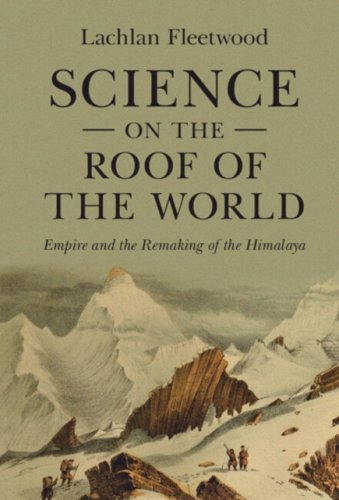
When, how, and why did the Himalaya become the highest mountains in the world? In 1800, Chimborazo in South America was believed to be the world’s highest mountain, only succeeded by Mount Everest in 1856. Science on the Roof of the World tells the story of this shift, and the scientific, imaginative, and political remaking needed to fit the Himalaya into a new global scientific and environmental order. Lachlan Fleetwood traces untold stories of scientific measurement and collecting, indigenous labour and expertise, and frontier-making to provide the first comprehensive account of the East India Company’s imperial entanglements with the Himalaya. To make the Himalaya knowable and globally comparable, he demonstrates that it was necessary to erase both dependence on indigenous networks and scientific uncertainties, offering an innovative way of understanding science’s global history, and showing how geographical features like mountains can serve as scales for new histories of empire.
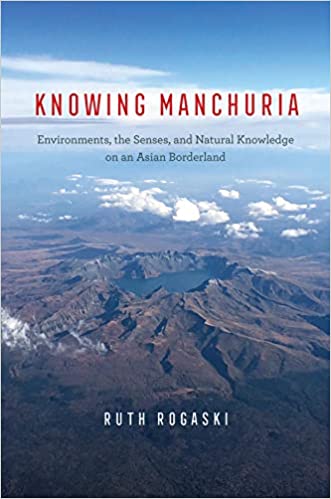
Ruth Rogaski’s Knowing Manchuria is a fascinating new study of the region mixed with some very strange tales…
According to Chinese government reports, hundreds of plague-infected rodents fell from the skies over Gannan county on an April night in 1952. Chinese scientists determined that these flying voles were not native to the region, but were vectors of germ warfare, dispatched over the border by agents of imperialism. Mastery of biology had become a way to claim political mastery over a remote frontier. Beginning with this bizarre incident from the Korean War, Knowing Manchuria places the creation of knowledge about nature at the center of our understanding of a little-known but historically important Asian landscape.
At the intersection of China, Russia, Korea, and Mongolia, Manchuria is known as a site of war and environmental extremes, where projects of political control intersected with projects designed to make sense of Manchuria’s multiple environments. Covering more than 500,000 square miles, Manchuria’s landscapes include temperate rainforests, deserts, prairies, cultivated plains, wetlands, and Siberian taiga. With analysis spanning the seventeenth century to the present day, Ruth Rogaski reveals how an array of historical actors―Chinese poets, Manchu shamans, Russian botanists, Korean mathematicians, Japanese bacteriologists, American paleontologists, and indigenous hunters―made sense of the Manchurian frontier. She uncovers how natural knowledge, and thus the nature of Manchuria itself, changed over time, from a sacred “land where the dragon arose” to a global epicenter of contagious disease; from a tragic “wasteland” to an abundant granary that nurtured the hope of a nation.
Had a great conversation with Adam Brookes about his new book Fragile Cargo, arranged by the Royal Asiatic Society Beijing, who have now loaded it up on Youtube if anyone’s interested…