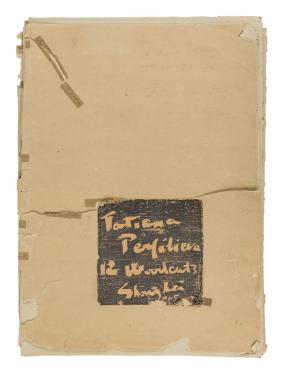
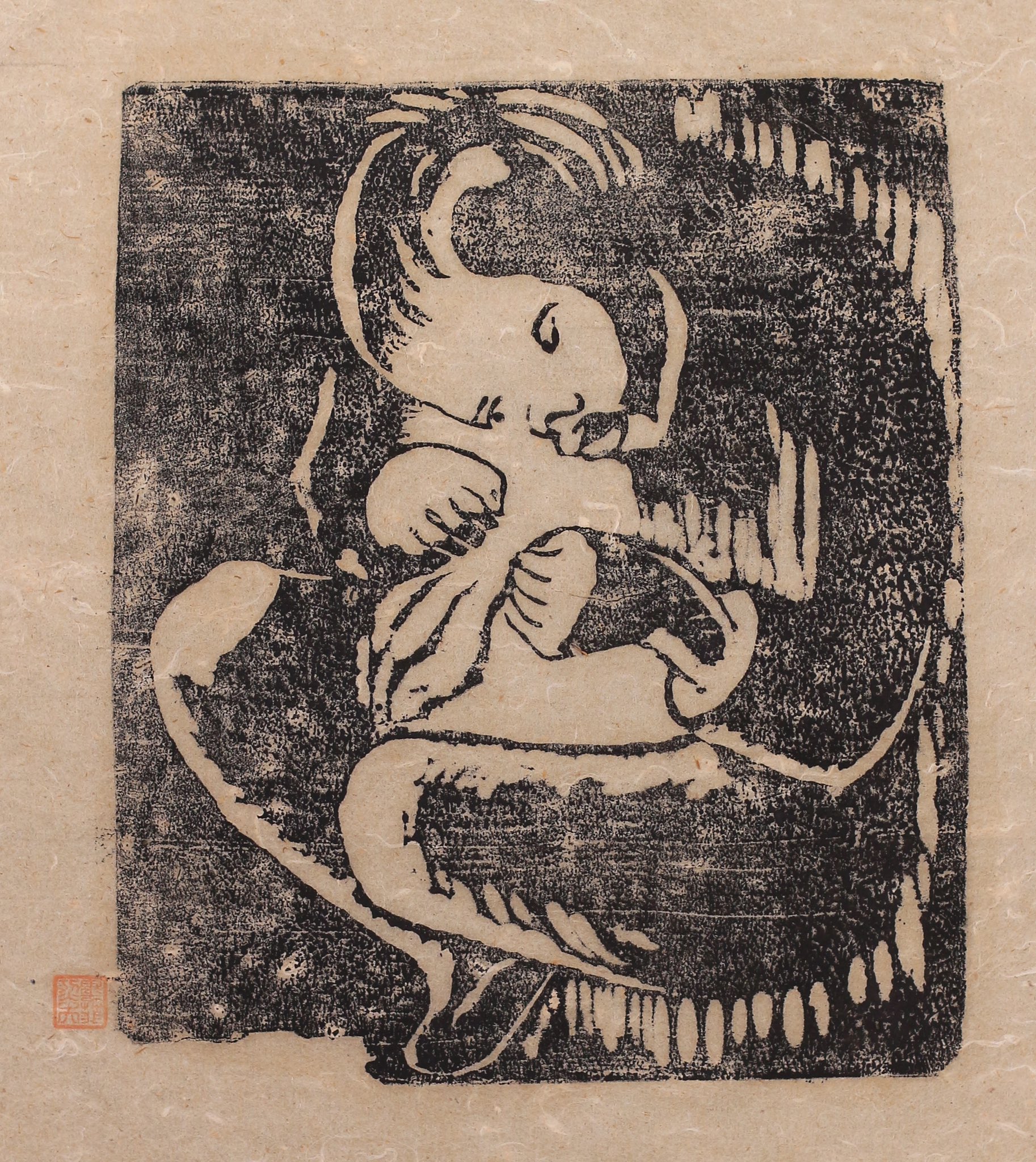
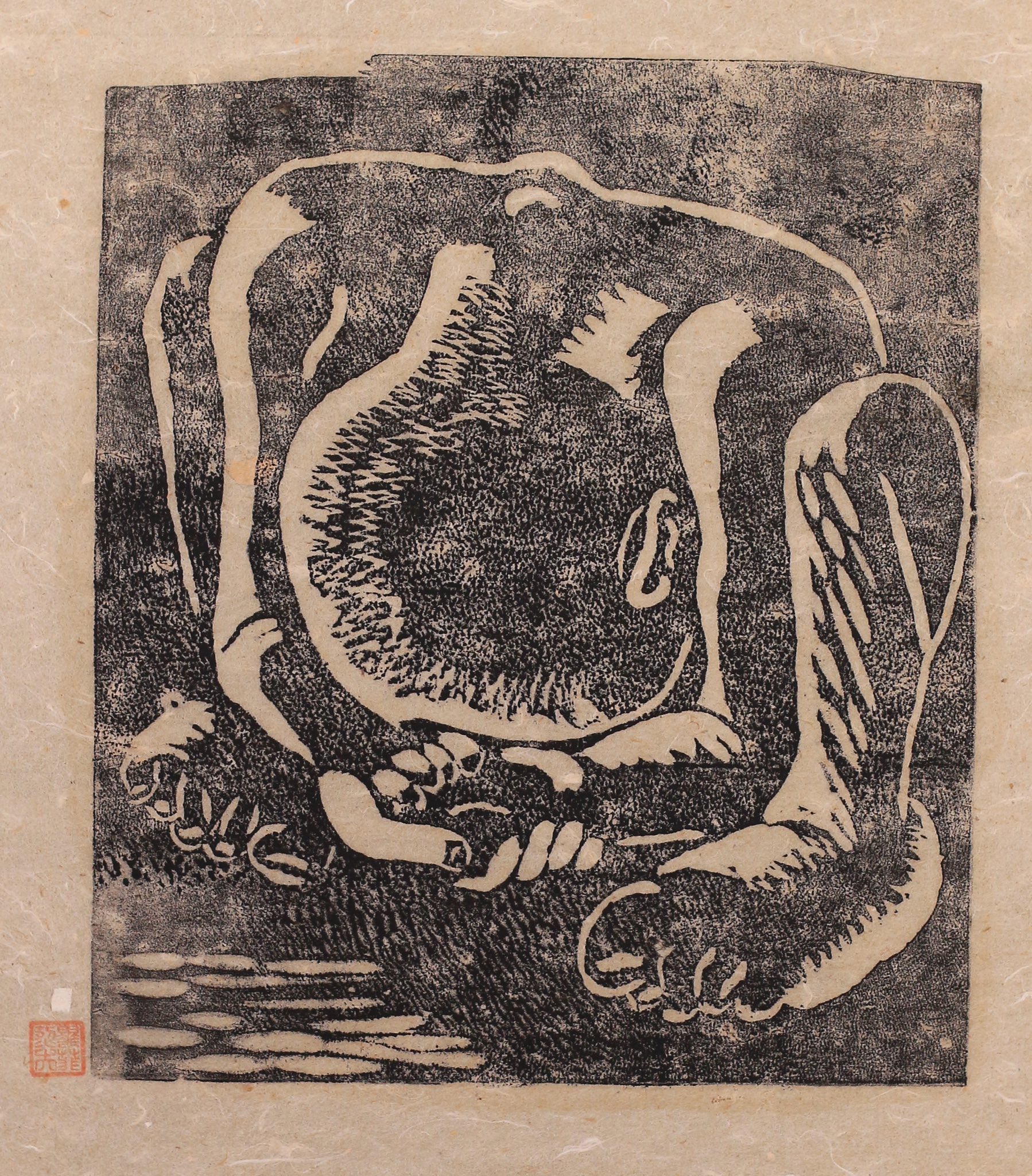
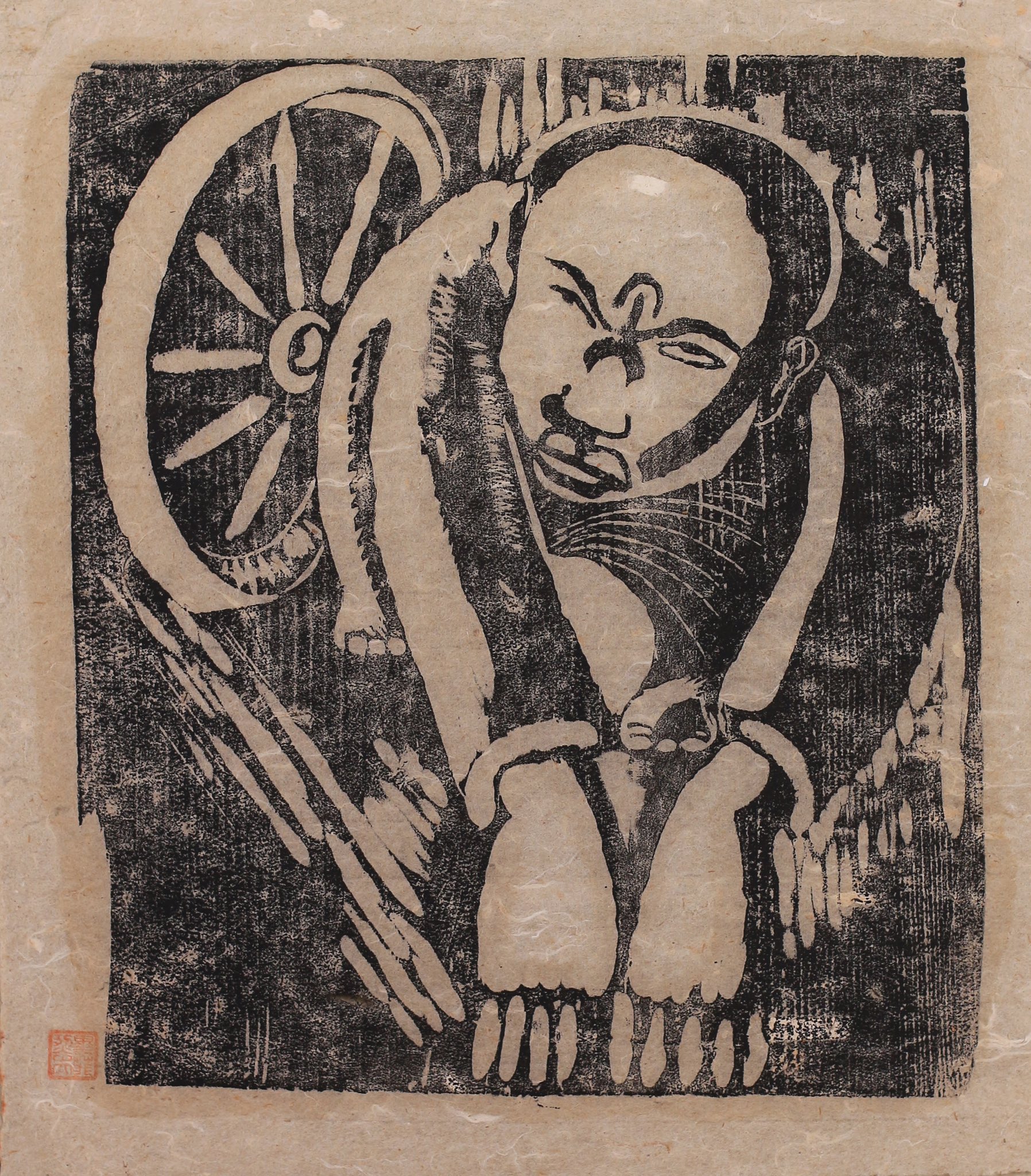
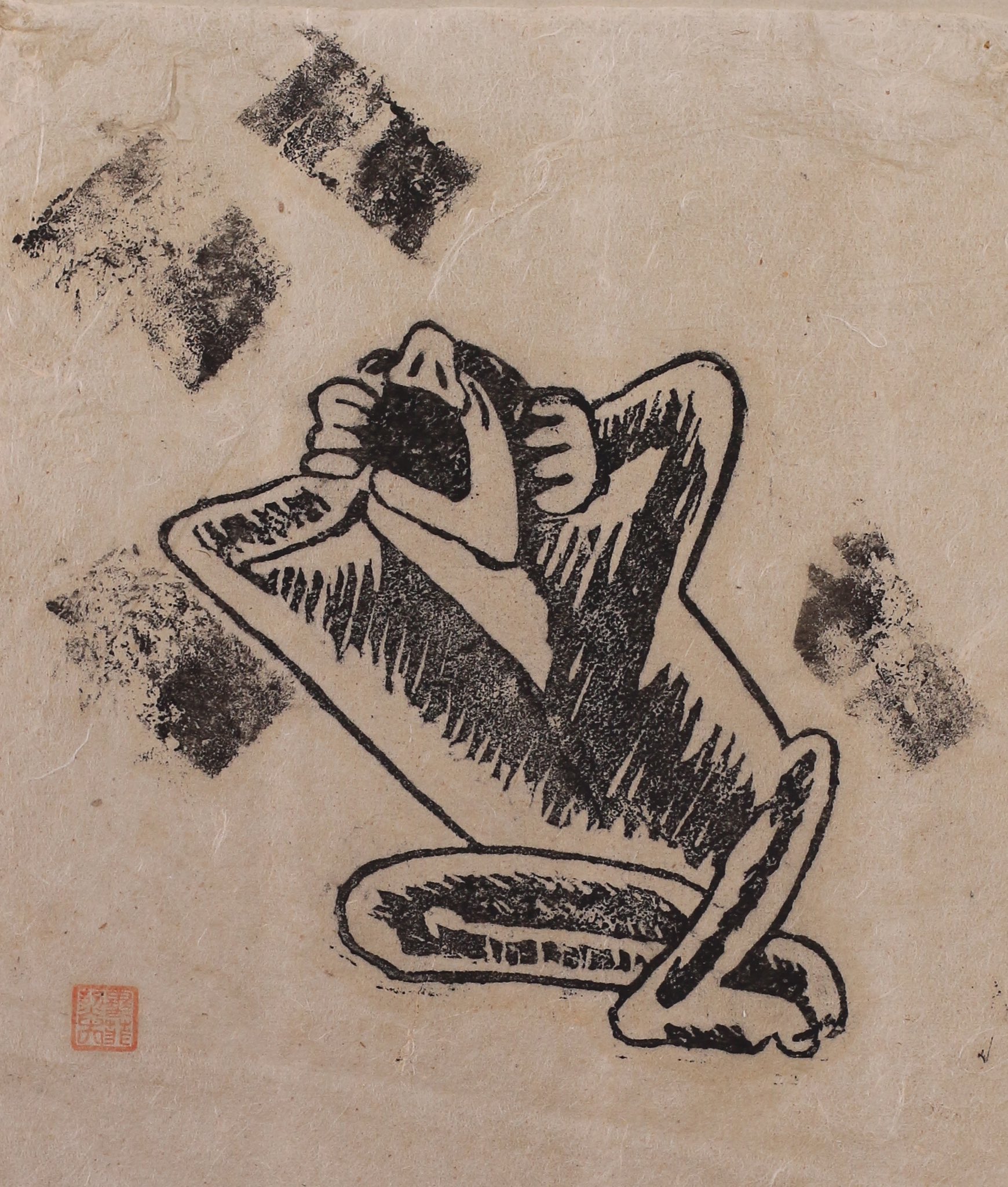
Apparently, Tatiana Perfitieva was a Jewish Russian emigre in Shanghai. During the war she produced a number of startling woodcuts that show the anguish and horror of the conflict in China. They are woodcut plates on rice paper, tipped to thick backing paper, signed in pencil by the artist, along with a Chinese chop in red. I am afraid I know nothing else about the artist, her background or experiences in China, so any information welcome….
30 June will mark two years since China passed its draconian national security law on Hong Kong. In our latest issue, Evan Fowler looks at ‘the regression of Hong Kong’s freedoms under Beijing’s rule’ but also the deep-standing inequality that has always plagued the city state. In his review of Mark L. Clifford’s Today Hong Kong, Tomorrow the World: What China’s Crackdown Reveals about Its Plans to End Freedom Everywhere, Fowler highlights both the colonial underpinnings where ‘London and Beijing are shown to be distant masters, with Hong Kong and its people perpetual colonial subjects’ and an elite who, ‘highly sensitive to where power lies, have seamlessly switched to serving their new masters.’ What has been lost, ultimately, are more freedoms.
Where do diminishing freedoms leave artists? An interview with the indomitable Chinese writer Yan Lianke might offer some hope. Once a soldier and propagandist, Yan is now one of China’s most controversial and celebrated writers. Despite the censorship of his work within his own country, he says: ‘I am glad that I became a professional writer, which has meant no longer having to live a life in which I am one person by day and another person by night.’
Why does Singapore remain so stubbornly attached to the death penalty? Ken Kwek profiles the journalist Kirsten Han, who lives a second life as an anti-death penalty campaigner. As much as her work focuses on legislative change, it’s a job that entails the gruelling emotional labour of ‘offering solace to those dreading an imminent execution.’ And it has carried no small price for Han whose ‘willingness to criticise laws she views as regressive or unjust within a climate of growing authoritarianism has repeatedly placed her in the crosshairs of powerful figures.’
Also in this issue,Rowena Abdul Razak offers a tribute to her extraordinary uncle: a Penang boy who grew up to be a couturier in Paris. Greg Lockhart reviews a book on Australian foreign policy since the Second World War. Thomas A. Bass considers the role of photography in the Vietnam War. Yuan Yi Zhu ponders the usefulness of China’s aggressive brand of diplomacy in his review of China’s Civilian Army: The Making of Wolf Warrior Diplomacy. Rhoda Feng tells the remarkable story of the development of the Chinese typewriter. Ally Le reviews the long-awaited translation of Chinatown by the Vietnamese novelist Thuận. Xu Xi on the quinessential Hong Kong writer Dung Kai-cheung.
And for those who remain home-bound, Khan Sokummono meanders through Phnom Penh’s hidden laneways in search of a book while Pim Wangtechawatspeeds through Bangkok’s sois to introduce a new love to a favourite delicacy, Nick J. Freeman takes a ride on the new train line linking China to Laos, whileSam Vincent takes us to his farm in Australia.
Yamanka Sadajiro was a major force in the world of Chinese and Japanese antiques and curios in the first half of the twentieth century. Although he was from Osaka and started dealing Japanese objet he soon moved to specialise in Chinese items and opened an acquisitions office in Peking. As well as New York and Boston, and later various other American locations – Chicago, Maine etc – Yamanka had a successful and long running London branch that operated from 1900 to WW2. It was based at 127 New Bond Street, a building that still exists. Some photos below….
PS: there is a chapter on Yamanaka and his family business in Chang Qing and Huang Shan’s The Great Plunder
Just a quick one – Heard In Our Time on BBC R4 the other day (still on BBC Sounds if you missed it) on Li PO/Li Bai. Both panellists Tian Yuan Tan & Frances Wood read some Li Bai in Chinese – I think the last person who did that on BBC radio was Chiang Yee on BBC North in 1938, as noted in…Donald Boyd, Regional Director of BBC North, reported that he had auditioned Chiang but felt his English was not ‘good enough to read translations of his poetry’, but that he could read them in Chinese and this might work in ‘a highbrow poetry space’. Tian Yuan Tan & Frances Wood got to do their own translations in 2022. You can listen to the programme on Tang Dynasty poetry here.
During the Cold War, the People’s Republic of China used Switzerland as headquarters for its economic, political, intelligence, and cultural networks in Europe. Based on extensive research in Western and Chinese archives, China’s European Headquarters charts not only how Switzerland came to play this role, but also how Chinese networks were built in practice, often beyond the public face of official proclamations and diplomatic interactions. By tracing the development of Sino-Swiss relations in the Cold War, Ariane Knüsel sheds new light on the People’s Republic of China’s formulation and implementation of foreign policy in Europe, Latin America and Africa and Switzerland’s efforts to align neutrality, humanitarian engagement, and economic interests.
I’m sorry but I really can’t remember who sent me this wonderful card for the Goose Cafe? If you did please get in touch and i’ll credit you. I don’t know the date, but i’m guessing late 1930s/40s given the accent on the Japanese entertainment. The Cafe was up in the (by the late 1930s) Japanese-controlled Northern Shanghai. North Szechuen Road (Sichuan Road North) was by the 1940s home to any number of nightclubs, bars and cabarets catering to Japanese soldiers in Shanghai – every Japanese soldier in the China war was promised some R&R in Shanghai rather like Nazis and Paris. The the Blue Bird Dance Hall and Cafe Lion both played jazz, performed by exiled Japanese jazz bands, much enjoyed by many of the Japanese officer class though forbidden back home.
Anyway, the Goose Cafe was on the long North Szechuen Road up by the junction with Barchet Road (Xinxiang Road). I’d like to know more about the manager “C. Ruth” if anyone happens to know?
China today is one of the world’s most powerful nations, yet just a century ago it was a crumbling empire with literacy reserved for the elite few, left behind in the wake of Western technology. In Kingdom of Characters , Jing Tsu shows that China’s most daunting challenge was a linguistic one: to make the formidable Chinese language – a 2,200-year-old writing system that was daunting to natives and foreigners alike – accessible to a globalized, digital world.
Kingdom of Characters follows the bold innovators who adapted the Chinese script – and the value-system it represents – to the technological advances that would shape the twentieth century and beyond, from the telegram to the typewriter to the smartphone. From the exiled reformer who risked death to advocate for Mandarin as a national language to the imprisoned computer engineer who devised input codes for Chinese characters on the lid of a teacup, generations of scholars, missionaries, librarians, politicians, inventors, nationalists and revolutionaries alike understood the urgency of their task and its world-shaping consequences.
With larger-than-life characters and a thrilling narrative, Kingdom of Characters offers an astonishingly original perspective on one of the twentieth century’s most dramatic transformations.