This is an in-depth study of the intellectual, technical, and artistic encounters between Europe and China in the late eighteenth century, focusing on the purposeful acquisition of information and images that characterized a direct engagement with the idea of “China.”
The central figure in this story is Henri-Léonard Bertin (1720–1792), who served as a minister of state under Louis XV and, briefly, Louis XVI. Both his official position and personal passion for all things Chinese placed him at the center of intersecting networks of like-minded individuals who shared his ideal vision of China as a nation from which France had much to learn. John Finlay examines a fascinating episode in the rich history of cross-cultural exchange between China and Europe in the early modern period, and this book will be an important and timely contribution to a very current discussion about Sino-French cultural relations.
John Finlay is an associate scholar with the Centre d’études sur la Chine moderne et contemporaine (CECMC).
I’ve been meaning to ut this up for a while as a curiousity. In 2021 I co-wrote the BBC Radio 3 docu-drama Peking Noir, now a 6-part podcast (available here) about Shura Sosnitsky/Giraldi the mercurial Russian emigre intersex nightclub dancer/owner in Peking. Shura started as a character in my book Midnight inPeking and Peking Noir (co-written with Sarah Wooley) was an attempt to find out more about the character and, to be honest, speculate a bit too.
One major source on Shura was old Pekinger John Blofeld’s 1961 memoir City of Lingering Spendour. In that book he talks about meeting Shura, presenting at different times both as male and female. For Shura’s backstory – raised as a girl in pre-revolutionary Tomsk, fleeing to Harbin and then Peking, aspects of Shura’s dual personality and rumours of criminal lifestyle etc – Blofeld cites a knowledgable friend under the psyeudonym “Bill Luton”. Who was “Bill Luton”?
Bill Luton’s identity is quite important as he reveals a lot of information on Shura, Peking’s 1930s underworld, gay, and Russian emigre community. Can we trust “Bill Luton”? Well, quite possible would be my conclusion. Luton was in reality Robert “Bob” Winter, an American literature scholar who spent many years in China (his full obituary is here). Winter moved to China to teach at Southeastern University in Nanjing in 1923. In about 1926 he moved to Peking to develop the first full-fledged English literature and language program in China at the new Qinghua University. He stayed in Peking after the Japanese invasion in 1937 and so was certainly there throughout Shura’s time in the city and Blofelds. He also returned to Peking in 1946 and stayed after the revolution. Shura returned to the city in late 1945 or 1946, probably from Shanghai, and stayed until the Communist forced his deportation to the USSR after which he disappers (most probably killed soon after arriving back in the coutnry he fled in 1921 or in a gulag).
Robert “Bob” Winter
Winter was gay so would have moved within the 1930s demimonde where Shura was well known. he was connected and a gossip. He was also very left wing and pro-communist though of course this didn’t help him later – in 1968, during the Cultural Revolution, Red Guards ransacked his home, destroyed his books and letters, including some from Ezra Pound, and held him in detention for three months. He eventually died at 100 in 1987 in Beijing.
Now published Chiang Yee and His Circle: Chinese Artistic and Intellectual Life in Britain, 1930–1950HK$390 if you use the code below – do tell your uni or other librariesOn Apr 25–29, enter “ETS22” to get online offer at 35% off (Books ordered online will be shipped to your address) or get 30% off at HKUP Bookshop!
This book, Chiang Yee and His Circle: Chinese Artistic and Intellectual Life in Britain, 1930–1950, celebrates the life and work of Chiang Yee (1903–1977), a Chinese writer, poet, and painter who made his home in London, England during the 1930s and 1940s. It examines Chiang’s relationship with his circle of friends and colleagues in the English capital, and assesses the work he produced during his sojourn there. This edited volume, with contributions from eleven distinguished scholars, tells a story of a Chinese intellectual community in London that up to now has been largely overlooked. It portrays a dynamic picture of the London-based émigré life during the years that led up to the war and during the conflict that was the catalyst for many of them moving on. In addition, the book broadens our understanding of cultural interactions between China and the West in Hampstead, one of the most vibrant artistic communities in London.
Paul Bevan is Departmental Lecturer in Modern Chinese Literature and Culture at the University of Oxford.
Anne Witchard is Reader in English Literature and Cultural Studies at the University of Westminster.
Da Zheng is Professor Emeritus of English at Suffolk University, Boston.
Contributors:
Sarah Cheang is Head of Programme in History of Design at the Royal College of Art, London.
Craig Clunas is Professor Emeritus of the History of Art at the University of Oxford.
Paul French is the author of the books Midnight in Peking and City of Devils: A Shanghai Noir.
Ke Ren is Assistant Professor of Chinese/East Asian History at the College of the Holy Cross (Massachusetts).
Tessa Thorniley is an independent researcher whose work focuses on writers of Chinese heritage who have lived and worked in Britain.
Frances Wood is the retired Curator of the Chinese Collections in the British Library.
Diana Yeh is Associate Dean of Equality, Diversity and Inclusion in the School of Arts and Social Sciences, City University of London, and Senior Lecturer in Sociology, Culture, and the Creative Industries in the Department of Sociology.
‘Control your soul’s desire for freedom’ – Shanghai Party drone. ‘In a completely sane world, madness is the only freedom’ Shanghai-born JG Ballard When a city and a writer were eternally made for each other!
Shanghai-born Ballard is so instructive as to how you get to sealed apartment blocks ridiculously called silly names like ‘Rich Paradise’ or ‘Evergreen Forest’ and drones saying ‘control the soul’s desire for freedom’ repeatedly across the city. He was so far ahead of us all and it came from growing up on Xinhua Lu…a little audio for the locked down…
Ballardian Dystopias in Wartime Shanghai – JG Ballard’s Hidden Shanghai
Regular readers will know I am interested in the various foreign artists (largely women) who worked, or at least sojourned, in Nothern China, Korea and Japan in the first half of the twentieth century. Examples include Americans Helen Hyde, Lilian May Miller and Bertha Lum (see an essay on her in my collection Destination Peking), along with Scottish artists Elizabeth Keith and Anna Hotchkins. I have written a little more extensively on the Peking-based British artist Katharine Jowett in the South China Morning Post. Though many skecthed and did oil and water colours, most worked in wood and lino cuts as most shared interest in shin-hanga, or the“new prints” movement in Japanese art.
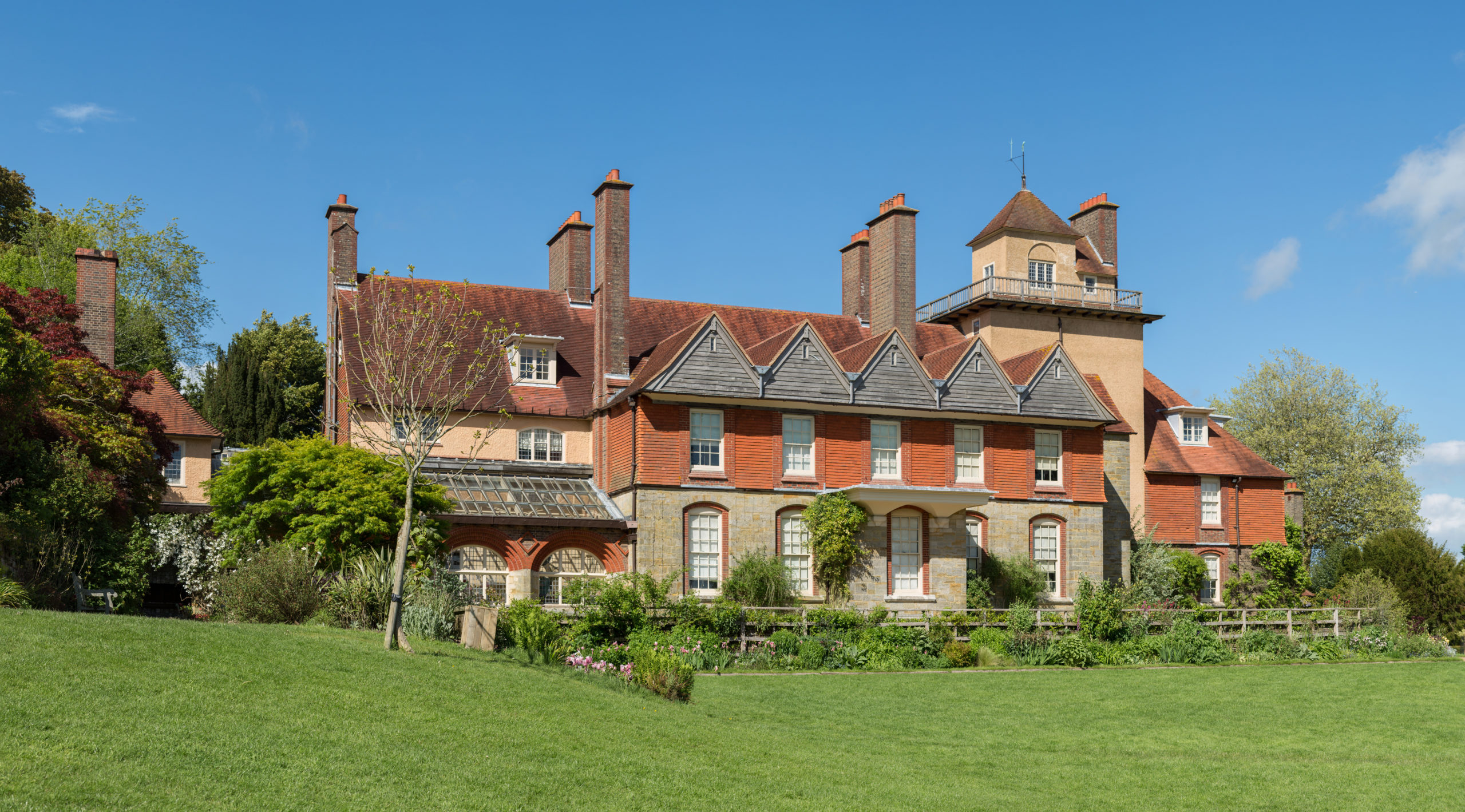
Anyway, a visit to the National Trust property Standen near East Grinstead, West Sussex. James and Margaret Beale chose this idyllic location with views across the Sussex countryside for their rural retreat in the 1890s. Designed by Philip Webb, the house is one of the finest examples of Arts and Crafts workmanship, with William Morris & Co. interiors. The Beale’s were also, as so many of the Arts and Crafts people were, on Japanese art and objects, as well as Japanoiserie. The house has many works of Japanese art on show, most probably largely collected on a trip the Beale’s made to Japan in 1907. Others probably came from London galleries and the heavily Japanese-influenced Liberty’s department store. There is a very good essay on the subject of Japanese art by the Conservation and Interpretation Assistant intern at Standen in 2015.
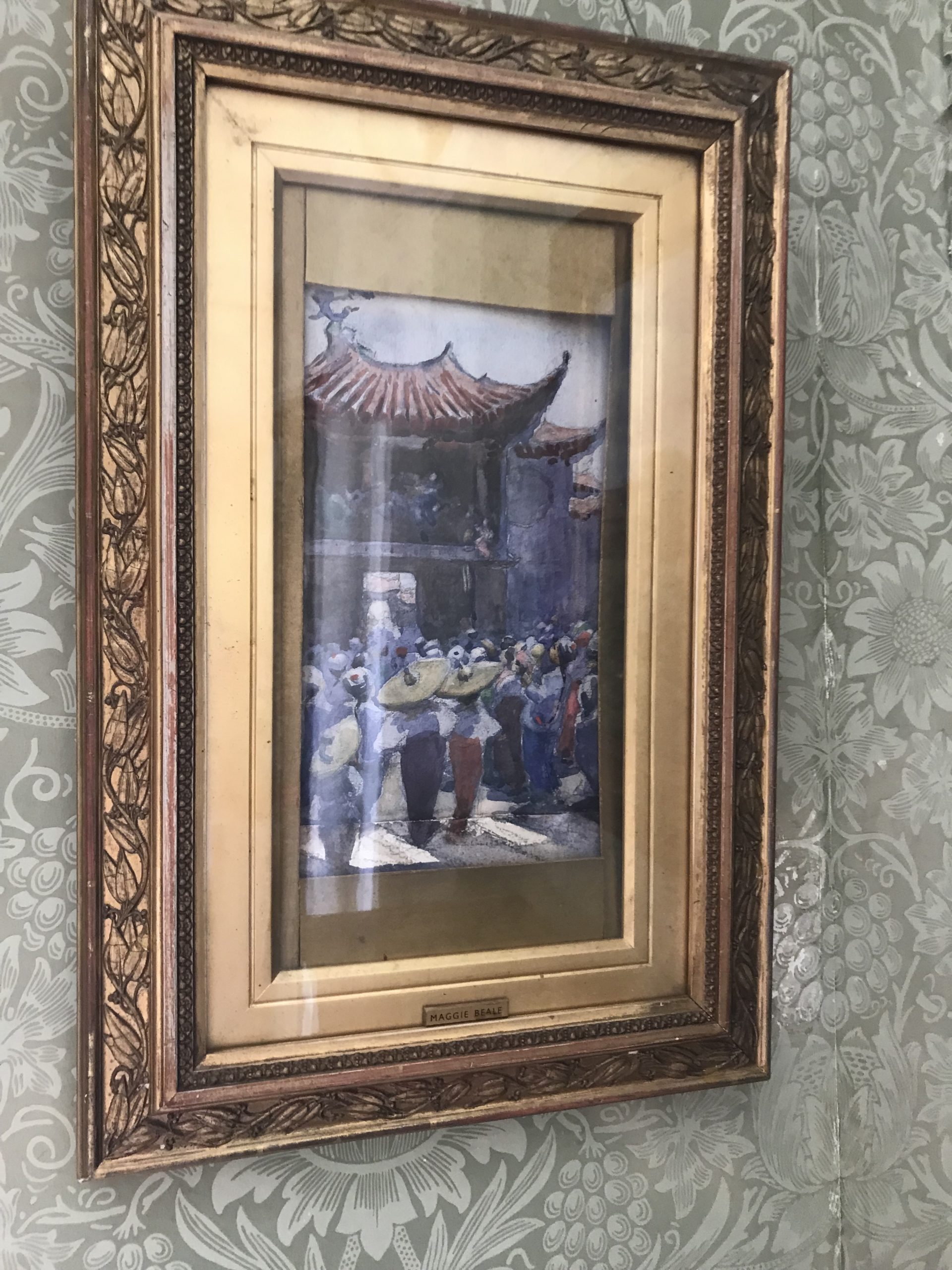
But here’s my theory on one interesting work. The house is also full of work by the Margaret LC Beale (not the Magaret Beale who owned the house), a British artist, notable as a painter of seascapes and marine craft, who worked in both oils and watercolours. All of these paintings are labelled ‘Margaret Beale’. But this one is different…
Obviously the image is of Japan, probably Yokohama where the Standen owning Beale’s visited and labelled “Maggie Beale”. However, it is in a distinctly different style to the works by Margaret Beale and, I believe, this one is by the Margaret Beale who owned Standen and labelled “Maggie Beale” to differentiate from Margaret Beale. At least that’s my theory. And it’s quite a nice piece too….
All the Penguin in WW1 series is now available in translation – essays by Mark O’Neill, Frances Wood, Robert Bickers, Jonathan Fenby, Anne Witchard & me (Paul French)…
A new exhibition at the Freud Museum London explores Sigmund Freud’s relationship to China, Chinese culture and the Chinese objects and books in his collection.
Collecting antiquities was one of Sigmund Freud’s greatest passions. Late in life he increasingly began to acquire Chinese pieces, to add to the ancient Egyptian, Greek and Roman objects which make up the majority of his collection. Though they were smaller in number, his Chinese pieces were among the most treasured items Freud owned.
Sigmund Freud’s engagement with China also took other forms. Although he did not read widely about China, he still made ideas about the Chinese language central to his understanding of the interpretation of dreams. And he owned and loved pets of the dog breed known as ‘Chows’, to whom he gave names with a distinct ‘Chinese’ flavour.
In his lifetime Freud’s ideas had a considerable impact in China. His works began to be read and discussed there from around 1913, and several Chinese translations of his works appeared in his lifetime.
The exhibition dives into Sigmund Freud’s own work – and psychoanalysis as a whole – in the context of Chinese art, history and culture.
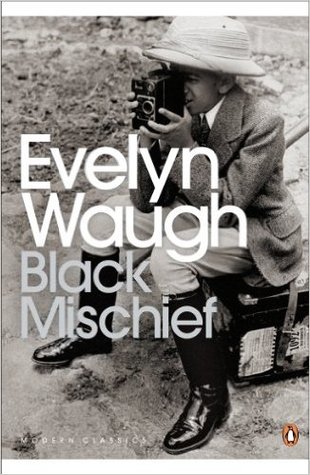
Back in 2019 I blogged on why Evelyn Waugh never got round to visiting China – long story short, he got invited to Abyssinia for the coronation of Haile Selasse in 1930. Abyssinia then became the basis for his satirical novel Black Mischief (1932) set in the fictional African country of Azania. Later he wrote a short story, Incident in Azania, which was based on a (then) famous kidnapping in China Waugh became obsessed with. I’ve written about that here. And so, eventually, I got around to reading Black Mischief (which I might have done years ago but have completely forgotten) and he has a small comic anecdote regarding China when discussing a list of people who entered the diplomatic service of their country despite being completely unsuited to the task (and not, it has to be said, untypical of many British diplomats still parceled off to Beijing)…It is a paragraph worthy of Acton’s Peonies and Ponies…
‘His Britannic Majesty’s minister (to Azania), Sir Samson Courteney, was a man of singular personal charm and wide culture whose comparative ill-success in diplomatic life was attributable rather to inattention than to incapacity. As a very young man he had great things predicted of him. He had passed his examinations with a series of papers of outstanding brilliance; he had powerful family connections in the Foreign Office; but almost from the outset of his career it became apparent that he would disappoint expectations. As third secretary at Peking he devoted himself, to the exclusion of all other interests, to the construction of a cardboard model of the Summer Palace…’