Join David Peace for the paperback publication of Tokyo Redux, the final book in his Tokyo Trilogy. Shifting across three twentieth-century time periods, Peace’s audacious conclusion to his Tokyo trilogy crafts a labyrinthine mystery entwined in an evocative social history of postwar Japan.
David Peace – named in 2003 as one of Granta’s Best of Young British Novelists – was born and brought up in Yorkshire. He is the author of eleven novels including the Red Riding Quartet, adapted for television by Channel Four in 2009, GB84, which was awarded the James Tait Black Memorial Prize, The Damned Utd and Red or Dead, which was shortlisted for the Goldsmiths Prize in 2013.
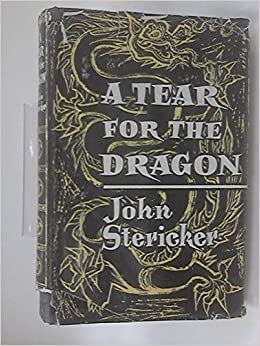
An interesting anecdote from John Stericker’s memoir A Tear for the Dragon (1958) regarding the economy of Tsingtao (Qingdao) and Chefoo (Yantai). I’ll let him tell it. He is referring to the time around World War One and just after as the Japanese took control of Tsingtao from the Germans and, in Europe, flappers emerged and saloon cars became common…
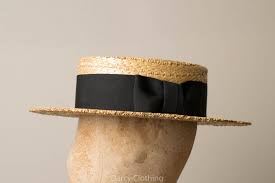
‘…men’s fashions, even more than those of women, affected the poor people of this part of the China coast because most of the straw-braid that to make up the ubiquitous straw boater of the Edwardian era came form Tsingtao and Chefoo. As millions of men began to discard the boater for the felt hat, or no hat at all, the straw-braid trade faded out of existence. Again, as the automobile progressed from being a wind-blown open vehicle propelled by a petol engine, and developed into an almost draught-proof saloon, so did the populatiry of hair-nets begin to fade. Their fate was further sealed by the introduction of the Etopn crop, the bob, and the shingle. Prior to that time, in every dingy cottage and home, Chinese women and children, applying their numble fingers, and drawing from their own tresses, were tying millions of knots in hair nets.’
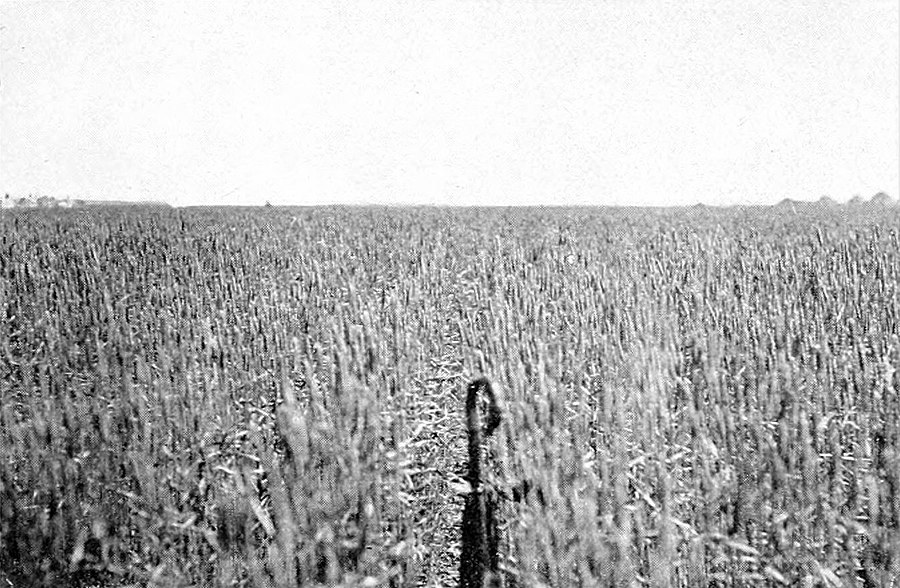
wheat fields in Shandong c.1910
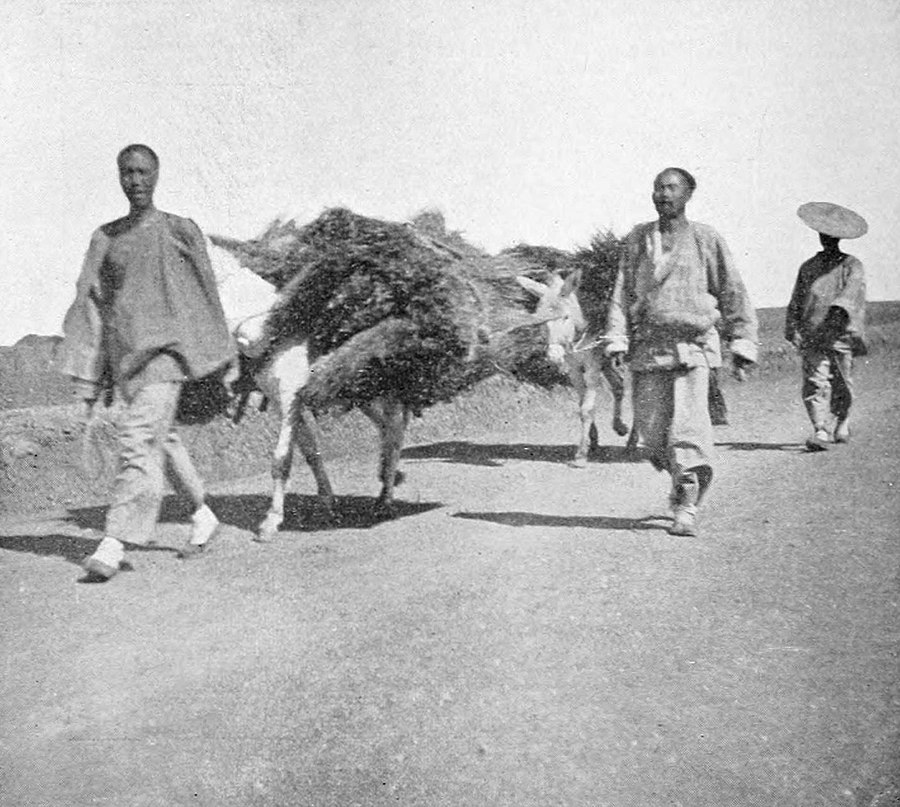
transporting stalks on a German-built road, Shandong 1910
Though Deborah Cohen’s Last Call at the Hotel Imperial is not specifically about China, the war in Asia, the attacks on China do get a bunch of mentions plus, most interestingly a host of characters who at one time or another interacted, visited or commented upon China do feature.
VIncent Sheean, John and Francis Gunther, Raina and Bill Prohme, Red Knickerbocker, the ill-fated Gareth Jones gets a mention as does Emily Hahn. Nothing really new about them and not focussing on their China experiences (if you want more of that see my book Through the Looking Glass: China’s Foreign Journalists from Opium Wars to Mao) but Cohen does nicely put them in context as a group sharing their lives and experiences and has room to talk about their non-China lives in much more detail than I was able to.
They were an astonishing group: glamorous, gutsy, and irreverent to the bone. As cub reporters in the 1920s, they roamed across a war-ravaged world, sometimes perched atop mules on wooden saddles, sometimes gliding through countries in the splendor of a first-class sleeper car. While empires collapsed and fledgling democracies faltered, they chased deposed empresses, international financiers and Balkan gunrunners, then knocked back doubles late into the night.
Last Call at the Hotel Imperial is the extraordinary story of John Gunther, H.R. Knickerbocker, Vincent Sheean, and Dorothy Thompson: a close-knit band of wildly famous American reporters who, in the run-up to World War II, took on dictators and rewrote the rules of modern journalism.
In those tumultuous years, they landed exclusive interviews with Hitler, Franco and Mussolini who sought to persuade them of fascism’s inevitable triumph. Nehru and Gandhi also courted them, seeking American allies against British imperialism. Churchill, for his part, saw them as his best shot at convincing a reluctant America to join the war against Hitler. They grabbed front pages across the world, causing Goebbels to rage about ‘international liars and counterfeiters.’
Alongside these backstage glimpses into the halls of power, they left another set of records – equally incredible. In their private lives, Gunther, Knickerbocker, Sheean and Thompson committed themselves to the cause of freedom: fiercely and with all its hazards. They argued about love, war, sex, death and everything in between, and they wrote it all down. The fault lines that ran through a crumbling world, they would find, ran through their own marriages and friendships, too.
Told with the immediacy of a conversation overheard, this revelatory book captures how the global upheavals of the twentieth century felt to live through up close.
Destination Peking is now available as a Kindle e-book on all the Amazons (US and UK)…and at a bit of a discount for the launch too!
New York Times bestselling author Paul French (Midnight in Peking) returns to the Chinese capital to tell 18 true stories of fascinating people – many Americans among them – who visited the city in the first half of the 20th century. From the ultra-wealthy Woolworths heiress Barbara Hutton and her husband the Prince Mdivani, to the poor “American girl” Mona Monteith, who worked in the city as a prostitute; from socialite Wallis Simpson and novelist JP Marquand, who held court on the rooftop of the Grand Hôtel de Pékin, to Hollywood screenwriter Harry Hervey, who sought inspiration walking atop the Tartar Wall; from Edgar and Helen Foster Snow – Peking’s ‘It’ couple of 1935 – to Martha Sawyers, who did so much to aid China against Japan in World War II; Destination Peking brings a lost pre-communist era back to life.
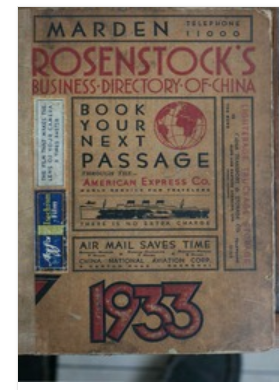
An excellent resource for anyone researching old Shanghai – Rosenstock’s Business Directory (1933) – a rare and delicious directory for China, including Shanghai, published by Millington, Ltd – is now available on the Internet Archive!
The Perils of Interpreting: The Extraordinary Lives of Two Translators between Qing China and the British Empire
The 1793 British embassy to China, which led to Lord George Macartney’s fraught encounter with the Qianlong emperor, has often been viewed as a clash of cultures fueled by the East’s disinterest in the West. In The Perils of Interpreting , Henrietta Harrison presents a more nuanced picture, ingeniously shifting the historical lens to focus on Macartney’s two interpreters at that meeting-Li Zibiao and George Thomas Staunton. Who were these two men? How did they intervene in the exchanges that they mediated? And what did these exchanges mean for them? From Galway to Chengde, and from political intrigues to personal encounters, Harrison reassesses a pivotal moment in relations between China and Britain. She shows that there were Chinese who were familiar with the West, but growing tensions endangered those who embraced both cultures and would eventually culminate in the Opium Wars.
Harrison demonstrates that the Qing court’s ignorance about the British did not simply happen, but was manufactured through the repression of cultural go-betweens like Li and Staunton. She traces Li’s influence as Macartney’s interpreter, the pressures Li faced in China as a result, and his later years in hiding. Staunton interpreted successfully for the British East India Company in Canton, but as Chinese anger grew against British imperial expansion in South Asia, he was compelled to flee to England. Harrison contends that in silencing expert voices, the Qing court missed an opportunity to gain insights that might have prevented a losing conflict with Britain.
Uncovering the lives of two overlooked figures, The Perils of Interpreting offers an empathic argument for cross-cultural understanding in a connected world.
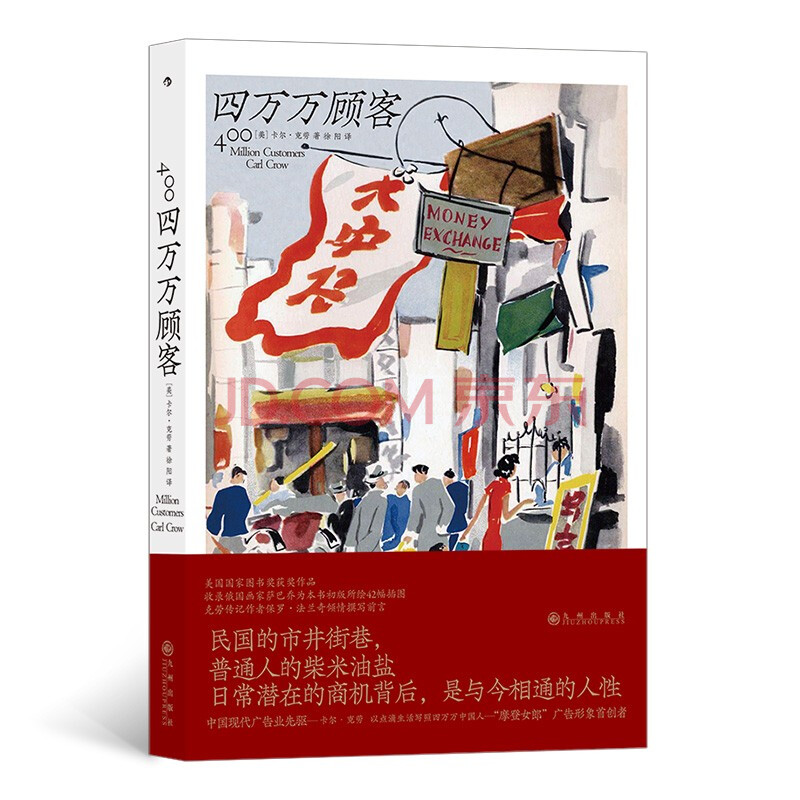
Delighted that Post Wave Publishing Co/Ginkgo Books in Beijing has published a Chinese translation of Carl Crow’s Four Hundred Million Customers (1937) (there’s a link to an English language edition here) with all the Sapajou illustrations & a new introduction to Crow for Chinese readers by me…if you want to buy a copy there’s a link here on JD and here on Dangdang.