Jonathan Spence died on Christmas Day and nobody seriously working on China – contemporary or historical – has not been deeply influenced by his work. Excellent to see that ChinaFile has uploaded all of his articles from The New York Review of Books (here) that includes writing on my book Midnight in Peking, as well as Joseph Needham, Pearl S Buck, Mao, Zhou Enlai, Nixon and Kissinger, Madame Chiang and his excellent reviews of Frederick Wakeman’s work….
Amongst Spence’s extensive writings To Change China is a, perhaps obviously, favourite….
Click here for a recording of my Christmas reading for RTHK3’s Morning Brew in Hong Kong – an abridged version of my chapter in Destination Peking (Blacksmith Books) of the chapter on Denton Welch’s life in Shanghai and his 1932 Christmas in Peking’s Legation Quarter.
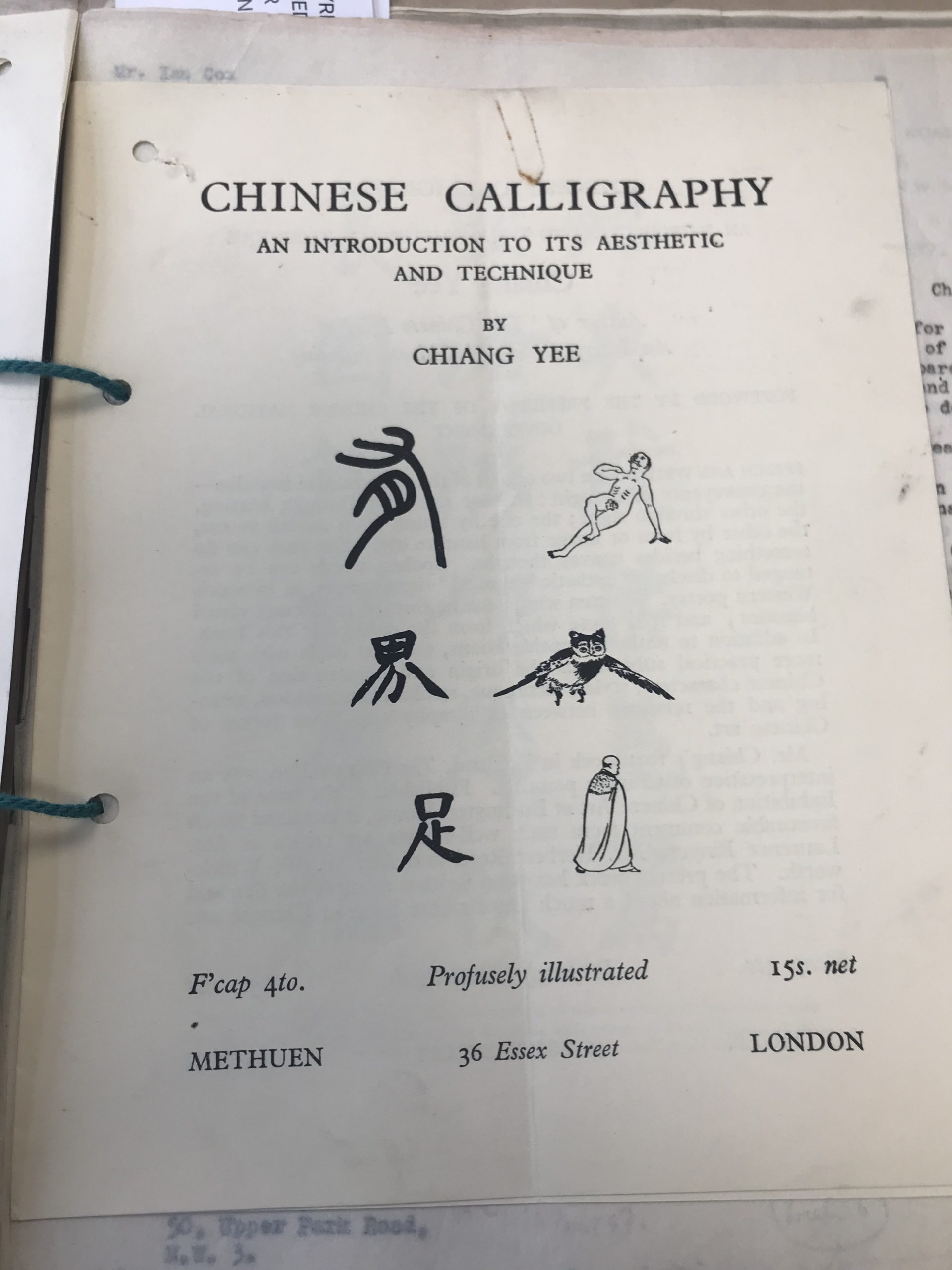
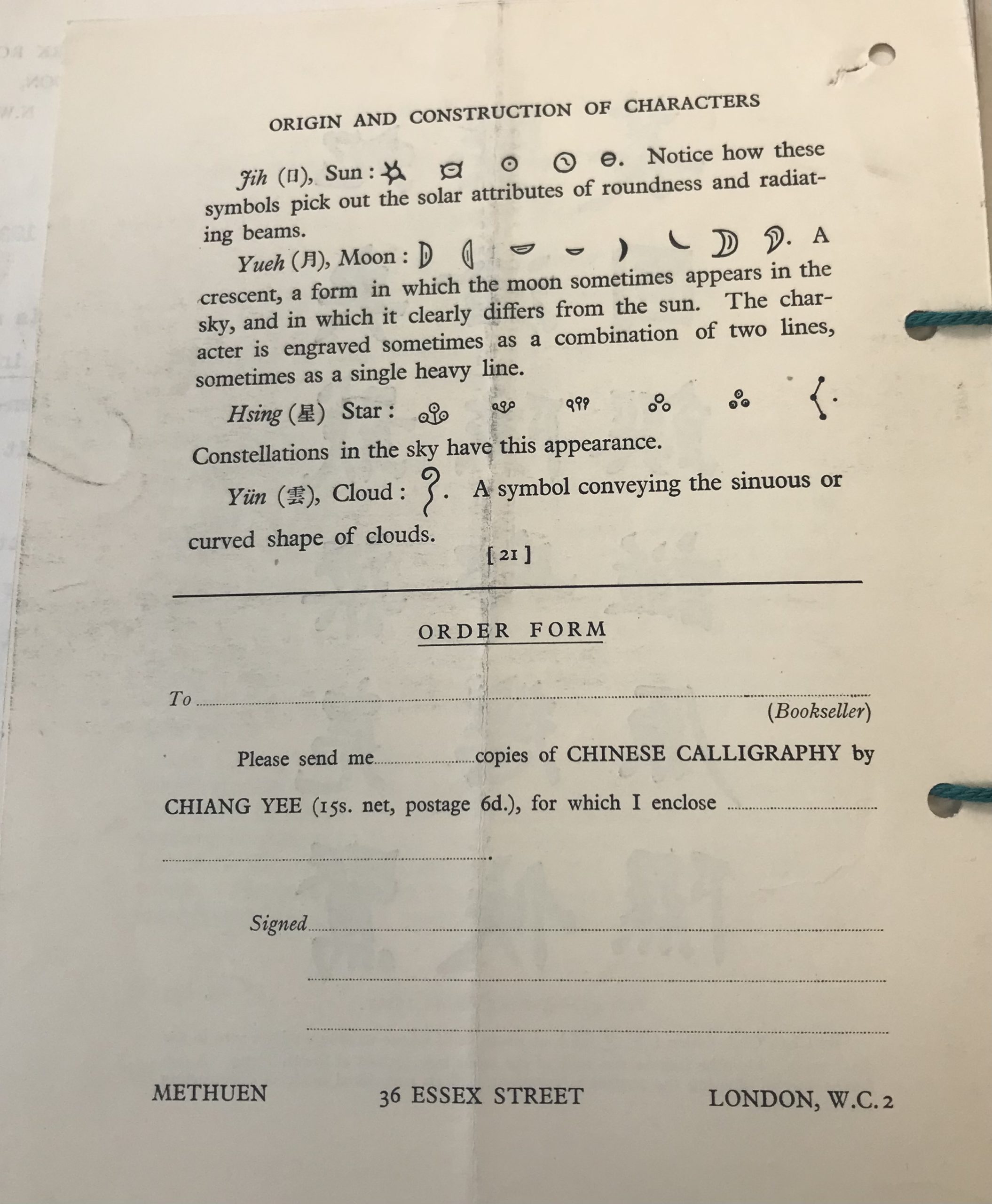
The London-based artist, poet and author Chiang Yee published a book in 1938 designed to introduce the British public to Chinese calligraphy…It sold surprisingly well, the BBC talked about it a lot, it sparked a mini craze for people having a go at calligraphy. I was at the BBC Written Archives at Caversham recently and they had a copt of the marketing materials on the book sent by publishers Methuen in advance of the recording of the programme (which itself is sadly “lost”)….
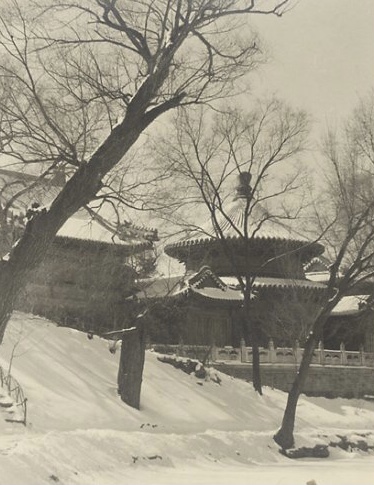
Christmas Eve on RTHK Radio 3 at 10.40 (HK time) I recall an old Peking Legation Quarter Christmas from 1932, when a young Denton Welch ice skated, curio shopped, saw the sights, enjoyed the snow & ate an amazing feast…(it’ll be online later but, if you’re in Hong Kong or online at that time have a listen. An abridged version of the chapter on the author and artist Denton Welch’s early life in China from Destination Peking (Blacksmith Books)…
Looking through the BBC Written Archives Centre at Caversham recently I noted the various speakers on the rather short-lived Chinese service of the BBC Far Eastern Service during the war (the one involving Orwell, Empson, Priestley, Mulk Raj Anand, Tambimuttu etc). It lasted only months really and ended with the fall of Hong Kong in December 1941. It broadcast for a time in both Cantonese and Mandarin and used many (at the time) well-known Chinese in Britain including the journalist Hsiao Ch’ien (Xiao Chen) andthe playwrite Hsiung Shih-I (Xiong Shiyi). Hsiung was hired several times to write and read what the BBC called the ‘Kuo Yue News Commentary’ (by which they mean Guoyu, standard Chinese or putonghua).
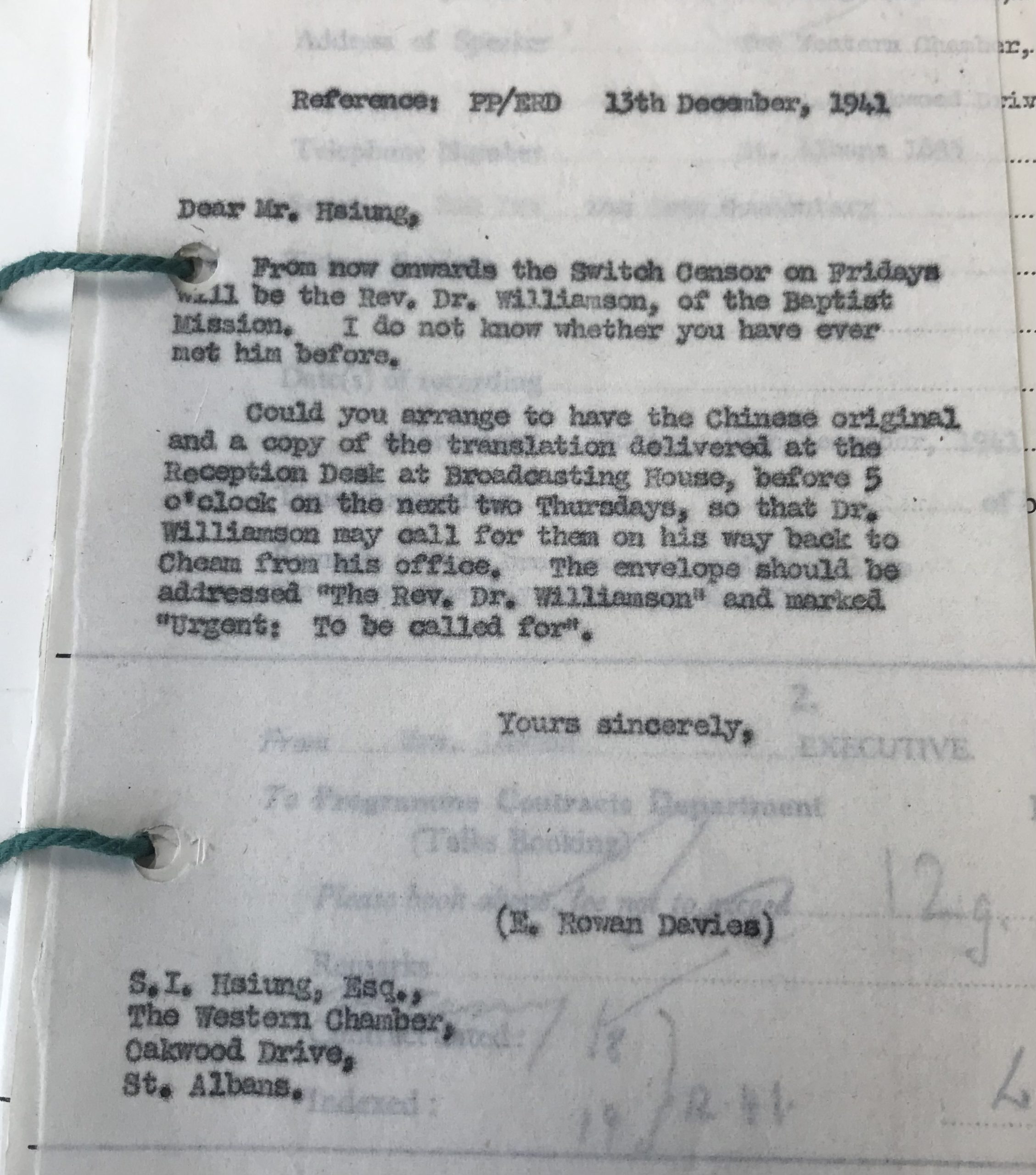
The BBC correspondence, archived at Caversham, informs SI Hsiung that he should deliver the talk, both in Chinese and English to Broadcasting House in London marked “Urgent” for Rev. Dr. Williamson, the newly appoiinted “Switch Censor” – the person with the power to halt the broadcast (hitting the several second delay) if the speaker deviates from the agreed text. Interesting in this sense as 1) all talks during the went rhrough the censors for obvious reasons and, by and large, the changes are recorded, discussed and invariably minor; 2) in this case a fluent English and Chinese speaker would be required 3) i believe the programmes were sent to Hong Kong and Singapore for re-boradcast.
And so to the Rev. Dr. Williamson, the appointed man for the job at the BBC Chinese Service. Henry Raymond Williamson (1883-1966) of the Baptist Mission was an at the time quite well-known missionary in China, an accomplished Chinese scholar and foreign secretary of the Baptist Missionary Society (BMS). Originally from Rochdale, Lancashire, Williamson had apparently, ‘sensed a call to China’ as a young man and was stationed in Shansi (Shanxi) from 1908 to 1926 doing educational and famine relief work as well as presumably attempting to save a few souls. He was actually nominated as a professor of Chinese studies at the University of London but preferred to remain in China and, from 1926 to 1938, was director of the Whitewright Institute and Museum in Tsinan (Jinan), Shantung (Shandong). He was appointed China field secretary of the BMS in 1932 and in 1938 was recalled to London as foreign secretary. He wrote a couple of books, a History of the British Baptists in China and another entitled China Among the Nations (1943) as well as a Teach Yourself Chinese guide (1947).
Williamson’s official bio doesn’t mention his time as a “switch censor” at the BBC Far Eastern Service and it’s not clear if he ever knew or met Hsiung or if he ever hit the switch!
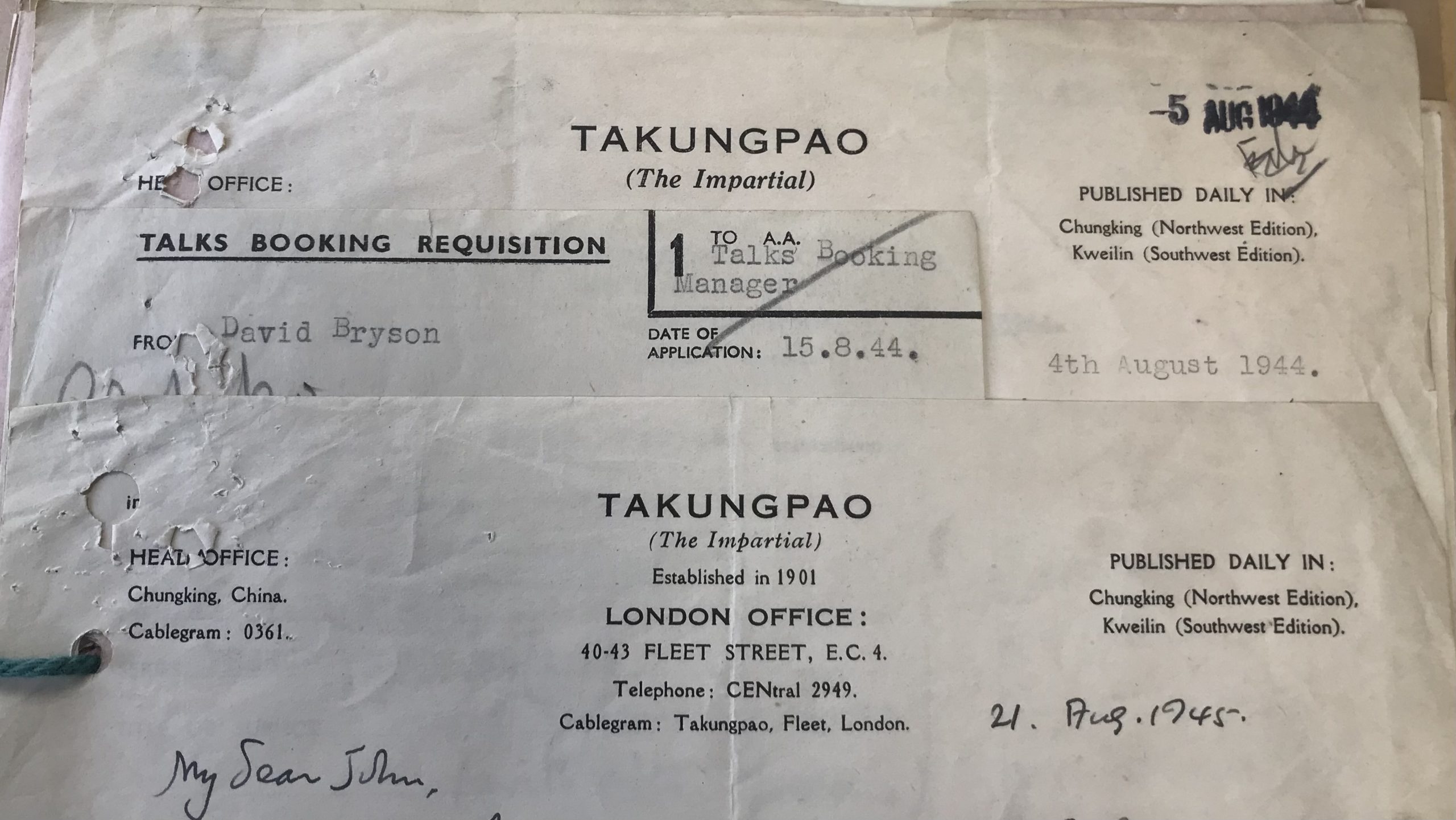
Takungpao (The Impartial) newspaper is the oldest active Chinese language newspaper in China. Founded in Tianjin in 1902. Between the wars (its heyday), its slogan was “no party affiliation, no political endorsement, no self-promotion, no ignorance”. It was aprticualrly noted for its sharp political commentary and foreign coverage after the outbreaks of the Second Sino-Japanese War. Based alternatively in Shanghai, Hankow, Guilin, Chongqing and Hong Kong, it continued to publish staying one step ahead of the Japanese. It established a London office on (where else!) Fleet Street and it’s correspondent for London, and Europe, was Hsiao Ch’ien (Xiao Chen) who had studied journalism at Yenching in the 1930s under Edgar Snow….
Hsiao was to writre several books during the war, and appear on the BBC many times, as the only Chinese foreign correspondent in Europe. These included one on the Burma Road with illustration by Chiang Yee.
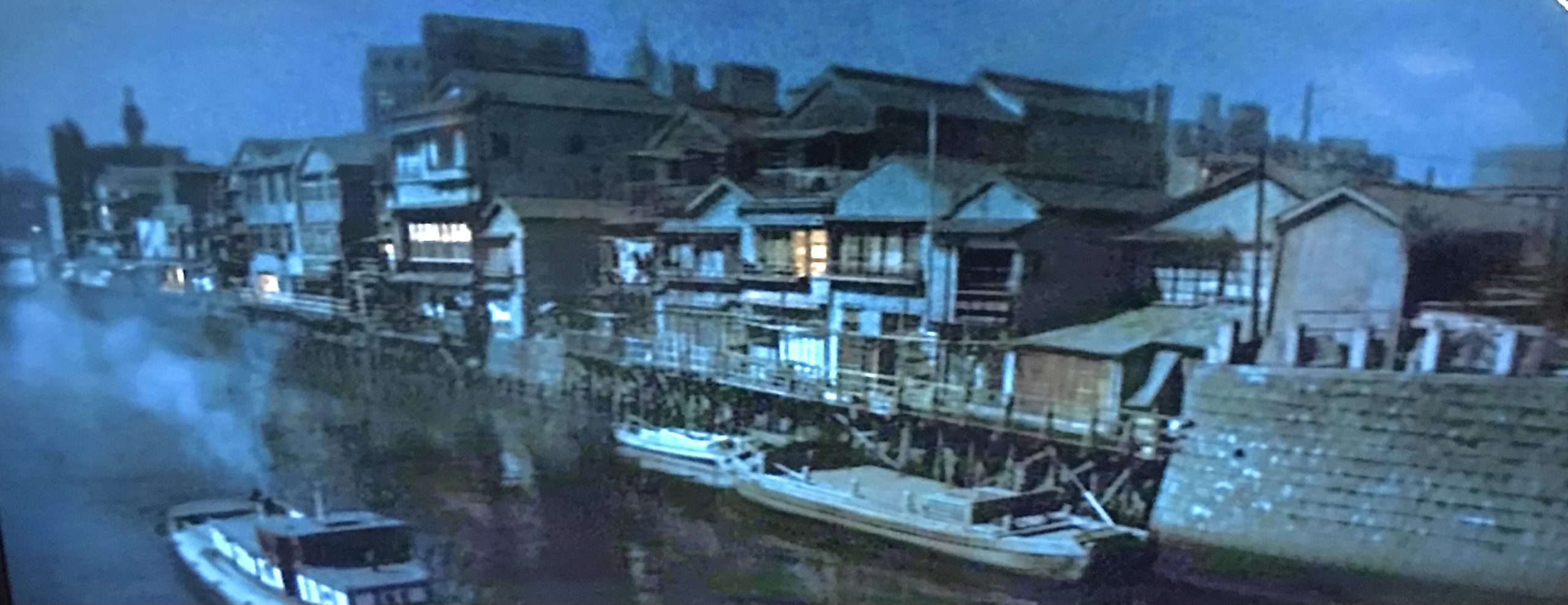
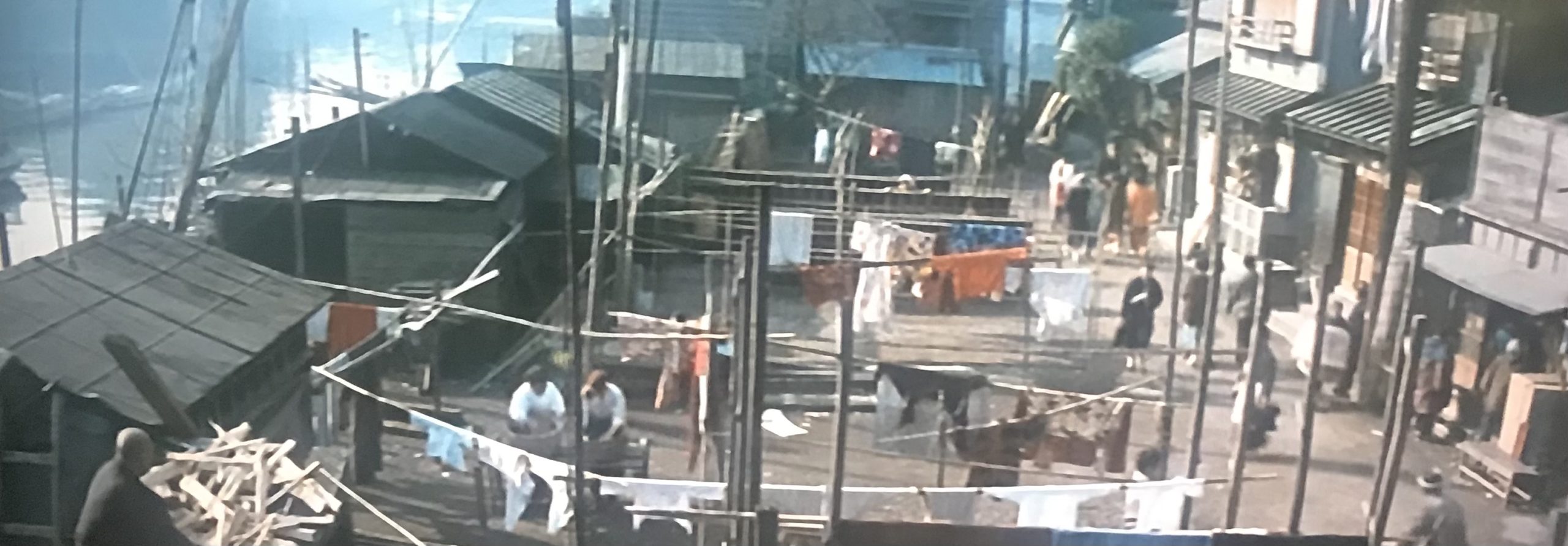
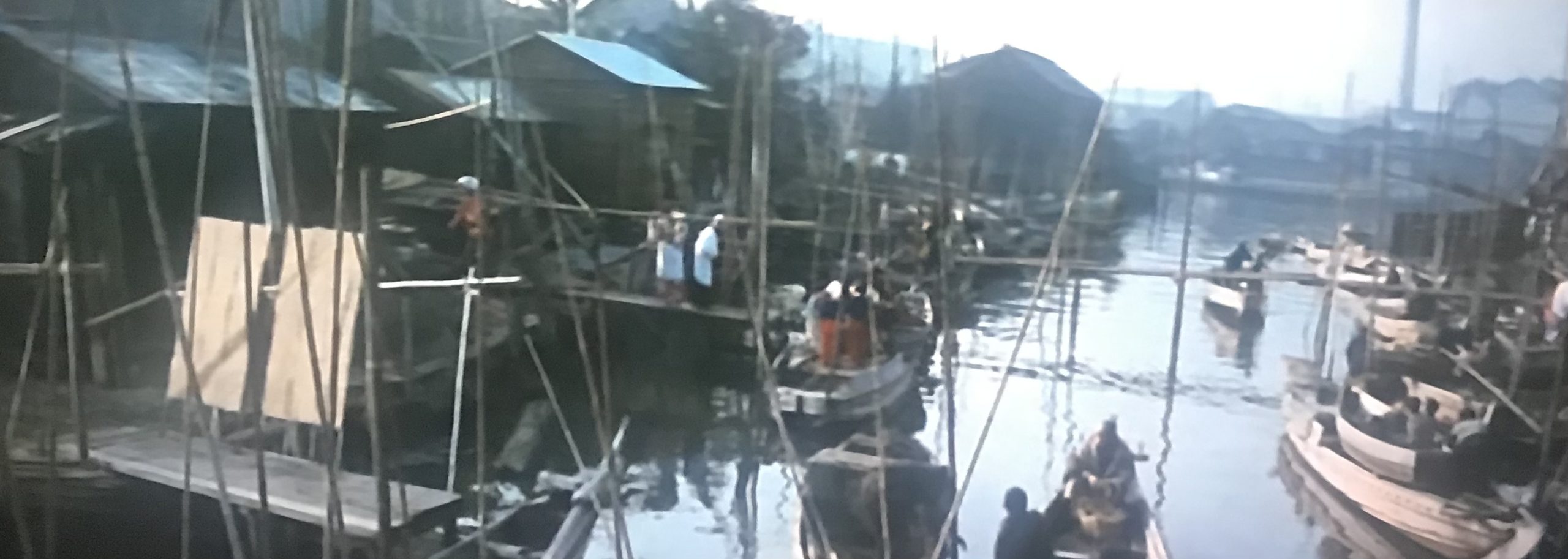
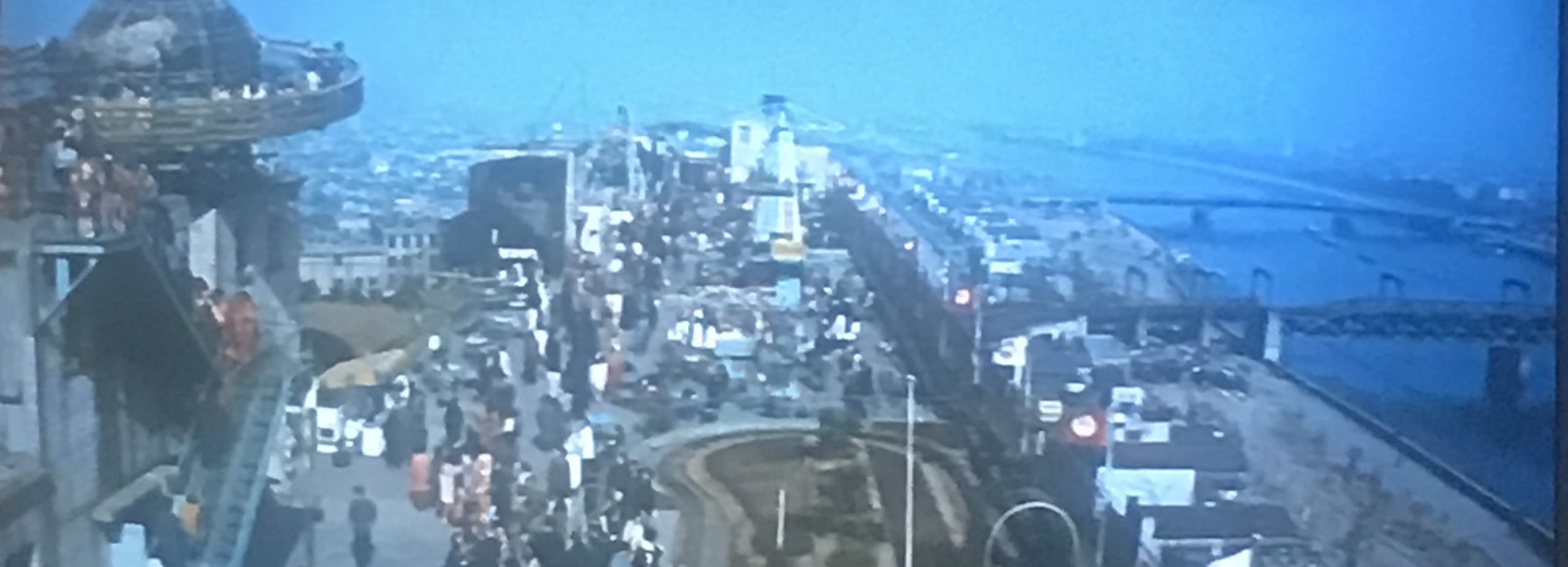
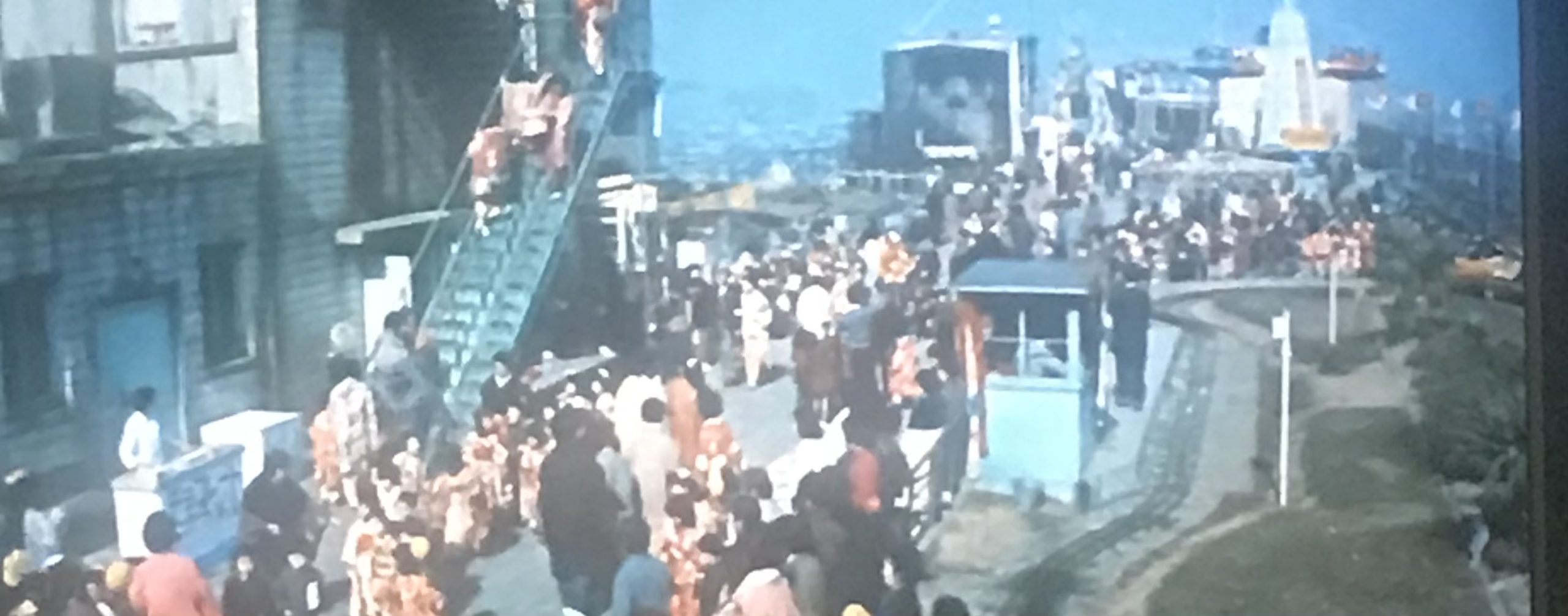
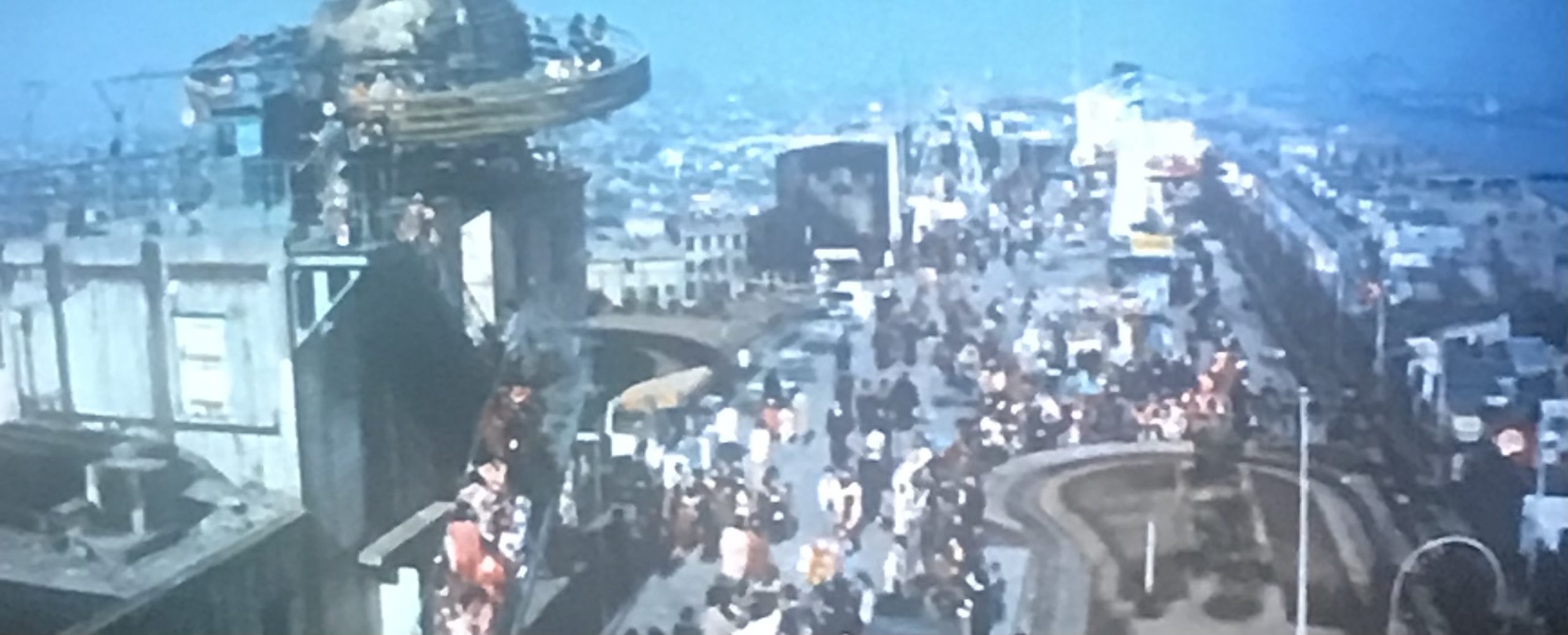
Talking of the 1955 movie House of Bamboo yesterday (here) and the Matsuya Departrment store rooftop amusements, that movie (filme don location in Tokyo in 1954) also had some great shots of the so-called “Ant City” (at least called that by the Americans, not sure if the Japanee used the name of where it originated?). The banks of the Sumida are now of course totally different so these are particularly interesting….
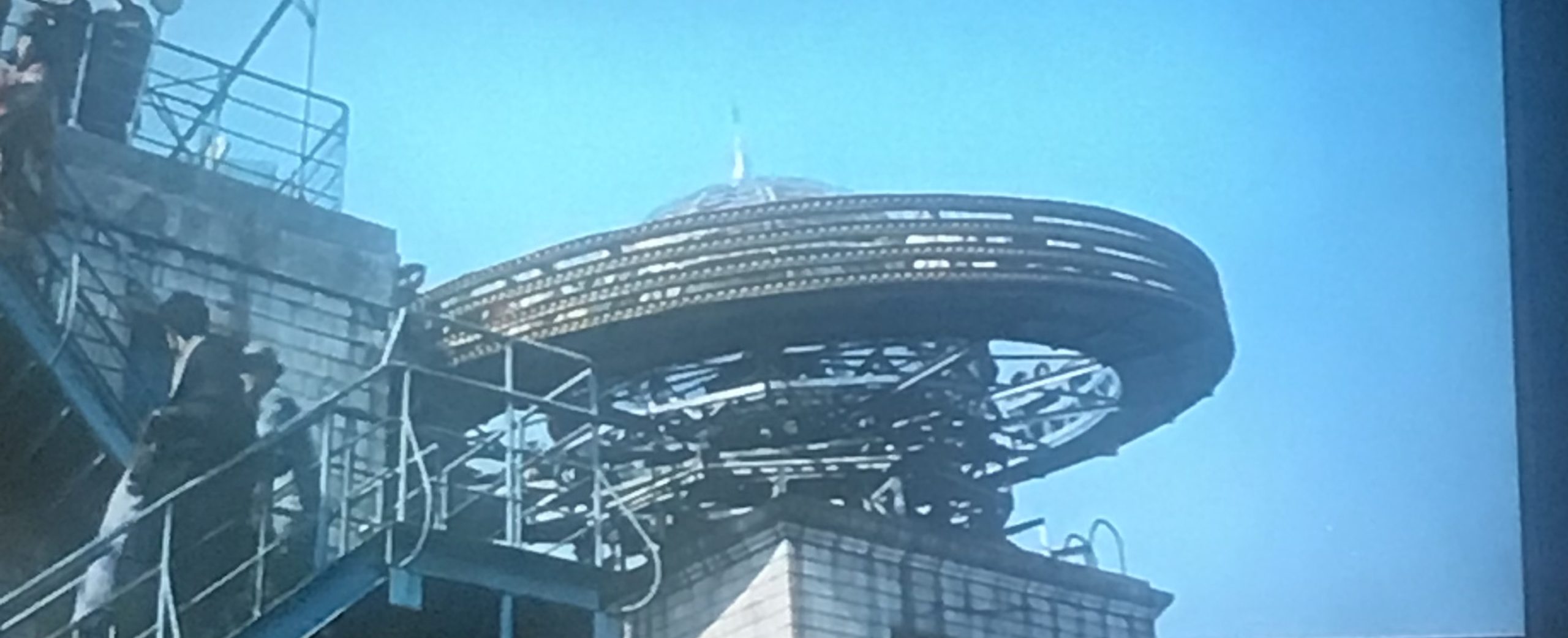
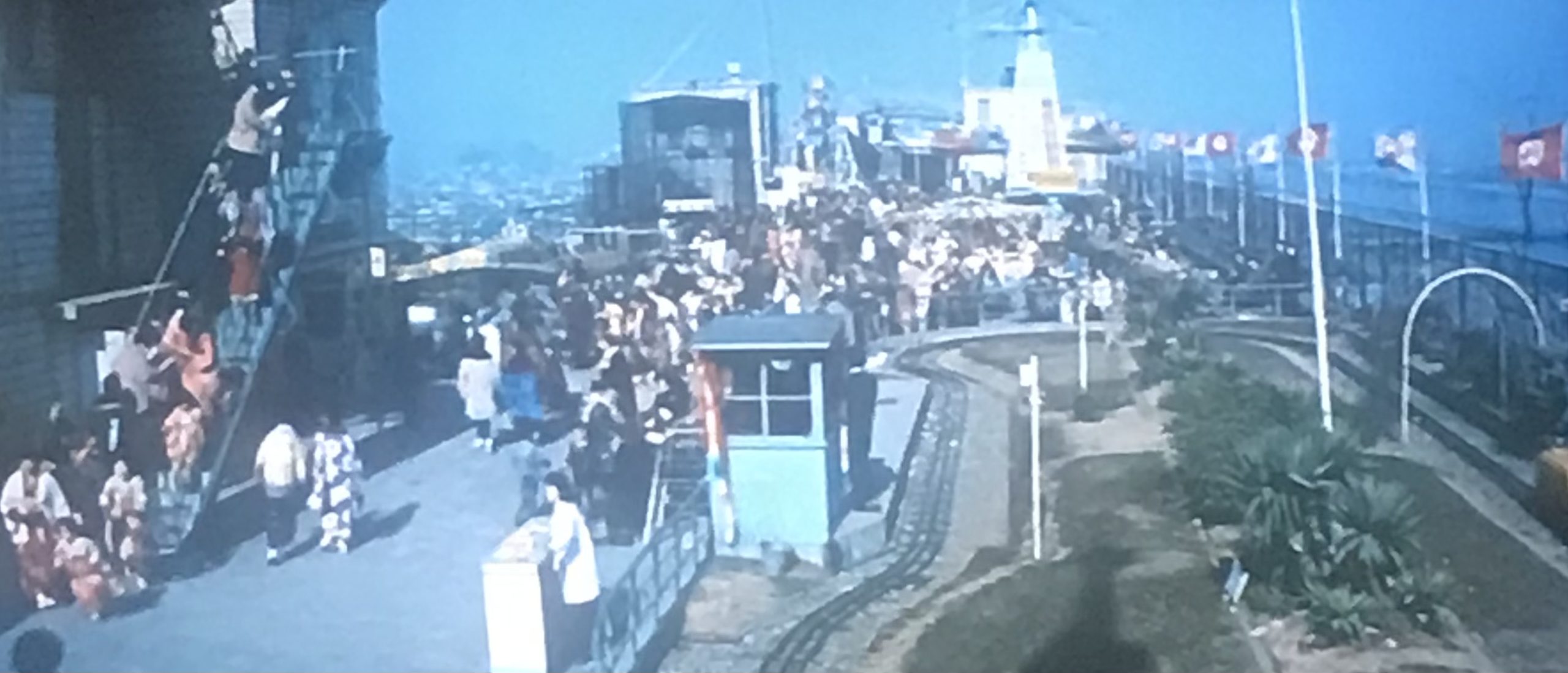
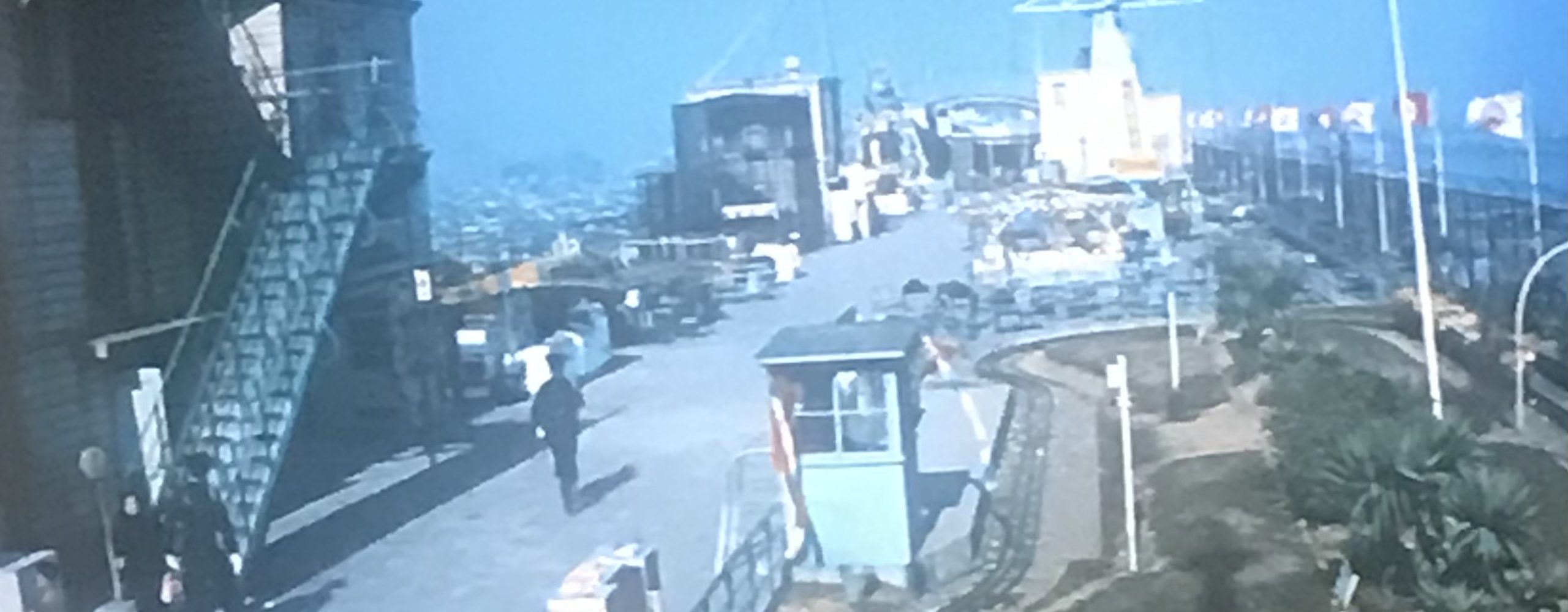
I finally got around to watching the 1955 movie, filmed on location in Tokyo, House of Bamboo last weekend – how I had not seen it before I simply do not know!. Of course the shots of Tokyo are fantastic, especially the climactic ending filmed at the Ginza Matsuya Amusement Park, Asakusa. The rooftop amusement park was the first of its kind in Tokyo, according to The Japan Times. Known as ‘Playland’ it apparently featured a petting zoo and a gondola ride, and lasted until 2010. Hwere’s some shots of the amusements and the fantastic view ove the Sumida River…
The same movie has some great shots of the “Ant City” along the banks of the Sumida River too…(here)