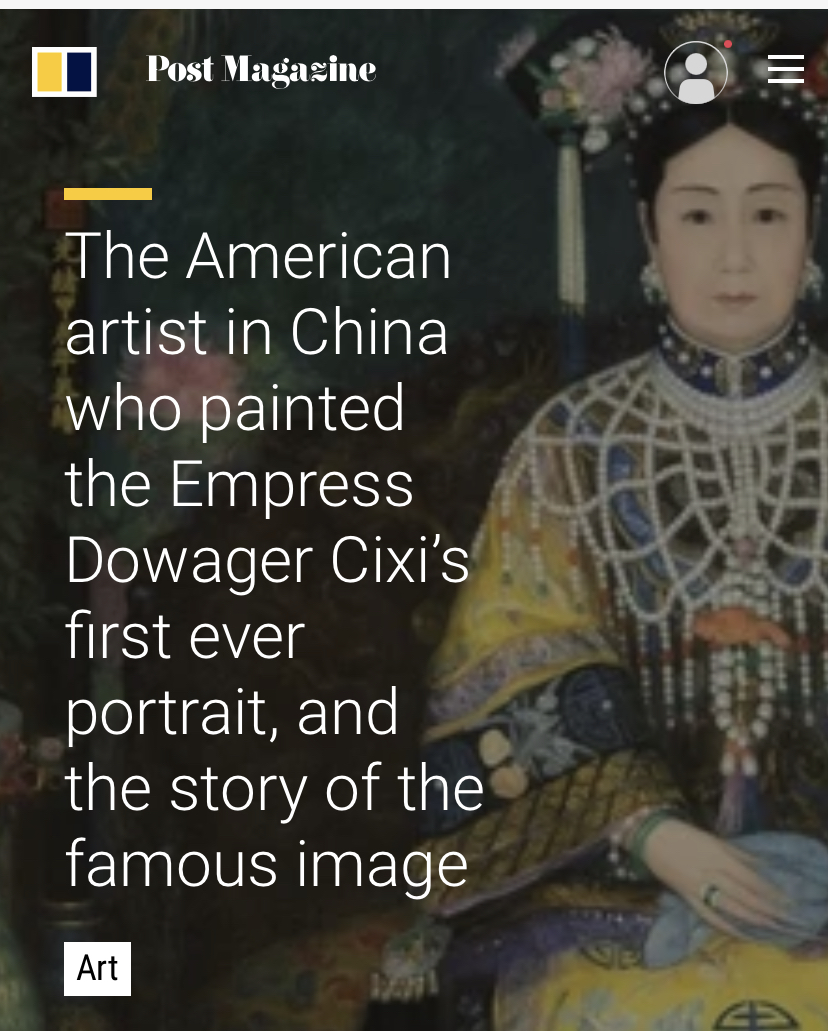
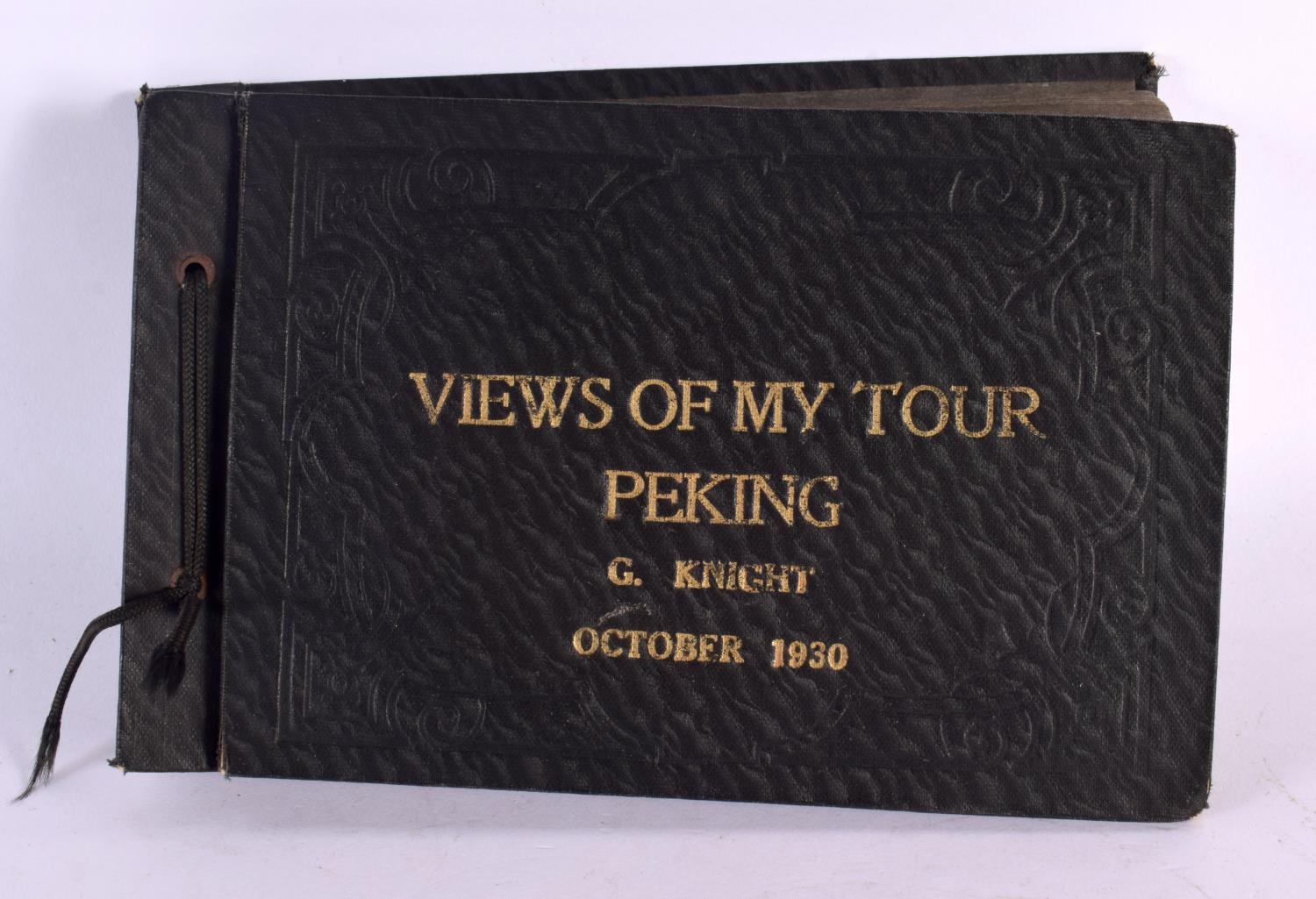
A piece by me in this weekend’s South China Morning Post weekend magazine on the relationship between the Empress Dowager Cixi and the American artist Katharine Carl who painted her portrait for the 1904 St Louis EXPO – the first formal portrait of Cixi to be painted. Click here
This exhibition presents works of art from the Museum’s collection that were produced between 1949 and 1999 in mainland China. Chairman Mao declared the founding of the People’s Republic of China in 1949 and until his death in 1976, art was subject to strict political controls.
Oil painting replaced the centuries-old tradition of ink landscape painting, and the Socialist Realist style adopted from the Soviet Union remained influential until the late 1970s. Pictorial woodblock printing developed from a folk craft to an increasingly creative medium used for both propaganda purposes and more subtle landscapes.
During the Cultural Revolution (1966–76) political images and messages were also produced in the historic media of woven or embroidered silks and papercuts.
From 1978, the Reform Era ushered in new possibilities as China re-engaged with the world, and artists encountered ideas and cultural practices from elsewhere.
Brush and ink, however, had never ceased to be used, and the scrolls and albums exhibited here include works by some of modern China’s most distinguished painters.
I’ve been very fortunate to receive a proof copy of Caroline Moorehead’s new biography of Edda Mussolini (out October 27 2022). It’s excellent, as expected. My interest is of course largely in the 30 months or so Edda spent in China in the early 1930s, largely in Shanghai where her husband Count Galeazzo Ciano was Consul General. Ciano (later Mussoilini, his father-in-law’s Foreign Minister and then, after Musolini’s death, arrested and executed by firing squad) had of course, earlier, served as an attache at the Italian Legation in Peking. The book has a lot of interesting info on Edda’s time in Shanghai, her husband’s constant philandering, her affair with Zhang Xueliang (the Young Marshall) and their lives in Shanghai and Peking.
Obviously China stuck with Ciano in many ways….they acquired a lot of furniture and rugs for insdtance that followed them back to Italy. Then, in October 1936 Ciano visited Hitler at Berchtesgarden as Italian Foreign Minister, ostensibly to discuss Italian-German relations in relation to the Spanish Civil War. According to Moorehouse Hitler later told an aide that he had loathed the smell of Ciano’s Chinese aftershave lotion….
Now my question – a dig at Ciano’s China sojourns? Or did Ciano stay loyal to a Chinese brand of aftershave? Anyone know?
Chinese Silk Textiles of the Ming and Qing Dynasties showcases fine examples of Chinese textiles from the Museum’s collection, including clothing, embroideries, hangings, and banners made between 1570 and 1911.
Chinese silk production originated in the Neolithic Yangshao culture during the fourth millennium BCE. However, due to fragility and perishability, the earliest surviving Chinese silk textiles are from the Western Han dynasty (206 BCE–9 CE). Most Chinese silk textiles that remain in good condition are from the Ming dynasty (1368–1644) or the Qing dynasty (1644–1911), and some are well preserved because they had been presented to Tibetan monasteries.
During the Qing dynasty, the minority Manchu ruling class wore silks that were distinct in design and cut from those worn by the majority ethnically Han Chinese population. The finest silk produced at the imperial factories at Nanjing, Suzhou, and Hangzhou were sent to the court in Beijing to be tailored and finished.
Chinese silk textiles were used for many different purposes and settings, but mostly for the luxury and beauty they imparted. These include formal and informal clothing, personal accessories, furnishing fabrics, and decorative pieces for imperial palaces, temples, monasteries, altars, residences, theatrical sets, and military establishments. Chinese silks were dyed to produce all imaginable colors, shades, and hues. Numerous types of weaves were employed, including plain, compound, gauze, and satin. Patterns were created using various techniques such as silk tapestry (kesi), brocading, embroidery, and couching. Motifs on Chinese textiles include mythical creatures like dragons, real animals like birds and bats, floral and plant imagery, geometric forms, Buddhist and Daoist symbols, and various auspicious emblems.
All objects in this exhibition are from the Saint Louis Art Museum’s collection. Numerous generous gifts from local patrons and donors have also greatly augmented the collection over many decades.
Chinese Silk Textiles of the Ming and Qing Dynasties is curated by Philip Hu, curator of Asian art.
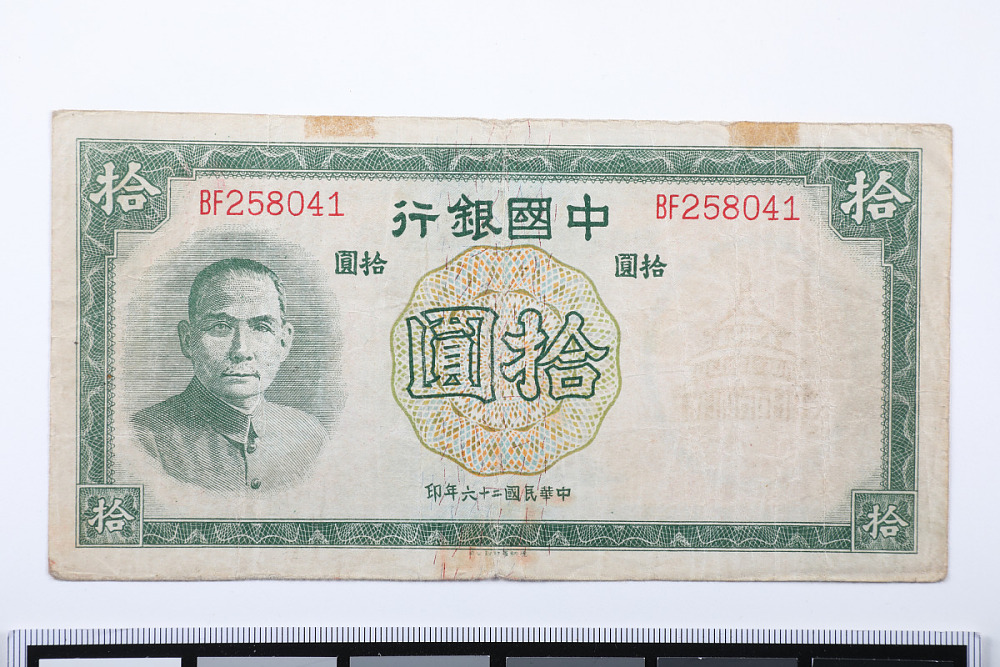
I get asked a lot how to work out exchange rates between the US$, the Nationalist Chinese $ and the widely used (particularly in Shanghai $Mex – the Mexican silver dollar). Below is a handy guide provided to me by Maggie Topkis from some work she did a while back…and my thanks to Maggie for this. I’ll poist it here as an aide-memoir for the next time someone asks this question…
“In the ordinary course of things, prior to WWII, the exchange rate ran roughly one US dollar to two Chinese or Mex dollars. For a few years following WWI, the exchange rate tipped significantly; by 1920 1 US dollar bought about 80 cents Chinese/Mex. This, in theory, was a function of trade imbalances arising from the war (hmmm…..rubber? I have some recollection that China was just exporting rubber like crazy), but the more typical relationship between the two dollars righted itself fairly quickly and (I am guessing here) held steady until perhaps 1937.”
I posted a while back on the preponderance of silversmiths is early twentieth century Shanghai, many of them perhaps having moved north from Guangdong and working mainly for the foreign and tourist market. Click here to see that post.
Anyway, here’s another marque i came across recently in an auction catalogue – ZEEWO (or sometimes ZEE WO) of Shanghai. Below an early twentieth century 4-piece teaset of circular form with applied decoration of fruits, birds, prunes, bamboo plants and flowers in panels around the bodies, naturalistic handles, gilt interiors, each piece stamped with a character mark and “ZEEWO” for Zeewo of Shanghai…
(there are two other posts on Shanghai silversmiths that may interest readers – on Tuck Chang here and on Luen Wo here)
silver dressing table set, each piece embossed with raised Dragon design, hallmarked for Zeewo, Shanghai. Set includes; two brushes, two clothes brushes, a comb and a handheld mirror. (6 pieces)
A Chinese silver rectangular box by Zeewo of Shanghai, early 20th century, repoussé decorated with peony blooms on a matted ground
Chinese silver tea caddy, stamped ‘Zeewo’, Shanghai, circa 1920.
The latest in my occasional series of old Shanghai signage (use the search box if you want to see other examples). This time how the street signs changed along The Bund and between the International Settlement and the French Concession. Obviously The Bund became the Quai de France south of Avenue Edward VII (Yan’an Road) – slightly different signage…