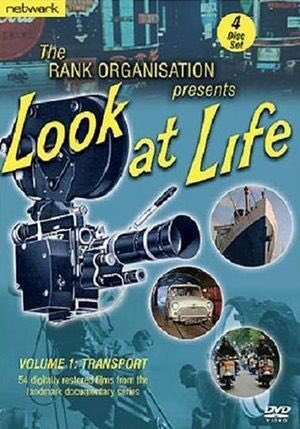
Heads up for the old film footage fans – Sat 16/7 13.45GMT – on Talking Pictures TV… Look At Life: Ticket to Tokyo (1959). A look at travelling from London with Britannia Airlines to Tokyo & back via Hong Kong on the ocean liner Arundel Castle.
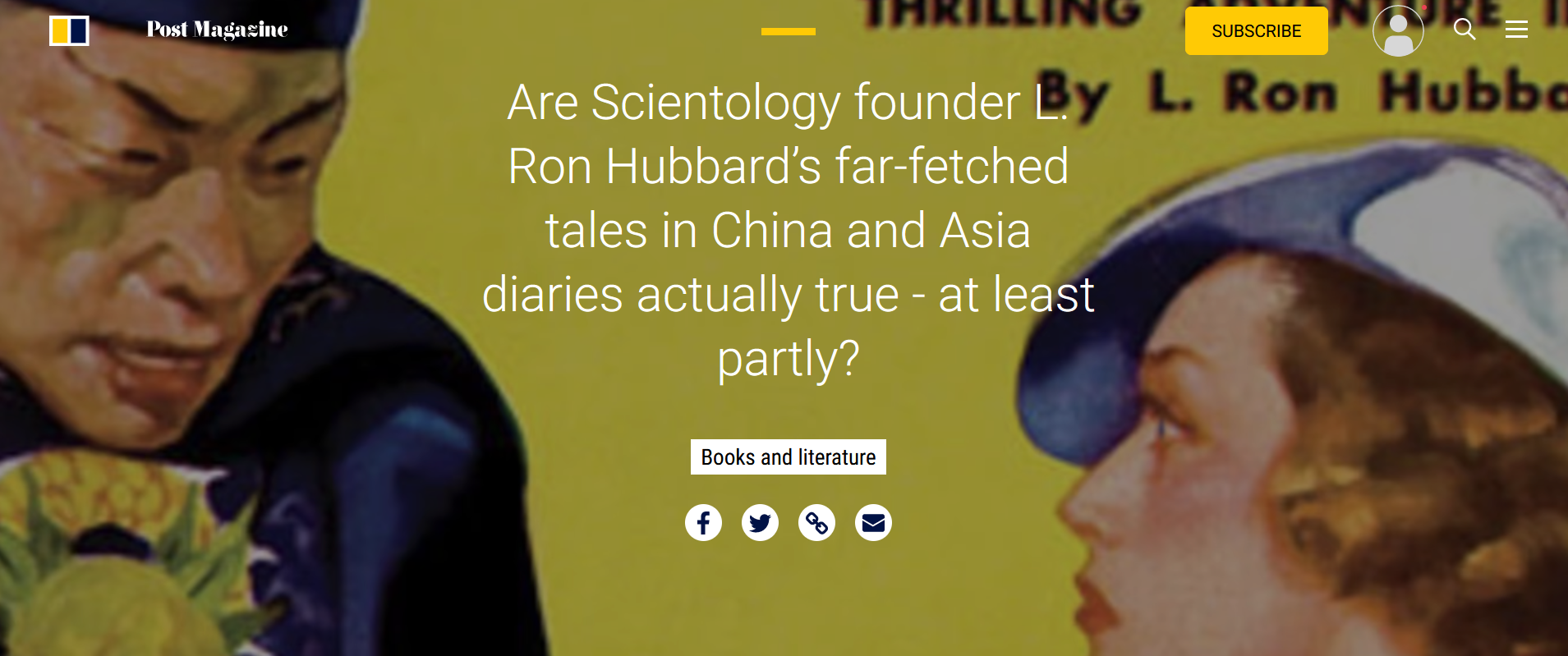
In the 1920s the teenage L Ron Hubbard made a couple of trips to China. In his diaries of the time his views were pretty negative; later he made fantastical (& usually dismissed) claims of where he went & who he met. Much of it later seeped into his pulp fiction.
But when it comes to his long dismissed tales of hanging out with British Intelliegence in China it looks like he really did….My long read in this weeks South China Morning Post weekend magazine on the Scientology founder’s China sojourns…click here to read…
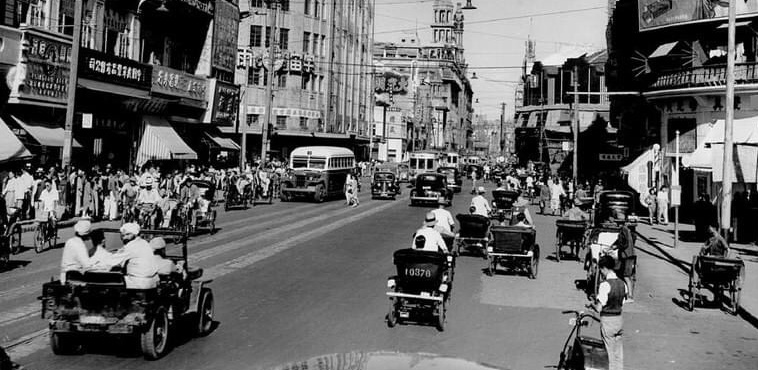
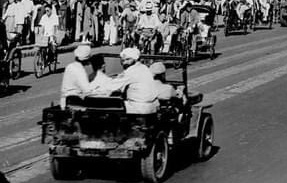
A great shot of the Nanking Road (Nanjing Lu) in 1949 just prior to the fall to the communists. I zoomed in to get a close up on the Sikh guys in the jeep – police or army I’m not sure? Not siure if the Sikh constables survived the end of the concessions in 1943 or were hired on by the US Army/UNRRA to help with supplies etc?
In this wide-ranging study, Ghassan Moazzin sheds critical new light on the history of foreign banks in late 19th and early 20th century China, a time period that saw a substantial influx of foreign financial institutions into China and a rapid increase of both China’s foreign trade and its interactions with international capital markets. Drawing on a broad range of German, English, Japanese and Chinese primary sources, including business records, government documents and personal papers, Moazzin reconstructs how during this period foreign banks facilitated China’s financial integration into the first global economy and provided the financial infrastructure required for modern economic globalization in China. Foreign Banks and Global Finance in Modern China shows the key role international finance and foreign banks and capital markets played at important turning points in modern Chinese history.
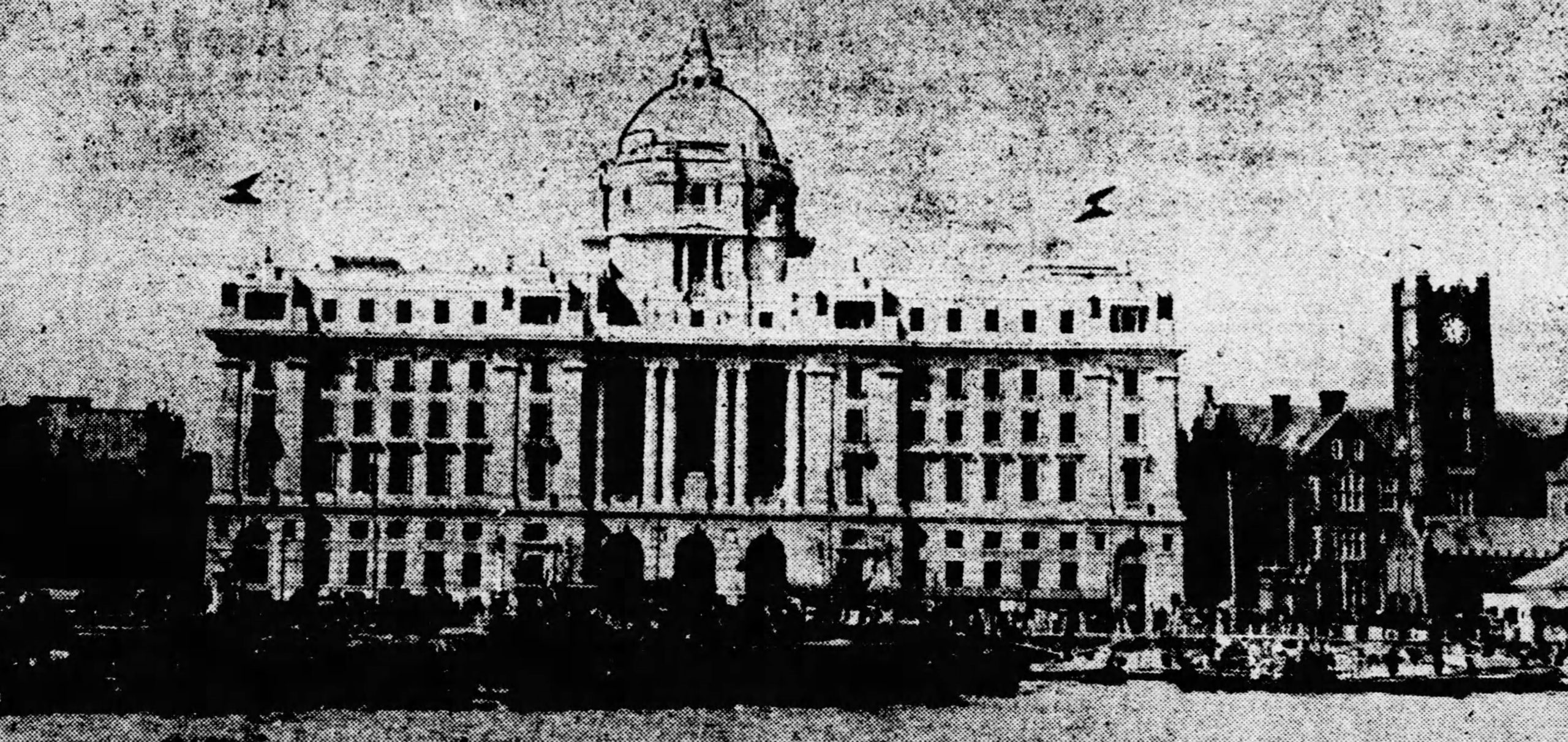
A nice picture of the Bund taken in early 1924 showing the newly completed (and still standing) HSBC Building adjacent to the soon-to-be demolished Customs House Building before a new one (the one there now) was constructed. The old one, built in the Gothic style in 1891, was demolished in 1925 so this is the last few months of the old and the new alongside…
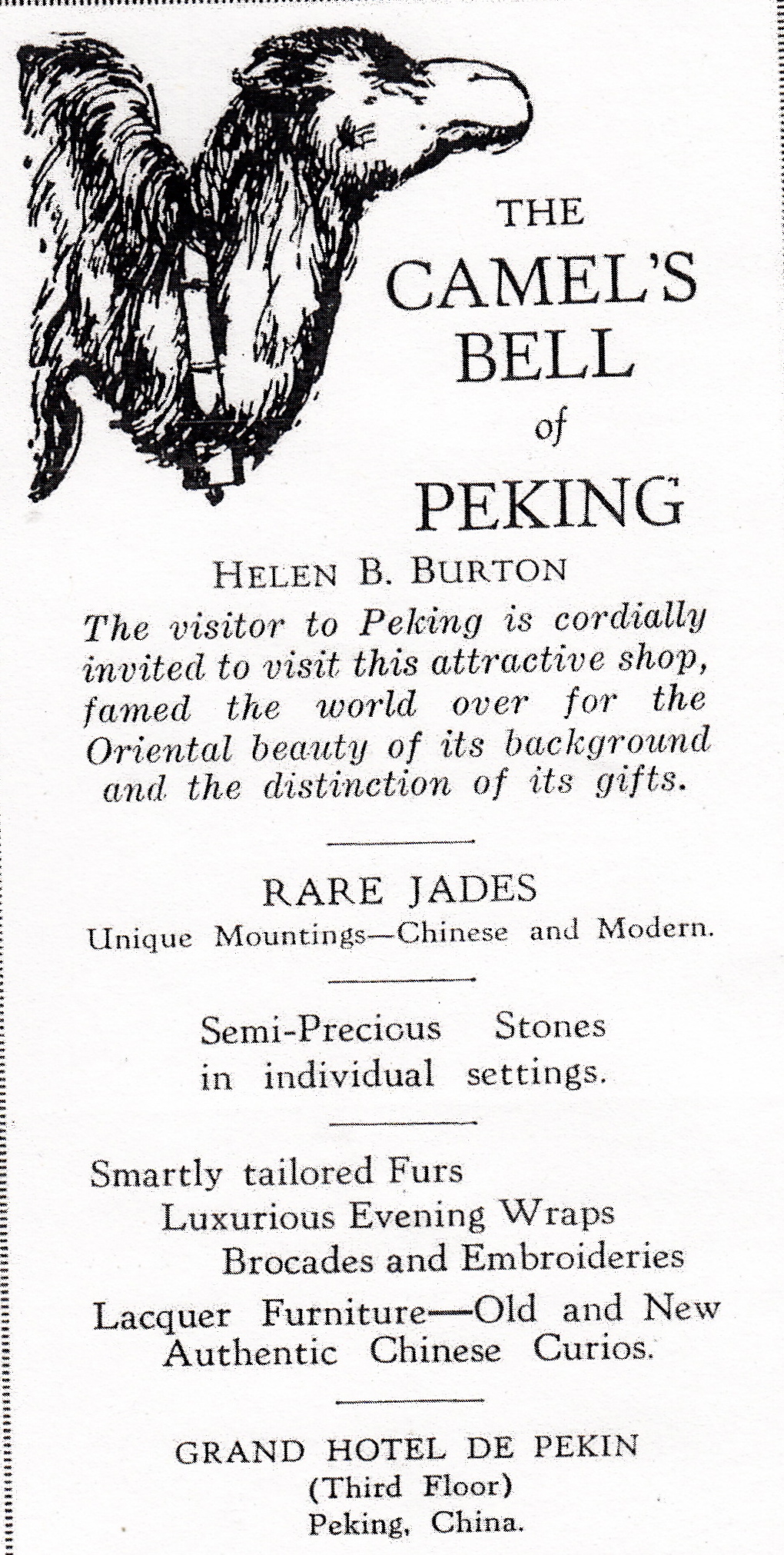
I’ve blogged before about the intrepid and entrepreneurial North Dakotan Helen Burton who ran a number of interesting businesses in Peking between the wars, the best known of which was The Camel’s Bell, situated in the lobby of the Grand Hotel de Pekin on Chang’an Jie (now the Nuo Hotel portion of the much expanded Beijing Hotel). The Camel’s Bell sold curios, antiques, art, objets and fashions. It wa sa must-stop shop for the Peking Foreign Colony as well as sojourners and tourists. Helen Burton, who also had a wonderful temple out in the Western Hills for weekends and adopted a number of Chinese kids threw generally agreed the best parties in Peking.
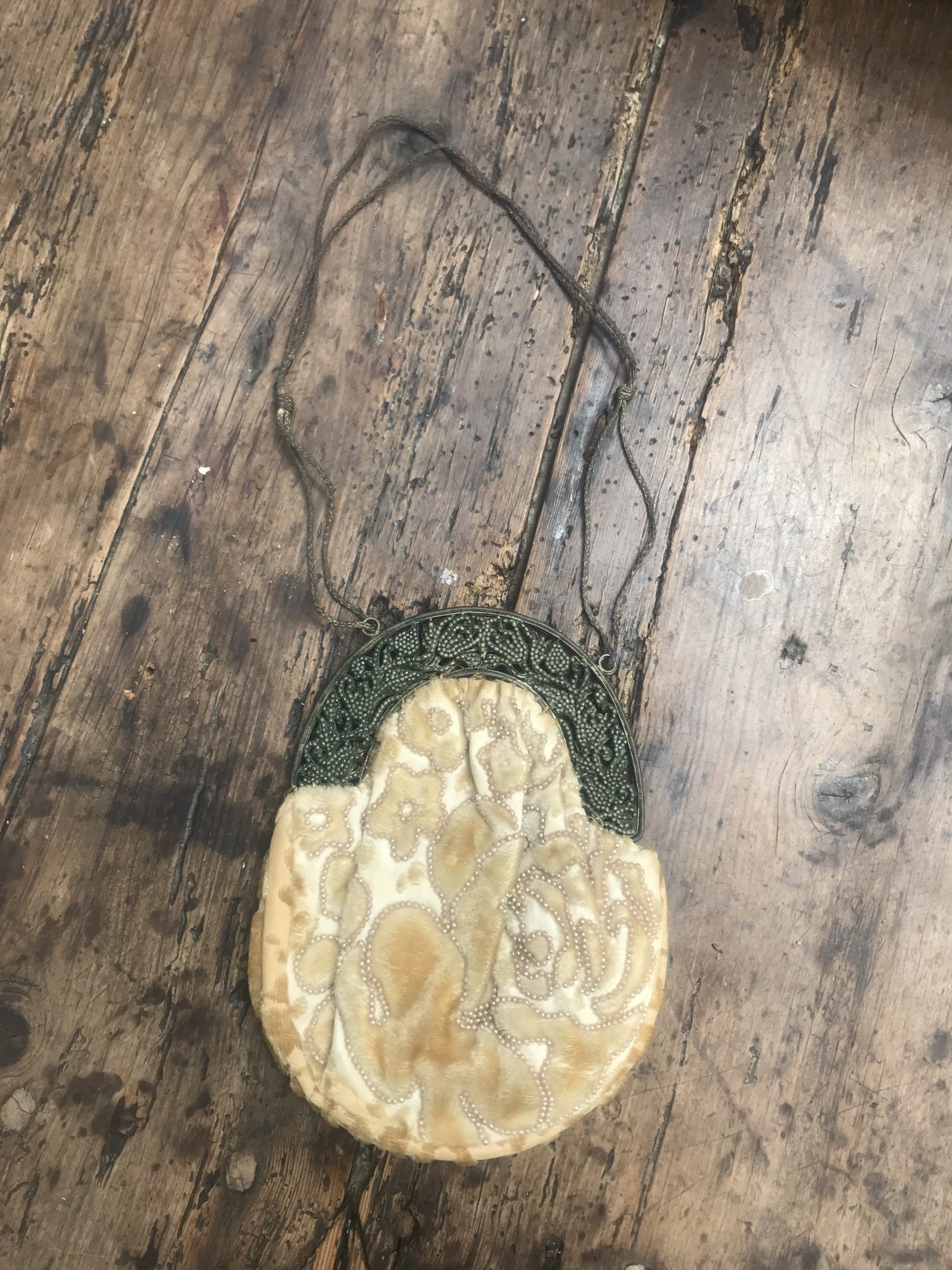
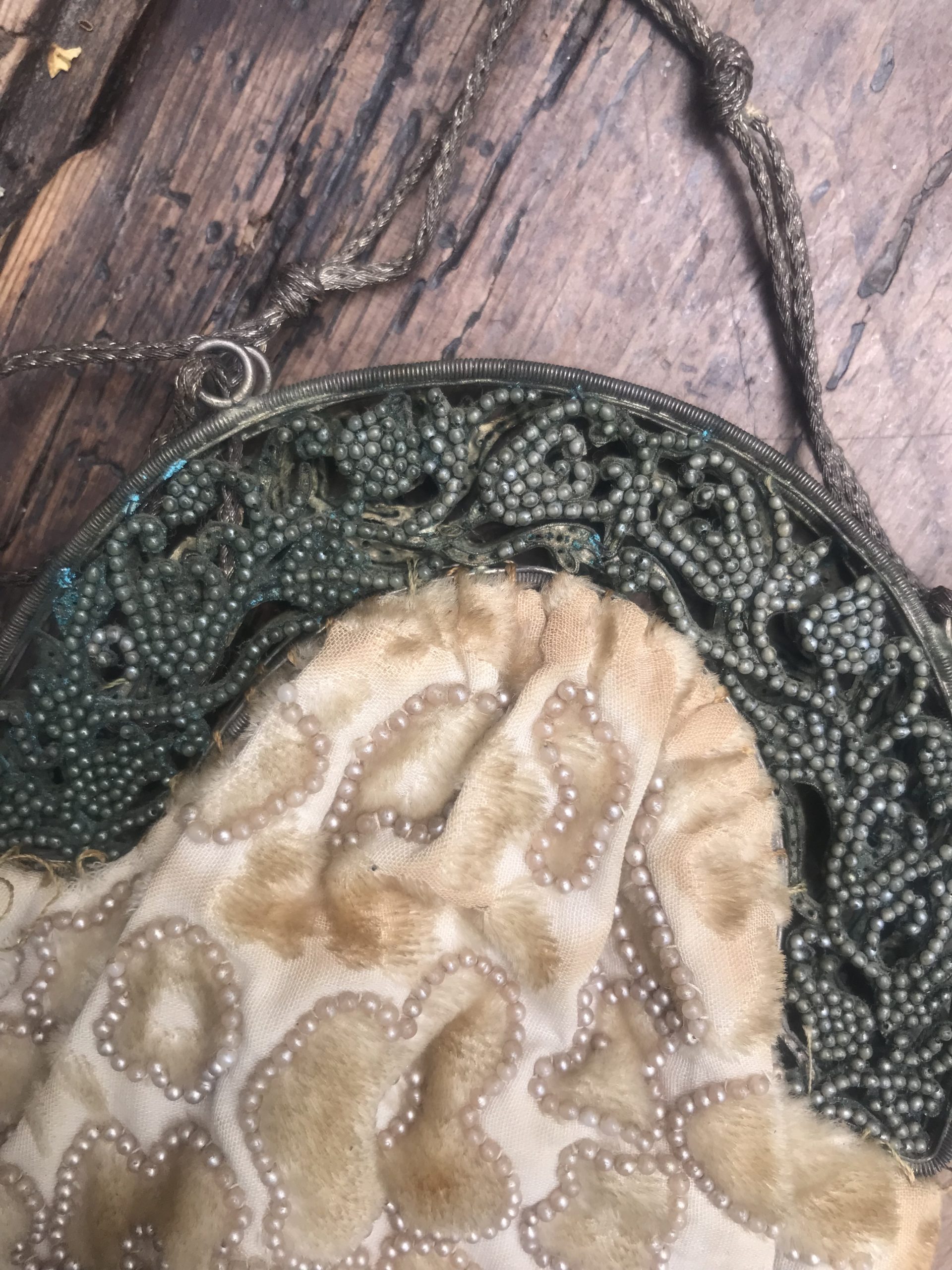
And so my thanks to Marieanne Doyle of Indiana, USA who contacted me to show me a purse her mother purchased at The Camel’s Bell some time before World War Two. It is very beautiful. Marieanne then amazingly posted the purse (the British at the time would call it an ‘evening bag’) to me in England. So here’s a closer look at the purse, it’s beautiful beading and the legendary label….Interestingly back then ‘Made in China’ would have been exotic and exciting rather run-of-the-mill.
Note the detailed beading work….
And the legendary Camel’s Bell label…
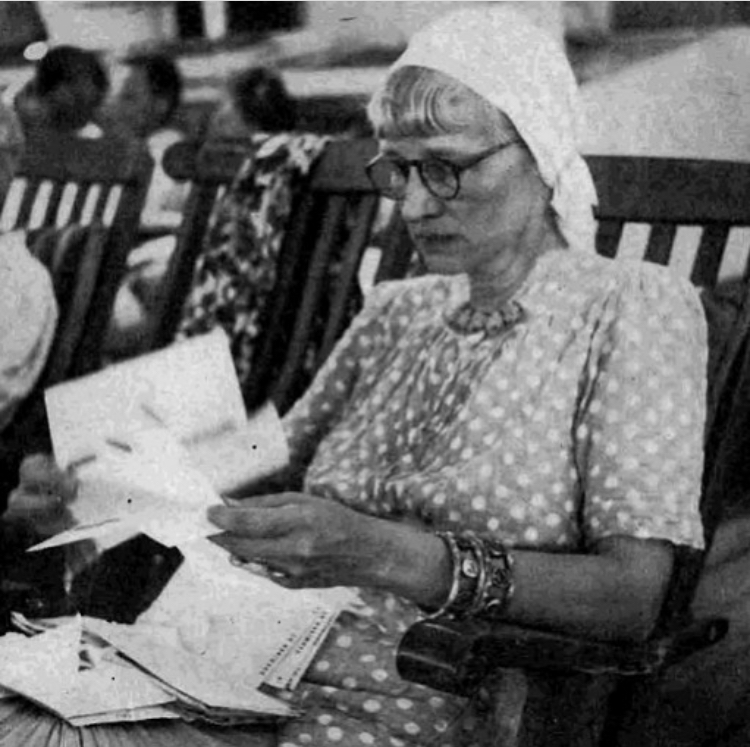
This picture of Helen Burton, as well as showing her stylishness (even in the adversity of WW2) is very poignant. It shows her in about 1944 on the US evacuation ship Gripsholm after a prisoner swap with Japanese civilians in the US. She is older, but still stylish with a lovely bangle, and yet it was taken at the very moment her mail has reached her and she is hearing of her brothers death in the war for the first time.
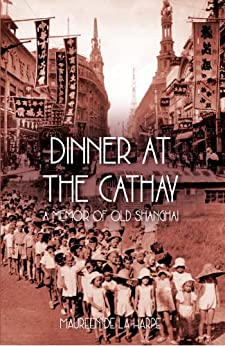
Shanghai-born Maureen de la Harpe got in touch with me some time ago to talk about her plans to write a history of her four-generation Shanghailander family that eventually left China after internment and WW2. Happy to report that Maureen has finished her family history and produced a memoir Dinner at the Cathay…
Shanghai-born Maureen de la Harpe was eight months old when the city was attacked by Japanese forces and two thousand people lost their lives. At the age of seven, her family and close relatives were interned in a Japanese concentration camp until the end of WW2. The family left China a year later.
It was not until 2014 that the author returned to Shanghai, with her daughter Lara, to rediscover the city of her birth, and it was that visit that prompted them to begin tracking the lives of their forebears. The author discovered she was a fourth generation ‘Shanghailander’, whose family history spanned the period of foreign settlement in the city.
Through the lives of her ancestors and her own childhood experiences during the war, the author has woven the story of foreign settlement in the cosmopolitan city of Shanghai.
Speaking of J Van Dyke yesterday I though this cover amusing. Van Dyke wrote two reasonably popular but not particularly distinguished novels about shenanigans among foreign men and women in Peking – Peking Madness in 1933 and Passenger to Peking in 1935. Neither are particularly recommended except to the serious student of the old ‘Foreign Colony’, but the photomontage cover is interesting…