The Hero Photo Studio (who also did photo engraving) in 1947 was at Nanking Road West, previously Bubbling Well Road, and now Nanjing West Road, by the junction with Seymour Road (now Shaanxi Road North).
The Summer Palace ‘Pekinese’ style restaurant was, i believe, very popular with Shanghailanders and advertised in English at them quite consistently – it was quite close to a number of key Shanghailander and sojourner locations including the American YMCA. In 1947 the restaurant was on Yu Ya Ching Road, renamed Sitzang Road and now Xizang Road (just in the International Settlement side).
Nice one – 2021 British Podcast Awards Best Arts & Culture podcast to Real Dictators from @Noiser_Podcasts (i’m sure my babbling about the DPRK pushed them over the line!)
Shing Hwang was a manufacturer of gas lamps and mantles in Shanghai ( i think a version of them still exists in Taiwan). This ad is from 1947 and so Shing Hwang ran their address as the old Rue Amiral Bayle in the French Concession, but the road names were changed and the Concession gone in 1943 and so Hwangpi Road South was also listed (now of course Huangpi Lu). Nice tilley lamps too if anyone’s got one??
I somehow missed Jenny Lin’s Above Sea when it first came out in 2018 but i’ve finally caught up. Lin has a great section on the emergence of modern art in Shanghai and its relationship to the haipai styles of the interwar republican era – the fusion of western and Chinese art styles, the impact on Shanghai artists exposed to Europoean art and studying abroad, the avant garde sense of the Storm Society. All this is fascinatingly used to critique the problematic Xintiandi development, that makes all sorts of claims about its nods to history and nostalgia without any real understanding. This siutation is, i imagine (as i haven’t been back to Shanghai recently due to the pandemic), accentuated by the glorification of the site of the First Congress of the CPC within Xintiandi’s confines. There are also interesting debates about more contemporary Shanghai and Chinese artists as well as the problems associated with the city’s bienalle. Highly recommended in other words.
Shanghai, long known as mainland China’s most cosmopolitan city, is today a global cultural capital. This book offers the first in-depth examination of contemporary Shanghai-based art and design – from state-sponsored exhibitions to fashionable cultural complexes to cutting edge films and installations. Informed by years of in-situ research, the book looks beyond contemporary art’s global hype to reveal the socio-political tensions accompanying Shanghai’s transitions from semi-colonial capitalism to Maoist socialism to Communist Party-sponsored capitalism. Case studies reveal how Shanghai’s global aesthetic constructs glamorising artifices that mask the conflicts between vying notions of foreign-influenced modernity and anti-colonialist nationalism, as well as the city’s repressed socialist past and its consumerist present.
Imagine how many crooks, tricksters, conmen and generally dodgy types were around in old Shanghai? Now remmeber that the used car business is a natural home to crooks, tricksters, conmen and generally dodgy types. And so imagine what a potential nest of vipers a Shanghai used car showroom must have been. Of course, Albert Motors might have been totally legit….
This ad for the company is from 1947 and so uses the dual road names then common – the old Settlement?French Concession names mixed with this introduced by either Wang Jing-wei during the war or the Nationalists just after. So Roi Albert was also now Shensi Road South and is now Shaanxi Road South.
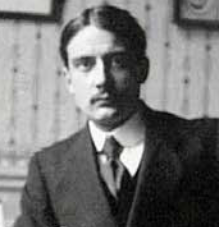
The Sundays of Jean Dezert by Jean de la Ville de Mirmont is a novella written in about 1912/1913 before the author went to war and was killed. It is a quite stunning work of French early modernism and ticks just about all the modernist reference boxes – jazz, cinema, trolleybuses, electric chains, modern funerals, vending machines, vegetarian restaurants etc. The novel is a snapshot of modern Parisian life just before the First World War. In among all these saymbols of the new and the modern are, of course, for this period Chinese lanterns:
“He invited Mademoiselle Dorgeval, a striking brunette who speicalized in the chanson rosse, out to dinner. He learned to play billiards and backgammon. He joined up with a procession of students in the Latin Quarter, carrying a Chinese lantern on the end of a cane. He even went dancing at the Tabarin and inadvertently almost got embroiled in a matter of honour with an artillery sergeant.”
But Confucius also gets a mention – which is interesting as it shows both a trend at the time for references to China in European early modernist works and the transmission of ideas back and forth much more than is normally acknowledged. Jean de la Ville de Mirmont’s stories of Jean Dezert have uncanny echoes in some Chinese early modernist writing, such as that from Mu Shiying (check out his stories here)….
Jean Dezert is spending one of his precious Sundays (now a time not for church and rest but for consumerism and consumption of course) browsing the bouquiniste book stalls on the Quai Voltaire.
For 5 sous he discovers a thin volume, printed in London in the 18th century entitled: Confucian Ethics and Chinese Philosophy. If this is not a real book (and if it is then i can’t find it with that exact title) then de la Ville de Mirmont is thinking of then there were many similar ones available.
Jean Dezert reads a few maxims:
A magistrate must honour his father and mother…
There are three things wise men must revere: the laws of heaven, powerful men, and the words of the righteous…
Jean Dezert thinks those OK maxims, but a third, he believes, symbolises his life…
When one is unable to find a remedy to an illness, it is useful to keep searching for one…
Dezert buys the book and, at home, places it on the nightstand next to his bed and, we are told, consulted it everyday for the rest of his life…
Jeremy Taylor’s Iconographies of Occupation is an absolutely fabulous book for those interested in Wang Jingwei’s collaborationist regime during the war – and the kindle version is free!
Iconographies of Occupation is the first book to address how the “collaborationist†Reorganized National Government (RNG) in Japanese-occupied China sought to visualize its leader, Wang Jingwei (1883–1944); the Chinese people; and China itself. It explores the ways in which this administration sought to present itself to the people over which it ruled at different points between 1939, when the RNG was first being formulated, and August 1945, when it folded itself out of existence. What sorts of visual tropes were used in regime iconography and how were these used? What can the intertextual movement of visual tropes and motifs tell us about RNG artists and intellectuals and their understanding of the occupation and the war?
Drawing on rarely before used archival records relating to propaganda and a range of visual media produced in occupied China by the RNG, the book examines the means used by this “client regime†to carve out a separate visual space for itself by reviving prewar Chinese methods of iconography and by adopting techniques, symbols, and visual tropes from the occupying Japanese and their allies. Ultimately, however, the “occupied gaze†that was developed by Wang’s administration was undermined by its ultimate reliance on Japanese acquiescence for survival. In the continually shifting and fragmented iconographies that the RNG developed over the course of its short existence, we find an administration that was never completely in control of its own fate—or its message. Iconographies of Occupation presents a thoroughly original visual history approach to the study of a much-maligned regime and opens up new ways of understanding its place in wartime China. It also brings China under the RNG into dialogue with broader theoretical debates about the significance of “the visual†in the cultural politics of foreign occupation.