Posted: May 11th, 2018 | No Comments »
Stephan R. Platt’s new book on the opium wars is out in the US I think and published in the UK on June 7th….

When Britain declared war on China in 1839, it sealed the fate of what had been, for centuries, the wealthiest and most powerful empire in the world.China was much weaker than was commonly understood and the war set in motion the fall of the Qing dynasty which, in turn, would lead to the rise of nationalism and communism in the twentieth century.
Beginning with the very first efforts by the British government to ‘open’ China to trade, Stephen Platt tells the epic story of the decades leading up to the war and, given the growing uncertainty in current relations between China and the West, shows how the conflict still has important implications for the world today.
Posted: May 10th, 2018 | No Comments »
China: Art, Power and Revolutions, 1950-76 –
Professor Craig Clunas
Museum of London, 14/5/18, 1pm

(broadcast live here)
The establishment of the People’s Republic of China in 1949 gave Chinese artists a government that had explicit policies for the arts, seeing them as an essential part of the creation of ‘new China’. Resources were put into the support of art and artists, opening up new possibilities at the same time as other possibilities that were uncongenial to Communist Party policy were closed down.Â
The consequences of fierce artistic debates could be expulsion from the visible art world and the silencing of some points of view. An increase in party control of the arts, linked with adulation of the Great Leader, led to very widely-reproduced images that played a part in the unprecedented stress and upheaval.
No reservations are required for this lecture. It will be run on a ‘first come, first served’ basis.
Doors will open 30 minutes before the start of the lecture.
Read more here
Posted: May 5th, 2018 | No Comments »
Wednesday, 9th May 2018
7:30 pm – 9:30 pm
RAS Library
Tushanwan Craft School in Shanghai
Speaker: Julie Chun

With the exception of Shanghai history specialists and the curious wayward wanderer, even some of the city’s local residents do not know about the small building inscribed ‘T’ou-se-we Museum’ (also known as Tushanwan  土山湾Museum) on its red façade. The remnants of the former Spanish-styled compound of dormitories, classrooms, and workshops on the sprawling 5.5 hectares is now but a mere shadow which once housed, fed, and taught many destitute young Chinese boys. While rich in history, the quaint and well-kept museum unfortunately possesses only a few actual artefacts produced during the period when the orphanage was instituted in 1864 until its formal closure in 1962. The craft school, which was distinctly tied to the identity of the orphanage, served a crucial social and artistic need in Shanghai for over 90 years during times of both political turmoil and commercial prosperity. By incorporating the evidence of recent scholarship, Art Historian Julie Chun seeks to re-address and re-evaluate the legacy of Xuhui’s understudied history, which continues to remain relatively insular to the world- at-large.
About the speaker
Julie Chun is an independent art historian and lecturer based in Shanghai since 2011. She serves as the Art Convener of the Royal Asiatic Society China in Shanghai, where she delivers monthly lectures at museums and galleries to widen the public’s understanding of artistic objects, past and present. She lectures frequently on art for the various foreign Consulate General offices in Shanghai and as an adjunct professor for The Alliance for Global Education at Shanghai at the University of Finance and Economics. She is a regular contributor to Yishu Journal of Contemporary Chinese Artand is also the Honorary Editor of the Journal Royal Asiatic Society.
Posted: May 4th, 2018 | No Comments »
Dr Craig Clunas discusses Chinese painting and its audiences.
 Left:Â Cover of Chinese Painting and Its Audiences, Right: Chen Shizeng, Viewing Picture (1917)
Professor Craig Clunas is a major figure in the field of Art History; specialising in Chinese art and culture from the Ming dynasty to the present day. His current research deals with the transnational history of Chinese art from 1911 to 1976.
In this lecture for Asia House, Professor Clunas will share his brilliant insights into individual Chinese paintings selected from his book, Chinese Painting and Its Audiences, listed as one of “The Best Art Books of 2017†by The New York Times and the London Evening Standard.
Professor Clunas will examine a remarkable range of Chinese images, from the 15th century to the 21st, to explain the changing audiences for Chinese painting and to look at the ideal types of viewer these pictures were made for. This lecture will look at some of the themes of this innovative book and at the changing audience for Chinese painting – from the scholars of the Ming period to the mass audience of present-day museum goers.
Exploring the complex relationships between works of art and those who look at them, Chinese Painting and Its Audiences sheds new light on how the concept of Chinese painting has been formed and reformed over hundreds of years.
About: Professor of the History of Art at the University of Oxford, Professor Clunas has published extensively on the art history and culture of China. Much of his work concentrates on the Ming period (1368-1644), with additional teaching and research interests in the art of 20th century and Contemporary China. He has worked as a curator at the Victoria and Albert Museum, and taught art history at the University of Sussex and the School of Oriental and African Studies, University of London.
He is the author of Art in China (1997, second edition 2009) in the Oxford History of Art Series, and his other books include Superfluous Things: Material Culture and Social Status in Early Modern China (1991); Fruitful Sites: Garden Culture in Ming Dynasty China (1996); Pictures and Visuality in Early Modern China (1997); Elegant Debts: The Social Art of Wen Zhengming, 1470-1559 (2004); Empire of Great Brightness: Visual and Material Cultures of Ming China, 1368-1644 (2007), based on the 2004 Slade Lectures, and Screen of Kings: Art and Royal Power in Ming China (2013); several of these books have been translated into Chinese, Japanese and Korean.
More details and tickets here

Posted: May 3rd, 2018 | No Comments »
Lovely book on the Peak just out from Blacksmith Books in Hong Kong, by Richard Garrett, and part of the Royal Asiatic Society Hong Kong Studies Series…

The Peak is Hong Kong’s top residential district, where property prices are as high as the altitude. How did it become an exclusive enclave in the bustling business centre of 19th-century Asia?
The British wanted relief from summer heat and the Peak was the obvious place to escape it. When the Governor adopted Mountain Lodge as a summer getaway, development accelerated and the opening of the Peak Tram in 1888 made access easier. Gradually a community developed and a church, a club and a school were established.
This book describes how the now-popular tourist area developed over time and adapted as needs changed.
Click here for more details and to order
Posted: May 2nd, 2018 | No Comments »
The excellent documentary Finding Kukan will be screened on PBS in America on May 8th – see here for details
if you don’t know this great film here’s the details….
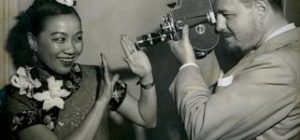
Filmmaker Robin Lung documents her 7-year journey investigating the work and legacy of Chinese American visionary Li Ling-Ai, the uncredited producer of Kukan. A landmark film, Kukan showcased China’s resistance to Japanese occupation during World War II, and was one of the first American feature documentary films to receive an Academy® Award in 1942.
Lung discovers a badly damaged film print of Kukan, which had been lost for decades, and pieces together the inspirational tale of the two renegades behind its making — Li Ling-Ai and Rey Scott. Relentless, Ling-Ai was determined to shift America’s perception of the Chinese plight by telling the story from a new point-of-view and not only hired Scott but sponsored the rare enterprise. Finding Kukan uses vintage and unseen archival footage to create an unforgettable portrait of a filmmaking pioneer, and shed a light on the longstanding underrepresentation of women and people of color in the movie-making business.
Finding Kukan is a co-presentation with the Center for Asian American Media (CAAM), a nonprofit organization dedicated to presenting stories that convey the richness and diversity of Asian American experiences to the broadest audience possible.
Posted: May 1st, 2018 | No Comments »
18:30 to 19:30
China Exchange, Gerard Street, Soho, London
Click above for more details and rsvp
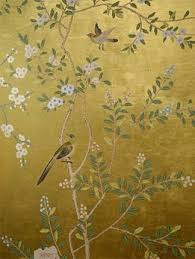
Join expert Emile de Bruijn as he enriches our understanding of Chinese wallpaper and explains how Europeans fell for them, how the Chinese market and artisans responded to this new demand, the original meanings and contexts of Chinese paintings, prints and wallpapers, and the way they are used in British and Irish interiors from the late seventeenth century onward.
Posted: April 26th, 2018 | No Comments »
The legendary (well, almost) Midnight in Peking walking tour brought to you by Bespoke Beijing, Lars from Beijing Postcards and made official by Penguin China (and me) is back this Saturday with cocktails at the Beijing Hotel too and books….a few tickets only left I’m told….
