All things old China - books, anecdotes, stories, podcasts, factoids & ramblings from the author Paul French
Posted: September 14th, 2017 | No Comments »
A new study of the takeover of Tibet in 1959….
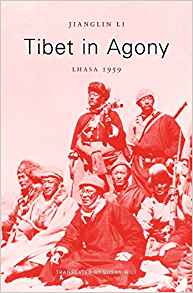
The Chinese Communist government has twice invoked large-scale military might to crush popular uprisings in capital cities. The second incident the notorious massacre in Tiananmen Square in 1989 is well known. The first, thirty years earlier in Tibet, remains little understood today. Yet in wages of destruction, bloodshed, and trampling of human rights, the tragic toll of March 1959 surpassed Tiananmen.
Tibet in Agony provides the first clear historical account of the Chinese crackdown in Lhasa. Sifting facts from the distortions of propaganda and partisan politics, Jianglin Li reconstructs a chronology of events that lays to rest lingering questions about what happened in those fate-filled days and why. Her story begins with throngs of Tibetan demonstrators who fearful that Chinese authorities were planning to abduct the Dalai Lama, their beloved leader formed a protective ring around his palace. On the night of March 17, he fled in disguise, only to reemerge in India weeks later to set up a government in exile. But no peaceful resolution awaited Tibet. The Chinese army soon began shelling Lhasa, inflicting thousands of casualties and ravaging heritage sites in the bombardment and the infantry onslaught that followed. Unable to resist this show of force, the Tibetans capitulated, putting Mao Zedong in a position to fulfill his long-cherished dream of bringing Tibet under the Communist yoke.
Li’s extensive investigation, including eyewitness interviews and examination of classified government records, tells a gripping story of a crisis whose aftershocks continue to rattle the region today.
Posted: September 12th, 2017 | No Comments »
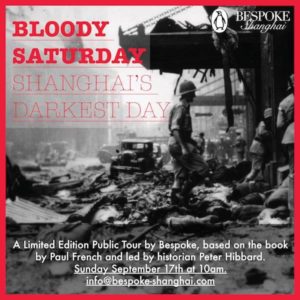
Final chance to sign up for the last few places on the Bloody Saturday walk this coming weekend…
-
Posted: September 10th, 2017 | No Comments »
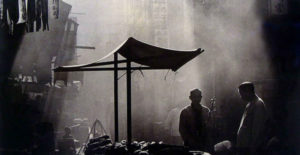
The tyrant Mao Tse-tung finally died on 9/9/76 – the US papers covered it extensively. This is the best picture i know of relating to Mao’s death…

Posted: September 10th, 2017 | No Comments »
Neil Monnery’s new study of a key figure in Hong Kong’s post-war recovery and rise to greatness in the 1970s….

This is a book about Sir John Cowperthwaite – the man Nobel Prize-winning economist Milton Friedman identified as being behind Hong Kong’s remarkable post-war economic transformation. Despite there being some articles about him and effusive obituaries there have, until now, been no published biographies of Cowperthwaite. At the end of the Second World War, Hong Kong lived up to its description as “the barren island.” It had few natural resources, its trade and infrastructure lay in tatters, its small manufacturing base had been destroyed and its income per capita was less than a quarter of its mother country, Britain. As a British colony it fell to a small number of civil servants to confront these difficult challenges, largely alone. But by the time of the handover of Hong Kong to China in 1997, it was one of the most prosperous nations on Earth. By 2015 its GDP per capita was over 40% higher than Britain’s. How did that happen? Around the world, post-war governments were turning to industrial planning, Keynesian deficits and high inflation to stimulate their economies. How much did the civil servants in Hong Kong adopt from this emerging global consensus? Virtually nothing. They rejected the idea that governments should play an active role in industrial planning – instead believing in the ability of entrepreneurs to find the best opportunities. They rejected the idea of spending more than the government raised in taxes – instead aiming to keep a year’s spending as a reserve. They rejected the idea of high taxes – instead keeping taxes low, believing that private investment would earn high returns, and expand the long-term tax base. This strategy was created and implemented by no more than a handful of men over a fifty-year period. Perhaps the most important of them all was John Cowperthwaite, who ran the trade and industry department after the war and then spent twenty years as deputy and then actual Financial Secretary before his retirement in 1971. He, more than anyone, shaped the economic policies of Hong Kong for the quarter century after the war and set the stage for a remarkable economic expansion. His resolve was tested constantly over his period in office, and it was only due to his determination, independence, and intellectual rigor that he was not diverted from the path in which he believed so strongly. This book examines the man behind the story, and the successful economic policies that he and others crafted with the people of Hong Kong.
Posted: September 8th, 2017 | No Comments »
I believe this reprint of Virginia Woolf’s short story set on a hot July day in Kew Gardens was republished last year, but I only chanced upon in a bookshop the other day. Woolf privately published the story in 1919 and then issued it more widely in 1921. Of course the cover immediately attracts a China Rhyming eye and the book, republished by Royal Botanic Gardens at Kew, is beautifully illustrated too. According to the blurbs, ‘Woolf’s story creates an impressionistic world with snippets of conversation, wondering thoughts and sparks of colour. The gentle narrative drifts between different characters as they stroll through the world famous botanic gardens…’
Worth an hour or so of your time to read and enjoy before summer finally, irrecoverably departs….

Posted: September 7th, 2017 | No Comments »
Emile de Brujin’s comprehensive survey is a joy to read and browse…
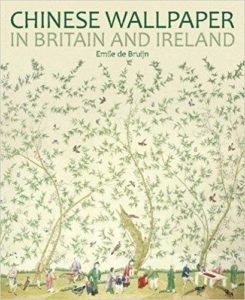
Chinese wallpaper has been an important element of western interior decoration for three hundred years. As trade between Europe and China flourished in the seventeenth century, Europeans developed a strong taste for Chinese art and design. The stunningly beautiful wall coverings now known as ‘Chinese wallpaper’ were developed by Chinese painting workshops in response to western demand. In spite of their spectacular beauty, Chinese wallpapers have not been studied in any depth until relatively recently. This book provides an overview of some of the most significant Chinese wallpapers surviving in the British Isles. Sumptuously illustrated, it shows how these wallpapers became a staple ingredient of high-end interiors while always retaining a touch of the exotic.
Posted: September 6th, 2017 | No Comments »
You may or may not be aware but I write a fortnightly column for The Literary Hub called Crime in the City. The idea is to look at city’s through the lens of the crime books – fiction and non-fiction with a bit of long form TV thrown in for good measure where appropriate. The series roams around the world but the last one was on Hong Kong so I thought I’d plug that and the other Asian cities I’ve covered as they migth be of interst to China Rhyming readers….
Posted: September 5th, 2017 | No Comments »
Here’s a little fact I did not know – China was the first country to sign the UN Charter on June 1 1945 in San Francisco. As it was deemed that China had been the first allied country to fall victim to fascist and militarist aggression they were accorded the honour of going first. Wellington Koo signed the document using a traditional Chinese calligraphy brush. Behind him stands PC Carson Chang (this photo has an arrow behind him for some reason), the playwright who became a diplomat and introduced ideas of Confucianism into the diplomatic world and the UN. Both great diplomats (Koo of course signed the UN Charter but had previously, correctly, refused to sign the Versailles Peace Treaty at the end of WW1).
there’s a video clip of the Chinese signing here…
