Shanghai’s Foochow Road, 1912
Posted: February 16th, 2016 | No Comments »Now of course Fuzhou Road…here’s Foochow Road in 1912…

All things old China - books, anecdotes, stories, podcasts, factoids & ramblings from the author Paul French
Now of course Fuzhou Road…here’s Foochow Road in 1912…
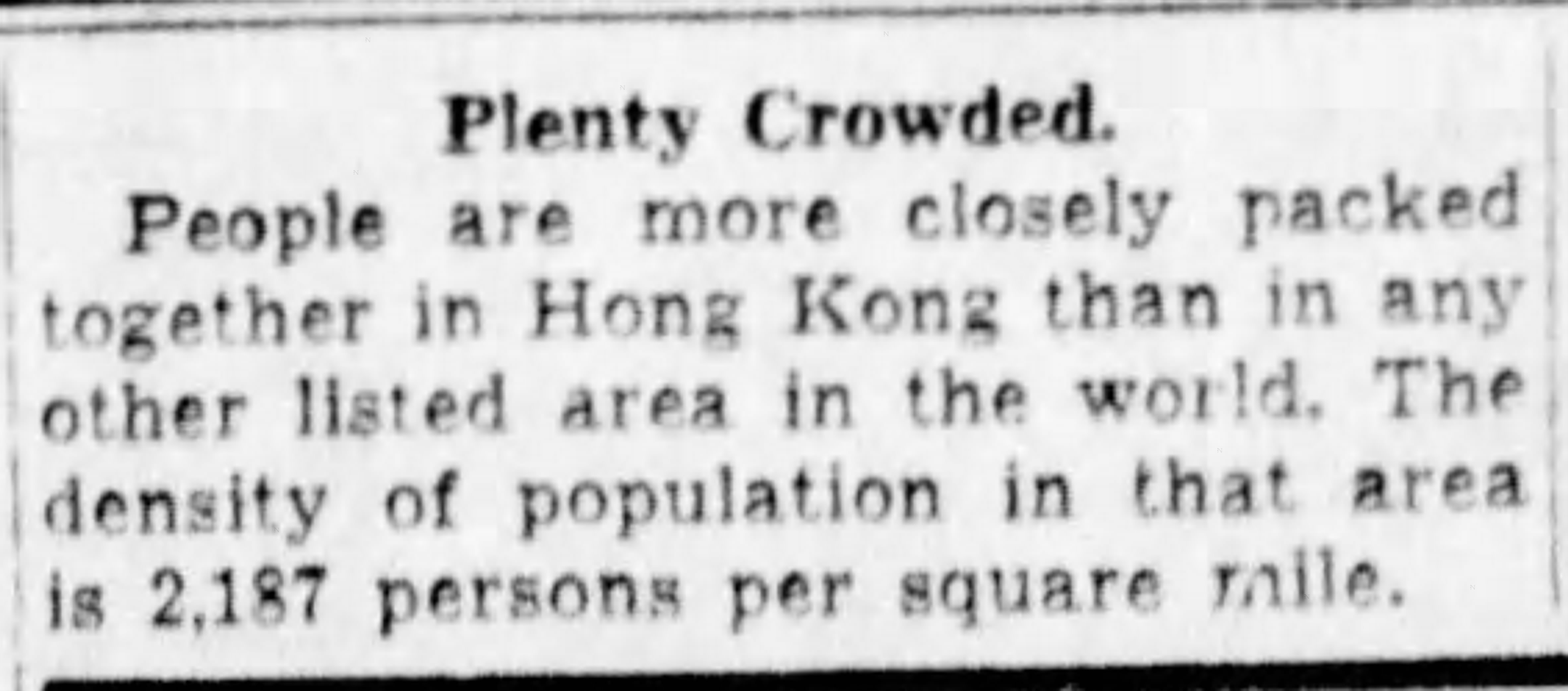
In 1932 the newspapers thought Hong Kong’s population density worthy of reporting when it hit 2,187 persons per square mile – the most densely packed city on earth then. For the record today’s recorded population density is 6,735 people per square mile – three times as many. Makes 1932 Hong Kong seem relatively empty and care free!
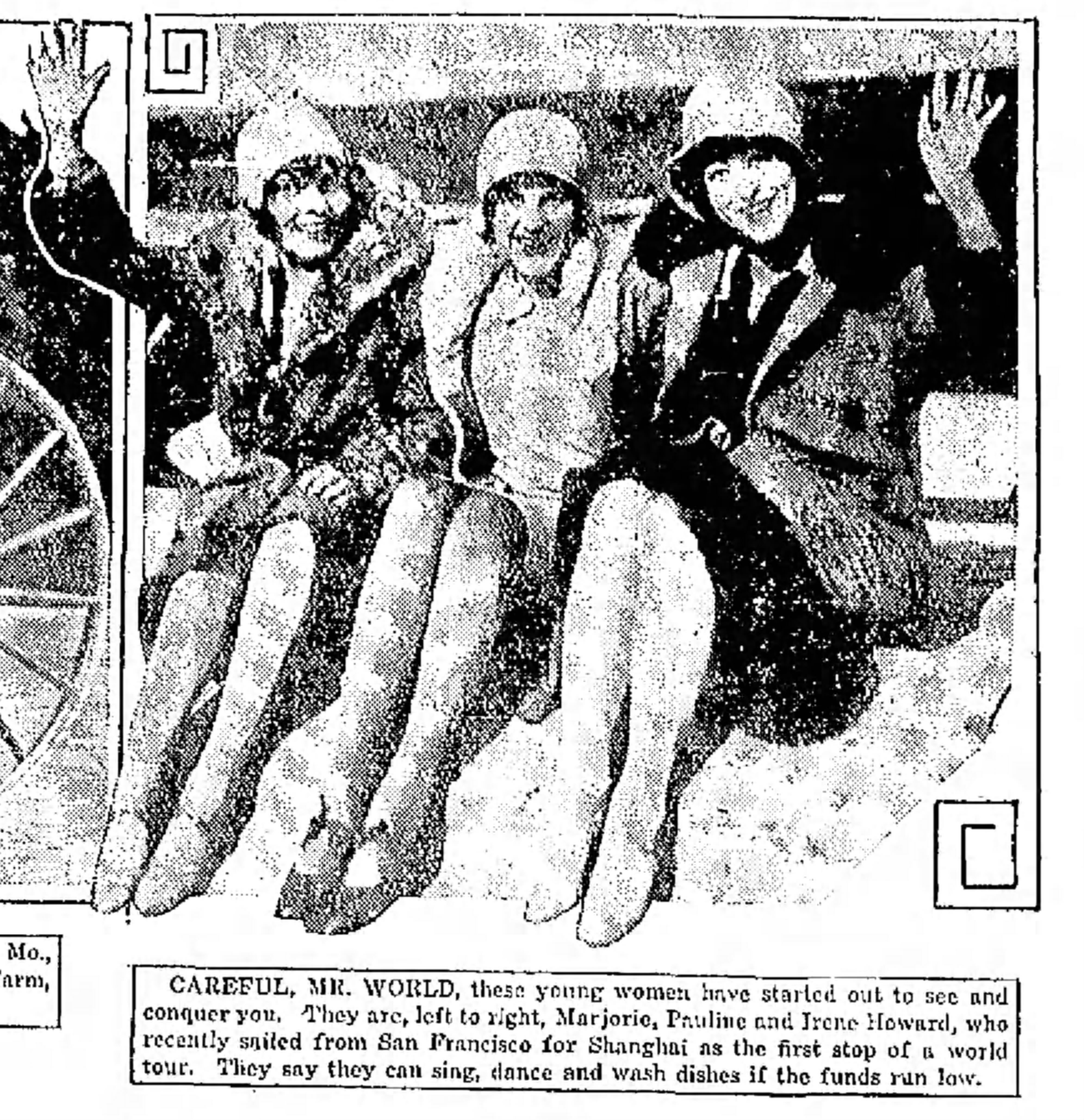
In 1928 the very flapperish Howard sisters of San Francisco set out to conquer the world with their song and dance act. First stop? Shanghai.
What happened to them? To be perfectly frank – I have no idea!
A couple of photographs showing Choy’s Chinese Restaurant on Soho’s Frith Street – the street shot showing Choy’s alongside Parmigiani’s Italian deli and the Cote D’Azur restaurant is from 1956 while the close up shot is from the early 1960s. Choy’s was often regarded as one of the best Chinese restaurants in London after the war – along with the actor Ley On’s place over on Wardour Street and, perhaps slightly bizarely, a Chinese restaurant up on Tottenham Court Road run by the boxer Freddie Mills and actor Andy ho (which is a whole other, very messy, story)! Choy’s got great reviews – Cue: The Weekly Magazine of New York Life described it as the best Chinese food in London in 1955 with “world famous egg-foo-ying”. In 1958 Fodor’s described Choy’s as the best Chinese food in Britain and praised its “authentic Oriental atmosphere”. Additionally, and unlike most Chinese restaurants of the pre-war and immediate post-war era Choy’s was licensed and Fodor’s considered them to have a good cellar. They were open noon till 11pm including on Sundays in the late 1950s (which was quite something!).

Photo by Daily Mail/REX – Corner of Old Compton Street and Frith Street, Soho, 1956

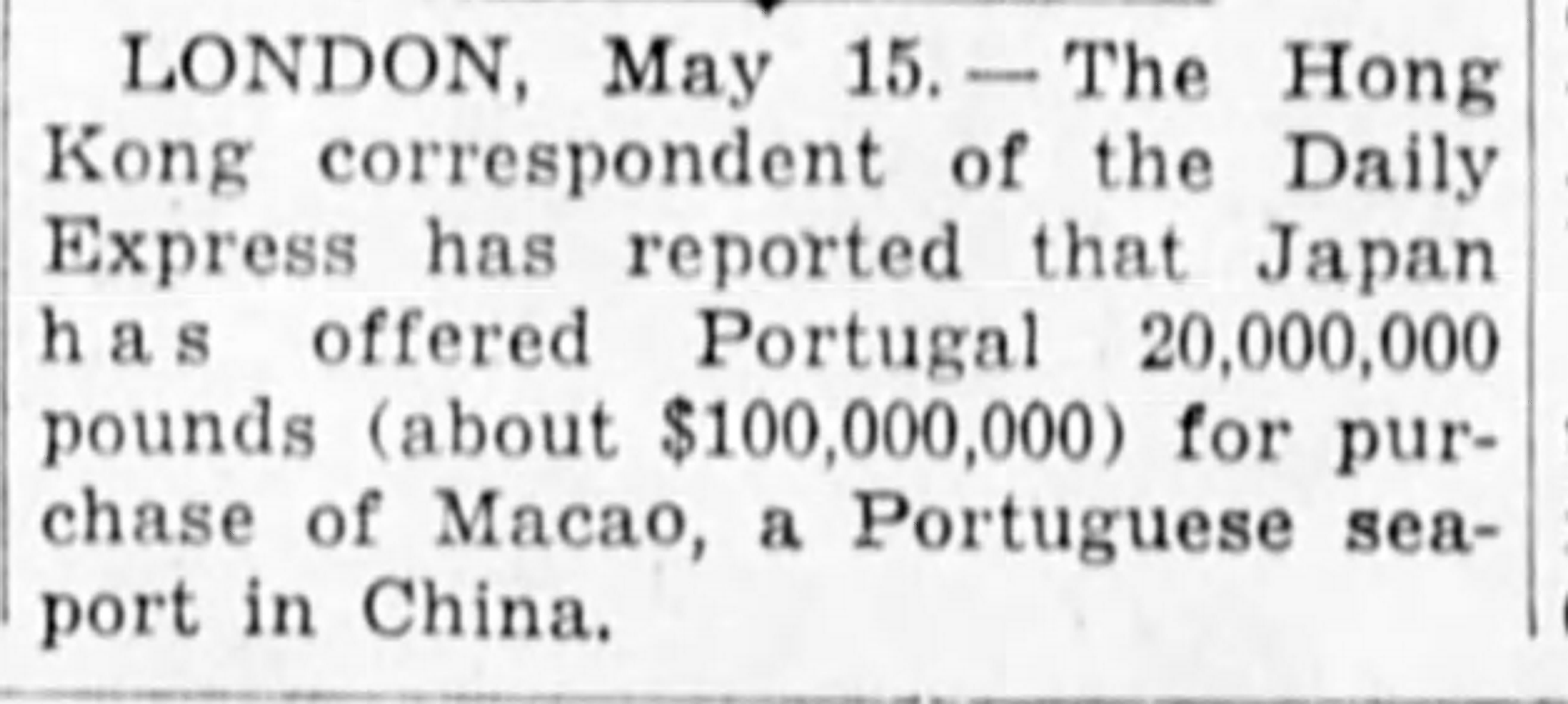
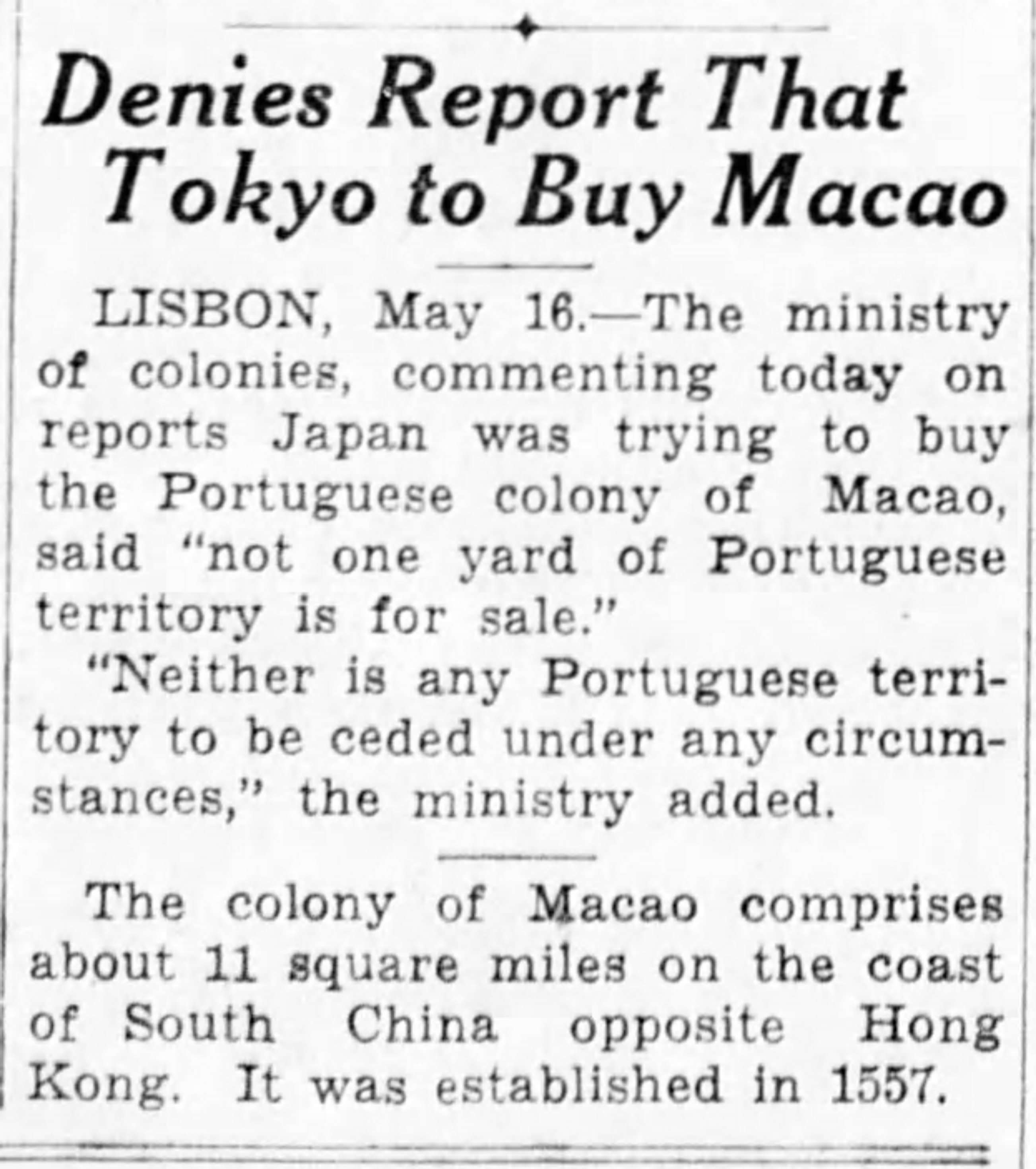
Did the Japanese try to buy Macao in 1935? a Hong Kong-based stringer (looking for a quick pay day maybe?) for the London Daily Express caught the whiff of a story that Tokyo was willing to offer a million bucks (which would be about US$18million today I think – quite a bargain!) for the Portuguese territory. A further follow up story reported that a Japanese delegation was on its way to Lisbon to make the offer to the Portuguese government. Another journalist, digging a little deeper, discovered that a major stumbling block was that China had to give its approval to any sale. Now those that hate Chiang Kai-shek would probably argue that he’d take the deal and the money and buy the wife a new frock; others might suggest it would never be approved. Still others thought that, as Japan was massing troops across Asia and looked likely to attack (as it did a couple of years later), perhaps Portugal/China should sell while the going was good!
But it seems Portugal said no to the offer, if indeed it ever was really made….However, there was the desire by Tokyo to buy, or more likely try to lease, Macao as an air base or at least to have landing rights. Pan-American Airways was trying to negotiate a similar deal with Macao being the eastern end of its soon-to-be inaugurated China Clipper service. The Pan-American deal never materialised either eventually.
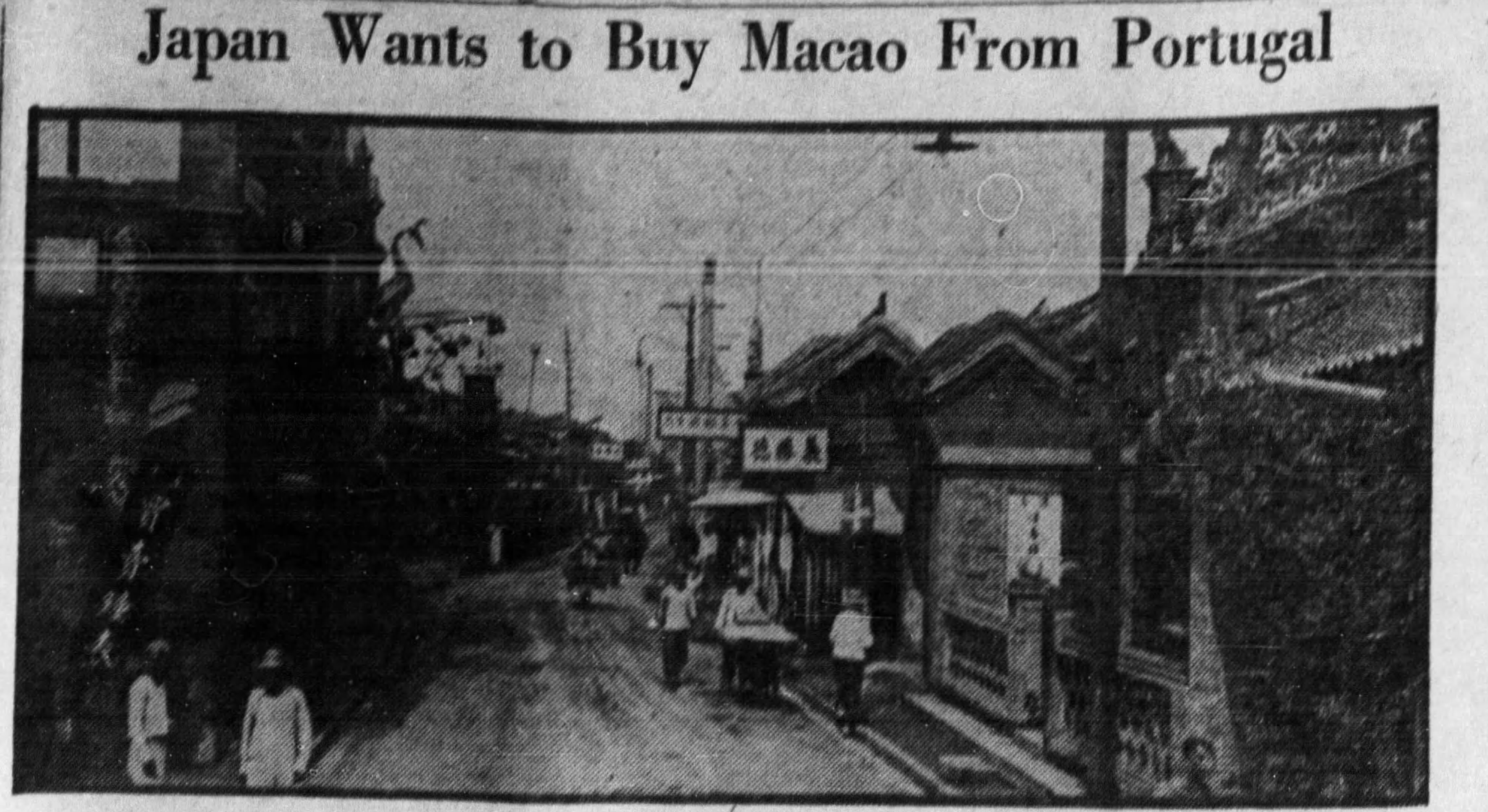 A Macanese street – apparently not for sale
Monday, 15 February 2016
In Manchuria: A Village Called Wasteland and the Transformation of Rural China
Michael Meyer
17:00-19:00
Room: Djam Lecture Theatre, Russell Square, SOAS, London

Abstract
Since arriving in the country as one of its first Peace Corps volunteers 20 years ago, Michael Meyer has witnessed and written about the transformation of China, at the level of both an urban neighbourhood and a remote village. His award-winning first book The Last Days of Old Beijing (Bloomsbury) documented changes in the daily life in the capital’s oldest neighbourhood as the city remade itself for the 2008 Olympics. In his second book In Manchuria: A Village Called Wasteland and the Transformation of Rural China (Bloomsbury) he describes a town of family rice farms being developed into a corporate agribusiness.
Amplifying the story of family and Wasteland, Meyer — via photographs — will take us on a journey across Manchuria’s past, a history that explains much about contemporary China—from the fall of the last emperor to Japanese occupation and Communist victory.  Meyer will also talk about the challenges of reporting from China and how to fund and produce books that reach a wide audience.
Biography
I’ve been reading, and hugely enjoying, DJ Taylor’s The Prose Factory: Literary Life in Britain Since 1918. Among the nuggets to be picked out is one about George Orwell’s last planned novel, of which only ‘fragments’ remain. Orwell of course served in the British Colonial Police in Burma, an experience that resulted in an outpouring of work (Burmese Days obviously as well as several short stories and a number of non-fiction articles critical of the British Empire in the Far East). Orwell was also a fan, as a boy, of Arnold Bennett, HG Wells and Somerset Maugham and planned a novel in their style. Shortly before his death in 1950, he was working on a new novel….’a rather old-fashioned piece about a young man coming back from the East in the 1920s: a trajectory that exactly parallels Orwell’s own return from Burma in 1927.’ Sadly it was never completed.
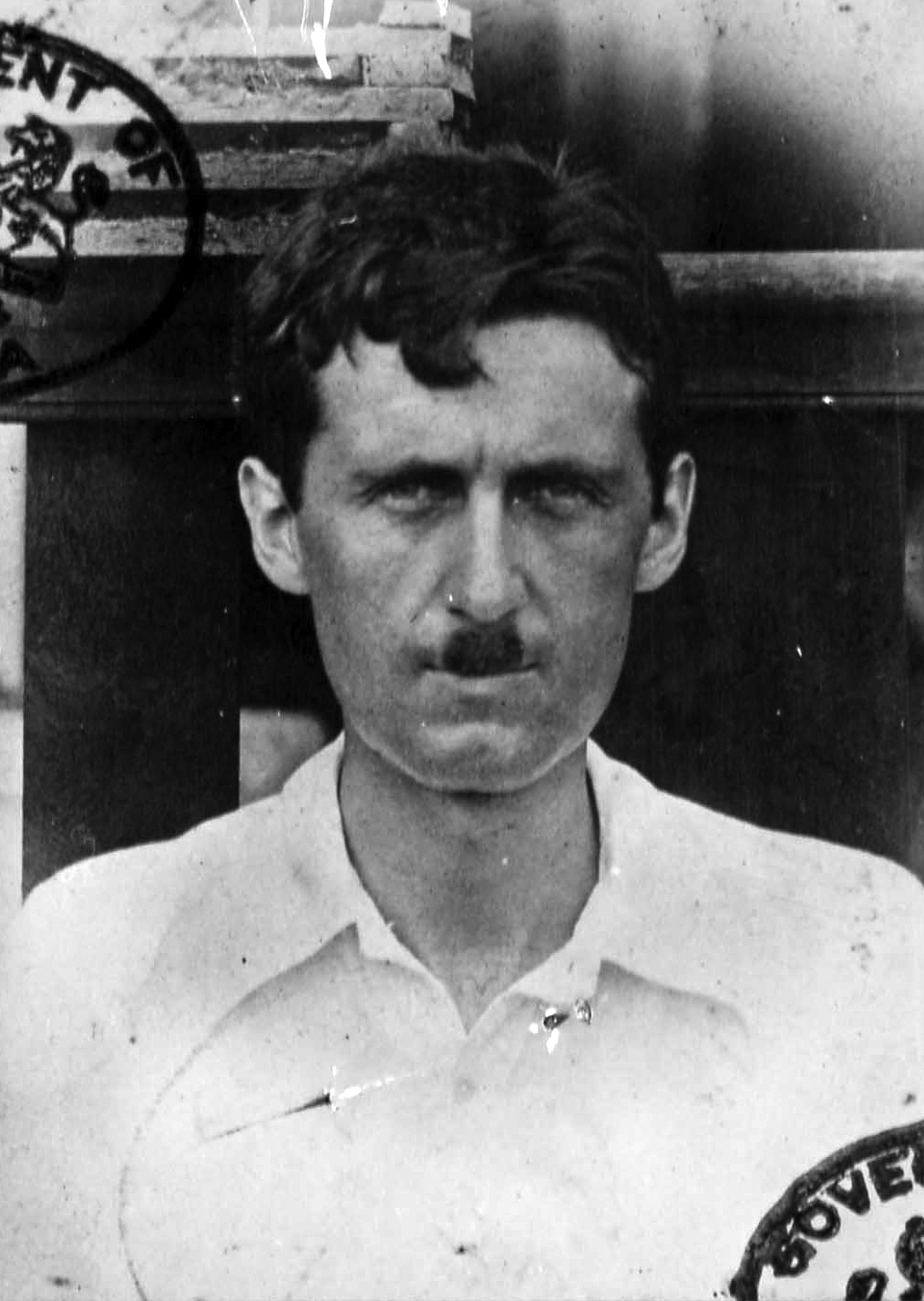
Orwell’s passport photo from his Burma Days – sporting a moustache style that would soon go decidedly out of fashion
Tuesday, 16th February 2016
7:00 pm – 9:00 pmTavern at the Radisson Xingguo Hotel
Speaker: Daqing Yang (George Washington University Visiting Scholar, Fudan University)

It is often said that truth is the first casualty of war. With the advance in communications technology and the rise of mass media, governments’ motivation and ability to influence news reporting became much greater. One hundred years ago, the Great War (1914-1918) was the first modern war of information and propaganda.
As the centre of international news in East Asia, Shanghai naturally became a battleground of information warfare shortly after Japanese forces invaded in autumn 1937. Despite the absence of a war declaration, Japanese military exercised belligerent rights by censoring news telegrams transmitted through foreign communications companies in Shanghai. Tapping the archives of such a company for the first time this talk reveals the hitherto unknown story of news and censorship, and explores their implications for the war and society.
ABOUT THE SPEAKER
Daqing Yang is an Associate Professor of History and International Affairs at the George Washington University, where he teaches modern Japanese history. A native of China, Professor Yang graduated from Nanjing University and received his Ph.D. from Harvard University. His research interests include the Japanese empire, World War II, as well as memory and reconciliation. His book, Technology of Empire: Telecommunications and Japanese Expansion in Asia, 1883-1945, was published in 2011. His co-edited works include Communication under the Sea (2006) and Toward a History Beyond Borders: Contentious Issues in Sino-Japanese Relations (2012). In 2015 he was interviewed in the Shanghai Media Group’s documentary on World War II, Another Battleground.