Posted: April 10th, 2015 | No Comments »
One for the specialists on WW2 in China I think….
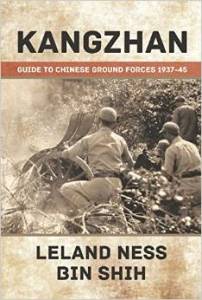
Kangzhan: Guide to Chinese Ground Forces 1937 – 45 is the first ready reference to the organization and armament of Chinese ground forces during the Sino-Japanese War of 1937 – 45. The work integrates Chinese, Japanese and Western sources to examine the details of the structure and weapons of the period. Recent scholarship has contributed greatly to our understanding of China’s role in the war, but this is the first book to deal with the bottom-level underpinnings of this massive army, crucial to an understanding of its tactical and operational utility. An introductory chapter discusses the military operations in China, often given short shrift in World War II histories. The work then traces the evolution of the national army’s organizational structure from the end of the Northern Expedition to the conclusion of World War II. Included are tables of organization and strength reports for the wartime period. The armament section illustrates and details not only the characteristics of the many and varied weapons used in China, many seen nowhere else, but also their acquisition and such local production as was undertaken. This is complemented by a chapter on the arsenals and their evolution and production programs. The Chinese army was one of the largest of the war and it, and Japan’s, fought longer than any other. It faced unique challenges, including fragmented loyalties, huge expanses of territory, poor logistics networks, inadequate arms supplies, and, often, incompetence and corruption. Nevertheless, they fought bravely in major battles through 1941 and were able to counterpunch effectively in important regions through the rest of the war. Aimed at both military historians and wargamers, this work fills an important gap in our understanding of this, the most under-appreciated army of the war.
Posted: April 9th, 2015 | No Comments »
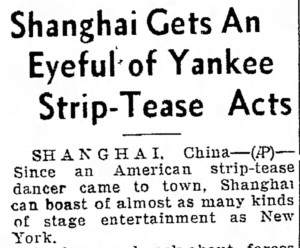
Well actually there weren’t any. What there were were Chinese knock-offs of the famous (infamous) Sally Rand and her fan dances and balloon bubble dances which wowed ’em at the Chicago World’s Fair in 1933 where she twirled, not quite showing all thanks to the delicately placed fans and balloons, to Claire de Lune. She was once arrested four times in one day for nudity. It didn’t take long for Shanghai to get in on the act and for local dancers to start waving fans and bouncing balloons on stage.
Of course a little later real strip acts came to the nightclubs of the Shanghai Badlands, but that’s another story…..
Posted: April 8th, 2015 | No Comments »
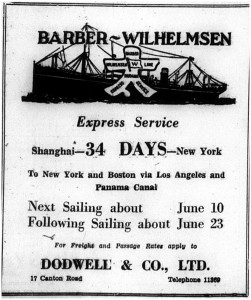
The Barber-Wilhelmsen shipping line was actually Norwegian I think – this add is from 1940 and offered a 34 day service to New York from Shanghai. Dodwell’s, a leading British Hong in Shanghai (and Hong Kong) were their agents from their offices on Canton Road (now Guangdong Road)….
Posted: April 7th, 2015 | No Comments »
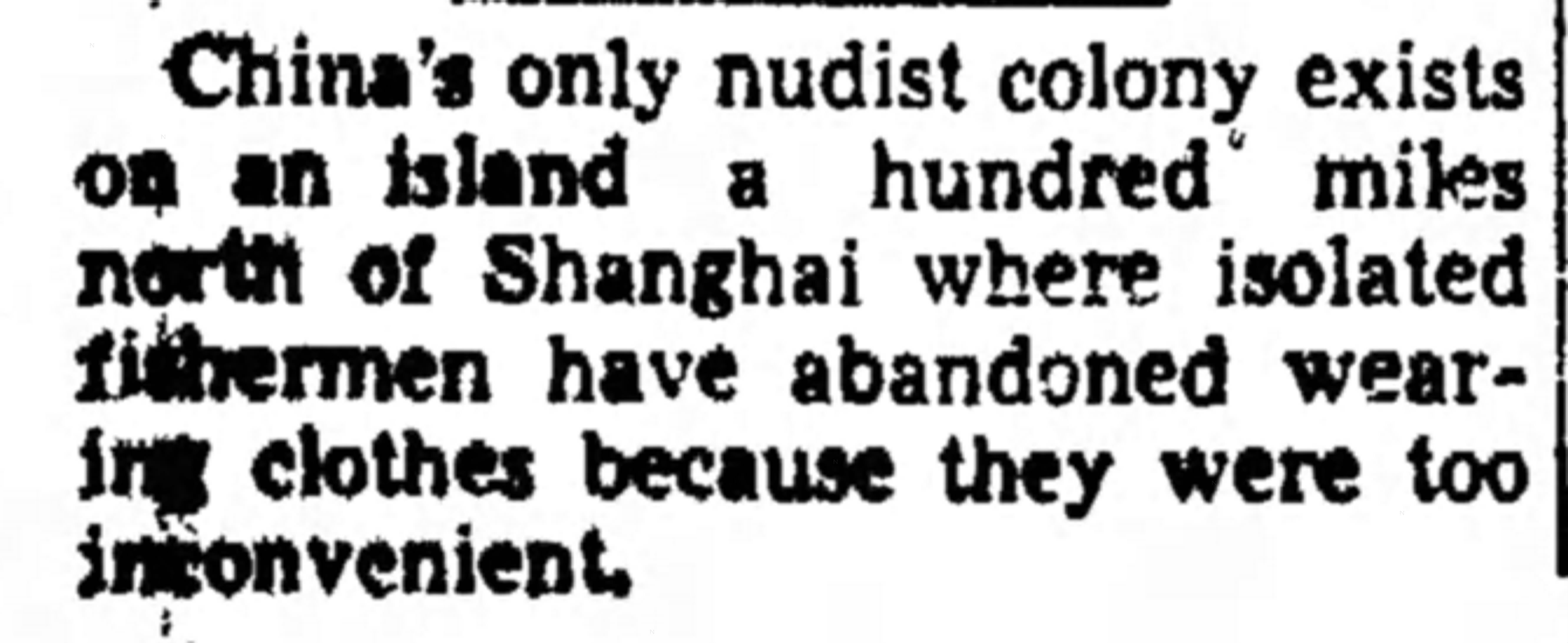
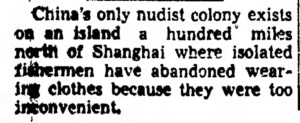
Anyone reading a daily newspaper will know that China is a very popular source for silly season stories of bizarre goings-on that may or may not be true, may or may not be quite accurate, but are amusing…well, nothing’s changed. Here an intriguing, though informationally scant, article from the Oshkosh Daily Northwestern on May 7th, 1937. Sadly the island is not identified and rather a lot exist north of Shanghai. Perhaps there are still naked fishermen wandering the shores of such a fabled island…or perhaps not…..
Posted: April 6th, 2015 | No Comments »
To chime with the ongoing remembrances of the centenary of the First World War here’s a link to a short documentary from the screenwriter and documentary maker Helen Fitzwilliam regarding Chinese labours (the Chinese Labour Corps) on the Western Front. Background for the documentary and some commentary from various authors in the Penguin China World War One series (more on that here). The documentary has some good, and rare, footage….

China sent 140,000 labourers to France and Belgium to help the Allied war effort during the First World War. Under French and British command, they dug trenches, carried ammunition, worked in docks, railway yards and arms factories. More than 2,000 died. Of those that survived, some were newly educated and politicized, and returned to China to add to the revolutionary ferment which led in time to the triumph of the Communist Party.
After years of neglect in China and Europe, their part in the war is now attracting a flurry of academic attention.
Following the screening of a short documentary, China on the Western Front, directed by filmmaker Helen Fitzwilliam in collaboration with The World Today, the panel will discuss the wartime role of the Chinese Labour Corps and assess their legacy in China’s modern history. They will discuss why this has sparked particular interest in both China and France and what this means for their relationship today.
Posted: April 5th, 2015 | No Comments »
Another of my occasional blog posts on places that used the name Shanghai – they usually have interesting tales behind them. This is an advert from August 22nd 1942 in the Tuscon Daily Citizen for the Shanghai Cafe. Chinese food along with steaks and “American Dinners”. There is a story behind the Cafe, which is told on the website accompanying the New York Historical Society’s Chinese American Exclusion/Inclusion exhibition – click here. The story is also told in even more detail on the Angel Island website here.
I won’t copy all their information – you can read it for yourself and it is a good story of the struggles of Chinese Americans to get around the Exclusion Act, settle, build families and business between the wars. It seems, in short, Gin Shue came to Tuscon from China in 1922 and opened a grocery store. Around 1929 he opened the Shanghai Cafe at 10 South 4th Avenue with a grocery store attached. After some trials and tribulation courtesy of the US Immigration Service he managed to open in larger premises at 266 East Congress Street. The new Shanghai Cafe included six tables and eight booths with waitress service. An immigration officer that visited the Cafe reported its a “first class establishment.” In the early 1940s Gin Shue moved the Shanghai Cafe once again, this time to Stone Avenue, on the corner of 17th Street. I assume this is the location for the ad below.
Afraid I don’t know anymore and don’t know Tuscon at all – when the Cafe closed or moved again I am not sure, what exists on Stone Avenue at the corner of 17th Street today I also have no idea…

Posted: April 4th, 2015 | No Comments »
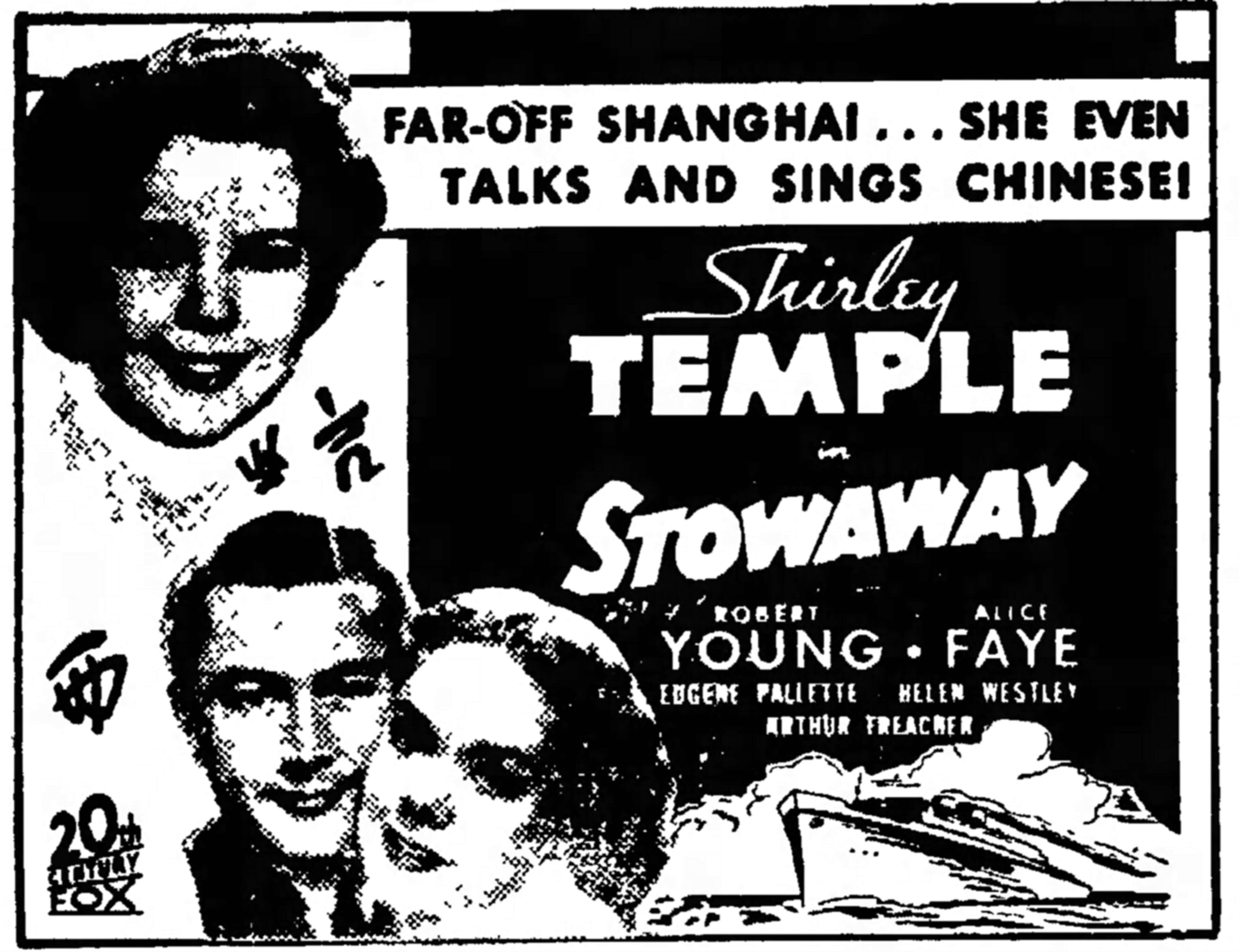
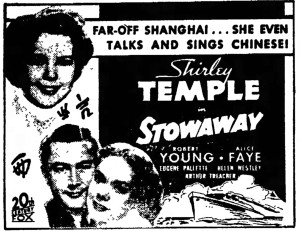
I’ve blogged previously about Shirley Temple’s one outing to Shanghai, her speaking a bit of Chinese (and how she became a pioneer for Mandarin overseas) and her Pekingese dog in the film Stowaway (1936). Here’s a poster for the movie advertising Shirley in “Far-off Shanghai”…..
Posted: April 3rd, 2015 | No Comments »
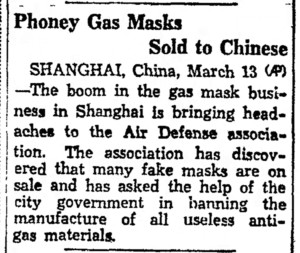
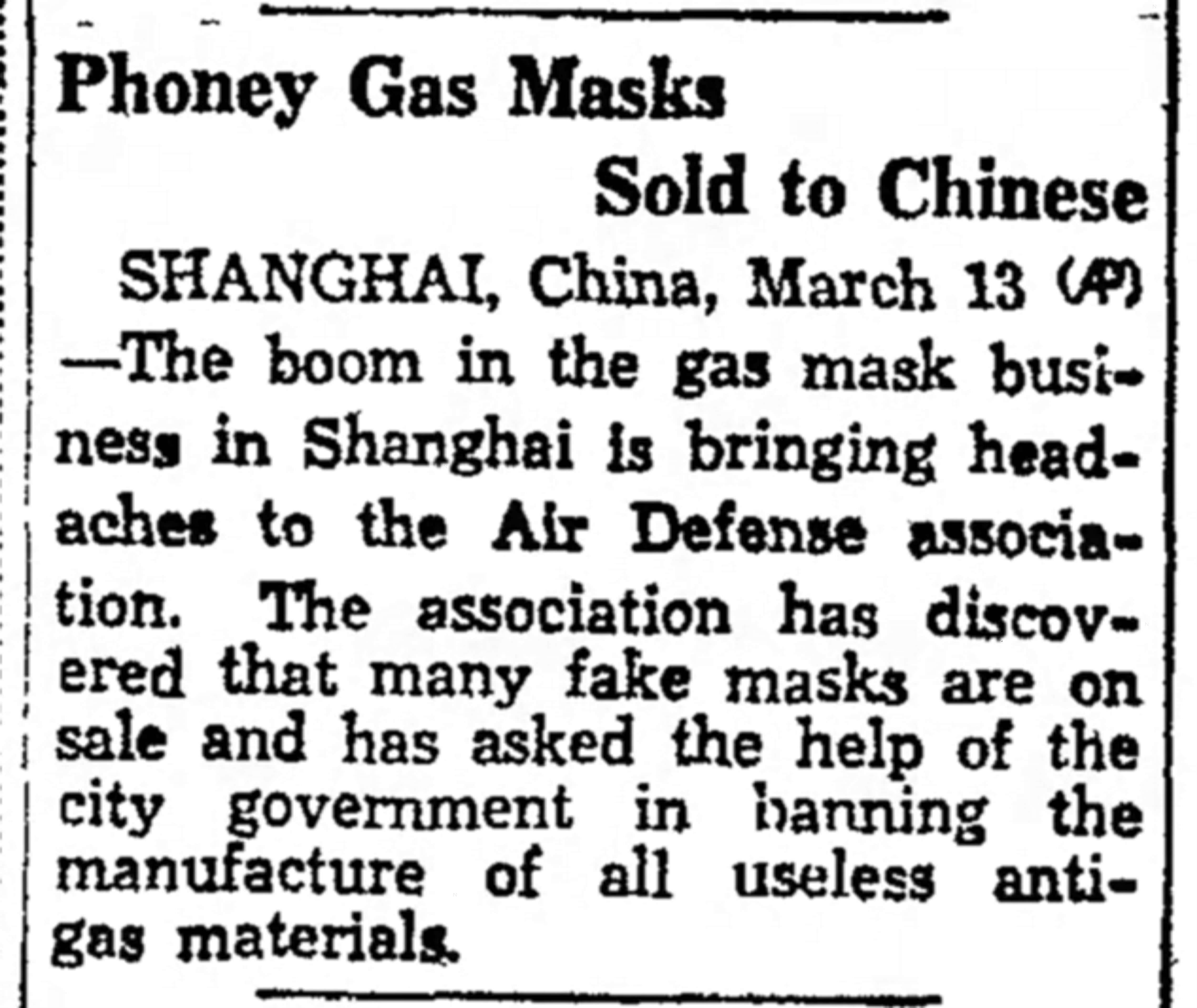
March 1937 and Shanghai residents are terrified that Japan may attack the city. They’re right to be afraid, Japan is menacing China and in August war will break out and bombs fall on the city. Worried citizens look to buy gas masks in the hope that they may be able to protect themselves and their families in the event of a gas bomb attack from Japan. But the Shanghai Air Defense Association reports a problem – fake masks are being sold, masks that will be useless in the event of a gas attack. Unscrupulous war profiteers are selling useless equipment to desperate and frightened people that will offer them no protection. I won’t bore you with the parallels over the years, they’re all too obvious….