Posted: January 30th, 2015 | No Comments »
Reading Linda Simon’s excellent The Greatest Shows on Earth – A History of the Circus made me think of traditional western ringed circuses and Shanghai. Amazing to think that in 1933, just after the First Shanghai War, Hagenbeck’s Circus came to Shanghai from Japan on a world tour. In the first half of the twentieth century Hagenbeck’s Circus, based in Peru, Indiana, rivalled Ringling Brothers and Barnum & Bailey for fame. And in 1933 it pitched up at the site of the Majestic Hotel on Bubbling Well Road, which had been pulled down and demolished just a year or two before. As Shanghai found itself in an economic depression after the 1932 Shanghai War, added to by the post 1929 depressions in America and Europe, nothing had been built on the site. It was a boggy flooded swamp after war and heavy rain but Hagenbeck’s drained it and pitched their tents.
Hagenbeck’s played to a mixed Chinese and foreign audience and despite the depression tickets sold well. The main draw was apparently an Indian elephant that wore a crown. the Shun Pao newspaper got political and likened the elephant passively following its trainers orders to the Chinese people. Lu Xun went and wrote a review of the show for the Shun Pao too. The circus eventually moved on but it had been the highlight of 1933 for thousands of Shanghai residents.

Posted: January 29th, 2015 | 2 Comments »
Pakhoi (now Beihai) was considered one of the remoter treaty ports to be posted to. Pakhoi was in Kwangsi (Guangxi) on the north shore of the Gulf of Tonkin, which placed it as an important port for trade west of Hong Kong and up into Yunnan, as well as its proximity to the French Indo-Chinese empire. Britain, America, Germany, Austria-Hungary, France, Italy, Portugal, and Belgium all had consulates there, built hospitals, schools and churches alongside the local branch of the Imperial Maritime Customs offices. In 1920 Benson, who was British and a suffragette but had spent time in America before moving on to teach in Hong Kong, met James (Shaemus) O’Gorman Anderson, an Anglo-Irish officer in the Customs Service. She followed him to his postings – first to Nanning, and then to Pakhoi. She was a prolific writer – their honeymoon driving across America was depicted in The Little World (1925) along with a number of novels and travelogues. Her novel The Far-Away Bride, was published in the United States first in 1930, and as (the rather obscure sounding) Tobit Transplanted in Britain in 1931. It won the Femina Vie Heureuse Prize for English writers in 1932. Sadly life in the east took its toll on Benson and she died in 1933 in Hongay (now Ha Long), in Vietnam. She is best known in England now for her friendship with Vera Brittain (she of Testament of Youth) and Winifred Holtby and Virgina Woolf (who also knew her) penned an obituary. I mention this as it shows that though people between the wars did travel far away – and Pakhoi was very remote at the time – they were able to maintain correspondences and careers despite the distances and rather basic communications systems.
Stella was actually quote pleased to be going to Pakhoi as she had previously been forced, for just a few weeks, to live in Hoi-how (now Haikou) on Hainan Island, a place she described a “scabby” and had suffered sickness. Stella was still very sick when she and Shaemus arrived at Pakhoi and she was carried ashore by the Russian harbour master. Stella liked their house, not least for its quiet and cool veranda (as shown below). There were only a handful of Europeans – some English and Germans as well as the Russian harbour master (and a few missionaries best avoided) and no access to fresh milk to help her convalesce. The missionaries were a big problem as they were divided and apparently fighting over a small matter of religious doctrine! The weather was extremely humid and hot and not conducive to a full recovery or much in the way of energy. She left Pakhoi to visit Vietnam with her husband (where she died) – leaving Pakhoi, her last view of China, she described its a “sugarily picturesque”.

This picture labelled, “Stella with Penko on the verandah at Pakhoi, 1933, shortly before her death

Beihai today
Posted: January 28th, 2015 | No Comments »
More good preservation news from Taiwan (which comes in almost inverse proportion to preservation news from mainland China!!) – Taipei’s Losheng Sanatorium is to be renovated. The 1930s building was constructed as a leper colony originally under the Japanese colonial administration. It was a site of compulsory quarantine but quite pleasant it seems (though reportedly overcrowded). After the Japanese left the KMT kept it in operation as a sanatorium. Despite a cure for leprosy being introduced in Taiwan in 1954 many inmates could not easily readjust to normal life, were simply too scarred or had been isolated too long and so remained at the site. Since 1994 the Taipei MRT has been trying to bulldoze the buildings for a storage shed. However Taiwan’s Cultural Affairs Department has now announced that it will restore the site. There’s more here on the long-running preservation campaign.

The entrance…

the former sanatorium shop

patient huts

view across the sanatorium
Posted: January 27th, 2015 | No Comments »
Claire van den Heever’s Paint by Numbers is a good oral history of the rise of Chinese art over the last few decades. There’s a good review here from the Taipei Times….
 The journey of Chinese art–from mass-produced propaganda in the Mao era to modern-day market darling–mirrors China’s own momentous changes like few other disciplines. Today, in both contemporary art and contemporary Chinese society, commerce and politics coexist in a delicate balance, which some call sensible and others, selling out. By traveling to the studios of renowned Chinese artists, hearing their rags-to-riches tales and interviewing the critics, curators, and collectors that have been around since its idealistic beginnings, author Claire van den Heever paints a picture of Chinese art’s bumpy path to commercial and critical success, and uncovers the secrets it tried to keep along the way.
Posted: January 26th, 2015 | 2 Comments »
Blogged a couple of days ago on Shanghai’s Rokusan Gardens in Hongkew (here and here). Just along from the Gardens was the famous Uchiyama Bookstore but I don’t have a picture of it….has anyone got a photograph of that famous store where Kanzo Uchiyama sold books and brought avant garde Shanghai and Japanese Shanghailanders together? See yesterday’s post for the location up at the northern end of the North Szechuan Road (Sichuan Road North nowadays) I only have images of the building as it is today….


 Uchiyama with Lu Xun in Shanghai
Posted: January 26th, 2015 | No Comments »
RAS LECTURE
TUESDAY 27th January 2015
7pm for 7.15pm
Â
RAS Library, Sino-British College
Linda Ferguson:
The RAS Shanghai LibraryÂ

In a meeting at the Masonic Lodge in Shanghai, a small group of British and Americans seeking intellectual engagement in a city dedicated to commerce decided to established a “Learned Society†in Shanghai.  It was originally called the Shanghai Literary and Scientific Society, but within one year it had become associated with the Royal Asiatic Society of Great Britain and Ireland, and had changed its name to the North China Branch of the Royal Asiatic Society (NCBRAS).  The Society’s intent was to investigate subjects connected with China and surrounding nations, to publish papers in a Journal and to establish a public library and a museum.
In 1858 they purchased 761 books from Alexander Wylie, a renowned Sinologist living in Shanghai. Â This became to the core of the NCBRAS Library. Â Primarily through public donations, over the next 90 years this library became the preeminent Library in the Far East.
Based on the records of the NCBRAS Journals, Linda Ferguson will retrace the history of the RAS Library in Shanghai, the people who created it and the challenges they faced over the years.
ENTRANCE: Â Members 20 RMB – Non Members 50 RMB
Includes a glass of wine or soft drink
Priority for RAS members. Those unable to make the donation but wishing to attend may contact us for exemption.
MEMBERSHIP applications and membership renewals will be available at this event.
WEBSITE: Â www.royalasiaticsociety.org.cn
Posted: January 25th, 2015 | 2 Comments »
I blogged at the start of the year on the little known and not much remembered Rokusan Gardens that once existed in Shanghai’s Hongkew (Hongkou) District – Little Tokyo. They were small and don’t really appear on many maps – at least not ones I’ve seen. But here is a map of Hongkew that does give an indication of where the Gardens were roughly by identifying both the Shinto shrine (Shanhai Jinja – 12 on the map below) that was in the Gardens and the famous Uchiyama Bookstore (13 on the map below) run by Uchiyama Kanzo in the 1920s and 1930s, probably the most important bookstore Shanghai ever had.

Posted: January 24th, 2015 | 2 Comments »
The lucky folk of Canberra have this exhibition to attend….
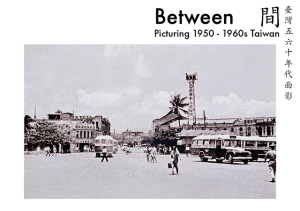
間:臺ç£äº”å…å年代é¢å½±
Between – Picturing 1950-1960s Taiwan
Politics has had complex effects on the cultural life of Taiwan in the twentieth century. These forty-four works, curated from the collection of the National Museum of History (Taipei), offer subtle observations of Taiwan in the 1950s and 1960s, from the perspectives of fifteen artists and photographers, as fresh and curious witnesses to lives in flux.
Featuring photography, sketches and prints by: Chang Tsuan-chuan, Chao Erh-tai, Chen Shih-an, Cheng Shang-hsi, Hsi Teh-chin, Kao Shan-lan, Lin Chih-hsin, Liu, An-ming, Teng Nan-kuang, Tsai Hui-ch’un, Tsai Hui-feng, Tsai Kao-ming, Tu Feng-hui, Yang Chi-hsin, Yu Ju-chi.
Curated by Dr Olivier Krischer (Australian Centre on China in the World), Dr Hsieh Shih-ying è¬ä¸–英 (National Museum of History)
Exhibition dates: 6 January – 3 April, 2015
Gallery hours : 9am-5pm, Monday to Friday
Download the exhibition information
Opening Reception
The exhibition will be opened by Dr Yui-tan Chang (Director, National Museum of History, Taipei) at 5pm on Tuesday 6 January.
Image credit: Yu Ju-chi, Historical Image of Taichung Station (12-11), c.1960, gelatin silver print, 45 x 66cm. Courtesy the National Museum of History, Taipei.
This exhibition is made possible through the generous loan of works from the National Museum of History, Taipei. The Australian Centre on China in the World also gratefully acknowledges the support of the Ministry of Culture, ROC (Taiwan), and the Taipei Economic and Cultural Office in Australia.


