Posted: May 14th, 2014 | No Comments »
RAS LECTURE
THURSDAY 15th MAY 2014
7pm for 7.15pm
Â
Li Ballroom at the Radisson Xingguo
ROBERT BICKERS
Getting Stuck in For Shanghai: Putting the Kibosh on the Kaiser from the Bund
Historian and author of Empire Made Me (“dedicated and original scholarship†– Sunday Times) returns to Shanghai, one of the most colourful outposts of the British Empire. In this First World War Special, Robert Bickers tells the stories of the largest contingent of Shanghai Britons to fight the Kaiser’s forces in Europe, exploring their contradictions, patriotic fervour and battlefield experiences.
After 1914, between tiffin and a day at the racetrack, the British in Shanghai enjoyed a life far removed from the horrors of the Great War. Shanghai’s status as a treaty port – with its foreign concessions home to expatriates from every corner of the globe – made it the most cosmopolitan city in Asia. The city’s inhabitants on either side of the conflict continued to mix socially after the outbreak of war, the bond amongst foreign nationals being almost as strong as that between countrymen. But as news of the slaughter spread to the Far East, and in particular the sinking of the Lusitania, their ambivalence turned to antipathy.
Robert Bickers is a writer and historian, author of ‘Empire Made Me: An Englishman Adrift in Shanghai’ and ‘The Scramble for China: Foreign Devils in the Qing Empire, 1832-1914’. He has written extensively on Chinese history and is currently Professor of History at the University of Bristol.
The First World War altered the course of the twentieth century, heralding the decline of the great European empires and ending a golden era of optimism. While for many, the Great War was a European war, the war was actually much more wide reaching. Its battles were fought as far away as the Shantung Peninsula in northeastern China, and its legacy continues to reverberate in the modern geopolitical relationships that the world’s biggest rising power has with its neighbour. To mark the centenary of the First World War, Penguin China has assembled a series of Specials by the world’s top China hands that bring a fresh and fascinating perspective to the conflict.
ENTRANCE: Â Members 70 RMB – Non Members 100 RMB
Includes a glass of wine or soft drink
Priority for RAS members. Those unable to make the donation but wishing to attend may contact us for exemption.
MEMBERSHIP applications and membership renewals will be available at this event.
RAS MONOGRAPHS – Series 1 & 2 will be available for sale at this event. 100 rmb each (cash sale only)
WEBSITE: Â www.royalasiaticsociety.org.cn
Posted: May 14th, 2014 | No Comments »
#3 – The Chinese Delegation kept the hotel bar open late every night singing….
So many of the Chinese delegation to Versailles were graduates of American universities that at night the Hotel Lutetia’s bar swelled with informal alumni meetings and rousing renditionsof Columbia University songs among old boys of both Chinese and American descent.
Posted: May 13th, 2014 | No Comments »
#2 – Every night the secretaries of the China delegation shredded their trash….
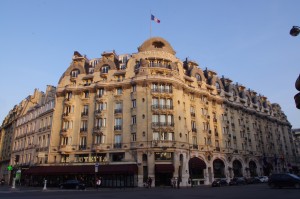
When they’d finished with internal documents the Chinese secretaries working out of the Lutetia Hotel had to tear the waste paper into tiny scraps; it was assumed Japanese spies went through the Lutetia’s rubbish nightly in search of information. More details in Betrayal in Paris (Amazon UK, Amazon US)

Posted: May 12th, 2014 | No Comments »
Ten shameless plugs for my new Penguin China Special in their World War One series Betrayal in Paris: How the Treaty of Versailles Led to China’s Long Revolution (ongoing – details of all the titles here) though hopefully with a little useful factoid attached daily….
#1 – The Chinese Delegation Stayed at the Hotel Lutetia in Paris….
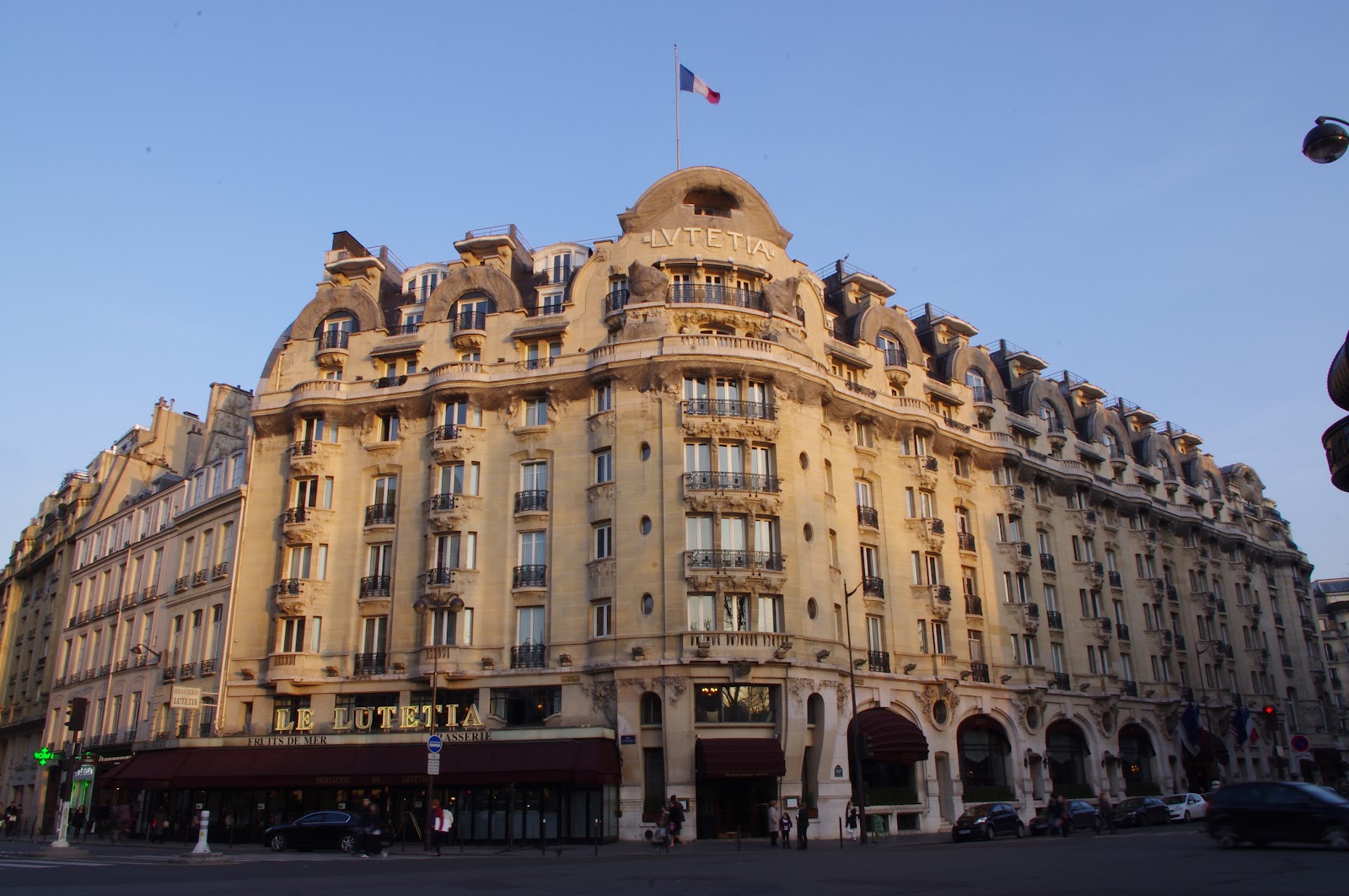
The bulk of China’s delegation to the Paris Peace Conference stayed from January to June 1919 at the Hotel Lutetia. Situated on the boulevard Raspail in the heart of Paris’s Left Bank, the Lutetia, in the Saint-Germain-des-PreÌs area of the smart sixth arrondissement, was an inspired choice. It was certainly one of the more commodious delegation HQs in Paris. Completed just nine years earlier, the hotel was supremely modern, the city’s first art-nouveau hotel.Â
Posted: May 11th, 2014 | 1 Comment »
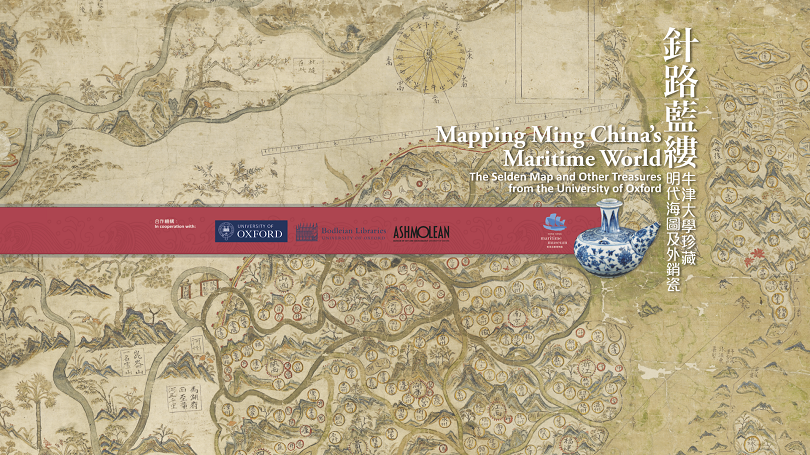
I blogged recently on the excellent book from Timothy Brooks’s Mr Selden’s Map of China – you can now see the map, till June, at Hong Kong’s Maritime Museum…
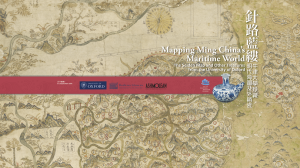
In 1659, a vast and unusual map of China arrived in the Bodleian Library, Oxford. It was bequeathed by John Selden, a London business lawyer, political activist, former convict, MP, and the city’s first Orientalist scholar. Largely ignored, it remained in the bowels of the library, until called up by an inquisitive reader. When Timothy Brook saw it in 2009, he realized that the Selden Map was “a puzzle that had to be solvedâ€: an exceptional artefact so unsettlingly modern-looking it could almost be a forgery. But it was genuine,
Posted: May 10th, 2014 | No Comments »
In the winter of 2012-13 BICC collaborated with Dr Weipin Tsai (Royal Holloway University of London), and Professor Hans van de Ven (Cambridge) on a project to restore the decrepit gravestone of Sir Robert Hart and Hester, Lady Hart. The Harts are buried in Bisham, near Marlow, yards from the bank of the River Thames. The initiative culminated in a rededication ceremony held in the churchyard on a cold February day in 2013.
A new 31 minute film, ‘For China and the World’, documents this process, and explores the story and legacy of Robert Hart, who for six decades led China’s Imperial Maritime Customs service. With narration by Tim Pigott-Smith.

Posted: May 10th, 2014 | No Comments »
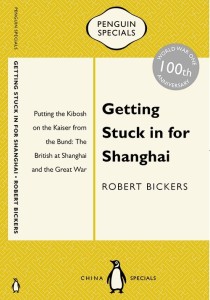
Robert Bickers may well walk away with best China title for 2014 with Getting Stuck in for Shanghai: Putting the Kibosh on the Kaiser from the Bund I reckon.
Posted: May 9th, 2014 | No Comments »
Dr Julia Lovell
Birkbeck, University of London
Â
Â
Â
“The Uses of Foreigners in Communist Chinaâ€
Friday 9 May 2014 at 5.30pm
Â
Gustave Tuck Lecture Theatre
University College London
Julia Lovell is senior lecturer in modern Chinese history and literature at Birkbeck College, University of London. She is the author of three books on modern China, most recently The Opium War: Drugs, Dreams and the Making of China (2011), which won the 2012 Jan Michalski Prize. Her several translations of modern Chinese fiction include Han Shaogong’s A Dictionary of Maqiao (winner of 2011 Newman Prize for Chinese Literature), Zhu Wen’s I Love Dollars, Zhang Ailing’s Lust, Caution and Lu Xun’s The Real Story of Ah-Q, and Other Tales of China. She is currently working on a global history of Maoism, and on a new, abridged translation of Journey to the West.