Posted: April 15th, 2014 | No Comments »
Talk by Chris Corin: “May 30th Changes Everything”
How an event in Shanghai in 1925 challenged British policy makers and how the Shanghailanders (entrenched British settlers) complicated thingsDate: Tuesday, 15th April
Time: 6:30pm
Venue:Â SOAS (School of Oriental & African Studies), Russell Square, Main Building G3Entry: Members of The Meridian Society, SACUÂ & SOAS CSSAÂ free
Non-members £5 donation

On May 30, 1925 workers and students demonstrated on the Nanking Road, the main shopping thoroughfare in the International Concession, in Shanghai. They were shouting slogans, “Take back the concessions†and “down with the imperialists†and they were told to disperse. 10 seconds later the Shanghai Municipal Police, commanded by a British officer, opened fire on an unarmed crowd. 13 were killed and more than 20 wounded. The event mobilised Chinese nationalism “as a nation responded to a policeman’s bulletâ€, and was a direct challenge to British policy makers. Shanghai was the most significant single element of British interest in China, and Britain sought to defend that interest but the Foreign Office was aware of the limits of British power. The Shanghailanders were not. The Shanghailanders, as they called themselves, were the small treaty port people, whose fortunes were inextricably tied up with the existence of the British concessions and extraterritorial privileges in China. Even a Shanghailander himself called them, “the spoilt children of the Empireâ€. They were to complicate British policy making. Indeed “the ramifications of the imperialist mind†has been called “the barbed wire thread which bound together the whole fabric of foreign imperialism in China and made it so unbearable to Chinese nationalism.â€Â This talk will look at 3 things:
Â
·      The clash between nationalism and imperialism and the challenge this brought to British policy makers
·      The views, actions, hopes and fears of the Shanghailanders.
·      The implications for today of the intertwined and interconnected histories of Britain and China.
Â
Chris Corin is a member of The Meridian Society. He taught History at Worthing College for many years. With Terry Fiehn, he has written Russia under Tsarism and Communism 1881 – 1953 (2nd edition 2011) and a number of articles for History Review and New Perspective. He has a long standing interest in British Foreign Policy and, after a visit to Shanghai, became fascinated with the development of that great city.
Posted: April 6th, 2014 | No Comments »
China Rhyming is away in New York this week and taking a short break from posting…so here’s a few shots of Manhattan’s old Chinatown….


Posted: April 5th, 2014 | No Comments »
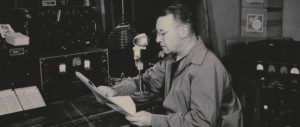
An interesting piece by Bill Lascher in Boom: A Journal of California. It’s about radio station XGOY and a dentist in Ventura, California who was the station’s contact in the U.S.
Posted: April 4th, 2014 | No Comments »
  RAS LECTURE
Tuesday 8 April 7:00 for 7:15 PM
RAS Library at the Sino-British College
1195 Fuxing Zhong Lu
Â
Non Arkaraprasertkul
PhD Candidate in Anthropology, Harvard University
Harvard Asia Center Affiliate, Harvard Center Shanghai
Â
 speaking on
Â
“Housing and Heritage: Political Economy and Urban Space in Shanghai Lilong Neighborhoods”
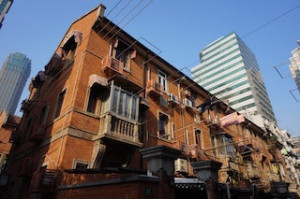
In massive development projects that often directly affect “traditional” Shanghai neighborhoods, the city’s local government has drawn urban planning inspiration from cities such as New York, London, and Tokyo, which have achieved architectural distinction as “global cities” by combining modern high-rise and heritage buildings. City branding is a major part of Shanghai’s urban development program, and the preservation of historic buildings is seen as integral to this emerging brand. The underlying rationale is to protect “architectural artifacts” that the local government considers appropriate for a city with global ambitions. The central question, however, is: how does the image of urban globalization affect the citizenry whose lives the city government is claiming to improve? More broadly, the politically charged context of “traditional” neighborhood preservation situates contested forms of expertise mobilized by local government actors, neighborhood residents, and architects and planners.
Â
As a result, old neighborhoods have been removed to make way for modern high-rises, condominiums, office and commercial buildings, and so on. In the process, not only are people forced from their homes, but their displacement also raises the critical question: what Shanghai should be as a city, whom it should serve – whether that should be the local population or global commerce. Exemplifying this issue are contestations surrounding the traditional alleyway houses of Shanghai known as lilong. Literally meaning “neighborhood lane,” the lilong (里弄) are the legacies of Shanghai’s Treaty Port era (1842-1946), representing the Chinese take on the British row house aesthetic. The lilong also constituted the primary housing stock found in Shanghai up until the early 1980s, with multiple generations having occupied the same dwellings for 100 years or more.
Â
Historians, journalists, and architects often share the opinion that lilong neighborhoods are historically important and, therefore, must be preserved. In many ways the attitude underlying this opinion – based as it is on a Eurocentric notion of the global city – encourages the local government’s romanticization of Shanghai’s neighborhood life, similar to the gradually disappearing courtyard houses in Beijing (“hutong,” 胡åŒ). In this presentation, I will present my ongoing doctoral research regarding the sociopolitical conflicts over the intertwined issues of heritage, urban space, and human rights – in which the lilong is at the center.
About Non Arkaraprasertkul
Trained as an architect, urban designer, historian and ethnographic filmmaker, Non Arkaraprasertkul is currently a PhD Candidate in Anthropology at Harvard University. He has published widely in the fields of urban studies, architectural history, and urban anthropology. His research interest lies in the crossroad of transdiscliplinary research between architecture and the social sciences. In the spring of 2013, he served as Distinguished (Visiting) Gibbons Professor of Architecture at the University of South Florida (USF). Previously, he was a visiting lecturer in Architecture and Urban Design at the Massachusetts Institute of Technology (MIT) in 2007-2008, and an adjunct professor in Modern Chinese History at Lesley University from 2012 to present.Â
Â
Non has master’s degrees in history, theory, criticism of architecture, and architecture and urban design from MIT, and Modern Chinese Studies from the University of Oxford. From September 2013, he will be based at Fudan University as Harvard-China Council Exchange Scholar and at Harvard Shanghai Center as Harvard Asian Center Affiliate conducting his doctoral research “Locating Shanghai: Globalization, Heritage Industry, and the Political Economy of Urban Space.” He can be reached at non@mit.edu.
RSVP: to RAS Bookings at: bookings@royalasiaticsociety.org.cn or just Reply to this email.
 Â
ENTRANCE CONTRIBUTION: Members 50 RMB Non-members 70 RMB. Includes a glass of wine or soft drink. Priority for RAS members. Those unable to make the donation but wishing to attend may contact us for exemption.
Â
MEMBERSHIP applications and membership renewals will be available at this event.
Â
RAS MONOGRAPHS – Series 1 & 2 will be available for sale at this event. 100 rmb each (cash sale only)
Â
WEBSITE: www.royalasiaticsociety.org.cn
Posted: April 3rd, 2014 | No Comments »
Well done to Camphor Press down in Taiwan for reissuing Gunther Pluschow’s The Aviator of Tsingtao….an amazing story (see below)

Gunther Plüschow: pioneering First World War pilot, aerial explorer, bestselling writer, the only German prisoner of either world war to break out of a POW camp in Britain and escape back to Germany, and perhaps the very first flyer to ever down an aircraft in combat. During the Battle of Tsingtao, where overwhelming Japanese and British forces attacked the German enclave in China, Plüschow was the defenders’ lone pilot.
The Aviator of Tsingtao is Plüschow’s gripping account of his wartime flying adventures, and his escapes from both China and England. This Camphor Press edition comes with new notes, maps, a timeline, photographs, and an introduction by Plüschow biographer, Anton Rippon.
Posted: April 2nd, 2014 | No Comments »
RAS WEEKENDER / M on the Bund Salon
SATURDAY 5th April 2014
4pm for 4.15pm
Â
Glamour Bar

Between its founding in 1854 and its collapse in 1952, the Chinese Maritime Customs Service delivered one-third to one-half of all revenue collected by China’s central authorities. Much more than a tax collector, the institution managed China’s harbors, erected lighthouses, and surveyed the Chinese coast. It funded and oversaw the Translator’s College, which trained Chinese diplomats while its staff translated Chinese classics, novels, and poetry and wrote important studies on the Chinese economy, its financial system, its trade, its history, and its government. It organized contributions to international exhibitions, developed its own shadow diplomacy, pioneered China’s modern postal system, and even maintained its own armed force. After the 1911 Revolution, the agency became deeply involved in the management of China’s international loans and domestic bond issues.
In other words, the Customs Service was pivotal to China’s post-Taiping integration into the world of modern nation-states and twentieth-century trade and finance. If the Customs Service introduced the modern governance of trade to China, it also made Chinese legible to foreign audiences. Following the activities of the Inspectors General, who were virtual autocrats within the service and communicated regularly with senior Chinese officials and foreign diplomats, this history tracks the Customs Service as it transformed China and its relationship to the world. The Customs Service often kept China together when little else did. This book reveals the role of the agency in influencing the outcomes of the Sino-French War, the Boxer Rebellion, and the 1911 Revolution, as well as the rise of the Nationalists in the 1920s, and concludes with the Customs Service purges of the early 1950s, when the relentless logic of revolution dismantled the agency for good.
Hans van de Ven is professor of Modern Chinese History at Cambridge University. He has written extensively on China’s military history and the history of the Chinese revolution.
ENTRANCE: Â Members 75 RMB – Non Members 130 RMB
VENUE: 6/F, No.5 The Bund ( corner of Guangdong Lu )
Includes a glass of wine or soft drink
Priority for RAS members. Those unable to make the donation but wishing to attend may contact us for exemption.
MEMBERSHIP applications and membership renewals will be available at this event.
RAS MONOGRAPHS – Series 1 – 4 will be available for sale at this event. 100 rmb each (cash sale only)
WEBSITE: Â www.royalasiaticsociety.org.cn
Posted: April 1st, 2014 | 1 Comment »
Yesterday I posted about the new 3 volume collection of the etchings of Mortimer Menpes. I briefly mentioned his London apartment at 25 Cadogan Gardens (just off Sloane Street, in Knightsbridge) and that it Japanois/Chinois in style and designed by Arthur Heygate Mackmurdo (1851-1942), a progressive English architect and designer who influence the Arts and Crafts Movement. Menpes lived in the apartment from the late 1880s to 1900.
In 1899 the magazine, The Studio: an Illustrated Magazine of Fine and Applied Art featured Menpes/Mackmurdo’s interiors for 25 Cadogen Gardens. Below that is the exterior of the building from roughly the same time
 “The drawing room at 25 Cadogan Gardens, Mr. Mortimer Menpes’ House – The small square wooden tables in the drawing-room are of Chinese form and useful for the reception of ornamental objects”


