Remembering Macao in the 1960s
Posted: February 19th, 2014 | 1 Comment »After yesterdays postcard of an American hotel’s version of Macao in the 1960s, here’s the real thing – before it went boom!!

All things old China - books, anecdotes, stories, podcasts, factoids & ramblings from the author Paul French
After yesterdays postcard of an American hotel’s version of Macao in the 1960s, here’s the real thing – before it went boom!!
Stay at the Sheraton in Dallas, Texas in the 1960s and an evening meal in the Macao Room was yours for a reservation. The rather uninteresting hotel was built in 1959 (though was a rather modern structure then)

who wouldn’t want dinner in the Macao room?
Where this was in the building I don’t know. According to the hotel’s website they have one restaurant now called The Kitchen Table. I’ll leave it up to you choose which you feel had more style and sophistication….
 Who would want dinner in The Kitchen Table!!
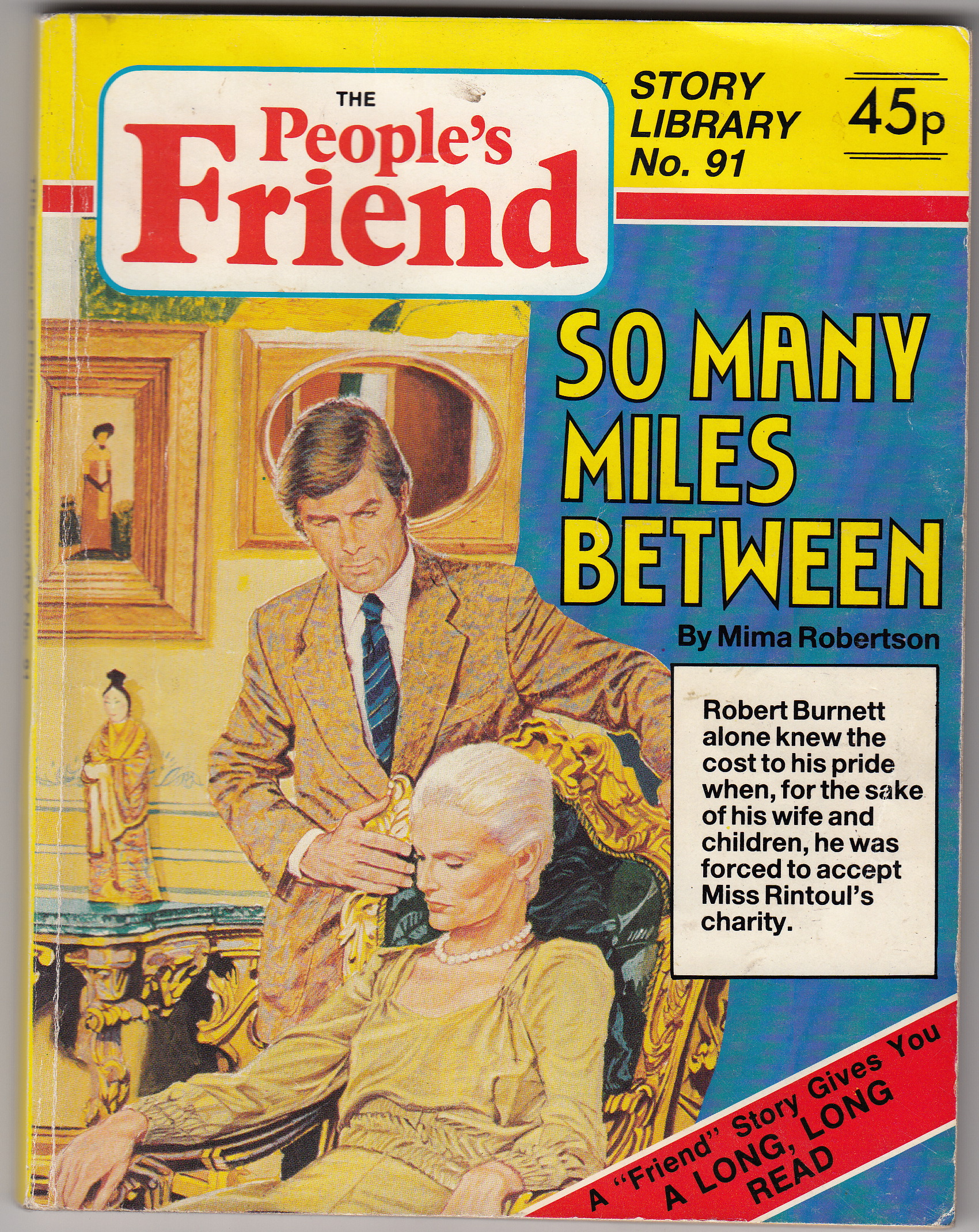
The People’s Friend (my grandmother’s favouite read), known as “the famous story magazine” began publoishing in 1869. This issue is from 1960 and is a rather turgid story set in Scotland. However, a wee touch of Chinoiserie crept in, courtesy of the cover designer (uncredited) – note the statue and picture on the wall. Neither are mentioned in the story so must have been the designer’s own idea.
Mentioning Taiwan and the preservation battle currently underway in Keelng at the moment yesterday I thought another Taiwan post called for. Anyone who reads widely (or even not that widely) on China knows that Taiwan is greatly under-served in terms of books, studies, histories and memoirs in English. I’ve always been shocked at how many “China Hands” have rarely, if ever, set foot on the island or anywhere in the Republic. The tsunami wave of books on mainland China (of which I openly admit to having contributed far more than my share) has left Taiwan marginalised, and this is not a good thing. For me Taipei is a wonderful and engaging city with a fascinating history and a place I long to return to as soon as I leave. I know the rest of the island far less well, but have never found anywhere I didn’t like. The PRC uber-boosters may scoff but Taiwan is a model for the mainland and the sooner the mainland looks and feels like Taiwan the better I say.
Hence a plug for the newly launched Camphor Press, of which I know little except that they are rolling out a great series of books on Taiwan (and mainland China). Among their initial offering are, what looks to be, a fascinating book The Flight of the Lapwing: A Naval Officers Jottings in China, Formosa and Japan by Henry Shore, a Royal Navy officer attached to the old “China Station” and a welcome reprint of Somerset Maugham’s irreverent and ever re-readable On a Chinese Screen describing the great man’s roamings through China in 1919.
there’s more – check out their website and the best of luck to them…
Keelung in Taiwan is my kind of town – a gritty port city that has just the right amounts of seediness, dirt and charm. It also has a fascinating history both in terms of the foreign presence in Taiwan (about which I’ve blogged repeatedly – see below pic for details and links) but also as one of the major arrival points for the Nationalist Army in 1949. This latter fact is the reason behind the current preservation battle over a cluster of otherwise unassuming warehouses on the waterfront. The threatened structures are the only two remaining buildings of a group of eight warehouses built in 1932 – since then they’ve seen the arrival of many Japanese during the occupation period and then the Nationalists. Between 1945 and 1949, at the port’s peak, more than 50 ferry boats docked at Keelung every day from Guangzhou, Xiamen, Wenzhou, Shanghai and other Chinese cities, most ferrying KMT troops and ordinary folk fleeing the Communists. Let’s hope the alliance of preservation activists and academics in Keelung can save these buildings. History isn’t always about grand and grandiose structures.

Some more great Keelung architecture here (taken in 2010)
A post of Keelung’s Ershawan Fort here
Keelung’s monument to Prince Kitashirakawa here
A post on Keelung’s French Cemetery here
the marvellous Keelung Harbour Integrated Administration Building here
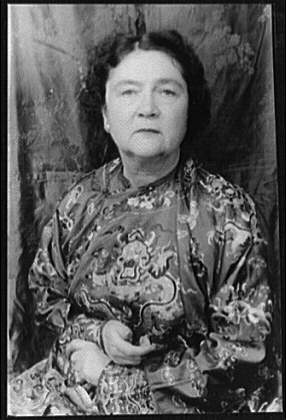
I’d never come across the American author Marjorie Kinnan Rawlings (1896-1953) before. Not surprising as her books were mostly to do with rural American themes and largely set in Florida. However, she was very popular in the 1930s and won a Pulitzer. She’s what would now be termed a YA author, I think. She never wrote anything about China as far as I know but did publish a novel entitled The Sojourners, which caught my attention as it’s a term often applied to foreigners in China in the interwar years. But it’s nothing to do with China. Still, Rawlings did like Chinese jim-jams…as the photo below shows (from 1953).
What’s the story behind those PJ’s? Well, a little research yields that, according to her correspondence, the Chinese pyjamas were a gift from her old college friend Bee McNeill in 1939 – and she obviously really liked them…
I noticed James Hendry’s A China Story on Amazon the other day. No idea if it’s any good or not as haven’t had a chance to read yet but I did, of course, note the Frank “Pinkie” Dorn 1935 map of Peking on the cover which I’ve been known to use myself!
 James Hendry is a development economist with a doctorate from Columbia University. Early in his career he was a member of the Michigan State University Advisory Group in Viet Nam, from which came a book, “The Small World of Khanh Hau,” which analyzes the economy of a village in the Mekong Delta. He subsequently became a member of the Harvard Advisory Group in Pakistan, serving as advisor on agricultural planning for the then Provincial Government of East Pakistan, now the independent nation of Bangladesh. On the basis of this experience he was recruited by the World Bank where he was associated with Bank lending efforts in the agricultural sector of countries in North Africa, Sub-Sahara Africa and South Asia. His end-of-career position with the Bank was as its Ombudsman, during which time he also served on the Board of Directors of the Corporate Ombudsman Association.