Not sure who these gentlemen are but they’re having a picnic at Malatoon (Ma-Lau-Tung) in 1866, which is most probably Ma Yau Tong on the border of New Kowloon and the New Territories. Any ideas on who these geezers are most appreciated?
A piece by me in the China Books Review – The Thrilling Truth – a review of Joseph Kanon’s Shanghai, a problematic thriller set in 1930s Shanghai that raises the question is history at risk of being overtaken by fiction?
‘Paul French gives an intriguing and erudite picture of the time Wallis was in China.’ Her dress is of course “Wallis Blue” selected for her by the designer Mainbocher.
In the 1990s contemporary art in China as we know it was finally born, emerging from the underground after decades of Maoist stricture, the dreary official dominance of socialist-realism, the constant interference of self-appointed cultural commissars and nosy prurient coppers. And one factor that contributed to that birth was the 1993 exhibitions in Shanghai and Beijing by Gilbert & George. China had never seen the like and a generation of young artists suddenly saw new vistas of possibility….
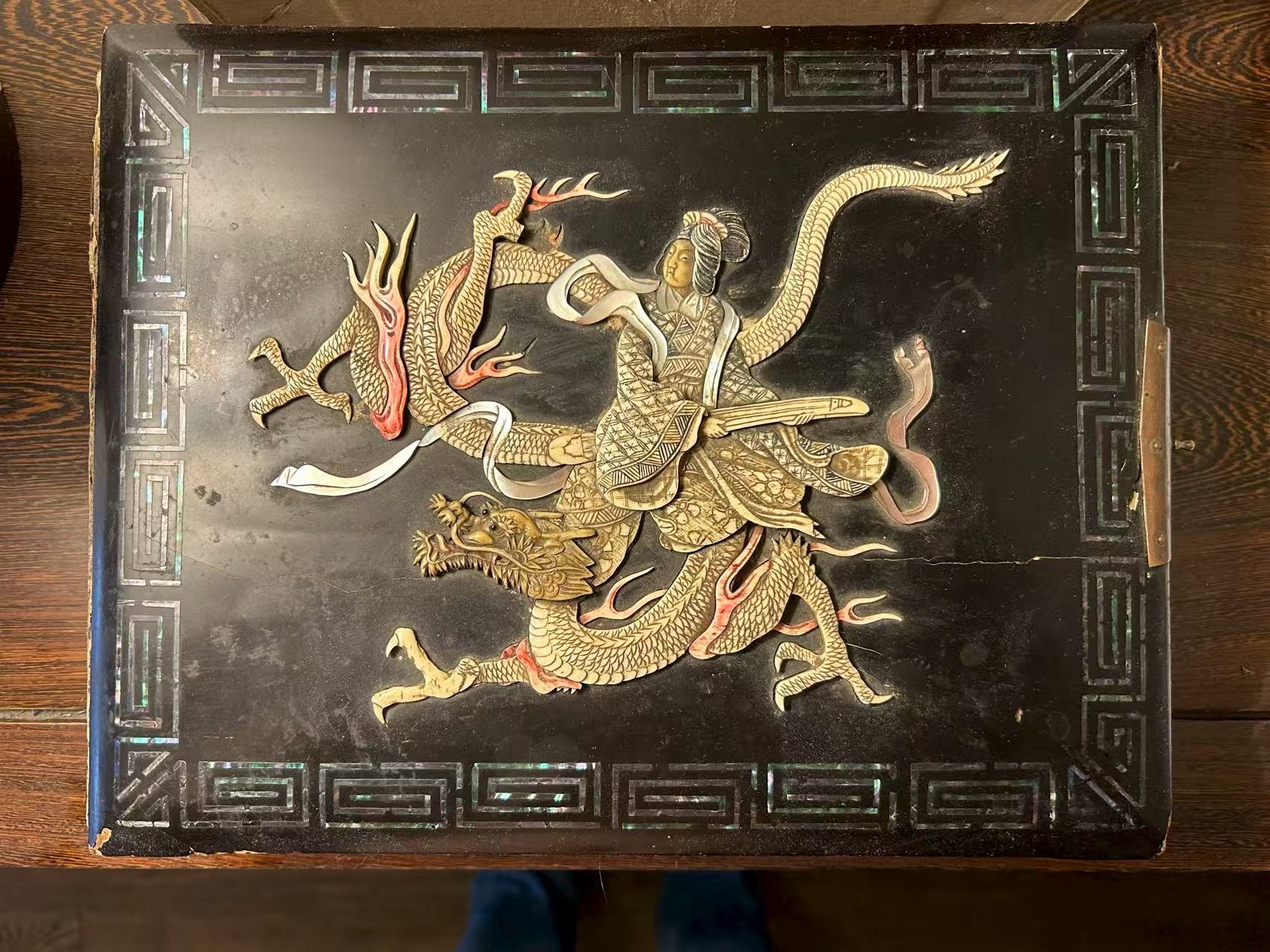
I’ve blogged previously about the detail and beauty of many East Asian photo albums sold to travellers in ports such as Hong Kong, Shanghai and Yokohama (see here and here). Usually it’s the covers that are the attraction – chinoiserie lacquered albums, silk covers, often with embroidery of local scenes (rickshaws seem to be particularly popular).
But this (I think Japanese and bought in Yokohama) lacquered album seems particularly ornate and features internal pages of chinoiserie designs over which the photos/postcards can be affixed. Quite charming…
And at the bottom another Japanese style album cover from the same period….
Art in Hong Kong is a fascinating analysis of the history, current status and possible future of Hong Kong as an international art hub, written by a local journalist who has reported on the city’s cultural landscape for many years. Enid Tsui presents a balanced and insightful picture of recent changes in the city which was once the poster-child of artistic freedom in Asia as well as the undisputed leader of the region’s booming contemporary-art market. Some of Hong Kong’s traditional advantages now look precarious following new laws imposed by China curbing freedom of expression and the city’s long period of isolation during the Covid-19 pandemic. Yet despite the exodus of talent from Hong Kong and growing uncertainties over the ‘red lines’ of censorship, there are more world-class art institutions in the city than ever before and the market has proved resilient, with international auction houses and galleries continuing to expand their presence there.
This book lifts the lid on a diverse art scene in a city of fascinating contradictions: a former British colony where artists have long been inspired by the interplay between east and west, and where the new M+ museum and other venues have to tread a tightrope between celebrating a distinct and vibrant culture based on different influences and abiding by the new national security regime.