Posted: August 26th, 2012 | No Comments »
Without question the single most beautiful creations ever – classic Penguin covers – are coming to China.
Art, Design, Culture: The History of Penguin By Design, a landmark exhibition first displayed at the Victoria and Albert Museum in London, is coming to Asia for the first time, visiting Beijing, Hangzhou and Seoul.
Featuring hundreds of original and rare book jackets and artwork, the exhibition is a celebration of British history, design, literature and culture. This exhibition charts not only the changes in tastes of readers, but chronicles a history of international designs. Work by the world’s top graphic, fashion and design talents will be featured, as well as author events, designer talks, children’s sessions and much more.
“Art, Design, Culture: The History of Penguin by Design†will feature in the ongoing UK Now cultural festival.
The Temple Hotel, Beijing
23 Songzhusi, Shatan Beijie, Dongcheng, Beijing 100009 东景缘 北京市东城区沙滩北街嵩ç¥å¯º23å·.100009
Contact: 13716314717
Start: 1 September 2012
End: 13 September 2012
12 – 9pm Daily, 12 – 10pm on Thursdays
Free Entrance
Posted: August 25th, 2012 | No Comments »
The interactions and mutual perceptions of China and Indonesia were a significant element in Asia’s postcolonial transformation, but as a result of prevailing emphasis on diplomatic and political relations within a Cold War and nation-state framework, their multi-dimensional interrelationship and its complex domestic ramifications have escaped the scholarly scrutiny.
China and the Shaping of Indonesia provides a meticulous account of versatile interplay between knowledge, power, ethnicity, and diplomacy in the context of Sino-Indonesian interactions between 1949 and 1965. Taking a transnational approach that views Asia as a flexible geographical and political construct, this book addresses three central questions. First, what images of China were prevalent in Indonesia, and how were narratives about China construed and reconstructed? Second, why did the China Metaphor – the projection of an imagined foreign land onto the local intellectual and political milieu – become central to Indonesians’ conception of themselves and a cause for self criticism and rediscovery? Third, how was the China Metaphor incorporated into Indonesia’s domestic politics and culture, and how did it affect the postcolonial transformation, the fate of the ethnic Chinese minority, and Sino-Indonesian diplomacy?

Employing a wide range of hitherto untapped primary materials in Indonesian and Chinese as well as his own interviews, Hong Liu presents a compelling argument that many influential politicians and intellectuals, among them Sukarno, Hatta, and Pramoedya, utilized China as an alternative model of modernity in conceiving and developing projects of social engineering, cultural regeneration and political restructuring that helped shape the trajectory of modern Indonesia. The multiplicity of China thus constituted a site of political contestations and intellectual imaginations. The study is a major contribution both to the intellectual and political history of Indonesia and to the reconceptualization of Asian studies; it also serves as a timely reminder of the importance of historicizing China’s rising soft power in a transnational Asia.
LIU Hong is Professor of History and Asian Studies and the Chair of the School of Humanities and Social Sciences at Nanyang Technological University in Singapore. He was formerly Professor of East Asian Studies and the inaugural Director for Chinese Studies at the University of Manchester.
Posted: August 24th, 2012 | No Comments »
Most delighted that we’ve got the RAS Shanghai-Hong Kong University Press China Monographs series launched with this great book on Lao She’s time in London from Anne Witchard at University of Westminster. I do hope it appeals to plenty of you China Rhymers – go to the HKUP web site and there’s a 20% discount for online orders…
Lao She in London
Anne Witchard
RAS China in Shanghai series
Â
August 2012  188 pp. 14 b/w illus.Â
Paperback ISBN 978-988-8139-60-6Â HK$120 / US$18.00
“A beautifully written book that combines literary biography with a remarkably succinct account of British modernism and an evocative portrait of interbellum London, as viewed through Chinese eyes. Anne Witchard reminds us eloquently of the key role played by Chinese influences—both classical and modern—in literary modernism, and makes a great contribution to our understanding of Lao She’s London years.” — Julia Lovell, Birkbeck College, University of LondonÂ
-Â Contributes to the rethinking of modernism as an event ‘outside the boundaries of a single language, a single historical moment, or a single national formation.
– Lao She (è€èˆ), one of China’s great modern writers, was uniquely positioned in his encounters with significant conditions of modernity, race and nationhood, both in Britain and in China.
- Reveals Lao She’s encounter with British high modernism and literature from Dickens to Conrad to Joyce, during the four years he spent in London.Â
Anne Witchard is a lecturer in the Department of English, Linguistics and Cultural Studies, University of Westminster.
Posted: August 23rd, 2012 | No Comments »
Should you happen to find yourself in Israel this week then the the Jerusalem House of Quality has an exhibition called “Jewish Refugees and Shanghai†which opened last Thursday and is set to close this Saturday, August 25. The exhibition was developed by the Shanghai Jewish Refugees Museum. More on the Jewish ghetto, Shanghai refugees and the exhibition here in Haaretz.

Posted: August 22nd, 2012 | No Comments »
Here’s a very China Rhyming post about book covers (and a veiled plug too!) – I came across this cover the other day for the sadly long forgotten (at least by me – I accept there may well be China Rhyming regulars who have course to peruse this book often!) book Hangchow Itineraries by Robert F Fitch (the full text is online here), published by the legendary Shanghai-based house of Kelly & Walsh in 1922. It’s a travel guide to Hangchow (Hangzhou if you must) and opens with the words:
“The purpose of this book is to help those who may come to this City to spend their hours pleasantly, profitably and with the best economy of time. The writer has travelled in a number of parts of China but with the exception of a few towns in North-western Szechwan he has seen no city so beautifully located as is Hangchow. It might be added that there are few cities in China with so many places of historic interest. In this work there has been an attempt to plan out definite itineraries for each day, to indicate them on separate maps, to illustrate some of the more attractive places and to give important facts in such a way that the resident or tourist may not be burdened with unessentials.”

The book caught my eye as clearly in 1922, or thereabouts, the editors at Kelly & Walsh (probably one of my dream jobs – editing books for Kelly & Walsh in 1920s Shanghai) thought “let’s go with a sketch illustration of something quintessentially Chinese.” And so they did.
Ninety years later myself and a group of Hong Kong University Press editors and designers sat down to think of a cover for one of our RAS Shanghai-HKUP China Monographs (I’m the Series Editor for the Monographs) – a biography of Florence Ayscough by Lindsay Shen. And what did we say, “let’s go with a sketch illustration of something quintessentially Chinese.” And so we did.

Posted: August 21st, 2012 | No Comments »
Thought you might like to see the front page of the North China Herald from today in 1920 – sorry – British newspapers still always had ads on their front pages!!
But which ex-pat in Peking, Shanghai or Tientsin doesn’t need a grafonola and some records to go with it…

Posted: August 20th, 2012 | No Comments »
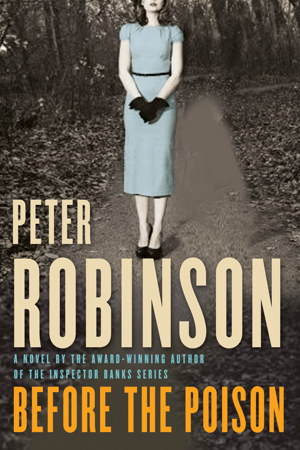
This post is a bit of an excuse to shoehorn in quite a things of interest to me. Firstly, the new book from crime fiction writer Peter Robinson – I’ve been a fan of his Yorkshire-set Inspector Banks books and the TV adaptation DCI Banks (which is happily getting a second series). Occasionally Robinson writes outside of the Banks series and has done several short stories around the Second World War and the Home Front – murders during the Blitz etc (see his collection Not Safe After Dark). Now he has published a new novel Before the Poison (I like the Canadian cover best – as below) which is not a Banks but is set largely in Yorkshire. The story hinges on a woman hanged in the 1950s for murdering her husband – moving into her former house in remote Yorkshire the new occupant reopens the case. So I’m happy again – an unsolved murder (of course I get to say how lazy to have to invent one when you could solve a real cold case!!).
And there are some excellent flash back scenes to the wartime Singapore and the eventual evacuation of the island as the Japanese invade. Robinson has taken real events, obviously the invasion of Singapore, guns facing the wrong way, etc etc, but also the smaller evacuation ships sunk of Pom Pong Island, the harsh time the survivors spent on the island and their eventual dramatic rescue. That story is retold with pictures on the excellent web site Singapore Evacuation 1942 which I also wanted to plug as having a wealth of information about Singapore in 1942.
And that neatly allows me to also add that I’ll be in Singapore on the first weekend in November at the Singapore Writers Festival.
Posted: August 20th, 2012 | No Comments »
This from Arthur Jones, the man making the documentary on HMS Poseidon, the British sub that sunk of China in the 1930s. I’ve posted about the forthcoming documentary and book before so you might be interested in seeing where they’ve got to and how you can potentially help them get finished.
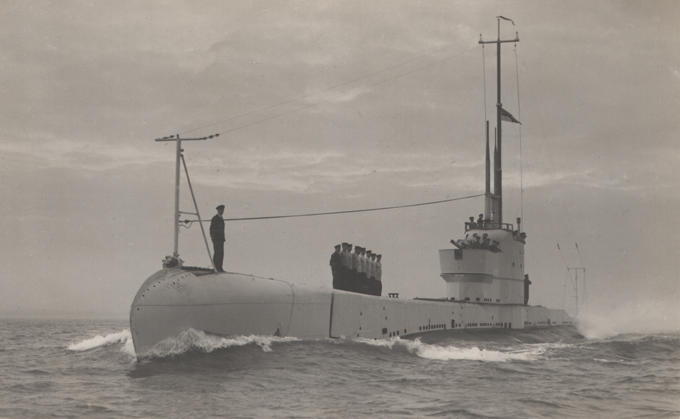
We’ve had an exciting last month on the film. Here’s a couple of bits of news:
1) There have been big stories about the film (and Steven Schwankert’s book) in the press. Here are a couple you might want to check out if you haven’t seen them already:
http://www.irishtimes.com/newspaper/magazine/2012/0818/1224322289928.html#.UC71aQf4yZQ.facebook
http://www.businessweek.com/ap/2012-08-03/answers-sought-in-chinas-salvaging-of-british-sub
We are expecting another major one in the next couple of days. I won’t spoil the surprise, but I will let you know once it’s online.
2) The website is looking better than ever, thanks to Stephen Wright, who has been building it from the start. Check out http://www.poseidonprojectfilm.comand look at the updates on most of the pages. We have a new mailing list facility built in, plus lots more info, including links to more stories in the press. Give us a plug on your facebook/google+/twitter/weibo/… profiles if you get a chance.
3) We finally recorded a real cello part for the song that finishes the film, COME ALIVE. Thanks to David Haime, who plays cello with the BBC National Orchestra of Wales, for his time and enthusiasm. He is a lovely man and a fantastic musician (and also happens to be my uncle).
Finally… we have now raised about $9,000 towards in our campaign to pay for the archive footage we want to use in the film. There’s just over $6,000 online at Indiegogo (where we have based the campaign), and we have another $3,000 in cash that hasn’t been put into the account yet. We now have just two weeks left to reach our target of $16,000 – which will allow us to play the 10 minutes or so of 1930s material in public screenings. So, we desperately need your help to raise $7,000 in the next 14 days!
Here is a link to the funding site:
http://igg.me/p/115713?a=655939
This one should work too:
http://www.indiegogo.com/theposeidonproject
Many of you have contributed already. But if you haven’t, please please please consider contributing even a small amount towards our campaign. The more funders we have (even if the amounts are very small), the higher our profile on Indiegogo – which means we have more chance of reaching a wider audience.
If you can think of anyone who might be interested in joining our mailing list, or contributing to the fund, please pass this message on to them.
As always, huge thanks for all your help and support. It has been quite a journey so far!
All the best,
Arthur Jones
Director
THE POSEIDON PROJECT
_____________
Arthur Jones
Mobile: +86 18621569371
THE POSEIDON PROJECT
On June the 9th 1931, one of Britain’s most advanced submarines collided with a cargo ship off the coast of China. Half of the crew escaped in the first few seconds, but the rest of the men sank 40 metres down to the bottom of the sea, entombed in their boat. Three hours later, six sailors surfaced, barely conscious and bitterly cold, as their comrades watched on in amazement. They were the first men ever to escape alive from a sunken submarine using a proto-scuba device.
Beijing-based journalist and part-time scuba instructor Steven Schwankert was looking for interesting wrecks to dive in northern China when he found HMS Poseidon on a list of unexplored dive sites. His private obsession with bringing wreck diving to China became a public and personally high-risk mission to uncover a secret history of political intrigue that took him half way across the world in search of evidence.
Their story hit newspaper headlines worldwide and went on to inspire a feature film, released later that year. Their miraculous escape changed marine safety forever, leading to a revolution in submarine design and a big leap forward in our understanding of decompression sickness. But their names, and their submarine, gradually sank into obscurity.
Steven Schwankert’s six-year search for the submarine revealed a story that was far more complicated than he had first expected, challenging official accounts of the escape, and uncovering the truth behind the forgotten wreck.
http://www.poseidonprojectfilm.com/


