Posted: June 28th, 2012 | No Comments »
Perhaps not the most gripping and scintillating read of the year but perhaps useful for background research…
Gavin Ure
Royal Asiatic Society Hong Kong Studies Series
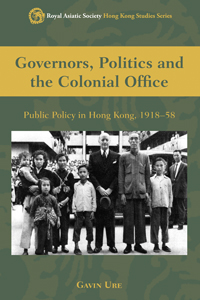
This book explores the making of public policy for Hong Kong between 1918 and 1958. During much of this period, the Hong Kong government had limited policymaking capabilities. Many new policies followed initiatives either from the Colonial Office or from politicians in Hong Kong. This book examines the balance of political power influencing how such decisions were reached and who wielded the most influence—the Hong Kong or British governments or the politicians. Gradually, the Hong Kong government, through implementing new policies, improved its own policy-making capabilities and gained the ability to exercise greater autonomy.The policy areas covered by this book include the implementation of rent controls in 1922, the management of Hong Kong’s currency from 1929 to 1936, the resolution of the financial dispute over matters arising from World War II, the origins of Hong Kong’s public housing and permanent squatter resettlement policies, negotiations over Hong Kong’s contribution to its defence costs and the background to the granting of formal financial autonomy in 1958.
Governors, Politics and the Colonial Office will be of interest to historians and political scientists, and to anyone with a general interest in the social, economic and political development of Hong Kong.
Gavin Ure is a former Administrative Officer with the Hong Kong government. He is now Adjunct Associate Professor in the Department of Applied Social Science at the Hong Kong Polytechnic University.
“In this meticulously researched book, based on archival sources, Gavin Ure explores the important issue of how Hong Kong’s colonial rulers made public policy. Through a careful examination of key political, economic and social questions, he shows how local administrators were able to wrest autonomy from the British government and to run the colony on their own terms. The book is essential reading for anyone interested in Hong Kong’s history and the policies that have shaped the modern city.” — Ian Scott, author of The Public Sector in Hong Kong
“Who governs Colonial Hong Kong—London or the officials sent from Britain? The issue of autonomy is central to our understanding of politics and policymaking in Hong Kong during the colonial era. From a unique perspective, both as an academic and former senior civil servant, Gavin Ure demonstrates how Hong Kong gradually gained control of key areas of public policy. This book is an essential read for anyone with an interest in politics and public policy in Hong Kong.” — James Lee, Hong Kong Polytechnic University
Posted: June 28th, 2012 | 1 Comment »
…a piece I did for Foreign Policy on dragon ladies that was fun. And, just before everyone piles in, I am aware that “dragon lady” was originally a western construct (I almost sound like an academic there!) going back to the Terry and the Pirates comic strip and Yellow Peril novels. However, it is interesting that it is also now used in China pretty widely. Anyway, here’s my quick summary in the word count allowed…a dash though an empress, an empress dowager, Madame’s Chiang, Mao and others right up to Madame Gu!
 the Empress Wu – trashed by the Confucians!
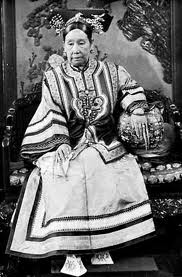 Dowager Empress Ci Xi – poisoned cakes to take over
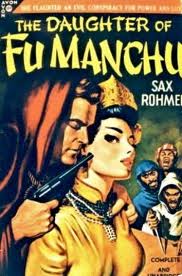 Bad girl, bad dad…
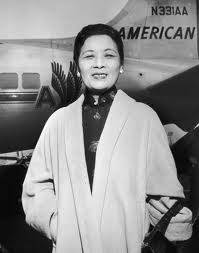 Madame Chiang – who even vamped Churchill!
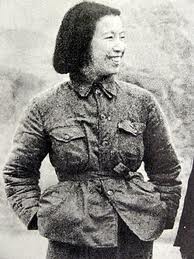 Madame Mao – not a lot of redeeming features here I’m afraid
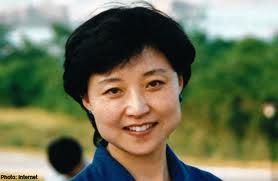 Madame Gu – a dragon lady for the 21st century?
Posted: June 27th, 2012 | No Comments »
A quick post to link to a paper given by Ho Yin Lee (Programme Director, Architectural Conservation Programme at The University of Hong Kong) and Lynne DiStefano of HKU’s Architecture Department on conservation in Hong Kong. It was presented as part of the LSE Cities Conference. Some interesting stuff – here’s a paragraph…I really wish I had time to do the course in conservation!!
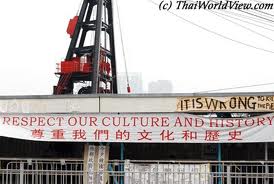
For the authors, as faculty members of China’s first and only master degree level academic programme in conservation – the Architectural Conservation Programme at the University of Hong Kong – we are pleased to see that built-heritage conservation is no longer considered an obscure branch of studies lumped together with museums and antiquities. What the programme has been advocating, that urban conservation should be an essential component of the sustainable development of Hong Kong as a city, has finally been given its due recognition. Many of the principles and ideas taught and advocated in the programme have become widely discussed not only in academic circles but also by the public through the mass media. When the programme was first established in 2000, the common reaction was, ‘What’s there to conserve in Hong Kong?’. Now, the common response is, ‘There is so much we need to conserve in Hong Kong, and we’re not doing enough’. For the loss of the Star Ferry Pier and Clock Tower, Hong Kong has gained one small step in the sustainable development of the city, and a significant step in the continual effort for better urban conservation and improved quality of life.
Posted: June 26th, 2012 | No Comments »
These conferences have been really great so far, organised by Anne Witchard at the University of Westminster and with funding from the AHRC. I would plug that there is also now a twitter feed (@chinamyths) that gives a lot of good links to things China in Britain and the sort of interests these conferences explore. This event will have some performances I think including David Yip (who I grew up watching in The Chinese Detective) and the rather wild Anna Chen – Madame Miaow!
China in Britain: Myths and Realities
Theatre/Performance and Music
July 18th 2012 – Time 9:45:AM – 5:30PM
The Old Cinema, University of Westminster, 309 Regent Street, London W1B 2UW
Entrance – including lunch and refreshments – is free of charge so
for catering purposes it is essential to book your place by emailing
anne@translatingchina.info
Twitter: @chinamyths

The day will present an eclectic programme with presentations from actors and broadcasters and equally exciting academics (!) Dongshin Chang (City University of New York), Diana Yeh (Birkbeck College and University of East London), Simon Sladen (University of Winchester) and Ashley Thorpe (University of Reading) will present research that restores the history of China and Chineseness to the English stage – from Regency Extravaganzas, such as Chinese Sorcerer to chinoiserie theatre in the 1930s and Lady Precious Stream. We will look at subversive pantomime in Thatcher’s Britain, Poppy, and more recently Anna Chen’s Steampunk Opium Wars and Damon Albarn’s opera Monkey: Journey to the West.
The UK’s most high profile British Chinese actor, David Yip, remembered by many for his role as Detective Sergeant John Ho in The Chinese Detective will be talking about his new multimedia show Gold Mountain. There will be performances from comedienne, poet and political pundit, Anna Chen (aka Madame Miaow), actor David Lee-Jones, currently the lead in Richard III – the first British Chinese actor to be cast as one of Shakespeare’s English Kings – and Resonance Radio’s Lucky Cat DJ, Zoe Baxter, playing Korean Punk, Chinese Hip Hop and Reggae, Japanese Ska, Thai Country, and Singapore 60’s pop.
PS: This is also a great opportunity to the University of Westminster’s Old Cinema which has the proud claim of being the birthplace of British cinema. Here, in 1896, the Lumière brothers put on the first public show of moving pictures in this country. Now a space of fascinating historical interest, the Regent Street Old Cinema has retained its stage, decorative gilding, barrel vaulted ceiling and boasts a working 1936 Compton organ. A refurbishment campaign is underway to restore the theatre to its original Victorian glory. http://www.birthplaceofcinema.com/
Posted: June 26th, 2012 | 1 Comment »
And here’s some non-fiction and biography worth the effort…

The West End Front: The Wartime Secrets of London’s Grand Hotels – Matthew Sweet – every so often a book comes along that you really, really wish you’d had the idea for and gone and done. This is one such. The sheer delight that Sweet must have had in digging up these stories of spies, intrigue, strikes, characters, scandals, con-men, con-women, deposed royals, odd foreigners and debauched all sorts comes shining through. A great read.
In the Garden of Beasts: Love and Terror in Hitler’s Berlin – Erik Larson – Larson rarely disappoints to be honest and this is a great story of the American Embassy in Berlin, the Ambasador and his family during Hitler’s rise to power. How we misread the Nazis too often, how Hitler and his cohorts could hide, dissemble and cajole, how the power and strength of the Nazis could, in 1933, still win over people with its brazenness and seeming renewal of an old and corrupt Europe. We read from hindsight of course, a gift denied the inhabitants of the tale, but still we are thrilled by their realisation of the wonderland cum nightmare they have wandered into. Larson’s now standards ability to bounce around the story and the milieu, the macro and the micro is always enjoyable an page turning.
Darkmarket: Cyberthieves, Cybercops and You – Misha Glenny – the follow up to the great McMafia. But see the thing is geeks and keyboards is only thrilling to geek who like keyboards – the sort of people who like video games and movies like The Net. Normal people find this stuff functional but boring. So Glenny breaks the story down into bite sized chunks and turns it into a Mission Impossible thriller (without the little American bloke with the weird beliefs)B flying around from Silicon Valley to Washington, Mi6 to the FBI, Odessa to, eerr, Scunthorpe! And then it works because just as your eyes start to glaze over with the techie details (which are important and scary for all of us who online bank, ATM etc etc) you’re back in a dingy Odessa basement or a Scotland Yard briefing and pumped again.

Lisbon: War in the Shadows of the City of Light, 1939-1945 – Neill Lochery – few cities (with the exception of Shanghai) are more fascinating in WW2 than Lisbon (see Robert Wilson’s great Lisbon spy thrillers) – even Casablanca. Lochery’s book is a good overview of how Salazar maintained neutrality, the spy wars between the British and Nazis, the plight of the refugees crowding into the city, the deals fone over the strategically crucial Azores and the ethical problems Salazar and Portugal faced over the Wolfram for Nazi gold deals. Lochery is a serious historian so he doesn’t play up the espionage side of things as much as some others, eerr like me, might.
Colour Me English – Caryl Phillips – Enjoyed the essays that were actually about England but there’s way too much of not that informed, not that original English in New York balls sadly. Basically anyone expecting an analysis of English, Englishness, multiracial Britain should ask for their money back. Better to go back and read Philips’s Foreigners, a set of three superb biographies of Black Britons that was great.
Blood on the Altar – Tobias Jones – Jones’s The Dark Heart of Italy is really the book to read if you’re at all interesting in Italy – going there on summer holiday? Definitely read it. Blood on the Altar is the true story of the Elisa Claps murder in Potenza that ended up unsolved and uncovering the links and scandals in the church, government, big families and pretty much all Italian institutions. That it was eventually solved after a bizarre murder in, of all places, Bournemouth once again shows how truth is stranger than fiction. I spoke at an event at the Hay Festival this year with Tobias and he was great – that’s the enthusiasm and depth of knowledge on Italy you get in this book too.

Venetian Navigators: The Voyages of the Zen Brothers to the Far North – Andrea di Robilant – an interesting tale of an obscure map, Venetian explorers and the north country. We’re used to Venetians going east (Mr Polo) but up north is a bit different. Interesting ruminations and observations on the Scottish Islands, the Faroes, Scandinavia, Greenland, Iceland, the colonisation of Canada and America and the search for the North West Passage north to Cathay (more my area that).
The Most Beautiful Walk in the World – John Baxter – A gentle flaneur though the streets of Paris in the company of Baxter who’s interests range form literature to art and les apaches to decadent nightclubs. Baxter also likes food and I am a resolute non-foodie but still enjoyed this. Not much deft but a lot of meandering wistful style. I’ll read three of four books a year on Paris and this was a nice starter for 2012.
Memoir/Autobiography
The Man Within My Head – Pico Iyer – a marvellously weaving and snaking book that looks at Iyer’s motivations and travels but always in the shadow of his hero and historical interlocutor Graham Greene who has dogged the writer through his life. Those, like me, who find life without Greene impossible to imagine and view the world as a giant Greeneland will find this an absorbing read that ends too soon.

Yesterday Morning – Diana Athill – Athill’s memoir of her rather privileged childhood in the English countryside in the interwar years is as lyrically delightful yet insightful as her other works. Her musings on first loves, infatuations and affairs are particularly good to read.
West End Girls – Barbara Tate – not the greatest piece of autobiographical literature ever but Tate’s memoir of being a prostitute’s maid in Soho in the late 1940s and 1950s. If she’s telling the truth then the sheer number of clients her girls used to get through were amazing. One book in which the Maltese appear as pimps and ponces – a bit of a minor theme at the moment with all the post-war set novels coming out.
Posted: June 25th, 2012 | No Comments »
Another half year gone!! A few fiction and pulp reads from the first half of the year that come recommended and might be good for the summer months…

The Picture Book – Jo Baker – a truly great series of episodic pieces that trace the history of Britain from the First World War through various slices of life affecting one London family.
The Greatcoat – Helen Dunmore – I’m a serious fan of Dunmore’s and this book is both a lilting ghost story as well as an evocation of the war years and the immediate post-war provincial Britain. It’s hard to read The Greatcoat and not be reminded of Sarah Walters’s The Little Stranger but that’s OK – to read one good writer and be reminded of another is not a problem.
Waiting for Sunrise – William Boyd – Boyd is always a delight and, after a very slow start (but stick with it) Waiting for Sunrise moves into the territory of the classic interwar British spy novel. Think Somerset Maugham’s Ashenden, John Buchan, GK Chesterton, Erskine Childers. Lysander is a great Boyd character.
The Girl in Berlin – Elizabeth Wilson – Wilson’s latest book in part follows familiar territory – London after the war, austerity Britain, England on its post-war uppers – but is more of a spy thriller than her previous books. As ever it is Wilson’s attention to detail (she’s a specialist in fashion and popular culture) that most fascinates.

Pure – Andrew Miller – a real joy to read, it flows as effortlessly as shit and offal through a sewer, which is sort of appropriate. A wonderful evocation of pre-Hausmann Paris when the city still lingered as a sprawling Medieval mess.
Visitation – Jenny Erpenbeck – for the first third of this book, really a novella, from the East German writer I wondered why I was bothering. Then Erpenbeck suddenly kicks in with passage s of staggering imagery and the ability, rare in books, to pull you up sharp in surprise and shock. A masterclass in taut writing.
Bereft – Chris Womersley – a solid Australian thriller that mostly held my attention apart from when it drifted into the, perhaps, paranormal. However, as descriptions of London seances in 1919, returning diggers to Oz after the horrors of the trenches and Gallipoli, small town corruption in rural Australia go, it’s a good read.
Grub – Elise Blackwell – just released on Kindle in 2011 so I only just discovered this modern reworking of Gissing’s Grub Street. The depression and obsession of people silly enough to want to be professional writers. Cringingly accurate in its depiction of the money deprived, contract deprived world of wanna-be authors who refuse to give up and get proper jobs.
The Pulps
Luther: The Calling – Neil Cross – quite simple really – if you liked the TV show you’ll love this book which has Idris Alba all over it. Cross is a man who goes down into the sewers of human activity but what could just be shock is saved by the modern urban Gothic nature of his London and its warped and twisted inhabitants. More please!

Secondhand Daylight – DJ Taylor – I liked Taylor’s previous 1930s novel At The Chime of a City Clock and this is in the same vein and features the intersting character of James Ross – man about town, a bit literary, a bit gun for hire, a bit of a drifter through 1930s London. Taylor has a tendency to rather over-egg the pudding with research and you find yourself screaming “less is more” now and again but it’s fun – Soho, the BUF, working girls, seances and loads and loads of detail for the train spotters.
Choke Hold and Money Shot – Crista Faust – Last year I really got into Megan Abbott and her noir writing and this year I discovered Crista Faust. Abbott’s noirs are set in the 1930s and 1940s, Faust is contemporary. She writes well and the plots crack on among the slime of the LA porno industry and her heroine Angel Dare. They’re a lot of fun, hard as nails and with some funny touches.
Angle of Investigation & Suicide Run – Michael Connelly – I’m an avid Harry Bosch fan and can take all the Bosch that can Connelly can throw at me. I’m also finding myself enjoying short stories more these days (it’s a Kindle thing I think). So these two collections of Harry Bosch shorts that really advertise the new novel, The Drop, are terrific reading. So that’s 6 Bosch shorts and I still wanted more, so obviously I bought The Drop!! Connelly’s plan worked.
Posted: June 25th, 2012 | 2 Comments »
An interesting book from the ever prolific Paul Van Dyke who has done more to enlighten us on the foreign trade in southern China than anyone else really…
Edited by Paul A. Van Dyke

The theme of this volume is the American relationship with Macao and its region through trade, politics, and culture, and the focus is mainly on the late eighteenth and nineteenth centuries. The essays address topics such as the role of the China trade in US pacific expansion and exploration, US consuls, smuggling networks, American women’s perceptions of China, and missionary and educational work. In all of the encounters, Macao emerges as a central player, adding a new dimension to our understanding of Sino-American relations.Paul A. Van Dyke is professor of history at Sun Yat-sen University in Guangzhou. He has spent many years researching various aspects of life, trade, and societies in the Pearl River Delta and Maritime Asia.”Significantly, gambling and casinos merit almost no notice in
Americans and Macao. Instead, this intriguing collection of essays illuminates sometimes brilliantly the complex intersections among Americans, Macao, and the structures and processes of globalization that converged in the waters off the South China coast in the late eighteenth and early nineteenth centuries.” — Paul A. Cohen, Fairbank Center for Chinese Studies, Harvard University
“A lively and important volume both for its focus on Macao and for its treatment of the pre-treaty port period as a matter of Sino-American relations rather than as just the Old China Trade.” — James Fichter, author of So Great a Proffit: How the East Indies Transformed Anglo-American Capitalism
Posted: June 24th, 2012 | 7 Comments »
A small article popped up in the China Daily recently about Xu Yinpei the architect behind Mao’s Mausoleum in Tiananmen Square. Of course as any fool can see they basically copied the Lincoln Memorial in Washington DC; Xu says not of course but anyone with eyes!! – apparently the State Council told Xu “the memorial should be solemn, aesthetically pleasing and blend in traditional Chinese elements but shouldn’t look like imperial emperors’ tombs,”. In perhaps the funniest quote of the year so far Xu, who did visit Washington and saw the Lincoln Memorial says, “When I saw the building (the Lincoln Memorial), I said to myself: ‘What a coincidence!'”. Yea sure Architect Xu – we believe you. Also, rather amazingly, Xu claims that “More than 700,000 laborers” worked on the Mausoleum, which even for The Great Helmsman’s final resting place seems a rather excessive amount of construction guys!! Anyway here’s the article.
 Mao’s Mausoleum in Tiananmen Square
 The Lincoln Memorial in Washington DC
or maybe it’s the other way round…what a coincidence!!


