Posted: May 28th, 2012 | No Comments »
RAS LECTURE
Tuesday 29th May 2012 at 7.00pm
The Tavern, Radisson Blu Plaza Xingguo Hotel 78 Xingguo Road,Shanghai
HILARY SPURLING
ON
BURYING THE BONES: PEARL BUCK IN CHINA
Pearl Buck is best known for her novel The Good Earth published in 1931 and awarded the Pulitzer Prize in 1932. In 1938, she was awarded the Nobel Prize in Literature, “for her rich and truly epic descriptions of peasant life in China and for her biographical masterpieces.”
In 1925, in a prophetic analysis written immediately after Sun Yat-sen’s death, Pearl Buck foresaw China’s future as a 21st century superpower, diagnosed an astonishing degree of ignorance about her in the West, and advised America that it would be a serious mistake to continue to underrate China. Her propositions were discounted and her reputation discredited in her lifetime and afterwards in both the US and China (where she became a Public Enemy under Mao).
This talk marks the ceremonial opening of the restored Pearl Buck House in Nanjing – the first official Chinese recognition of the unique role she played in relations between China and the West.
Hilary Spurling: Born in 1940 and educated at Somerville College, Oxford University, Hilary Spurling has written biographies of Ivy Compton-Burnett, Paul Scott and Sonia Orwell along with Henri Matisse in two volumes, which won the Whitbread Book of the Year Award and the Los Angeles Times biography prize in 2005. Spurling’s latest bestseller, Burying the Bones: Pearl Buck in China, won the James Tait Black Prize last year. She is a CBE, Fellow of the Royal Society of Literature, Hon. Trustee of the Royal Literary Fund, and founder of the RLF Writers Fellowship scheme.
Entrance: RMB 30.00 (RAS members) and RMB 80.00 (non-members). Those unable to make the donation but wishing to attend may contact us for exemption, prior to the RAS Lecture. Membership applications and membership renewals will be available at this event. Members will have priority booking until 27 May 2012.Â
To RSVP:Â Please “Reply” to this email or write to
RAS Bookings at: bookings@royalasiaticsociety.org.cn
Posted: May 28th, 2012 | 1 Comment »
Back in April I blogged about the rather mild controversy stoked up in the UK paper’s over the marvellous TV show The Hour written by Abi Morgan (disclaimer: Kudos TV who made The Hour have now optioned my book Midnight in Peking). The row was over the use of the phrase, in the BBC of 1956, of “going for a Chinese” as a way of indicating everyone was off for a Chinese meal. Not a phrase used in 1956 say some while others disagree. I got fairly close to evidence in my post quoting from Eric Ambler’s 1938 book Cause for Alarm – but no actual citation of the phrase yet.
However, one reader, originally from the beautiful urban landscape that is the Midlands did respond that he thought it possible that the phrase was used and that he remembered going for a Chinese in the 1950s to his local Cantonese restaurant in the suburb of Birmingham (the English one obviously) called Shirley. The restaurant was, inevitably, thus called The Shirley Temple and if anyone wants an argument about immigrants coming to Britain and not successfully and wholeheartedly adopting British culture, sense of humour and the language then I give you The Shirley Temple Cantonese Restaurant in, yes, Shirley (sort of near Solihull). Now that is superb and can only be described, in the local vernacular of those Midlands parts, as bostin!!
And it’s still in business showing that both the food and the pun have enjoyed great longevity!!
And so…first
Here’s a picture of the Shirley Temple from the 1960s or 1970s;
Then, the Shirley Temple these days (complete with patriotic England flag in window!)….A must visit for anyone in the Greater Birmingham/Solihull Area
And, of course, a gratuoitous excuse to post a pictire of Romola Garai from The Hour….


Posted: May 27th, 2012 | No Comments »
Well it seems the Communist Party is having one of its occasional anti-foreigner fits – they invariably comes at times of stress and uncertainty for the Party and are the easiest, most knee jerk position for it to fall back on. I don’t know what percentage of the Chinese population fall for it and look at the right hand while they should be watching the left in a classic political sleight of hand but enough probably. The foreign press will enjoy reporting it too – CNN here in sombre mood for instance. Readers of this blog don’t need a chapter and verse history of how often over the centuries ruling elites in China have pulled this trick with differing degrees of success. Of course it occasionally backfires and the Chinese wonder if it’s possible that a bunch of economic refugee twenty-somethings from the European and America’s recessions can really be responsible for all China’s woes??? Question is – what’s this goon handing out to tourists? Tourists who may well now go away with more a jaded opinion on China than actual jade! “Thanks for Coming, and by the way nobody likes you”
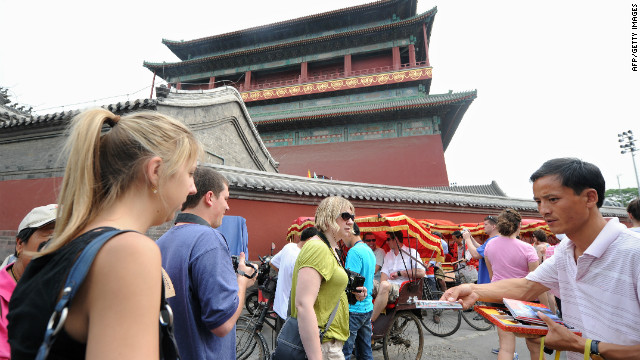
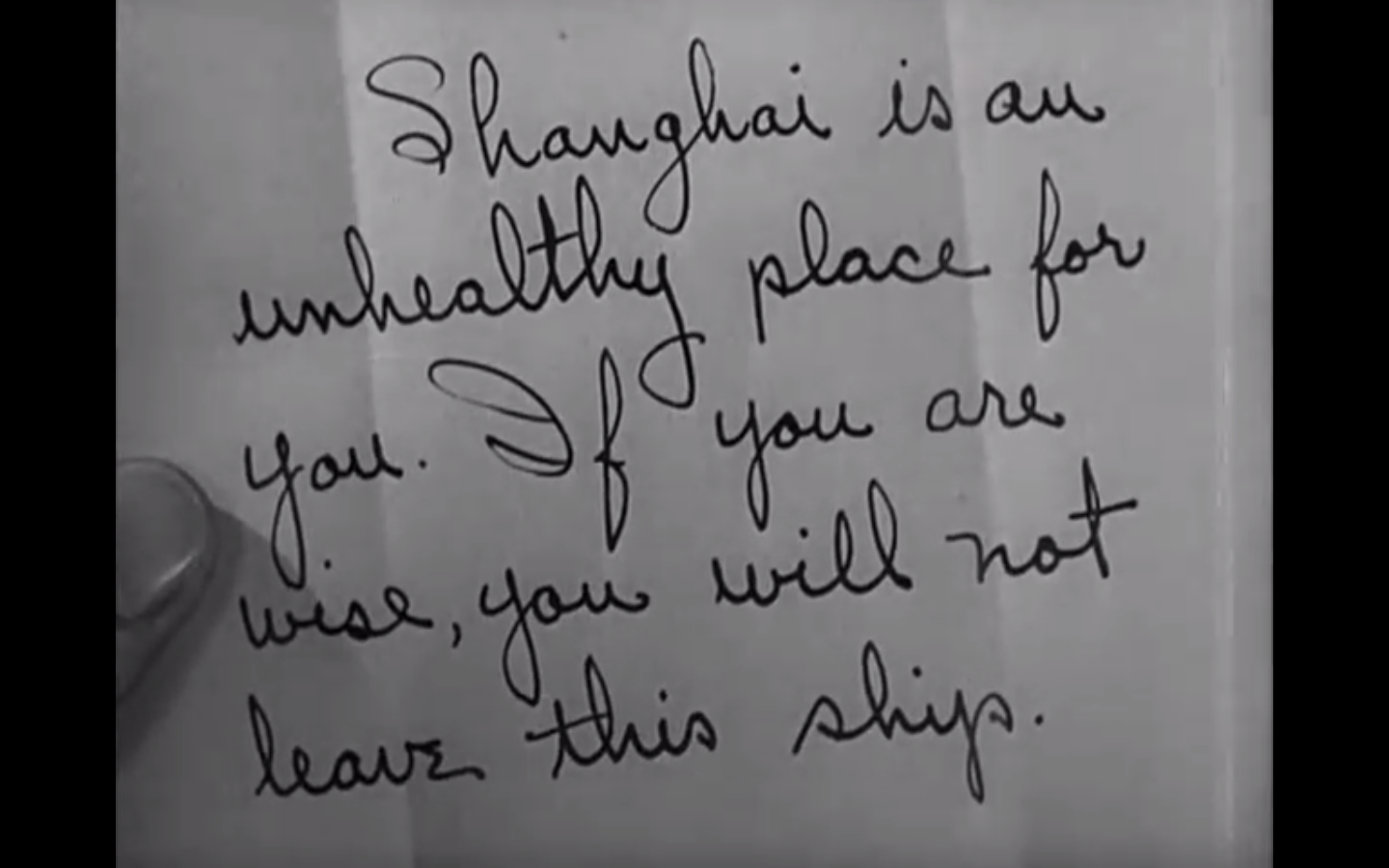
Well I have a theory as to what is on those cards. China Rhyming has studied history!! Warnings in China come solemnly whether it’s some Little Napoleon from the Exit-Entry Administration Department (above) or unknown thugs sending Charlie Chan notes warning him to stay away (below). Ohhh, how history does indeed rhyme….I found myself watching the excellent 1935 film Charlie Chan in Shanghai (you can watch it on Youtube here) where, as his steamer approaches Shanghai Charlie is presented with the following note – ‘nough said, as we say in Norff London (where I am safely hiding from the Exit-Entry Administration Department – they’ll never take me alive!)
Posted: May 27th, 2012 | No Comments »
Here’s the details and, if you’re in the UK or listening live online it’s every morning – I think afterwards you’ll be able to listen online at the BBC Radio Listen Again pages or at the Book of the Week site
Book Of The Week: Midnight In Peking
Ep 1/5
Monday 28 May
9.45-10.00am
(and then every morning same time all week concluding Friday)
BBC RADIO 4
Author Paul French reveals the details of a scandalous murder mystery which haunted the last days of Old Peking. The reader is Crawford Logan.
On a frozen night in January 1937, in the dying days of colonial Peking, the body of a young woman was found in the shadows of a haunted watchtower. It was Pamela Werner, the daughter of the city’s former British consul Edward Werner.
A horrified world followed the hunt for Pamela’s killer but the police investigation drew a blank and the case was forgotten amid the carnage of the Japanese invasion.
Seventy-five years later, deep in the Scotland Yard archives, British historian Paul French accidentally came across the lost case file prepared by Edward Werner and, through his fresh eyes, uncovered the killer’s identity.
An evocative account of the end of an era, the book spent seven weeks in the South China Morning Post’s Top 10 bestsellers list.
Abridged by Robin Brooks.
Producer/Kirsteen Cameron for the BBC
BBC Radio 4 Publicity
Posted: May 26th, 2012 | 1 Comment »
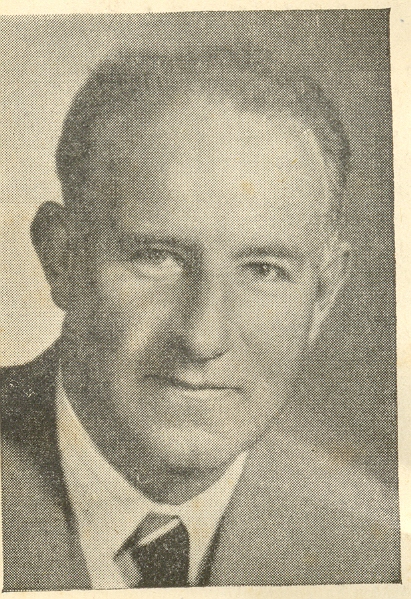
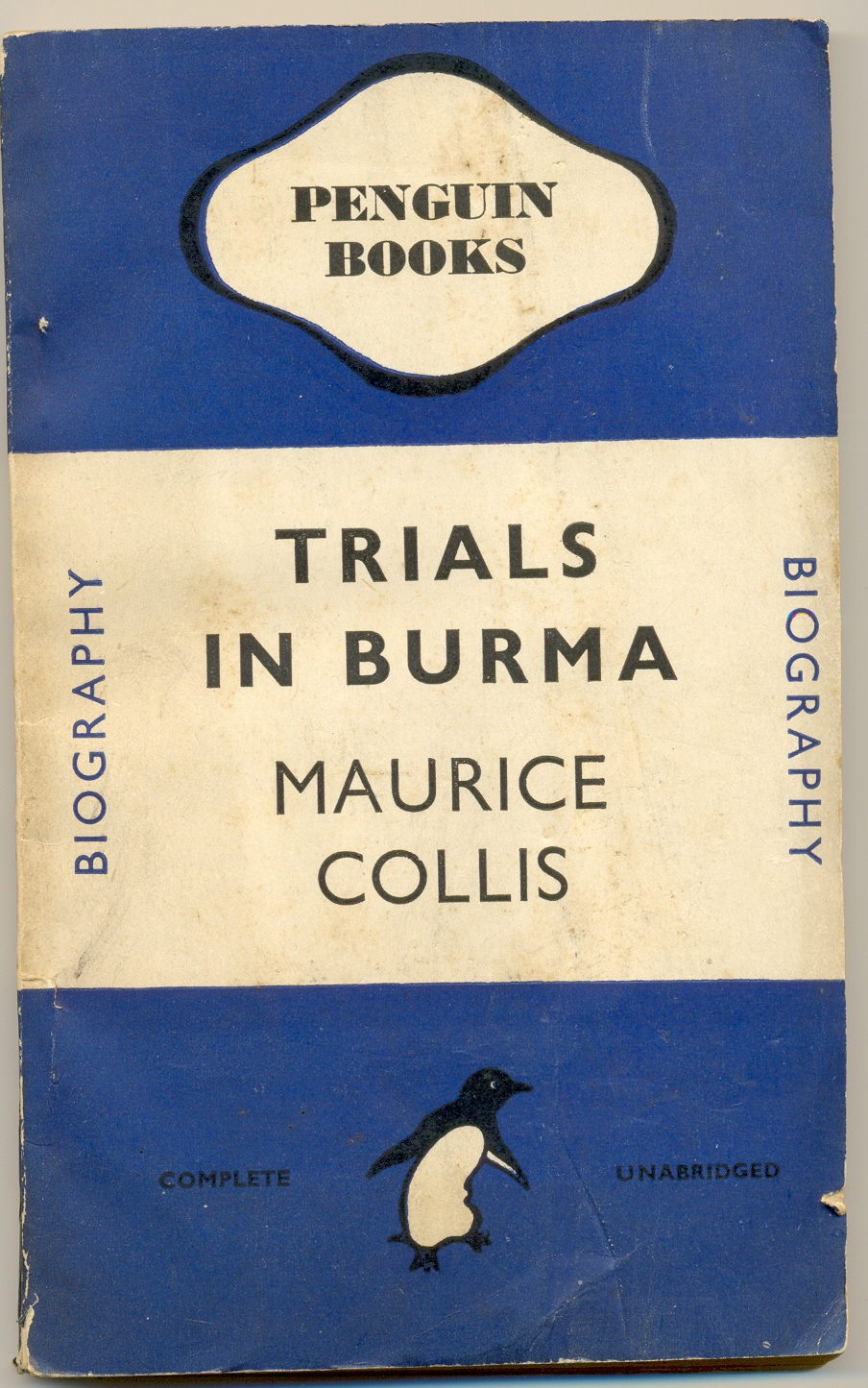
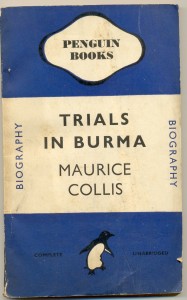
Talking of Burma and Burma-related books the other day, a reader was smart to remind me of Maurice Collis (1889-1973) the former British colonial official in Burma, prolific author on a range of subjects Far East and, later, a painter. Collis has long been a favourite of mine (and is available in second hand shops and ebay in lovely original Penguin covers),particularly for his history of the Opium Wars, Foreign Mud. But he also wrote extensively on Burma….I’ve nicked his Wikipedia entry on that time below…
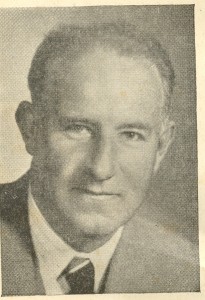
He was born in Dublin, the son of an Irish solicitor, and went to Rugby School in 1903 and then in 1907 to the University of Oxford, where he studied history. He entered the Indian Civil Service in 1911 and was posted to Burma in 1912. He had postings at Sagaing and elsewhere. In 1917, the British army raised a Burmese brigade with which Collis went to Palestine, but he saw no action. In 1919, he went on leave and travelled in Europe. In the 1920s he was district commissioner in Arakan. In 1929-1930, a period when relations between Burmese, Indians and British became particularly difficult, he was district magistrate in Rangoon. This period is narrated in his memoir Trials in Burma. He gives special attention to the political trial of J. M. Sen Gupta, mayor of Calcutta, for sedition in impromptu speeches made during a brief visit to Rangoon in 1930; also to two criminal trials which became politically charged because they brought to light underlying attitudes of British merchants and army officers to Burmese people. Collis’s judgments were (according to his own analysis) too independent to be pleasing to the then British Government of Burma, arousing the particular disapproval of his superior, Booth Gravely, Commissioner of the Pegu Division. After giving judgment in the last of these trials Collis was hastily moved to the post of Excise Commissioner. After returning to England in 1934, he wrote many books, including Siamese White and Foreign Mud, as well as art and literary criticism.
Posted: May 26th, 2012 | No Comments »
I have been a listener to BBC Radio 4’s Front Row arts show for many a year – it’s a daily mix of the British arts scene – books, theatre, art, music etc etc. So it was a great honour to be interviewed by Kirsty Lang on Front Row which meant I also got a nose around Broadcasting House on Portland Place too.
Anyway, it aired Friday night (along with a CD on Black Power music, the excellent Tracey Emin and a round up of Cannes) but you can listen on line here.

Posted: May 25th, 2012 | No Comments »
 Much merriment is being had at the expense of Beijing’s Municipal Commission of City Administration and Environment announcement that public toilet hygiene must be improved and that no more than two flies will be tolerated in any one public bog. Any more than two flies discovered in a toilet and someone’s in trouble. All a bit daft and of course unenforceable and typical sort of oddity from Chinese officials. Here’s the BBC report on it all. I point to the BBC for no particular reason except that the article includes an unintentionally hilarious “At the Scene” piece from BBC hack Michael Bristow – now I know that some overpaid honcho at the Beeb will have decreed that all internet stories must be accompanied by an “At the Scene” piece and it probably works from the trenches of Basra or Afghanistan, but “At the Scene” of a Beijing lavvy!! What intrepid journalism!!
Anyway, the point of this post is of course to put the “two flies” campaign into some sort of historical context. Now many will know of the silly Four Pests Campaign during the Great Leap Forward which targeted flies as well as rats, mosquitoes and sparrows. Many of you will also know that it was daft as killing all the sparrows meant worms proliferated as a far greater pest. The food chain not being one of Mao’s strong skills. A massive disaster – kids shooting down pest eating sparrows above in this poster.
But hatred of flies goes back even further. Here from my Carl Crow biography based on his observations of the Madame Chiang Kai-shek inspired New Life Movement of the 1930s:
“The New Life Movement had its slightly comical side, which Madame Chiang acknowledged to Crow when she explained the policy to him. The rampant spread of signs urging people not to commit suicide or not to visit brothels were some manifestations of exuberance as were the fly extermination contests in local schools where prizes were awarded to school children bringing the most dead flies to class for the teacher’s inspection and counting by official tellers. Crow noted that exterminating China’s fly population was probably an impossibility but did record with encouragement on a trip to Suzhou at the time that the vendors of ripe red slices of watermelon were now covering their wares with mosquito nets. To Crow the small changes, such as the local signs and wire nets over food stalls, were further indication that in China change always ultimately comes from below be it school children collecting flies, the anti-gambling patrols that wandered the back streets of Chongqing listening for the telltale click of Mahjong tiles late at night or the train boys Crow noted on the Lung-hai railway who voted to forgo their tips for the sake of the Movement. This soon proved problematic as tips were an important part of their salary so they revised their decision and decided to only forgo accepting tips from foreigners.”
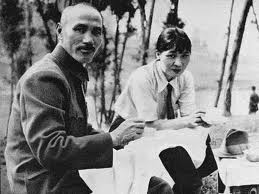 CKS and Madame on a tour checking out how well their New Life Movement was doing in 1934
Posted: May 25th, 2012 | No Comments »
A few more reviews that are also, in some instances, broader features on Beijing and so may be of interest…
Jonathan Kaiman came for a stroll through the hutongs, Legation Quarter and the Badlands back in March and makes some apposite points about the book, 1937 and modern day Beijing and Chinese politics in the Los Angeles Times here and re-ran in the Chicago Tribune here.
The Christian Science Monitor did a question and answer session here – Can’t believe they actually printed my term “bum-numbingly boring” – someone will complain about British smut getting in the papers!! Carry On Up the Fox Tower!!
A longer and more in-depth interview with Peter Boyle on 630 K-HOW in Denver – here
A mixed review from USA Today where the reviewer even got my name wrong and didn’t like the book much at all! here. However, they changed the mistake and then, very kindly, made me a Book of the Weekend pick.
And the mighty Oprah‘s Spring Reading list – here
The San Francisco Bay Guardian did a Q&A on Midnight in Peking here
PopMatters were kind too!
And the New Yorker book blog likes Midnight in Peking too