Posted: May 24th, 2012 | No Comments »
 I shouldn’t have to explain to the sort of educated folk that browse China Rhyming who Pierre Loti was – but I will. French naval officer and novelist who spent time and wrote about Tahiti and the South Seas and took the pseudonym “Loti” (red Flower) while in Polynesia. He also served and wrote about French Indo-China, Tonkin in work that was not always pro-French and got him into hot water. His Japanese-inspired novel Madame Chrysantheme (1877) is seen as a precursor to both Madame Butterfly and Miss Saigon. Of course in England he became notorious for his book L’inde sans les Anglais (India, Without the English – indeed!!!). Still, from the point of view of this blog it was Loti’s participation with the French forces in Peking in 1900 at the relief of the Boxer siege that is most interesting and his subsequent book Les Derniers Jours de Pekin (Last Days of Peking – 1902). Later, in 1912, he also wrote a stage version of the Sinologist Judith Gautier’s The Daughter of Heaven for Sarah Bernhardt in New York – chinois theatre! His house in Rochefort was apparently an Orientalists wet dream. I’ve also included this lovely portrait of him done by Henri Rousseau in 1891.
All of which was prompted to the front of my mind today while walking down Rathbone Place, just off Oxford Street in Fitzrovia where, sadly, a restaurant called Pierre Loti has just shut….perhaps the English are still not ready to the forgive Pierre Red Flower for that book about India!

Posted: May 23rd, 2012 | 3 Comments »
The tradition of erecting English Heritage Blue Plaques on buildings in the UK where famous folk resided is well established. I’ve mentioned a few London plaques on this blog before that have China connections – for instance, the poet and lecturer William Empsom who spent a long time in Peking recently had a plaque unveiled to him on Marchmont Street in Bloomsbury. There are several other China-related Blue Plaques around London – for instance in 2003 a Blue Plaque was unveiled in honour of Lao She at 31 St James’s Gardens in London, where Lao She lived between 1925 and 1928. It is the only blue plaque in London to feature Chinese characters and, significantly, it is the only one to commemorate a Chinese writer.
But now there is a blue plaque with Chinese writing on display up north…in Barnsley, South Yorkshire. the Gospel Herald (some sort of Christian newspaper – it popped up on Google, obviously I’m not a believer or anything daft like that) reports that a plaque has been unveiled on Barnsley’s Cheapside to James Hudson Taylor. It was unveiled by the Mayor of Barnsley, Cllr. Dorothy Higginbottom (honestly, you couldn’t make up a better Yorkshire name!!) and the Rev. Dr. Lai Pong from the Chinese Christian Community in Leeds. Well done to the local Barnsley Civic Trust and some local businesses who funded it as it is interesting and he is best known for founding the China Inland Mission.

Now who, you may well ask, was James Hudson Taylor (apart form the founder of the CIM)? Well, he was a rather important figure in the history of Christian missionaries to China(not a group who feature often on the pages of China Rhyming admittedly). A brief official bio as follows – “James Hudson Taylor (1832-1905) was an English missionary to China. At the age of 21, Taylor left his homeland to China and started his works near Shanghai, where he then established a church. He founded the China Inland Mission, one of the largest and Christian movements in the world. Taylor spent 51 years in China. The society that he began was responsible for bringing over 800 missionaries to the country who began 125 schools and directly resulted in 18,000 Christian conversions, as well as the establishment of more than 300 stations of work with more than 500 local helpers in all eighteen provinces.” Wikipedia has more on him here.
It seems Hudson Taylor had some adventures including nearly being killed in Shanghai and Yangzhou though ultimately whether he was more or less of an annoying and interfering God Botherer than any other missionary I don’t really know. I’m afraid my experience of missionaries is that they are all a pious and sanctimonious pain in the arse wandering around with their Big Book of Fairy Stories praying on weaker minds with their nonsensical superstition – but, hey, if it’s your thing! Anyway, below is a drawing of him almost being killed in Shanghai.

Posted: May 23rd, 2012 | No Comments »
I’ll be speaking at a lunch at the lovely Asia House in the heart of London’s Marylebone on the 25th May about Midnight in Peking and with an old mate Misha Glenny doing the chairman honours. It should be a good event and a fine meal and all part of Asia House’s May Festival of Asian Literature.
More details here

Posted: May 22nd, 2012 | No Comments »
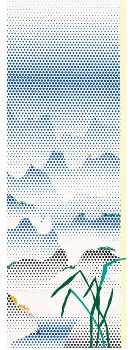
Damned annoyed to have missed the exhibition of Roy Lichtenstein’s (he of pop art fame) Landscapes in the Chinese Style which ran at the Gagosian in New York until April. You can still see the works here though. I was not personally aware of these Chinese inspired works previously I must admit but rather like them. Hopefully the exhibition will move, perhaps to the Gagosian in London which would be handy for me at the moment!
Posted: May 22nd, 2012 | No Comments »
A little plug nice and early for the third book in the series that I edit for Zed Books called Asian Arguments. More details to follow but it is a little known area of study – the Burmese women who migrate to northern Thailand’s manufacturing towns for work – in an area now attracting much renewed interest as Burma finally shifts. More to follow soon, but it’s available for pre-order now on Amazon:

Thailand’s Hidden Workforce
Burmese Migrant Burmese Migrant Women Factory Workers
Ruth Pearson and Kyoko Kusakabe
Millions of Burmese women migrate into Thailand each year to form the basis of the Thai agricultural and manufacturing workforce. Un-documented and unregulated, this army of migrant workers constitutes the ultimate ‘disposable’ labour force, enduring grueling working conditions and much aggression from the Thai police and immigration authorities. This insightful book ventures into a part of the global economy rarely witnessed by Western observers. Based on unique empirical research, it provides the reader with a gendered account of the role of women migrant workers in Thailand’s factories and interrogates the ways in which they manage their families and their futures.
The authors give a voice to a part of Thailand’s workforce invisible to many Thais, and to consumers across Asia and around the world who buy the cheap goods they produce. That voice is authentic, and paired with sound analysis of the issues raised.’
Chris Hogg, Former BBC correspondent in Asia.
‘The labels on your clothes do not say ‘Made by Burmese migrant women in Thailand’, but once you have read this book you will carry that information with you. Many thanks to the authors for exposing these conditions.’
Jackie Pollock, director, MAP Foundation, Thailand
‘This book reveals the hidden face of Thailand’s industrial and migration policies by giving visibility and voice to Burmese female migrants employed in the country’s ready-made garment and knitwear factories. The authors shine the spotlight, not only on the women’s work experiences on the factory floor, but also on the way they juggle care responsibilities for their children. It is a compelling story about ordinary women making hard decisions under precarious conditions as they live transborder lives.’
Professor Brenda Yeoh, National University of Singapore
Table of Contents
1. Thailand’s Hidden Workforce: Burmese Women Factory Workers
2. Thailand’s industrialization and labour migration policies
3. Burmese women migrant workers in Thailand’s export industries:
4. Migrant women in Thailand’s factories: working conditions, struggles and experiences
5. Burmese migrant women and families in Thailand: reproduction, children and care
6. After the crisis: new struggles and possibilities
7. Burmese Migrant workers between two worlds
Bibliography
Appendix One – history of registration schemes
Appendix Two – currency exchange rates
Posted: May 21st, 2012 | 1 Comment »
I accidentally came across this web site on the history of cars in China which is rather memory jerking for some of us at the wrong end of the age scale and also quite amusing. It’s part of carnewschina.com and you can see posts here under the China Car History heading.
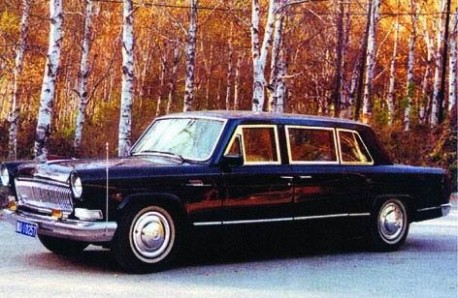
Some highlights (for me) include those old ‘made in China’ Citroens as well as Yunbao‘s. Personally I always loved the Hongqi (Red Flag) and remember the joy in Shanghai and Beijing when you got one of the rare Hongqi taxis! The bulletproof Hongqi is also cool – you can see one at Soong-ching Ling’s place up on Huaihai Road.
Do check out this site – loads of great old cars…
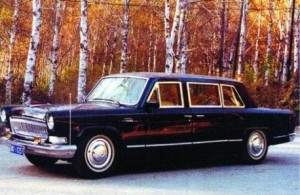 The bulletproof Hongqi heads out to someone’s dacha!
Posted: May 21st, 2012 | No Comments »
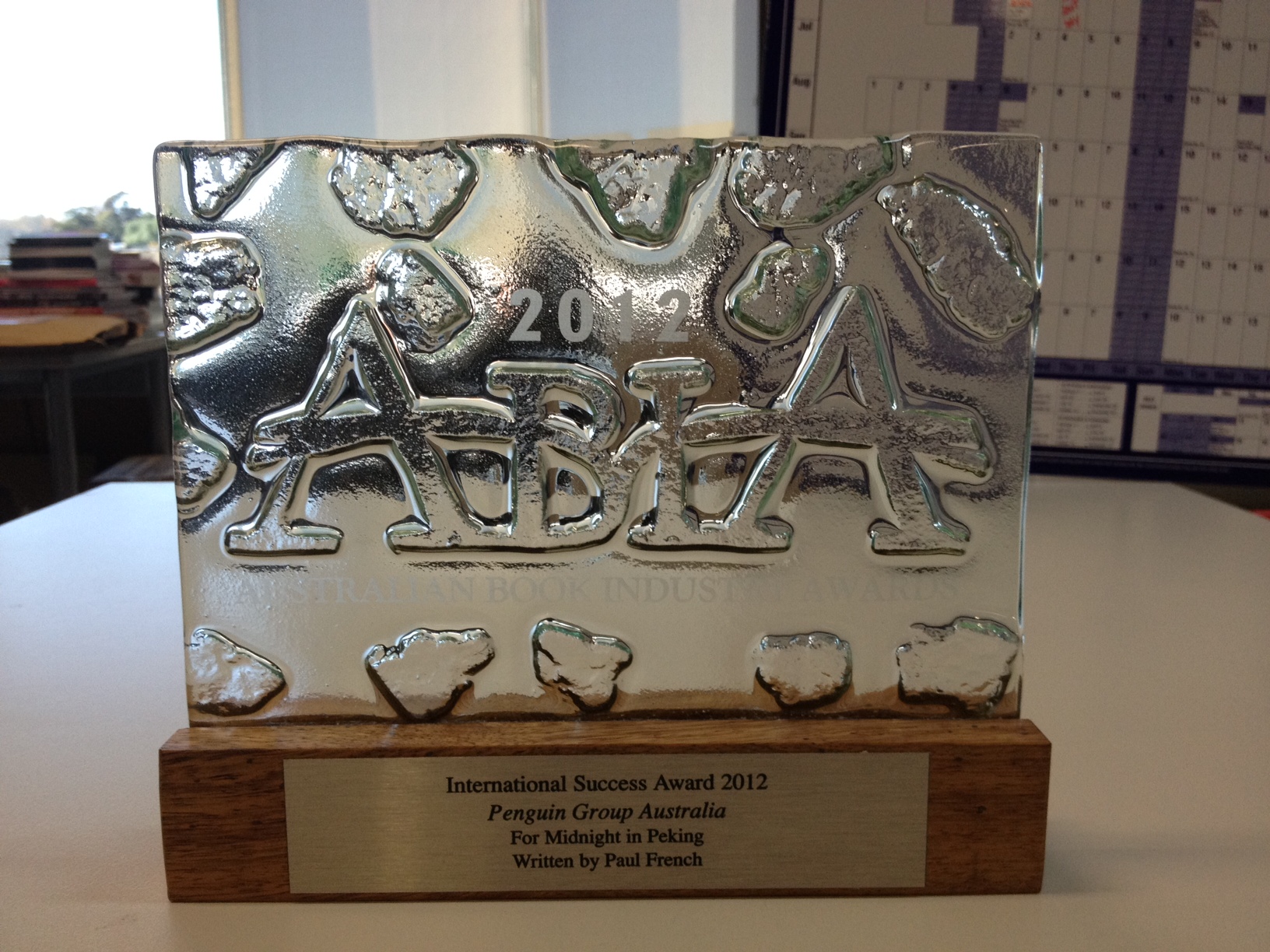
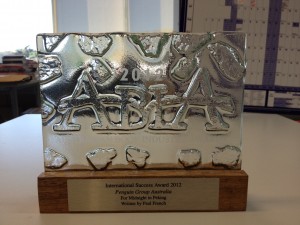
Obviously very glad that Midnight in Peking won the International Success of the Year award at the Australian Book Industry Awards – congrats to Kate and Peg at Penguin Oz who did all the heavy lifting on TV, foreign rights and all that – but also that Anna Funder won book of the year for All That I Am – which was my personal book of the year 2011. Trebles all round, as they say…here’s the trophy –
Posted: May 21st, 2012 | No Comments »
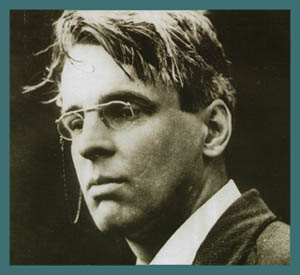
Regular readers will know that I have designated 2012 China Rhyming’s year of Chinoiserie poetry – We’ve had Vachel Lindsay (twice), Ezra Pound, Edith (and here a second time) and Sacheverell Sitwell to date. Now it’s the turn of William Butler (WB) Yeats, Irish poet and all round man of letters. Lapis Lazuli is a lovely poem published in 1938, dedicated to Harry Clifton. Clifton gave Yeats, on his seventieth birthday, an eighteenth century Chinese carving in lapis lazuli, an azure-blue semiprecious stone. It was a traditional scene representing a mountain with temple, trees, paths, and tiny human beings about to climb the mountain. Yeats uses the carving to meditate on the role of art in an essentially tragic world. Naturally, Yeats felt moved to write a poem.
We can see Yeats’s fears of approaching war and some Shakespeare references. FYI: Callimachus was a Greek poet
Enjoy…
Lapis Lazuli
(For Harry Clifton)
I HAVE heard that hysterical women say
They are sick of the palette and fiddle-bow.
Of poets that are always gay,
For everybody knows or else should know
That if nothing drastic is done
Aeroplane and Zeppelin will come out.
Pitch like King Billy bomb-balls in
Until the town lie beaten flat.
All perform their tragic play,
There struts Hamlet, there is Lear,
That’s Ophelia, that Cordelia;
Yet they, should the last scene be there,
The great stage curtain about to drop,
If worthy their prominent part in the play,
Do not break up their lines to weep.
They know that Hamlet and Lear are gay;
Gaiety transfiguring all that dread.
All men have aimed at, found and lost;
Black out; Heaven blazing into the head:
Tragedy wrought to its uttermost.
Though Hamlet rambles and Lear rages,
And all the drop-scenes drop at once
Upon a hundred thousand stages,
It cannot grow by an inch or an ounce.
On their own feet they came, or On shipboard,’
Camel-back; horse-back, ass-back, mule-back,
Old civilisations put to the sword.
Then they and their wisdom went to rack:
No handiwork of Callimachus,
Who handled marble as if it were bronze,
Made draperies that seemed to rise
When sea-wind swept the corner, stands;
His long lamp-chimney shaped like the stem
Of a slender palm, stood but a day;
All things fall and are built again,
And those that build them again are gay.
Two Chinamen, behind them a third,
Are carved in lapis lazuli,
Over them flies a long-legged bird,
A symbol of longevity;
The third, doubtless a serving-man,
Carries a musical instrument.
Every discoloration of the stone,
Every accidental crack or dent,
Seems a water-course or an avalanche,
Or lofty slope where it still snows
Though doubtless plum or cherry-branch
Sweetens the little half-way house
Those Chinamen climb towards, and I
Delight to imagine them seated there;
There, on the mountain and the sky,
On all the tragic scene they stare.
One asks for mournful melodies;
Accomplished fingers begin to play.
Their eyes mid many wrinkles, their eyes,
Their ancient, glittering eyes, are gay.
 I shouldn’t have to explain to the sort of educated folk that browse China Rhyming who Pierre Loti was – but I will. French naval officer and novelist who spent time and wrote about Tahiti and the South Seas and took the pseudonym “Loti” (red Flower) while in Polynesia. He also served and wrote about French Indo-China, Tonkin in work that was not always pro-French and got him into hot water. His Japanese-inspired novel Madame Chrysantheme (1877) is seen as a precursor to both Madame Butterfly and Miss Saigon. Of course in England he became notorious for his book L’inde sans les Anglais (India, Without the English – indeed!!!). Still, from the point of view of this blog it was Loti’s participation with the French forces in Peking in 1900 at the relief of the Boxer siege that is most interesting and his subsequent book Les Derniers Jours de Pekin (Last Days of Peking – 1902). Later, in 1912, he also wrote a stage version of the Sinologist Judith Gautier’s The Daughter of Heaven for Sarah Bernhardt in New York – chinois theatre! His house in Rochefort was apparently an Orientalists wet dream. I’ve also included this lovely portrait of him done by Henri Rousseau in 1891.