Posted: January 24th, 2012 | 1 Comment »
Noting this book, Mission to China about Ricci, afraid I haven’t read it yet – blurb and cover as usual below:

In the sixteenth century, the vast and sophisticated empire of China lay almost entirely unknown to Western travellers. As global trade expanded, this land of reputedly boundless wealth, pale-faced women, and indecipherable tongues began to feed the fantasies of European merchants and adventurers. The Catholic Church, meanwhile, saw in this great people millions of souls who would be damned unless the Christian message could be brought to them. In this book, Mary Laven tells the extraordinary story of the first Jesuit mission to China. Confronting enormous challenges, the Italian priest Matteo Ricci and a tiny handful of learned companions gained permission from the notoriously xenophobic Wanli emperor to settle in the fabled Forbidden City. Living among eunuchs and mandarins, wearing the clothes of Confucian scholars, Ricci and his associates strove to master the language and culture of their hosts. At the same time, they energetically preached the virtues of Western art and science. In Mission to China Mary Laven brings this remote world vividly to life.
Mary Laven lectures in History at the University of Cambridge, and is a Fellow of Jesus College. She grew up in Canterbury, and apart from interludes in Venice and York, has spent most of her subsequent life in Cambridge. She loves Italy, archives, beer, and walking around the suburbs of unfamiliar cities. Her first book, Virgins of Venice: Enclosed Lives and Broken Vows in the Renaissance Convent, won the John Llewellyn Rhys prize.
Posted: January 24th, 2012 | No Comments »
Danwei (which now appears, after a long time in the commie dog house, to have been unblocked in China) has a history of Chinese serial killers by Robert Foyle Hunwick. He catalogues suspected and known serial killers in the PRC from the early 1980s the the present (the apparent rise of the serial killer being seemingly in a similar arc to the introduction of capitalism and the market to China may of course by mere coincidence and you can choose to believe that if you want!). It does seem that just as China scoops all the golds at the Olympics it’s serial killers are also off the scale in terms of their numbers – Yang Xinhai with 65 victims is thought to be China’s worst serial killer. Unsurprisingly perhaps prostitutes and sex workers seem to be the main targets of these men in many cases. Also the now transitory nature of much of Chinese society, migrant wanderers without any stable sense of community – indeed with all the displacement of traditional communities it seems all too easy to murder and walk away; the neighbours won’t check for ages! There are also big questions of police capabilities in these kinds of cases and to co-ordinate nationally as well as the media’s complicity in hushing up cases on occasion leading to the raft of rumours that fly around China constantly.
And if you want a China Rhyming theme (history doesn’t repeat itself but it does rhyme) then Foyle Hunwick refers to the spate of kidnappings now rampant, particularly in Shenzhen. Of course kidnapping was a criminal disease in the 1930s too, though mostly of the wealthy rather than children (and, again, should you wish to draw lessons from the one-child policy and forced social engineering from this then I won’t stop you!).
A fascinating article well worth a read.
Posted: January 23rd, 2012 | No Comments »
As it’s the Chinese New Year holiday a longer piece today as you might have some time to read. I persuaded friend of China Rhyming, Anne Witchard, author of the forthcoming book Lao She, London and China’s Literary Revolution (RAS Shanghai-Hong Kong University Press) to make a few notes from her recent reading on Noel Coward’s first encounters with China and his relationship with Jeffery Holmesdale, the fifth Earl Amherst, who’s esteemed ancestor had been British Ambassador to China and refused famously to kow-tow. It takes us from dope dens in Limehouse and Tallulah Bankhead to tramp steamers at Haiphong!!

In 1927 the society beauty, Lady Diana Cooper remarked: ‘Noel Coward is on the edge of a nervous breakdown which he proposes to have in China.’ Coward was 27 and already rich and famous. His first attempt at a Chinese nervous breakdown however would take him only as far as Honolulu where he was waylaid by the charms of La Pietra, a coral-pink Italianate villa nestled among cocoa palms and scarlet hibiscus. It belonged to Harold Acton’s aesthetically inclined cousin Louise, and was a paradisial place to plot up. However the lure of Far Eastern consolations was irresistible to Bright Young men of the Twenties and two years later it was announced in the New York Times (November 1929) that ‘Mr Coward is to embark on a trip round the world […] He will be joined in Japan by Jeffery Holmesdale, who used to write […] for the New York World, and together they will venture deep in Japan and China. Mr Coward may be gone for a long time.’
Coward had first met Jeffery Holmesdale, the future fifth Earl Amherst, in 1920 at a Park Lane party thrown by the pale and willowy Earl of Lathom. In the aftermath of war, a ‘corrupt coterie,’ as Diana Cooper described her set, hedonistic and stage-struck young aristocrats, artists and theatre people, became renowned for their lavishly decadent lifestyle. Amherst recalled ‘cocaine on the table’ in West End nightclubs and at Tallulah Bankhead’s parties in Chelsea, of which one of her friends complained ‘ I’m sick and tired of Talullah’s parties. Every morning they run out of cocaine, and it’s me whose sent down to Limehouse to get some more!’ In 1920 Amherst was about to resign his commission in the Coldstream Guards having served in the war and earned his Military Cross. Slightly built with blond hair and blue eyes he was the scion of an esteemed family. The 1st Earl Amherst was ambassador to China whose famous refusal to perform the ko-tou ceremony before the emperor gave kow tow to the English language. His forebear and namesake Sir Jeffrey Amherst had been commander-in-chief of the British Army during the American War of Independence, his reputation tarnished for supposedly endorsing the giving of blankets infected with smallpox to the Native Americans. Coward described Amherst as ‘gay and a trifle strained’ with ‘a certain quality of secrecy […] as though he knew too many things too closely.’ He was immediately attracted to this blond-haired aristocratic young officer whose air of mystery contributed to his appeal. That night they left the party together. ‘I watched him twinkling and giggling through several noisy theatrical parties’ Coward recalled later, ‘but it took a long while for even me to begin to know him.’ Soon after they met, in 1921, Amherst got a post as a journalist on New York World and seeking to establish his name on Broadway, Coward journeyed with his new friend on the luxurious Cunard liner Aquitainia – known as The Ship Beautiful. They stayed at the Algonquin Hotel and one of first things they did was to go sightseeing in Chinatown. During the years that followed, Coward made as sensational an impact on New York as he had in London. By 1929 he was ‘getting egg-bound, mentally that is’ as he informed Amherst, and suggested that he break from reporting gruesome crime stories and writing theatre reviews and join him on his trip to China.
Coward sailed from San Francisco on the President Garfield (29 November) once again stopping at La Pietra. This time he joined the Tenyo Maru for Yokohama. He arrived in a snowstorm and took a taxi to Tokyo which he described as a ‘sad scrap heap of a city’ sacrificed to Western aspirations. Here he waited three days for Amherst to join him for the start of a six-month adventure that would inspire some of his best known work, including the play Private Lives, which he conceived in the Imperial Hotel in Tokyo (designed by Frank Lloyd Wright) while he was waiting for Amherst and would write up later in four days at Shanghai’s Cathay Hotel during a bout of flu.
The two friends with their twenty-seven pieces of luggage, including a portable gramophone, travelled from Nagasaki to Korea, then to Mukden where they attended a New Year’s fancy dress party with the British consul. Amid the amateur pierrots, now dusty images of the previous decade, Coward noted his countrymen’s isolation ‘condemned to stay in that grim, remote place perhaps for years.’ They journeyed on through northern China on a freezing train cocooned in a heap of fur coats, drinking vodka and repelling carriage invaders by cranking up Sophie Tucker’s Some of these Days to full volume on the gramophone.
As Coward recovered from his flu at the Cathay, the weather improved, and he enjoyed Shanghai, ‘a cross between Brussels and Huddersfield’ he wrote in a letter to his mother. They got to know three naval officers from HMS Suffolk moored on the Yangtse and soon they were dining riotously on board ship, and having a ‘fairly rowdy’ time. Coward persuaded the navy to let them travel on the ship to Hong Kong where propped up in bed in a dark blue flannel dressing gown, with notes scattered about and a portable typewriter he got Private Lives down on paper.
Back in Shanghai, they took a tramp steamer for Haiphong, sharing a cabin with a multitude of bedbugs and cockroaches, and were driven in a hired car along the coast to Saigon. The drive took a week and while jungles and rivers and mountains and rice fields were unrolling past the window of the car, Coward came up with a new song ‘Mad Dogs and Englishmen’. From Singapore they took a night train to Kuala Lumpur and visited Coward’s younger brother Erik who was stationed at a tea plantation near Colombo, Ceylon. On a P & O boat home from Ceylon to Marseilles they were asked to judge a fancy dress competition. When they awarded the prize to two pretty young Eurasian girls, ‘with much the best costumes’ the caste-conscious planters wives were annoyed. After Coward discovered that there wasn’t a mother among them whose daughter didn’t dance and sing he took his revenge with the song ‘Don’t Put Your Daughter on the Stage’. A lesser known product of the trip was a song ‘Half Caste Woman’ which Coward wrote for Charles B. Cochran’s 1931 Revue, from which it was cut after just a few weeks.
Drink a bit, laugh a bit’ love a little more
I can supply your need
Think a bit, chaff a bit, what’s it all for
That’s my Eurasian creed
The set design featured several flappers languorously decorating a whisky bar (Graham Hodges’s Anna May Wong). A song about prostitution was rather risky for the conservative attitudes of the 1930s but it was picked up by Anna May Wong who chose it as as her signature tune.
In later life Amherst remained reticent about his friendship with Noel Coward, speaking movingly of their attachment but declining to delve deeper, their relationship remains shadowy and essentially private.
Info from Philip Hoare Noel Coward: A Biography. University of Chicago Press. 1988
Also see Jeffery Amherst, Wandering Abroad. Secker and Warburg. 1976
Posted: January 22nd, 2012 | No Comments »
The annual Beijing International Literary Festival 2012 is on throughout March up at the Beijing Bookworm and it’s bigger than ever and spread over more venues, with more authors than previously. I’m there doing a bunch of stuff of which more details later – but here’s a link to their newly launched site with all details for the early birds who work out their lives sensibly in good time to get tickets for things!

Posted: January 21st, 2012 | 1 Comment »
In 2011 I got my own dragon!! A very cool dragon that appeared on the front of Midnight in Peking. So I’m well prepared for the year of the dragon! Happy new year to all and sundry.

Posted: January 21st, 2012 | No Comments »
They just launched the Perth Writers Festival 2012 Programme – I’ll be speaking at a few events, mostly panels if anyone’s around Western Australia. The full programme is now available on their website. The festival takes place on the weekend from February 23 – 26 2012 at The University of Western Australia. I’ll be in Canberra and then Adelaide after Perth, details on those events to follow.

Posted: January 21st, 2012 | No Comments »
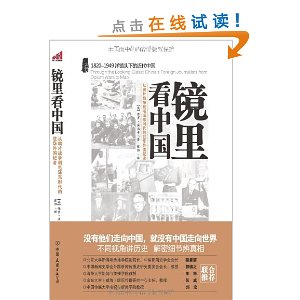
Remiss of me not to have noted this earlier but my book Through the Looking Glass: China’s Foreign Journalists From Opium War to Mao (here in English hard copy and here in English in an excellently low priced Kindle edition) is now available in a Chinese edition. I’m told it’s been seen in bookshops around Shanghai and Beijing and is here on Amazon.com.cn for a mere RMB27. Chinese readers have given me 4 out of a possible 5 stars and reader reviews give it a bunch of 5 stars so that’s nice!
Thanks to everyone at Beijing Mediatime Books for all their efforts in getting the book out in Chinese.
Posted: January 20th, 2012 | No Comments »
Ellen Thorbeck’s Shanghai: Photographed and Depicted by Ellen Thorbecke with Sketches by Schiff is a great, but rarely seen these days, book. Shanghai’s great newspaper, ‘the old lady of the Bund’, The North-China Daily News actually published it in 1940. Thorbecke and Schiff (an Austrian artist working in Shanghai) worked together several times on books about Hong Kong and Peking as well as Shanghai – their great 1934 guide to Peking was a large book – Hong Kong and Shanghai were more manageable publications. Thorbecke, a German who married a Dutch Ambassador to China, was an accomplished photographer and photo-journalist who worked in China a long time. The trademark style of using Schiff’s amusing colourful sketches of people over, say, a Thorbecke photograph of Jessfield Park (Zhangshan Park) was considered sacrilege by some photographers but the public liked thre combination (and it would be nice to see some of Shanghai’s photography and art community try something similar today perhaps). The mix of essays, photos, drawings and little epigrams was very popular and sold really well reflecting a taste for art-nouveau styles in Shanghai and a fondness for the eccentric among China Coasters.
Anyway, below is an advert from the North-China Daily News advertising the book in 1940 – it includes some more Schiff sketches – ‘tea at the French Club’, ‘Blood Alley’, ‘Moscow Boulevard’ – come on, how can you not rush credit card in hand to your local antiquarian bookseller!! However, just checking Abe Books you might need US$800 for a good copy!!


