Posted: January 13th, 2012 | No Comments »
RAS BOOK CLUB
Monday 16th of January, 2012 at 6.00pm
The PuLi Hotel and Spa
1 ChangDe Road, JingAn District, Shanghai
璞麗酒店 ä¸å›½ä¸Šæµ·å¸‚é™å®‰åŒºå¸¸å¾·è·¯1å·
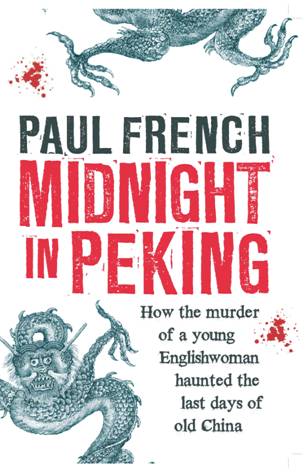
The RAS Book Club will meet to discuss Midnight in Peking; the author, Paul French, will participate in the conversation with a group of people that has read the book. This will give the members of the book club an opportunity not only to discuss the writing, motivations, literary experience, evolution of this work of literary non fiction but also to dialogue about the ‘who done it factor’ something that has not been included in Paul’s previous presentations on this work.
Entrance: RMB 70.00 (RAS members) and RMB 100.00 (non-members) including a drink (tea, coffee, soft drink, glass of wine) Those unable to make the donation but wishing to attend may contact us for exemption, prior to this RAS Book Club event. Membership applications and membership renewals will be available at these events.
RSVP: bookclub@royalasiaticsociety.org.cn
RSVP ESSENTIAL AS ATTENDANCE IS LIMITED. PREFERENTIAL BOOKING TO MEMBERS UNTIL 10TH JANUARY, 2012.
N.B. FOR RAS MEMBERS AND THOSE OF YOU WHO HAVE READ MIDNIGHT IN PEKING, ARRANGEMENTS ARE IN PLACE TO PROVIDE AN EARLY AND LATE SESSION, SHOULD THIS EVENT BE OVERSUBSCRIBED BY RAS MEMBERS.
MORE ABOUT MIDNIGHT IN PEKING
In 1937, Peking was a city with a healthy appetite for privilege and scandal. Lavish cocktail bars and dingy opium dens abound; corruption, superstition and rumours were par for the course. The exclusive Legation Quarter thrived on gossip, and almost nothing was too shocking for its foreign residents. Meanwhile, Japanese troops had already moved into Manchuria and were poised to move on Peking. The people of the city nervously waited for the axe to fall with parties and drinking and drugs, frantically living out the last days of their indulgent Peking lifestyles.
Ever on edge and with tension peaking, the discovery, one freezing January morning, of a brutally murdered young Englishwoman traumatized the people of Peking. Pamela Werner’s body was found, horrifically mutilated, at the foot of the Fox Tower, an ancient watch tower supposedly haunted by fox spirits. The police investigation that ensued was one of confusion and surprise but not one of answers. A private investigation conducted by Pamela’s father proved more productive but still brought no justice.
When author Paul French came across the story by chance, he was so haunted by a photograph of Pamela that he decided to investigate the circumstances surrounding her unsolved murder. The enquiry took him back to a city full of vice and intrigue where he met a perplexed Chinese police force,a determined ex-Scotland Yard detective and a British Foreign Office more interested in saving face than revealing the truth. He tracked Pamela’s killer through the infamous Peking ‘Badlands’ rife with crime, prostitution and drugs and into the grand foreign Legation Quarter where supposed gentlemen were not so gentle and in doing so he uncovered the truth.
Almost seventy-five years after the murder of Pamela Werner, Paul French finally gives the case the resolution it was denied at the time and in the tradition of the true crime classics White Mischief and Midnight in the Garden of Good and Evil, Midnight in Peking transforms a headline gripping murder into an absorbing and emotional exposé, bringing the last days of old Peking to life.
Paul French studied history, economics and Mandarin in London and has an M. Phil in economics from the University of Glasgow. He is now based in Shanghai as a business advisor and analyst. He is the author of four works of Asian History including Carl Crow: A Tough Old China Hand and Through the Looking Glass: China’s Foreign Journalists from the Opium Wars to Mao and wrote the foreword to Penguin’s Shanghai: A History in Photographs 1842-Today.
SPONSOR AND SUPPORTER

Posted: January 13th, 2012 | 1 Comment »
On December 30th we lost Ronald Searle, a man who brilliantly lampooned British society in the 1950s and created the two great post-war visions of the British education system!! – St Trinian’s and Molesworth. What many people don’t know (and everyone knows St Trinian’s) was that Searle was a POW in Singapore, first imprisoned in Changi jail and then being forced to work on the Burma-Siam Railway – the Death Railway of Bridge Over the River Kwai fame. Searle suffered horribly with beri-beri and malaria and saw many of his comrades die in the jungles of South East Asia through to his release in 1945.
 Searle’s self-portrait of himself at the time of the surrender of Singapore
Searle’s drawings of life in Changi and on the Burma Railway were stunning and conveyed perhaps better than any other images or memoirs the horrors of the POW camps in the Far East. He drew while in captivity hiding his pictures under his mattress. He eventually produced over 300 drawings many of which first reached the public through being included in Russell Braddon’s memoir The Naked Island. More were made available in the 1986 book, Ronald Searle: To the Kwai and Back, War Drawings 1939-1945. Some of his pictures can be seen in London’s Imperial War Museum. Some have also suggested that the skinny figures that typified Searle’s drawings of the St Trinian’s brats reflected his war-time familiarity with starving prisoners – the war, it seems, affected Searle’s work just as it did other famous internees such as JG Ballard.
 The Terror of St Trinian’s and Other Drawings shows Searle’s repeated skinny girls
Posted: January 12th, 2012 | No Comments »
Edited by Kendall Johnson
Global Connections series
“This is an important and necessary book emphasizing the early period of Sino-American interaction. Johnson and his authors reinterpret historical events through the lenses of narrative and literature, showing how the stories people tell about one another become the first drafts of history. This book will change historians’ understanding of Chinese- American relations.” — James Fichter, author of So Great a Proffit: How the East Indies Trade Transformed Anglo-American Capitalism
-Â The first in a new series by the School of Modern Languages and Cultures, the University of Hong Kong.
– Discusses the first commercial encounters between a China on the verge of social transformation and a fledgling United States struggling to assert itself globally as a distinct nation after the Revolutionary War with Great Britain.
-Â Nine essays are attuned to the activities of competing European traders, especially the British, in Canton, Macao, and the Pearl River Delta.
Kendall Johnson is director of the American Studies Programme and associate professor at The University of Hong Kong.
Posted: January 12th, 2012 | No Comments »
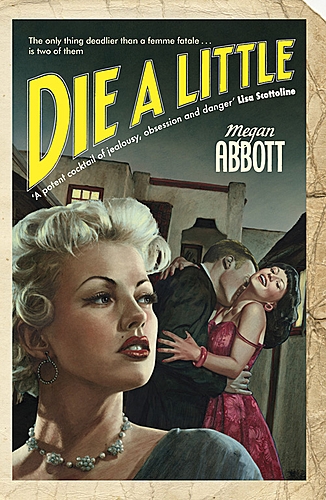
I’ve been looking for a way to shoehorn the writer Megan Abbott into this blog for a while now. She’s a great crime writer who’s dark, deep noirs are set in 1940s/1950s LA and rightly deserve comparison to the noir greats – Cain, Chandler, Thomspon, Ellroy. One of her best is Die a Little (they all come with very cool retro-covers) and I noticed that she does have a scene, a great scene of a drunk and louche party, where the soundtrack is Doris Day’s Why Did I Tell You I Was Going to Shanghai. I’ve never really thought much about that song – lyrics by Bob Hilliard and the composer Milton De Lugg – as, the way Day interprets it, it’s a schmaltzy cutsey tune, the way she delivered everything basically. It’s got a couple of gags about going to Shanghai but not liking rice. However, in Megan Abbott’s book, a rather deliciously corrupt woman sings it and by slowing it down and vamping it up turns it into a very sexy song – which is the way Shanghai should always be. Listening to the song again you can get how it could be a very sexy tune taken away from someone as wholesome and dreary as Day. Here‘s Doris’s saccharine version anyway.
I’ve looked around a bit but can’t find a sexier version a la Abbott’s book – this Peggy Lee version is a little huskier but not much and this Judy Cannon version is pretty awful I think. And here is a version by four grown men in green shirts in a barbershop quartet – which is just so wrong on so many levels I don’t know where to start!!
So it seems we can put the sexy version of the song down entirely to Megan’s imagination!!
Posted: January 10th, 2012 | 1 Comment »
Thanks to University of Westminster’s Anne Witchard (author of the soon to be published Lao She, London and China’s Literary Revolution, Hong Kong University Press) for sending me this China reference from Little Dorrit (published between 1855-1857). The text refering to Chinese women is reproduced below.
I have one question – what is a ‘Pagodian dissenter’?
Anne notes that in the recent BBC TV adaptation starring Claire Foy and Matthew McFadyen, Andrew Davies, the screenwriter, inserted the comment, “…and are Chinese ladies different down there?” which, of course isn’t in Dickens but refers to the long held myth that Asian vagina’s are horizontal rather than vertical, a strangely long persisting myth certainly still current among American GIs during the Second World War in the Pacific. Of course for some websites that would be a cue to post some rather risque photos, of which the Internet is full. I’ll stick with Claire Foy as little Amy Dorrit stuck in the Marshalsea debtors prison.

‘Indeed I have little doubt,’ said Flora, running on with astonishing speed, and pointing her conversation with nothing but commas, and very few of them, ‘that you are married to some Chinese lady, being in China so long and being in business and naturally desirous to settle and extend your connection nothing was more likely than that you should propose to a Chinese lady and nothing was more natural I am sure than that the Chinese lady should accept you and think herself very well off too, I only hope she’s not a Pagodian dissenter.’
‘I am not,’ returned Arthur, smiling in spite of himself, ‘married to any lady, Flora.’
‘Oh good gracious me I hope you never kept yourself a bachelor so long on my account!’ tittered Flora; ‘but of course you never did why should you, pray don’t answer, I don’t know where I’m running to, oh do tell me something about the Chinese ladies whether their eyes are really so long and narrow always putting me in mind of mother-of-pearl fish at cards and do they really wear tails down their back and plaited too or is it only the men, and when they pull their hair so very tight off their foreheads don’t they hurt themselves, and why do they stick little bells all over their bridges and temples and hats and things or don’t they really do it?’ Flora gave him another of her old glances. Instantly she went on again, as if he had spoken in reply for some time.
‘Then it’s all true and they really do! good gracious Arthur!—pray excuse me—old habit—Mr Clennam far more proper—what a country to live in for so long a time, and with so many lanterns and umbrellas too how very dark and wet the climate ought to be and no doubt actually is, and the sums of money that must be made by those two trades where everybody carries them and hangs them everywhere, the little shoes too and the feet screwed back in infancy is quite surprising, what a traveller you are!’
In his ridiculous distress, Clennam received another of the old glances without in the least knowing what to do with it.
‘Dear dear,’ said Flora, ‘only to think of the changes at home Arthur—cannot overcome it, and seems so natural, Mr Clennam far more proper—since you became familiar with the Chinese customs and language which I am persuaded you speak like a Native if not better for you were always quick and clever though immensely difficult no doubt, I am sure the tea chests alone would kill me if I tried, such changes Arthur—I am doing it again, seems so natural, most improper—as no one could have believed, who could have ever imagined Mrs Finching when I can’t imagine it myself!’
Posted: January 10th, 2012 | No Comments »
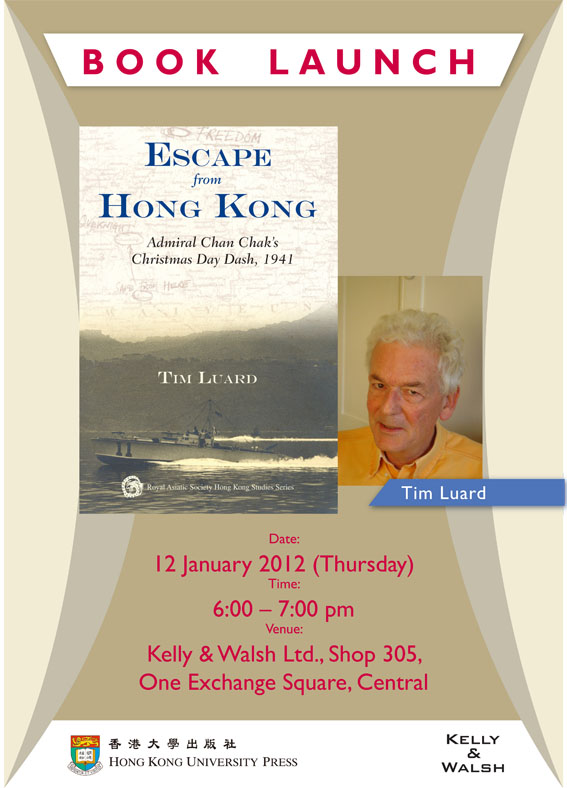
Book Launch
Escape from Hong Kong: Admiral Chan Chak’s Christmas Day Dash, 1941
by Tim Luard
Date: 12 January 2012 (Thursday)
Time: 6:00 – 7:00 pm
Venue: Kelly & Walsh Ltd., Shop 305, One Exchange Square, Central, HK
The dramatic escape under fire of sixty-eight British and Chinese defenders of Hong Kong just hours after the colony’s surrender to the Japanese on Christmas Day 1941 is one of the most remarkable untold stories of the Second World War.
The British officers and sailors were led by a famous one-legged Chinese admiral, who was shot in the arm and left behind his wooden leg as he swam for his life in a barrage of gunfire. The group landed in China and marched for four days across rivers and mountains frequented by bandits and Japanese patrols, guided by local guerrillas and villagers who carried the admiral in a bamboo sedan chair.
The Royal Navy party continued by river, road and rail across some of China’s poorest and most remote regions, reaching home five months later after again coming under Japanese attack in Burma.
Escape from Hong Kong, by former BBC China correspondent Tim Luard, tells the full story of this epic adventure for the first time. Its publication coincides with the 70th anniversary of the escape this Christmas Day.
“Tim Luard tells this exciting and little known story with great skill.’ — Chris Patten
More information about the book here
Posted: January 9th, 2012 | No Comments »
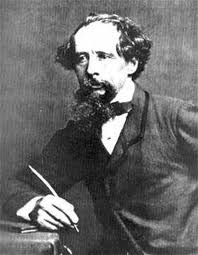
A few more China moments in Dickens’ life and work following my attempt at a round up of Dickens and his China influences/references recently (see previous post). More have appeared!
- Dickens was true to Victorian perceptions in believing the Chinese especially skilled in magic. Chinese, or Europeans dressed as Chinese (as discussed before on this blog with posts on Chung Ling Soo and Alexander Hermann). According to Claire Tomalin’s excellent Dickens bio (my Christmas reading this year) Dickens would perform magic tricks for his children dressed in a Chinese gown and mask. At one party for friends around 1848/49 Dickens performed tricks claiming that he had acquired his magical knowledge from a Chinese mandarin for 5,000 Guineas who then promptly died of grief after parting with the secret! As Tomalin notes, Dickens was a fun dad!! Apparently his most famous trick was to put all the ingredients of a Christmas pudding in his hat and then, miraculously, producing a flaming Christmas Pud!!
- Dickens was also, it seems, as susceptible to the long running crazes for Chinoiserie as were most Victorians. Apparently his house at Gads Hill (now some private school) and in London had “Oriental” carpets and drapes while at Gads Hill he would hang Chinese lanterns in the conservatory and apparently sit around of an evening admiring them.
- Dickens’s first son Charles Jr (below in a rather un-Victorian Christine Keeler sort of pose!!), known as Charley in the family, was not a great success and was at one point in 1860 packed of to Hong Kong to learn to be a tea buyer meaning that for a time Dickens’s had family in China! However, there appears to be no records I can find of this Hong Kong trip of Charley’s apart from in Claire Tomalin’s new bio. I believe the whole idea of him working in the East in the tea trade must have not worked out as he was back in England by February 1861 and getting married in December 1861 – given the length of a round trip voyage from England to Hong Kong in 1860 he not only obviously took against Hong Kong but clearly took against it rather swiftly and departed post-haste ye gads!
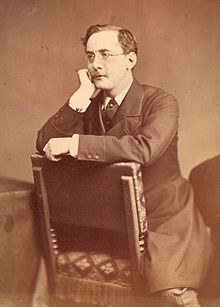
- Obviously Charley’s trip to the Orient rather got Dickens’s thinking of the East. In one of his many Christmas short stories, written in the early 1860s, Dr Marigold’s Prescriptions, Dickens’s has several China references. Dr Marigold encounters a young deaf-and-dumb lad and is astounded that he is, “…a-going out to China as clerk in a merchant’s house, which his father had been before him.” Slightly later a young deaf-and-dumb girl he has adopted marries and leaves with her new husband for a life in China, though we never find out what happens to her there or whether she likes it or not. China is a device in this story to indicate distance and parting – it could have been Timbuktu or Tierra del Fuego but Dickens chose China, presumably because his boy Charley had just been and gone and he’d been thinking of how far it was from London.
- And thanks to reader CharlesDickensLondon (who has a rather fun Dickens site here) who, after I mentioned Dickens’ visit to the Chinese junk that came to London a a tourist attraction and moored up at Blackfriars Bridge, pointed me in the direction of this interesting article by Patrick Wright (author of the recent book Passport to Peking: A Very British Mission to Mao’s China) on the Thames junk and Dickens visit to see it.
And that’s probably enough Dickens China trivia for now – of course the old boy’ll everywhere this year what with it being the bicentenary of his birth.
Posted: January 9th, 2012 | No Comments »

RAS LECTURE: SIMON COCKERELL ON “TOURISM IN NORTH KOREA”
Date: Tuesday 10th January, 2012 at 7:00 p.m.
Place: Tavern, Radisson Plaza Xingguo Hotel 78 Xing Guo Road,Shanghai
兴国宾馆上海市兴国路78å·
Rsvp:Â to RAS Bookings at: bookings@royalasiaticsociety.org.cn
During the last ten years Simon Cockerell has journeyed to North Korea more than a hundred times, taking tourists into and out of the world’s most enigmatic and fascinating county. The market for western tourism has risen from a few dozen people annually to around 3000 non-Chinese tourists per year and Simon has, first hand experienced, this phenomena, both personally and professional.
In this presentation, he will explain how the system of tourism works in this very different country, share some stories from the times he has been there and the experiences and dealings he has had with the North Koreans.
He hopes to demystify some of the more confusing elements of their society and in general present more information about a place that is too-often a knowledge black hole. Simon Cockerell is the General Manager of Koryo Tours Ltd, the Beijing-based British-run tour company that specializes in leading tours to North Korea. In addition to running tours for both groups and individuals during this time Simon has broken new ground by introducing such concepts to the North Koreans as school trips (several international schools now send groups there to mix with their North Korean contemporaries), sports events with foreign teams (the first amateur football, ice hockey, ultimate Frisbee, mountain biking, volleyball, and even cricket matches), and documentary filmmaking – Koryo Tours has co-produced three award winning films about the country including A State of Mind which had the first glimpse of real life of Pyongyang dwellers, and Crossing the Line, the amazing story of an American soldier who defected to North Korea in 1961 and remains there to this day.
Entrance: RMB 30.00 (RAS members) and RMB 80.00 (non-members) those unable to make the donation but wishing to attend may contact us for exemption, prior to the RAS Lecture. Membership applications and membership renewals will be available at this event.