Posted: January 17th, 2012 | 1 Comment »
Bilingual in English &Â Chinese; Illustrated.
Mandarins, Revolutionaries, Educators and Scientists
高風世承:廣州許æ°å®¶æ—
Published by University Museum and Art Gallery, HKU
Distributed by Hong Kong University Press

December 2011Â Â 152 pp.
Hardback ISBN 978-988-19021-4-6 HK$380 / US$53
As part of the celebrations to commemorate the centenary of the 1911 Revolution and the 100th anniversary of The University of Hong Kong, an exhibition is held at the University Museum and Art Gallery to trace the development of China in the past two centuries through the legacies of the Xu Family in Southern China. Beginning from the late Qing period, through the Republican era to the present, members of the Xu Family served in multiple capacities that made them influential in charting the destiny of the Chinese nation. They include Qing mandarins; Chinese diplomatic corps; revolutionary military commanders; a martyr general; celebrated poets; wives of a literary giant and outstanding scientist. This fully-illustrated publication accompanying the exhibition focuses on the saga of the Xu (Hui) family.
香港大å¸ç¾Žè¡“åšç‰©é¤¨è¯åŒå»£å·žè¨±åœ°è¨±æ°å®—親會åˆè¾¦ã€Œé«˜é¢¨ä¸–承:廣州許æ°å®¶æ—ã€å±•è¦½ï¼Œé€šéŽå¶ºå—第一家æ—的傳奇故事,追溯近ç¾ä»£ä¸åœ‹çš„發展,把這展覽作為辛亥é©å‘½åŠé¦™æ¸¯å¤§å¸ç™¾å‘¨å¹´çš„紀念活動。從晚清æ·æ°‘國至新ä¸åœ‹ï¼Œè¨±æ°å®¶æ—æˆå“¡ä¸€ç›´åœ¨ä¸åœ‹ç™¼å±•ä¸æ“”ä»»é‡è¦è§’色。廣州許家人æ輩出,既有一å“大員和å°ç–†å¤§åã€å¤–交使節ã€æ±å¾åŒ—ä¼çš„民國將è»ã€å£¯çƒˆçŠ§ç‰²çš„ç´…è»å°‡é ˜ï¼Œä¹Ÿæœ‰ä¸€ä»£æ–‡è±ªçš„ç´…é¡çŸ¥å·±ã€æ‰é«˜å…«æ–—的詩人ã€å‚™å—尊崇的科å¸å®¶ã€‚為é…åˆå±•è¦½ï¼Œåšç‰©é¤¨å‡ºç‰ˆæ¤åœ–冊,闡述許æ°å®¶æ—çš„æ·å²ã€‚
Posted: January 16th, 2012 | No Comments »
 The weekend in Shanghai was one of the grayest and mankiest imaginable so here’s an inappropriate advert!!
Now Sunglass Hut is just about everywhere but still the Chinese Optical Company on the Nanking Road, at the corner of Lloyd Road (now Liuhe Road) seems very cool. Those are an exceptionally good pair of sunglasses I must say – I don’t care how much they are, I want them!! Apparently ‘Very Moderate Prices’. As this ad appeared in the winter of 1940 in the North-China Daily News I can only assume that Shanghailander posers, then as now, wore sunglasses in the mid-winter too!!
Posted: January 15th, 2012 | No Comments »
Wanted to give a plug to Liao Yiwu’s The Corpse Walker and Other True Stories of Life in China as it is a great book. I’m also going to point to this interview with Liao Yiwu in The Australian as the author comments on why the Chinese Communist Party still praises the work of novelist social commentators such as Lu Xun yet Liao Yiwu has been deemed a pariah by the communist state for his social commentary.

The Corpse Walker is a collection of twenty-seven extraordinary interviews that opens a window, unlike any other, onto the lives of ordinary, often outcast, Chinese men and women. Liao Yiwu reconstructs conversations he had between 1990 and 2008 with a range of remarkable people: a professional mourner, a human trafficker, a leper, an abbot, a retired government official, a former landowner, a mortician, a feng shui master, a former Red Guard, a political prisoner, a village teacher, a blind street musician, a Falun Gong practitioner and a corpse walker. The result is an idiosyncratic, powerful and dignified portrait of a people, a time and a place we might otherwise have never known.
Liao Yiwu is a Chinese poet, novelist, and screenwriter. In 1989, he published an epic poem, ‘Massacre’, that condemned the killings in Tiananmen Square and for which he spent four years in prison. In 2007, he received a Freedom to Write Award from the Independent Chinese PEN Centre. In July 2011, Liao Yiwu escaped to Germany after repeated attempts to publish his books were stymied by Chinese authorities.
Posted: January 14th, 2012 | 2 Comments »
Now we all know Bond Street and many of you will know New Bond Street too – but Old Bond Street?? Apparently a great shop which, like many other rather classy places, was based in the Crawford Building over the road from the Cathay Hotel down Nanking Road. This is a rather lovely relocation advert from 1940.

Posted: January 13th, 2012 | No Comments »
RAS BOOK CLUB
Monday 16th of January, 2012 at 6.00pm
The PuLi Hotel and Spa
1 ChangDe Road, JingAn District, Shanghai
璞麗酒店 ä¸å›½ä¸Šæµ·å¸‚é™å®‰åŒºå¸¸å¾·è·¯1å·
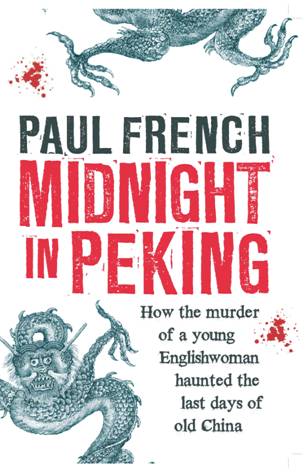
The RAS Book Club will meet to discuss Midnight in Peking; the author, Paul French, will participate in the conversation with a group of people that has read the book. This will give the members of the book club an opportunity not only to discuss the writing, motivations, literary experience, evolution of this work of literary non fiction but also to dialogue about the ‘who done it factor’ something that has not been included in Paul’s previous presentations on this work.
Entrance: RMB 70.00 (RAS members) and RMB 100.00 (non-members) including a drink (tea, coffee, soft drink, glass of wine) Those unable to make the donation but wishing to attend may contact us for exemption, prior to this RAS Book Club event. Membership applications and membership renewals will be available at these events.
RSVP: bookclub@royalasiaticsociety.org.cn
RSVP ESSENTIAL AS ATTENDANCE IS LIMITED. PREFERENTIAL BOOKING TO MEMBERS UNTIL 10TH JANUARY, 2012.
N.B. FOR RAS MEMBERS AND THOSE OF YOU WHO HAVE READ MIDNIGHT IN PEKING, ARRANGEMENTS ARE IN PLACE TO PROVIDE AN EARLY AND LATE SESSION, SHOULD THIS EVENT BE OVERSUBSCRIBED BY RAS MEMBERS.
MORE ABOUT MIDNIGHT IN PEKING
In 1937, Peking was a city with a healthy appetite for privilege and scandal. Lavish cocktail bars and dingy opium dens abound; corruption, superstition and rumours were par for the course. The exclusive Legation Quarter thrived on gossip, and almost nothing was too shocking for its foreign residents. Meanwhile, Japanese troops had already moved into Manchuria and were poised to move on Peking. The people of the city nervously waited for the axe to fall with parties and drinking and drugs, frantically living out the last days of their indulgent Peking lifestyles.
Ever on edge and with tension peaking, the discovery, one freezing January morning, of a brutally murdered young Englishwoman traumatized the people of Peking. Pamela Werner’s body was found, horrifically mutilated, at the foot of the Fox Tower, an ancient watch tower supposedly haunted by fox spirits. The police investigation that ensued was one of confusion and surprise but not one of answers. A private investigation conducted by Pamela’s father proved more productive but still brought no justice.
When author Paul French came across the story by chance, he was so haunted by a photograph of Pamela that he decided to investigate the circumstances surrounding her unsolved murder. The enquiry took him back to a city full of vice and intrigue where he met a perplexed Chinese police force,a determined ex-Scotland Yard detective and a British Foreign Office more interested in saving face than revealing the truth. He tracked Pamela’s killer through the infamous Peking ‘Badlands’ rife with crime, prostitution and drugs and into the grand foreign Legation Quarter where supposed gentlemen were not so gentle and in doing so he uncovered the truth.
Almost seventy-five years after the murder of Pamela Werner, Paul French finally gives the case the resolution it was denied at the time and in the tradition of the true crime classics White Mischief and Midnight in the Garden of Good and Evil, Midnight in Peking transforms a headline gripping murder into an absorbing and emotional exposé, bringing the last days of old Peking to life.
Paul French studied history, economics and Mandarin in London and has an M. Phil in economics from the University of Glasgow. He is now based in Shanghai as a business advisor and analyst. He is the author of four works of Asian History including Carl Crow: A Tough Old China Hand and Through the Looking Glass: China’s Foreign Journalists from the Opium Wars to Mao and wrote the foreword to Penguin’s Shanghai: A History in Photographs 1842-Today.
SPONSOR AND SUPPORTER

Posted: January 13th, 2012 | 1 Comment »
On December 30th we lost Ronald Searle, a man who brilliantly lampooned British society in the 1950s and created the two great post-war visions of the British education system!! – St Trinian’s and Molesworth. What many people don’t know (and everyone knows St Trinian’s) was that Searle was a POW in Singapore, first imprisoned in Changi jail and then being forced to work on the Burma-Siam Railway – the Death Railway of Bridge Over the River Kwai fame. Searle suffered horribly with beri-beri and malaria and saw many of his comrades die in the jungles of South East Asia through to his release in 1945.
 Searle’s self-portrait of himself at the time of the surrender of Singapore
Searle’s drawings of life in Changi and on the Burma Railway were stunning and conveyed perhaps better than any other images or memoirs the horrors of the POW camps in the Far East. He drew while in captivity hiding his pictures under his mattress. He eventually produced over 300 drawings many of which first reached the public through being included in Russell Braddon’s memoir The Naked Island. More were made available in the 1986 book, Ronald Searle: To the Kwai and Back, War Drawings 1939-1945. Some of his pictures can be seen in London’s Imperial War Museum. Some have also suggested that the skinny figures that typified Searle’s drawings of the St Trinian’s brats reflected his war-time familiarity with starving prisoners – the war, it seems, affected Searle’s work just as it did other famous internees such as JG Ballard.
 The Terror of St Trinian’s and Other Drawings shows Searle’s repeated skinny girls
Posted: January 12th, 2012 | No Comments »
Edited by Kendall Johnson
Global Connections series
“This is an important and necessary book emphasizing the early period of Sino-American interaction. Johnson and his authors reinterpret historical events through the lenses of narrative and literature, showing how the stories people tell about one another become the first drafts of history. This book will change historians’ understanding of Chinese- American relations.” — James Fichter, author of So Great a Proffit: How the East Indies Trade Transformed Anglo-American Capitalism
-Â The first in a new series by the School of Modern Languages and Cultures, the University of Hong Kong.
– Discusses the first commercial encounters between a China on the verge of social transformation and a fledgling United States struggling to assert itself globally as a distinct nation after the Revolutionary War with Great Britain.
-Â Nine essays are attuned to the activities of competing European traders, especially the British, in Canton, Macao, and the Pearl River Delta.
Kendall Johnson is director of the American Studies Programme and associate professor at The University of Hong Kong.
Posted: January 12th, 2012 | No Comments »
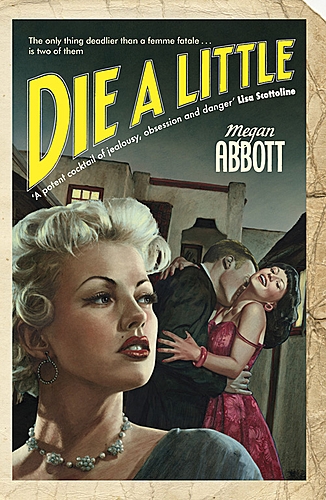
I’ve been looking for a way to shoehorn the writer Megan Abbott into this blog for a while now. She’s a great crime writer who’s dark, deep noirs are set in 1940s/1950s LA and rightly deserve comparison to the noir greats – Cain, Chandler, Thomspon, Ellroy. One of her best is Die a Little (they all come with very cool retro-covers) and I noticed that she does have a scene, a great scene of a drunk and louche party, where the soundtrack is Doris Day’s Why Did I Tell You I Was Going to Shanghai. I’ve never really thought much about that song – lyrics by Bob Hilliard and the composer Milton De Lugg – as, the way Day interprets it, it’s a schmaltzy cutsey tune, the way she delivered everything basically. It’s got a couple of gags about going to Shanghai but not liking rice. However, in Megan Abbott’s book, a rather deliciously corrupt woman sings it and by slowing it down and vamping it up turns it into a very sexy song – which is the way Shanghai should always be. Listening to the song again you can get how it could be a very sexy tune taken away from someone as wholesome and dreary as Day. Here‘s Doris’s saccharine version anyway.
I’ve looked around a bit but can’t find a sexier version a la Abbott’s book – this Peggy Lee version is a little huskier but not much and this Judy Cannon version is pretty awful I think. And here is a version by four grown men in green shirts in a barbershop quartet – which is just so wrong on so many levels I don’t know where to start!!
So it seems we can put the sexy version of the song down entirely to Megan’s imagination!!