Slightly confusing – the rather rare Shanghai of Today, published in 1927 was a souvenir album of thirty-eight Vandyke prints of the ‘Model Settlement’ published by the Shanghai/Hong Kong/Singapore house of Kelly & Walsh in 1924. I posted before on the K&W edition with a full padded morocco binding. The book came with an introductuion by the long time editor of the North-China Daily News, OM Green (See here for that post).
However, there appears to be another edition – published in 1927 by AS Watson (better known as a pharmacy company in Shanghai and Hong Kong), same cover as the Kelly & Walsh edition and published in Shanghai. Not sure why there are two editions or why Watsons was involved at all?
Every August book writers and readers gather in Edinburgh for several weekends of author talks, workshops, panel discussions and other events. It’s a busy time of year – the start coincides with the Edinburgh Fringe and the end with the Film and TV Festival. But it’s a great time to head to the Scottish capital… and, for those with a particular China/Asia interest, here’s some events that may be of especial interest….
12/8/24 – 11:00-12:00 – Yan Ge writes in English, Mandarin and Sichuanese. She’ll be in discussion with Andrzej Tichý, a Swedish-Czech-Polish writer, about the art of the short story. Her 2023 short story collection Elsewhere: Storieswas praised in The Guardian: ‘Yan Ge’s English debut is preoccupied with language, its failures, and its relationship to human emotions and the raw reality – the ‘food’ – of life. … These stories map out the distance between the head and the gut – the way language can fail to convey the deepest, most visceral facts of life.’
12/8/24 – 12:30-13:30 – FT journalist and Beijing Bureau Chief Yuang Yang’s revelatory book Private Revolutions has been getting a lot of positive press this summer. The story of four ordinary women in China’s new social order caught between capitalist ambition and authoritarian reality. Yuan Yang will present her book at the Courtyard Theatre.
13/8/24 – 19:45-20:45 – Those with a thing for translation and language will want to see RF Kuang, in conversation with editor and translator Daniel Hahn, talking about the complexities of translation, the Korean language and her speculative novel Babel.
13/8/24 – 18:45-19:45 – Yuan Yang is back, this time in conversation with Robin Niblett of Chatham House, talking about the geopolitical rivalry between China and the US and her new book Private Revolutions.
14/8/24 – 20:30-21:30 – RF Kuang is back talking about fantasy writing and its future with fellow fantasy writer Samantha Shannon.
15/8/24 – 19:30-20:30 – And one more go round with RF Kuang, this time talking about her bestselling book (serialised in BBC Radio 4 too) Yellowfaceabout cultural appropriation, race and the misdeeds of the publishing industry.
18/8/24 – 19:15-20:15 – UK based Chinese writer Xiaolu Guo has a new book, My Battle of Hastings, out this summer talking about what happens when a Chinese writer looking to escape the pressures of writing in London pitches up on England’s south coast and contemplates Englus history.
19/8/2024 – 10:00-11:00 – Former Beijing correspondent Ed Wong talks about how to maintain quality journalism and avoid fake news over morning coffee and croissants in the famed Edinburgh Spiegeltent.
19/8/2024 – 19:30-20:30 – Democracy on the Brink with Ed Wong, Olesya Khromeychuk from Ukraine and the BBC’s Nick Bryant – Ukraine, America’s internal dissent and China with 3 veteran journalists
21/8/24 – Ed Wong, NYT journalist and former Beijing correspondent has a new book about his own heritage, China and the last century of change in the country, The Edge of Empire. In this talk – China Under the Lens – he’ll dissect China’s authoritarian turn of late.
24/8/2024 – 18:45-19:45 – William Dalrymple’s new book, The Golden Road: How Ancient India Transformed the World reveals the nation’s position as the preeminent Eurasia intellectual and philosophical superpower for a millennium and a half until 1200 AD. India, but you can expect some questions on India-China relations and India influence on China’s religions and belief systems as the moderator is Focus’s own Paul French.
Of course there’s lots, lots more on at EBIF this year…. See the above events, ticketing, and everything else at www.edbookfest.co.uk
A copy of the 1891 Tourist’s Guide and Interpreter – Being a Comprehensive Guide to all the Interesting Places to Visit…to which is added General Information for Travellers in Japan published in Yokohama by Kelly & Walsh. The book included a folding map of Kobe, 29 colour plates of Tokyo, Mount Fuki, Nikko, Osaka, Nara, Lake Biwa etc , a folding map), numerous period adverts. This copy was the property of Henrietta Tayler (1869-1951), a Scottish scholar of the Jacobite period and WWI nurse.
In putting extraterritoriality into practice in the treaty ports, the British state did not simply withdraw rights from the Chinese state; it inhabited the space made by extraterritoriality by building institutions and engaging in practices which had consequences for the development of the treaty ports, and which need to be at the forefront of any attempt to understand colonialism in China. Through a focus both on the creation of law and institutions, and also on the management of British ‘problem populations’ – violent Europeans and ‘martial’ Indians – this book provides a revision of the history of empire and colonialism in China, explaining important features which have to date been glossed over in studies of other aspects of treaty port colonialism. Colonialism in China casts a long shadow, but key aspects of the British state’s central role in this history have before now been little understood.
A choice memory from the memoirs of the Netherlands Ambassador to China – who first went to Peking in 1894 at just 19 years of age – Willem Jacobus Oudendijk’s Ways and By Ways in Diplomacy (1939).
Here Oudendijk is recalling the Legation Quarter just before the Boxer Uprising raised it mostly to the ground. It was a less protected, less enclosed space then than after 1900. The Spanish Legation was just to the south of the Japanese Embassy on Canal Street (Zhengyi Road) by the corner with Legation Street (Dongjiaomin Xiang). It’s hard to imagine such pratices occuring after the rebuilding of the Legation Quarter, and certainly not now in what is a heavily policed and surveilled, often quite desolate area. But Oudendijk here gives us a nice vignette of an early, more raw, Legation district in the late nineteenth century.
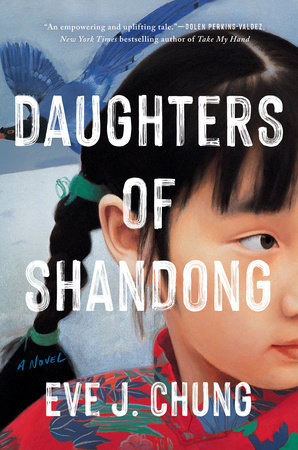
Eve J. Chung is a Taiwanese American human rights lawyer focusing on gender equality and women’s rights. Daughters of Shandong is published by Penguin….
In 1948, civil war ravages the Chinese countryside, but in rural Shandong, the wealthy, landowning Angs are more concerned with their lack of an heir. Hai is the eldest of four girls and spends her days looking after her sisters. Headstrong Di, who is just a year younger, learns to hide in plain sight, and their mother—abused by the family for failing to birth a boy—finds her own small acts of rebellion in the kitchen. As the Communist army closes in on their town, the rest of the prosperous household flees, leaving behind the girls and their mother because they view them as useless mouths to feed.
Without an Ang male to punish, the land-seizing cadres choose Hai, as the eldest child, to stand trial for her family’s crimes. She barely survives their brutality. Realizing the worst is yet to come, the women plan their escape. Starving and penniless but resourceful, they forge travel permits and embark on a thousand-mile journey to confront the family that abandoned them.
From the countryside to the bustling city of Qingdao, and onward to British Hong Kong and eventually Taiwan, they witness the changing tide of a nation and the plight of multitudes caught in the wake of revolution. But with the loss of their home and the life they’ve known also comes new freedom—to take hold of their fate, to shake free of the bonds of their gender, and to claim their own story.
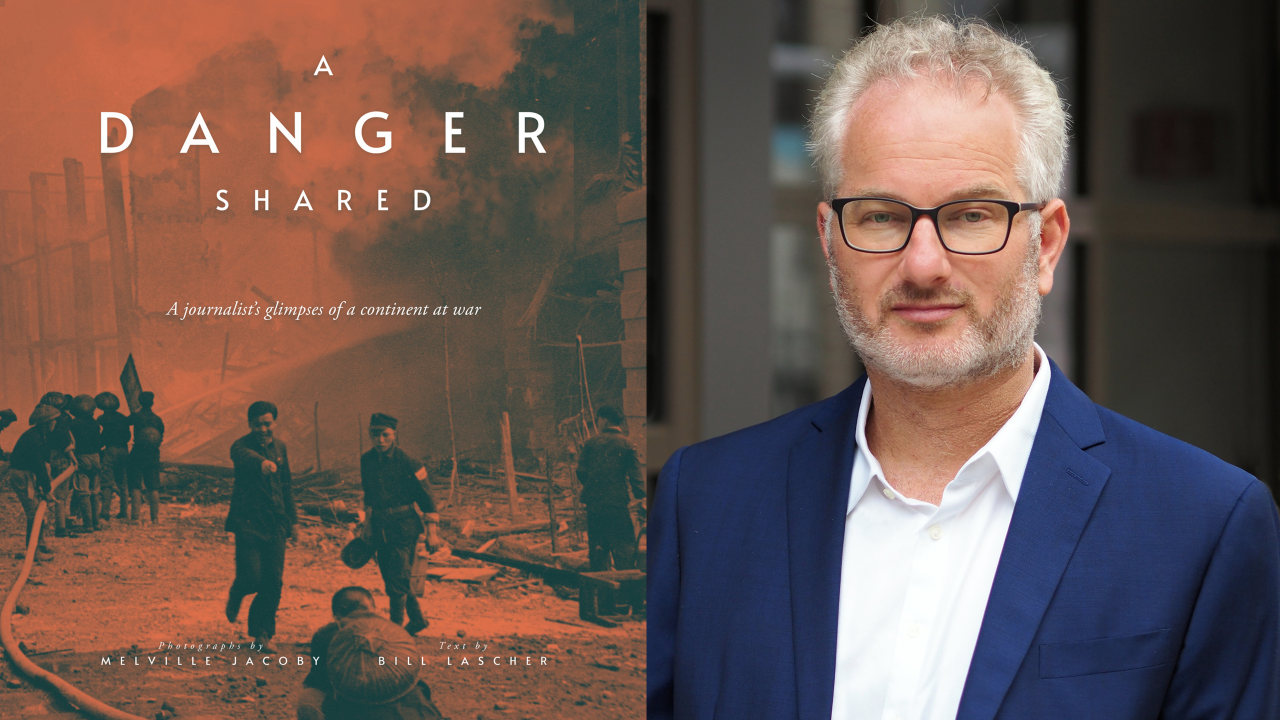
Bill Lascher on A Danger Shared: the photography of Melville Jacoby (available from Blacksmith Books) at Long Brothers Fine & Rare Books, Seattle, June 26 at at 7:30 p.m.
Explore never-before-published photographs of World War II-era China, Vietnam, and beyond captured by American foreign correspondent Melville Jacoby. Author Bill Lascher will discuss his new book, A Danger Shared: A Journalist’s Glimpses of a Continent at War, which features hundreds of previously-unseen images Jacoby captured as he bore witness to an oft-neglected, transformative, and cataclysmic conflict that engulfed Asia after China and Japan went to war. Lascher will also share one-of-a-kind documents and artifacts from Jacoby’s five years as an exchange student in Guangzhou, as a freelance reporter in Shanghai, Chungking and Hanoi, and, finally, as the Manila-based “Far East” bureau chief for Time Inc. who witnessed the first dramatic months of war between Japan and the U.S. The event will also revisit Jacoby’s daring escape from the Philippines capital with his new wife and fellow journalist, Annalee Jacoby, which began minutes before midnight on New Year’s Eve, 1941 as the pair leapt from a burning Manila waterfront to begin the adventure described in Lascher’s critically-acclaimed 2016 book, Eve of a Hundred Midnights: The Star-Crossed Love Story of Two WWII Correspondents and Their Epic Escape Across The Pacific.
Jacoby’s photographs — which Lascher curated, digitized, and contextualized for A Danger Shared — and Lascher’s accompanying writing together connect present-day readers with the pivotal yet often overlooked subject of the war’s devastating impact on Asia as well as the broader ramifications of the conflict between China and Japan still felt today.
Thu, Jun 27, 2024, 3:30 AM – 4:30 AM (your local time)
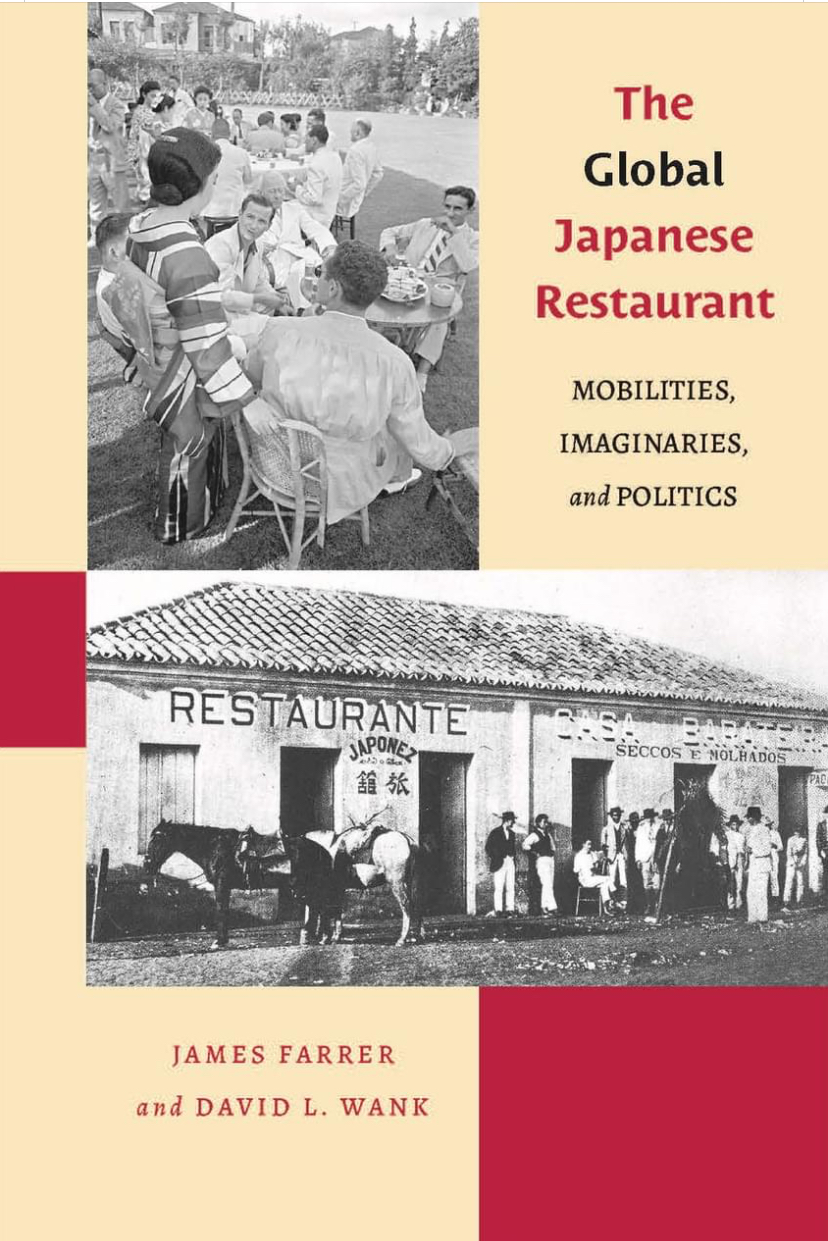
With more than 150,000 Japanese restaurants around the world, Japanese cuisine has become truly global. Through the transnational culinary mobilities of migrant entrepreneurs, workers, ideas and capital, Japanese cuisine spread and adapted to international tastes. But this expansion is also entangled in culinary politics, ranging from authenticity claims and status competition among restaurateurs and consumers to societal racism, immigration policies, and soft power politics that have shaped the transmission and transformation of Japanese cuisine. Such politics has involved appropriation, oppression, but also cooperation across ethnic lines. Ultimately, the restaurant is a continually reinvented imaginary of Japan represented in concrete form to consumers by restaurateurs, cooks, and servers of varied nationalities and ethnicities who act as cultural intermediaries.
The Global Japanese Restaurant: Mobilities, Imaginaries, and Politics uses an innovative global perspective and rich ethnographic data on six continents to fashion a comprehensive account of the creation and reception of the “global Japanese restaurant” in the modern world. Drawing heavily on untapped primary sources in multiple languages, this book centers on the stories of Japanese migrants in the first half of the twentieth century, and then on non-Japanese chefs and restaurateurs from Asia, Africa, Europe, Australasia, and the Americas whose mobilities, since the mid-1900s, who have been reshaping and spreading Japanese cuisine. The narrative covers a century and a half of transnational mobilities, global imaginaries, and culinary politics at different scales. It shifts the spotlight of Japanese culinary globalization from the “West” to refocus the story on Japan’s East Asian neighbors and highlights the growing role of non-Japanese actors (chefs, restaurateurs, suppliers, corporations, service staff) since the 1980s. These essays explore restaurants as social spaces, creating a readable and compelling history that makes original contributions to Japan studies, food studies, and global studies. The transdisciplinary framework will be a pioneering model for combining fieldwork and archival research to analyze the complexities of culinary globalization.