The Best China-Related Reads of the Year
Posted: December 28th, 2009 | No Comments »A few caveats – not always published first in 2009 and only books with some reference to China and I’ve left out what I consider ‘work reading’ (so I’m not, apart from here, going to mention Leslie Chang’s Factory Girls, Zhao Ziyang’s Prisoner of the State, James Fallows’s Postcards from Tomorrow Square, Kerry Brown’s Friends and Enemies, or Paul Midler’s Poorly Made in China – though all good and useful).
So here’s a list of what I liked in no particular order with the publisher’s blurbs:
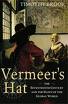 Vermeer’s Hat: The Seventeenth Century and the Dawn of the Global World – Timothy Brook
“In one painting, a Dutch military officer leans toward a laughing girl. In another, a woman at a window weighs pieces of silver. In a third, fruit spills from a porcelain bowl onto a Turkish carpet. The officer’s dashing hat is made of beaver fur, which European explorers got from Native Americans in exchange for weapons. Beaver pelts, in turn, financed the voyages of sailors seeking new routes to China. There – with silver mined in Peru – Europeans would purchase, by the thousands, the porcelain so often shown in Dutch paintings of this time. Vermeer’s haunting images hint at the stories behind these exquisitely rendered moments. As Timothy Brook shows us in Vermeer’s Hat, these pictures, which seem so intimate, actually open doors onto a rapidly expanding world.”
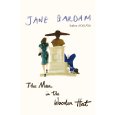 The Man in the Wooden Hat – Jane Gardham (the follow up to Old Filth)
“Written from the perspective of Filth’s wife, “Betty”, this is a story of Filth (Failed In London Try Hong Kong), a successful lawyer when he marries Elisabeth in Hong Kong soon after the War. Reserved, immaculate and courteous, Filth finds it hard to demonstrate his emotions. But Elisabeth is different – a free spirit. She was brought up in the Japanese Internment Camps, which killed both her parents, but left her with a lust for survival and an affinity with the Far East. No wonder she is attracted to Filth’s hated rival at the Bar – the brash, forceful Veneering. Veneering has a Chinese wife and an adored son – and no difficulty whatsoever in demonstrating his emotions …How Elisabeth turns into Betty, and whether she remains loyal to stolid Filth or swept up by caddish Veneering, make for a page-turning plot, in a lovely novel which is full of surprises and revelations, as well as the humour and eccentricities for which Jane Gardam’s writing is famous.”
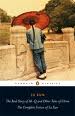 The Complete Fiction of Lu Xun – Lu Xun (not new obviously but a great new translation by Julia Lovell and all in one volume)
“Lu Xun is arguably the greatest writer of modern China, and is considered by many to be the founder of modern Chinese literature. Lu Xun’s stories both indict outdated Chinese traditions and embrace China’s cultural richness and individuality. This volume presents brand-new translations by Julia Lovell of all of Lu Xun’s stories, including ‘The Real Story of Ah-Q’, ‘Diary of a Madman’, ‘A Comedy of Ducks’, ‘The Divorce’ and ‘A Public Example’, among others. With an afterword by Yiyun Li.”
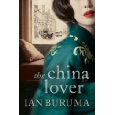 The China Lover – Ian Buruma
“Ian Buruma’s epic novel is the richly imagined story of one woman’s struggle to survive in the face of war and occupation in the Far East during the Second World War. When Sidney Vanoven is sent to occupied Japan, in the immediate aftermath of the Second World War, it is his dream posting. By day, he works in the censor’s office watching Japanese films; at night he immerses himself in the sensual pleasures of Tokyo. His job leads him into the circle of the beautiful film star Shirley Yamaguchi, a passionate and indomitable woman, whose wartime secrets hint at deception and betrayal. As he becomes increasingly aware of her story, it seems to point at the dark heart of Japan itself. In “The China Lover”, Ian Buruma has created a saga of modern Japan that is epic in scale, richly imagined and vividly populated.”
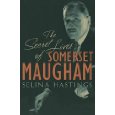 The Secret Lives of Somerset Maugham – Selina Hastings
“For nearly 60 years Somerset Maugham (1874–1965) was one of the most famous writers in the world, and yet his personal life was largely kept hidden. An enormously successful playwright and the author of over a hundred short stories and twenty-one novels – several of which, Of Human Bondage, Cakes and Ale and The Razor’s Edge, are now established classics – Maugham early became an expert at concealment. Predominantly homosexual, Maugham made a disastrous marriage to Syrie Wellcome, although deeply in love with the charming but dissolute Gerald Haxton. It was partly to escape his wife that Maugham undertook the extensive journeys in the Far East that inspired so many of his memorable short stories. A talented linguist, during both world wars Maugham worked for British Intelligence. In between he moved in literary and theatrical circles in London, New York and Hollywood and entertained lavishly at his luxurious villa in the south of France. Outwardly his life was richly rewarding, but privately he suffered anguish from an unrequited love affair and a shocking final betrayal.”
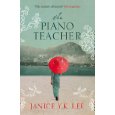 The Piano Teacher – Janice YK Lee
“In 1942, Will Truesdale, an Englishman newly arrived in Hong Kong, falls headlong into a passionate relationship with Trudy Liang, a beautiful Eurasian socialite. But their love affair is soon threatened by the invasion of the Japanese, with terrible consequences for both of them, and for members of their fragile community who will betray each other in the darkest days of the war. Ten years later, Claire Pendleton lands in Hong Kong and is hired by the wealthy Chen family as their daughter’s piano teacher. A provincial English newlywed, Claire is seduced by the colony’s heady social life. She soon begins an affair!only to discover that her lover’s enigmatic demeanour hides a devastating past. As the threads of this compelling and engrossing novel intertwine and converge, a landscape of impossible choices emerges — between love and safety, courage and survival, the present and above all, the past.”
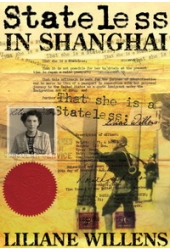 Stateless in Shanghai – Liliane Willens
“Born in Shanghai to Jewish Russian parents who fled the Bolshevik Revolution, Liliane Willens is a “stateless†girl in the world’s most cosmopolitan city. But when the Far East explodes in conflict, the family’s uncertain status puts them at risk of being stranded, or worse. Stateless in Shanghai recounts Willens’ life and trials in a China collapsing under the weight of foreign invaders and civil war.”
 Thomas Burke’s Dark Chinoiserie – Anne Witchard
“Focusing on Thomas Burke’s bestselling collection of short stories, “Limehouse Nights” (1916), this book contextualises the burgeoning cult of Chinatown in turn-of-the-century London. London’s ‘Chinese Quarter’ owed its notoriety to the Yellow Perilism that circulated in Britain at the fin-de-siecle, a demonology of race and vice masked by outward concerns about degenerative metropolitan blight and imperial decline. Anne Witchard’s interdisciplinary approach enables her to displace the boundaries that have marked Chinese studies, literary studies, critiques of Orientalism and empire, gender studies, and diasporic research, as she reassesses this critical moment in London’s history. In doing so, she brings attention to Burke’s hold on popular and critical audiences on both sides of the Atlantic. A much-admired and successful author in his time, Burke in his Chinatown stories destabilizes social orthodoxies in highly complex and contradictory ways. For example, his writing was formative in establishing the ‘queerspell’ that the very mention of Limehouse would exert on the public imagination, and circulating libraries responded to Burke’s portrayal of a hybrid East End where young Cockney girls eat Chow Mein with chopsticks in the local cafes and blithely gamble their housekeeping money at Fan Tan by banning Limehouse Nights. Witchard’s book forces us to rethink Burke’s influence and shows that China and chinoiserie served as mirrors that reveal the cultural disquietudes of western art and culture.”
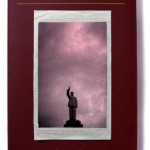 The Chairman and I – Andre Eichman
“Traveling throughout China with a kitsch little statue of the late Chinese Chairman Mao Tse-Tung, international fine-art photographer André Eichman photographed and interviewed local people from all walks of life. The result is a compelling, thought provoking and affectionate portrait into how the ‘Great Helmsman’ impacted the individual lives of everyday Chinese.”
Of course it would cheeky of me to note Paul French’s Through the Looking Glass: China’s Foreign Journalists from Opium War to Mao or the newly published wartime diaries of Carl Crow (edited by me) The Long Road Back to China – but then I’m shameless, so I have!
Leave a Reply