RAS Shanghai China Monographs Sneak Preview 2 – Florence Ayscough Remembered
Posted: July 31st, 2012 | No Comments »After previewing the first in my (when I say mine, I mean I’m the Series Editor) China Monographs series (Lao She in London) published jointly between the Royal Asiatic Society Shanghai and Hong Kong University Press…So here’s the second in the series coming out this autumn…
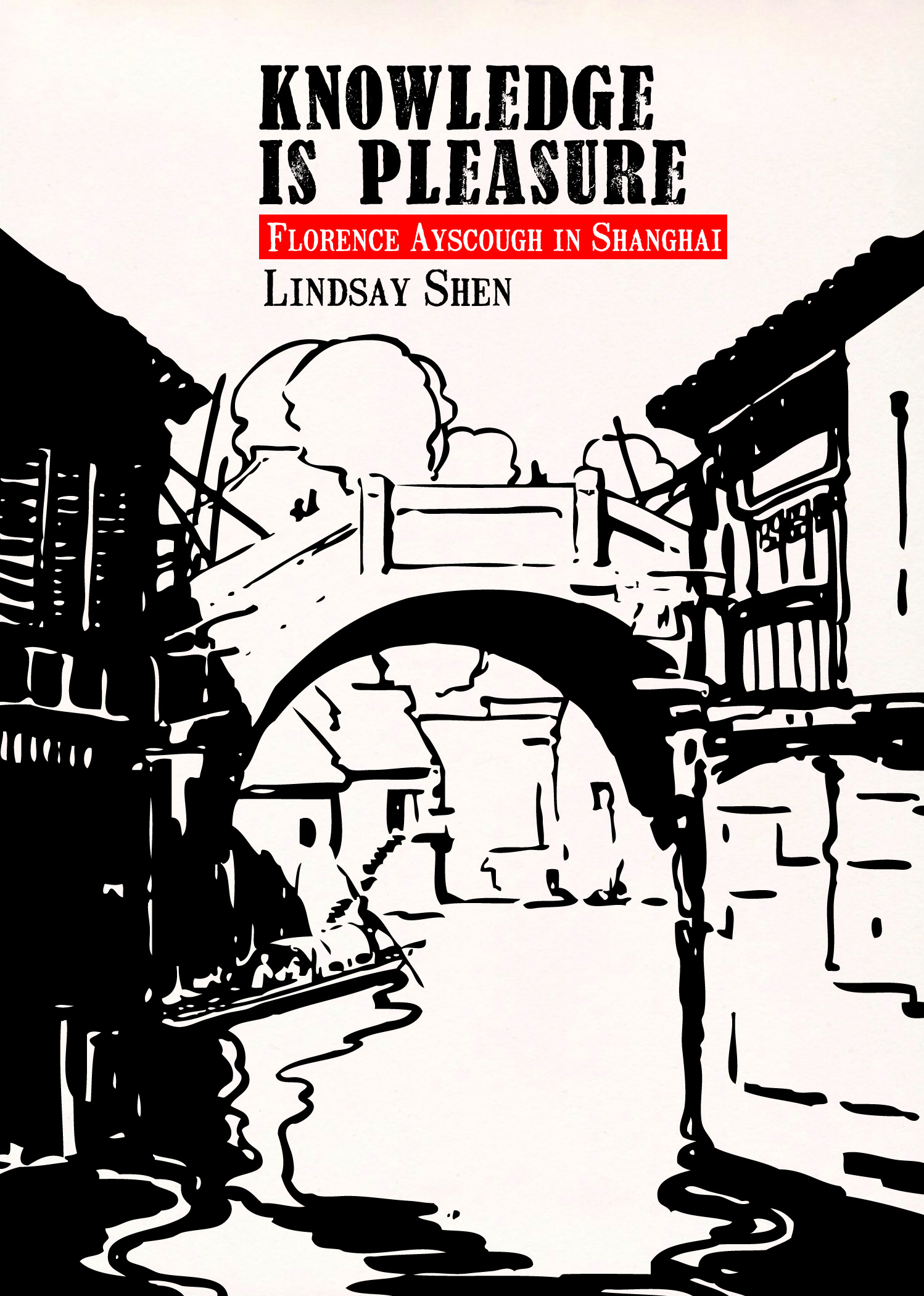
Knowledge is Pleasure: A Life of Florence Ayscough
‘The Sensuous Realist’
Florence Ayscough – poet, translator, Sinologist, Shanghailander, avid collector, pioneering photographer and early feminist champion of women’s rights in China. Ayscough’s modernist translations of the classical poets still command respect, her ethnographic studies of the lives of Chinese women still engender feminist critiques over three quarters of a century later and her collections of Chinese ceramics and objets now form an important part of several American museum’s Asian art collections. Raised in Shanghai in an archetypal Shanghailander family in the late nineteenth century, Ayscough was to become anything but a typical foreigner in China. Encouraged by the New England poet Amy Lowell, she was to become a much sought after translator in the early years of the new century, not least for her radical interpretations of the Tang Dynasty poet Tu Fu published by the renowned literary critic Harriet Monroe. She later moved on to record China and particularly Chinese women using the new technology of photography, turn the Royal Asiatic Society’s Shanghai library into the best on the China Coast and build several impressive collections featuring jars from the Dowager Empress Xi Ci, Ming and Qing ceramics. By the time of her death Florence Ayscough has left a legacy of collecting and scholarship unrivalled by any other foreign woman in China before or since. In this biography, Lindsay Shen recovers Ayscough for posterity and returns her to us as a woman of amazing intellectual vibrancy and strength.
Lindsay Shen is Associate Professor at Sino-British College, Shanghai. She is Honorary Editor for the Royal Asiatic Society China in Shanghai. She has published in the fields of design and museum studies in Europe and the United States.
Endorsements
“In this well-researched book, Lindsay Shen has brought Florence Ayscough to life and painted a fascinating picture of the many aspects of the life of the foreign community in old Shanghai. Using enchanting prose, Lindsey shows us a scholarly and unusual woman who, in her study of Chinese language and culture was ahead of her times.”
Jane Portal
Matsutaro Shoriki Chair
Art of Asia, Oceania and Africa
Museum of Fine Arts, Boston
“This is a sensitive and elegantly written biography of one of the most passionate Sinologists of the late nineteenth and early twentieth centuries. The author moves fluidly between closely shadowing Florence Ayscough’s remarkable life and immersion in Chinese culture and stepping back to illuminate her setting and kindred spirits. Those previously familiar with only a few of Ayscough’s pioneering achievements will find in this monograph a coherent narrative unfolding before them; those for whom she is an unknown name are in for the delight of discovery.  Lindsay Shen is to be admired for recognizing that this impressive story is worth telling and for giving it such vividly human character.”
Elinor Pearlstein, Associate Curator of Chinese Art, Art Institute of Chicago
“Shen’s insightful, yet gentle exploration of the life and work of Florence Ayscough serves to bring a very human face and elegant persona to the tumultuous and challenging world of turn of the 20th century Shanghai. Ayscough’s homes in the British settlement serve as vantage points from which we are provided an insider’s view of the many challenges she and others faced at the end of the colonial era in China. Shen explores with equal parts analytical interest and romantic fascination Ayscough’s embrace of Chinese society, art, literature and horticulture. Her examination reveals the complexity of colonial life marked by a distinct mixture of undying devotion to the colonized culture and rather unpleasant disdain for aspects of its indigenous identity. This dichotomous perception of China lies squarely at the heart of Ayscough’s experience, an experience that is easy to romanticize but equally easy to criticize.  Ayscough struggles with her self-identity in the pages of Shen’s text as she clings to aspects of the China in which she was born just as that same China undergoes a profound and irreversible transformation. Perhaps nowhere is this more evident than in Ayscough’s decision as a self-taught scholar of Chinese to take on the challenge of retranslating the poetry of Tu Fu. Through her translations, Ayscough reveals an understanding of and sensitivity to the subtlety of Chinese poetry that no pervious English language translator had managed to capture. Shen through her unfolding of the layers of Ayscough’s remarkable life reveals both the great intellectual triumph that she achieved and the troubling colonial moment that she so precisely embodied.”
Robert Mintz, Chief Curator and Mr. and Mrs. Thomas Quincy Scott Curator of Asian Art, The Walters Art Museum, Baltimore, Maryland
Leave a Reply