The Tageblatt für Nord-China, 1909
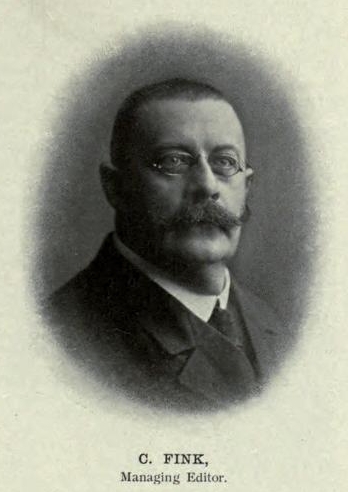
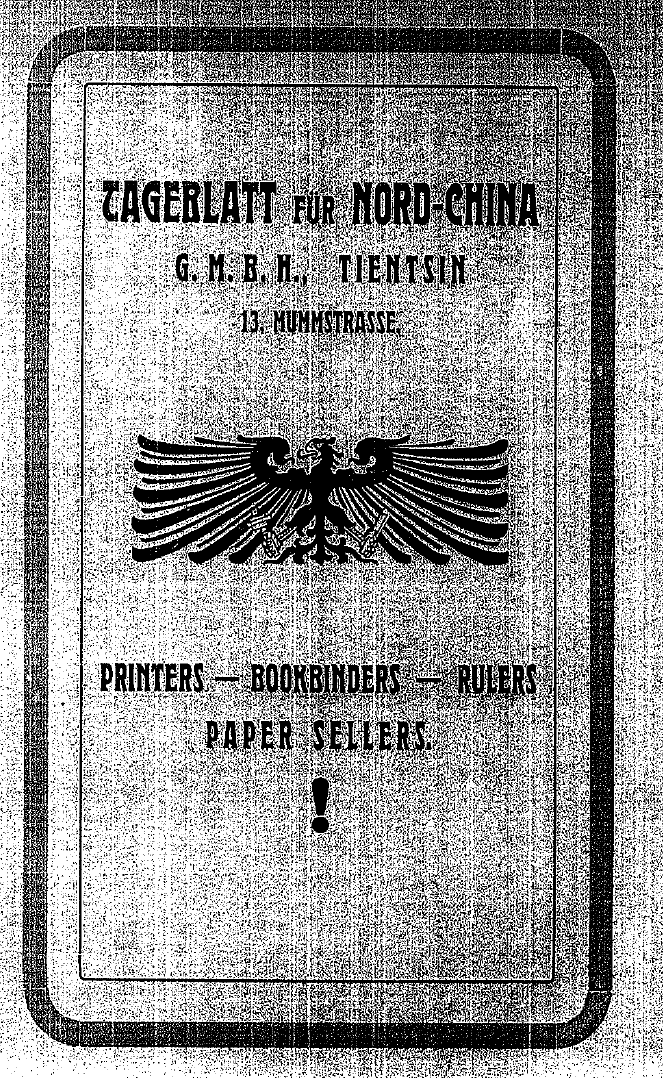
Posted: May 5th, 2026 | No Comments »A 1909 ad for the German language newspaper Tageblatt für Nord-China that was in business (as a printers and book/guide publishers too) between 1904-1915 in Tianjin. Founded by the German media entrepreneur in China Carl Fink from Lübeck. It was edited in 190i9 by Bruno Petzold who later moved to Tokyo and became a noted Buddhism scholar.
An excerpt from my book Through the Looking Glass: The Foreign Press Corps in China from Opium War to Mao.…
‘German Communications
English dominated the foreign press but there were other languages represented and other foreigners too, such as the French and Americans and also, importantly, the Germans. The Ostasiatischer Lloyd was the oldest German-language paper in China and had been founded in 1889 in Shanghai as a daily edited by Herr von Gundlach and later by Bruno Navarra and then, from 1900 to 1917, by Carl Fink who changed it into a weekly when it became generally regarded as the best German newspaper in the Far East. Its readership covered all the German communities in China and across Southeast Asia. The Ostasiatischer Lloyd was later joined by the Pekinger Deutsche Zeitung, which was launched in 1901.
The ever-entrepreneurial Fink then launched an illustrated monthly magazine Der ferne Osten in 1904, which the North-China Daily News reproduced in English translation, but it only lasted a few issues as the minutiae of German China coast society perhaps predictably failed to interest greatly the largely English readership of the North-China.
However, Fink was one of the most important Germans in China in the first years of the century and was also instrumental in establishing the German news service for East Asia — Deutscher Nachrichtendienst fr Ostasien. German newspapers internationally and in Berlin all took feeds from Fink’s agency. He was also an early example of a foreign journalist who became intricately involved in Chinese politics and not just as a casual outside observer. Shiwubao (also called Shiwu Ribao and later Zhongwai Ribao), the major publication of the nascent Chinese reform movement at the end of the nineteenth century, was linked to a German firm run by Fink, which was able to protect the paper from a certain amount of censorship and repression.
Fink also launched a newspaper for northern China, the Tageblatt fur Nord-china, which was published in Tianjin; and there was a smaller publication called the Brigade-Zeitung, which was specifically produced for the German military railway guards stationed in northern China until 1906. In addition, Qingdao, the major German interest in China, had five papers: the Deutsch-Asiatische Warte, a weekly which lasted until 1906 and featured a cultural supplement Die Welt des Ostens; Altes und Neues aus Asiens drei Kaiserreichen; the Tsingtauer Neueste Nachrichten, a daily that was launched in 1905 and lasted until 1914 edited by Fritz Secker; and the Kiautschou Post, a daily that ran between 1908 and 1912. Meanwhile The Hankow Daily News was published in English but edited for many years by a German. The China
coast press was becoming truly multilingual.’
Leave a Reply