Exclusive: 84 Years Ago American Journalist & POW Bernard Covit Arrived in Japanese-Occupied Shanghai…
Posted: September 22nd, 2026 | 1 Comment »Below is Covit’s account of his time in Japanese-occupied Shanghai between autumn 1942 to his internment in Pudong in February 1943…It’s a unique & revealing portrait of life in occupied Shanghai…
This is the January 29, 1944 edition of Liberty magazine. Though published in 1944 this account covers events around September 1942 to February 1943, obviously after Pearl Harbour and the declaration of war between Japan and the USA. The Japanese had moved to occupy the International Settlement of Shanghai on December 8, 1941, but at this point, a year or so later, all Allied nationals were yet to be interned (and would not be until January 1943), though their movements were highly restricted.
Before the war Bernard Covit (1907-1978), a Brooklynite, worked for the New York Post among other papers and, at this point, UP. He knew Shanghai previously having been in the city on “Bloody Saturday”, August 14, 1937, when the city was bombed (and which I’ve written about here). He was close to the Great World Amusement Centre when two shrapnel-filled bombs fell on Thibet Road (Xizang Road) right outside the packed building. After the war Covit went on to remain involved in Asian affairs – editing several books on the South Seas and Tahiti. He also worked in radio with WPIX, New York, and the Mutual Broadcasting System.
Anyway, here’s Covit reporting from occupied Shanghai in 1944…
(NB: Annotations for clarification by me are in parentheses and italicised. Additionally be aware that Covit uses outdated language throughout, such as “Japs”, “Nips” and “Coolies”)
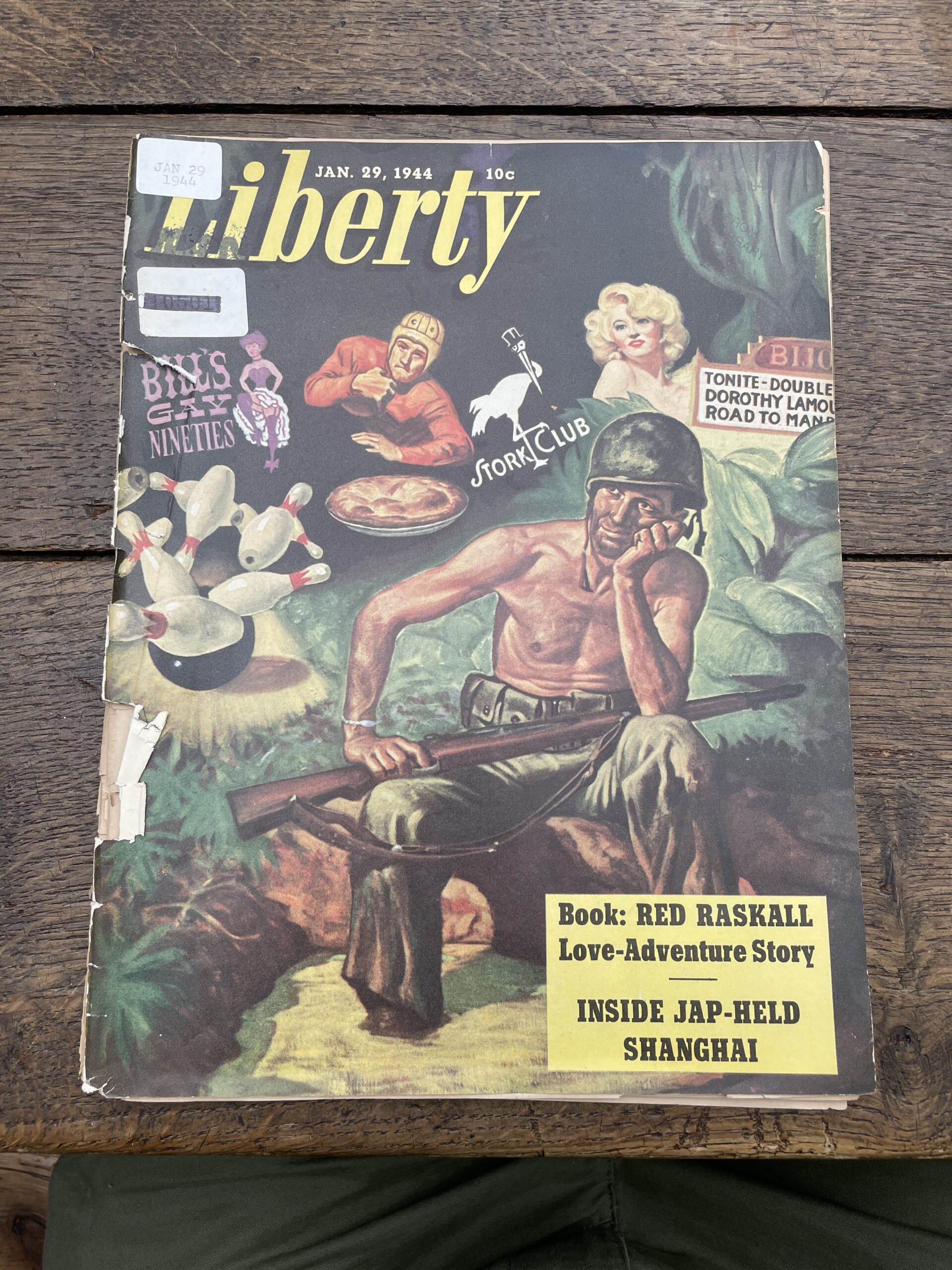
Inside Jap-Held Shanghai
What sort of overlord is the Jap? An exchanged American correspondent tells of the Nips’ methods with the lives and possessions of the people in a conquered city
BY BERNARD COVIT
I COVERED the war for the United Press in the Philippines during that never-to-be-forgotten month of December, 1941. When the Japs came into Manila, I was picked up on January 6 and interned in the Santo Tomas Camp along with some 3,500 Americans and British.
I had been in Santo Tomas nearly eight months when, late in August, 1942, the Jap commandant, Tsurumi (Riozo Tsurumi who was later appointed commandant at Chapei Camp in Shanghai), announced that there was room on a ship for 120 bona fide residents of Shanghai who wished to return there. There was no rush to fill the quota. Most of those who had lived in Shanghai, having got as far as Manila, had no desire to retrace their steps being repatriated. They feared American submarines and they had no idea how they could support themselves in Shanghai. To the commandant’s chagrin, only fifty-seven names appeared on the first list.
As for myself, all thoughts of repatriation had become as remote as a dream. I had made a little place for myself in the camp life. As chairman of the entertainment committee, I worked a certain number of hours each day arranging programs with Dave Harvey (David Harvey McTurk, businessman and radio broadcaster in Manila and Shanghai as well as a noted “camp entertainer” in Santo Tomas), my best friend and a professional entertainer of outstanding ability. But the greatest part of my time I devoted to the writing of a novel. From nine o’clock each night until three the next morning I worked at it in the camp office, where the Jap guards allowed us to burn a light. It kept me reasonably content.
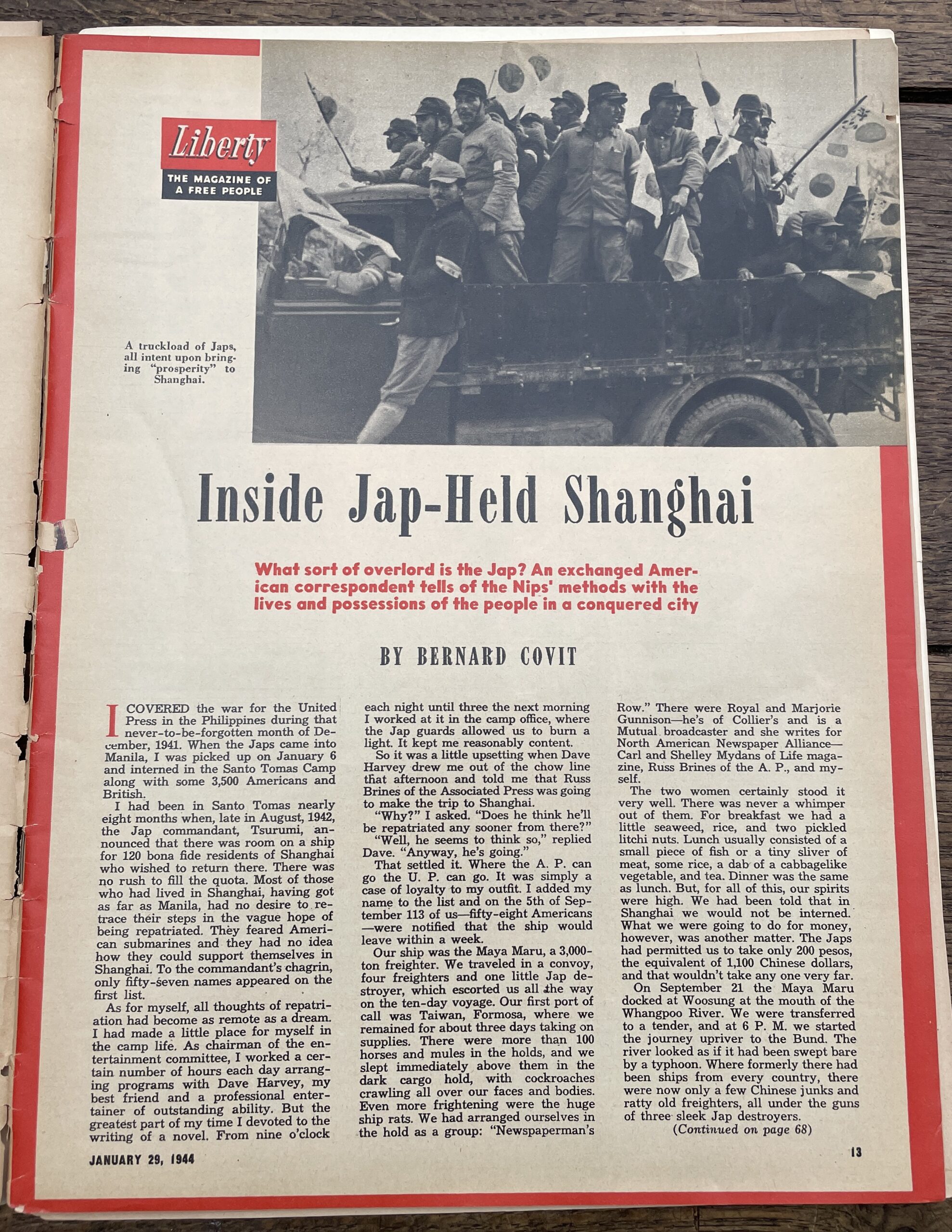
So it was a little upsetting when Dave Harvey drew me out of the chow line that afternoon and told me that Russ Brines of the Associated Press was going to make the trip to Shanghai (Russell Brines began his journalism career in 1933 at the Hilo Tribune Herald and later at the Honolulu Star-Bulletin in Hawaii before joining AP in 1939. While reporting the Japanese invasion of Manila in 1941, Brines was arrested by Japanese soldiers and interned in a camp at Santo Tomas near Manila. He was freed by American forces under General Douglas MacArthur in 1943.)
“Why?” I asked. “Does he think he’ll be repatriated any sooner from there?”
“Well, he seems to think so,” replied Dave. “Anyway, he’s going.”
That settled it. Where the AP can go the UP can go. It was simply a case of loyalty to my outfit. I added my name to the list and on the 5th of September 113 of us – fifty-eight Americans – were notified that the ship would leave within a week.
Our ship was the Maya Maru, a 3,000-ton freighter. We traveled in a convoy, four freighters and one little Jap destroyer, which escorted us all the way on the ten-day voyage. Our first port of call was Taiwan, Formosa, where we remained for about three days taking on supplies. There were more than 100 horses and mules in the holds, and we slept immediately above them in the dark cargo hold, with cockroaches crawling all over our faces and bodies. Even more frightening were the huge ship rats. We had arranged ourselves in the hold as a group: “Newspaperman’s Row.” There were Royal and Marjorie Gunnison – he’s of Collier’s and is a Mutual broadcaster and she writes for North American Newspaper Alliance – Carl and Shelley Mydans of Life magazine, Russ Brines of the AP, and myself.
The two women certainly stood it very well. There was never a whimper out of them. For breakfast we had a little seaweed, rice, and two pickled litchi nuts (lychees). Lunch usually consisted of a small piece of fish or a tiny sliver of meat, some rice, a dab of a cabbage-like vegetable, and tea. Dinner was the same as lunch. But, for all of this, our spirits were high. We had been told that in Shanghai we would not be interned. What we were going to do for money, however, was another matter. The Japs had permitted us to take only 200 pesos, the equivalent of 1,100 Chinese dollars, and that wouldn’t take any one very far.
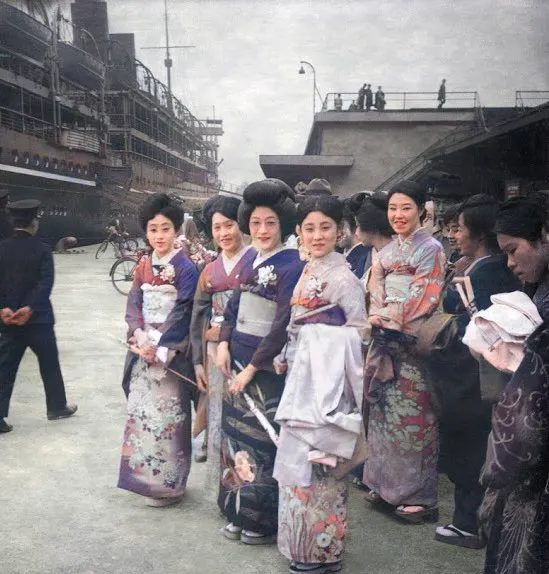
On September 21 the Maya Maru docked at Woosung (Wusong) at the mouth of the Whangpoo (Huangpu) River. We were transferred to a tender, and at 6 PM we started the journey upriver to the Bund. The river looked as if it had been swept bare by a typhoon. Where formerly there had been ships from every country, there were now only a few Chinese junks and ratty old freighters, all under the guns of three sleek Jap destroyers.
On the tug were representatives from the Swiss Consulate and the American Association, the body officially designated to handle the affairs of American nationals. All Americans were registered at the Association’s headquarters and aid was extended to them if needed. On the tug we got the glad tidings that funds would be allotted to us through the Swiss, and when the American Association representative, Mr. Henry Kay of the American President Lines (Following the end of World War II Kay played a documented role in diplomatic and commercial negotiations aimed at restoring international commerce in post-war China), told us that we would be free, it seemed too good to be true.
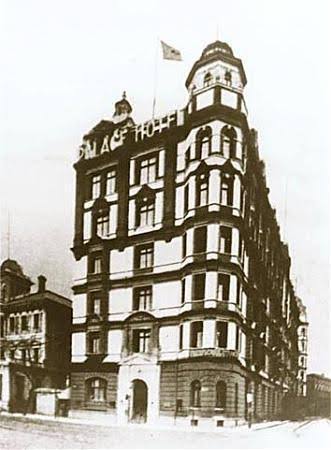
All six members of Newspaperman’s Row made a beeline for the Palace Hotel (#19 Bund and now The Swatch Art Peace Hotel) as soon as we got off at the Bund. Russ Brines and I shared a room, and together we sat down to the first steak dinner we had had since before the fall of Manila eight and a half months previously (January 2, 1942). Then there was a nice hot bath, also something I hadn’t enjoyed in all the time of my internment. It was a pleasure just not to have to stand in line for the toilet or the bath, and to sleep with only one other person in the room instead of twenty-five, as we had in Manila.
The following day I called on an old friend of mine, a wealthy neutral. What he told me about conditions in Shanghai was appalling. The cost of living was rising inexorably, and the poor Chinese in their massed millions were hit the hardest. Their wages were almost static while food skyrocketed in price. With the Japanese Army and Navy continually confiscating large portions of the produce, the Chinese farmers produced only sufficient for their own immediate needs. Eggs, which a year or two before could be bought for a cent apiece Chinese, were then about 90 cents each (a year later they went to $2.50 each); rice rose from about $75 a picul to over $500, and other prices were up similarly.
This friend of mine told how the Japanese were absorbing the great economic interests built up by Americans and British in China over the years. The technique was simple. Jap supervisors had been placed in every public utility, every bank and insurance company, every business concern of any importance at all, and the supervisors forced the Americans and British in charge to “teach them the business.” Those British and Americans who had expected to be interned immediately and to have their properties confiscated outright soon realized that their expressions of relief had been premature. The Japs were simply using them.
Many Americans closed up their businesses at once and did everything in their power to hamper the Japanese; others followed the line of least resistance.
The Japanese civilian population had increased alarmingly from about 20,000 a few years before to 130,000. They were active in all phases of the city’s life and occupied all the best hotels and apartment houses, having moved out of Hongkew (Hongkou), the section of the city traditionally reserved for them.
The days following my arrival at Shanghai were very busy and interesting. It was an amazing contrast to Santo Tomas. There were good meals soup, meat, two vegetables, coffee, and perhaps pie or ice cream; there were clean beds. It was strange to be able to visit any one I wished, to converse without fear of being overheard, to be free to listen to American radio broadcasts. We wondered at the Japs’ consideration – until we realized that it was part of the Jap strategy to give us, the enemy, plenty of rope as long as they felt they could make some use of us.
Several of my Chinese acquaintances told me what their people were thinking and doing about the Japanese infiltration. Despite the frenzied propaganda of the Japs, the bulk of the Chinese were as loyal as ever to their own and the Allied cause. Most of them regarded the Wang Ching-wei (Wang Jing-wei) puppet government as a joke – if a disastrous one. Many were heartily ashamed of him and disdainful of his treacherous acts. As one of my acquaintances expressed it: “When the time comes for China to drive out the little bad devils of the island kingdom across the China Sea, we are all sure that Wang, the traitor, will sing another song. He will come over to our side. Of that you may be sure.”
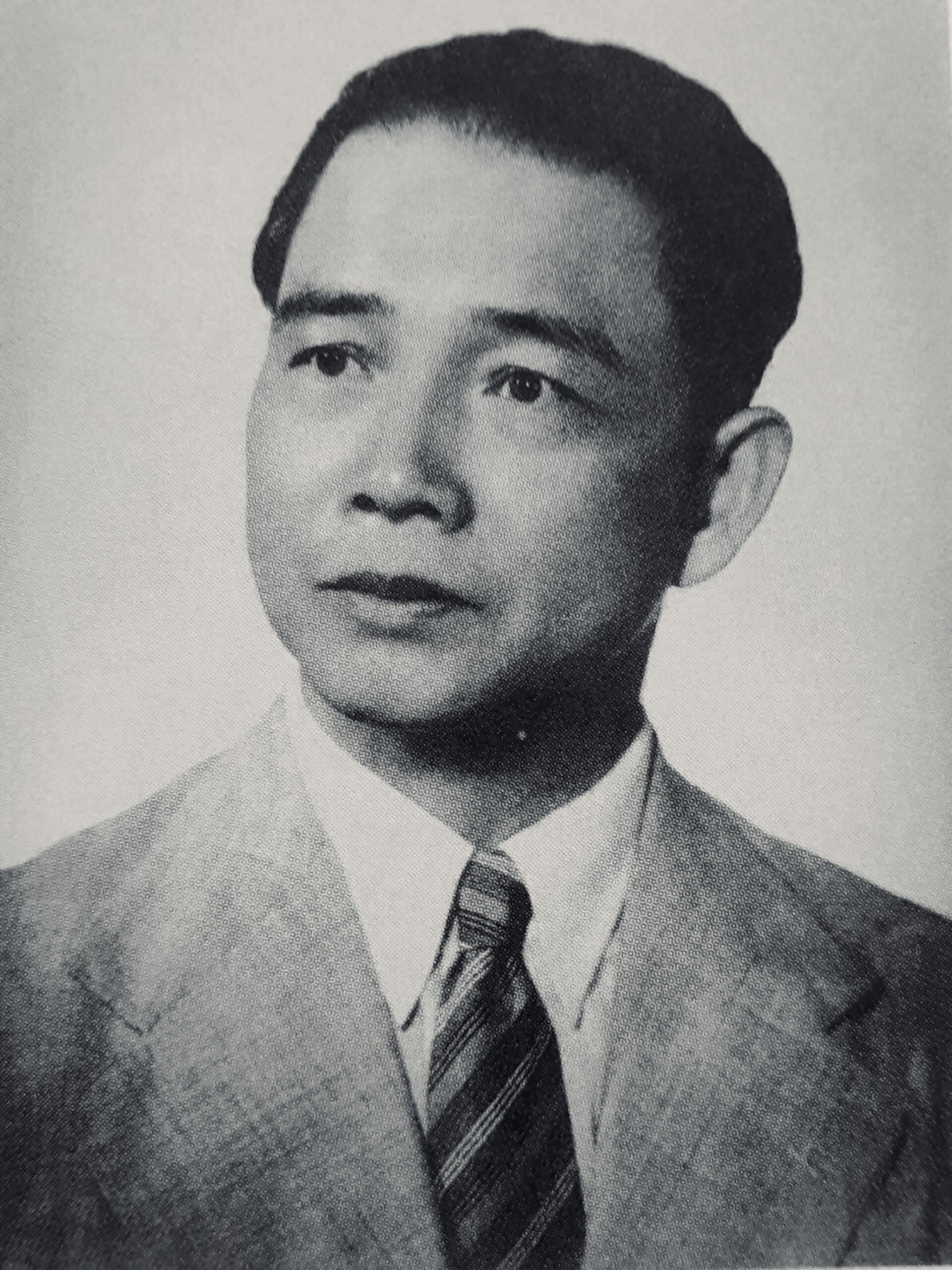
A PROMINENT Chinese business leader told me: “While the Chinese common laborer and worker generally do not understand politics or government, their only interest being whether they can fill their bellies with rice, still there are few who do not remember Shanghai, 1937, and the terrible things the Japanese have done to our people in hundreds of cities and villages throughout our country – the looting, the burning, the raping, the murders and the terror! We are not so stupid as to be taken in by the new tune the Japanese are now playing for us – that we are to be their ‘brothers’ and share with them in the ‘Co-prosperity Sphere.’ We know what that means – prosperity, for the Japs and enslavement for us.”
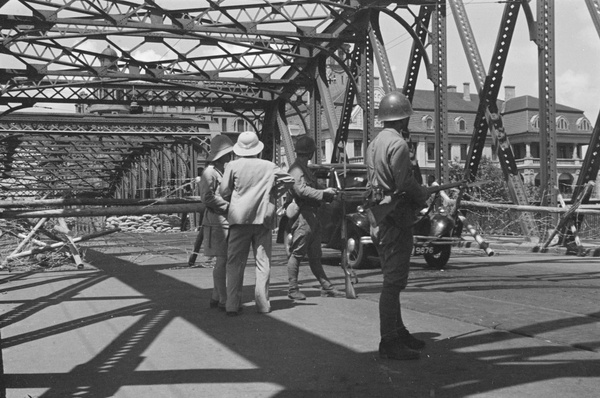
Several times I saw Jap gendarmes (military police) beat and kick Chinese coolies into bloody insensibility, sometimes for no reason at all. Once I witnessed the beating of an old Chinese woman peddler because she had failed to bow deeply enough to the sentry standing at Garden Bridge (Waibaidu). There are hundreds of authenticated cases of incredible Jap brutality by the Army, the naval landing group, the Jap police and the plainclothes ronin (Tairiku Ronin, “continental adventurers”) and, above all, the hated gendarmerie with their Gestapo methods.
In December and January the Jap authorities carried out a complete and compulsory listing of all property belonging to Americans, British, Netherlanders, and other enemy nationals. It was the handwriting on the wall. We knew complete confiscation would soon follow. Months later, when we were interned (beginning in January 1943), the Japs did take over everything. Some of the houses and offices were sealed, but whenever it suited their purposes the Japs would break the seals and remove furniture, equipment, and machines. Shanghai was being methodically gutted from the time of our internment.
Until February, 1943, we still had radios and I could listen to our own news broadcasts from America, as well as those from Japan. Subsequently all radios were seized and severe punishment imposed for possession of a receiving set. The Japs had taken over daily newspapers in English, the Shanghai Evening Post Mercury and, of course, the Shanghai Times, which they had subsidized for many years. These newspapers carried the official Domei Agency news and also dispatches of Transocean, the German agency. Figures of American losses, one could safely estimate, were exaggerated by from 50 to 75 per cent. The figures on Japanese losses generally represented only 5 to 10 per cent of the actual damage. A typical dispatch read: “Fifty American planes have been shot down in the recent action, and only one Japanese plane has failed to return. It is presumed that it dived and crashed into its objective, the noble pilot choosing a glorious death.”
The local Red Russian newspaper printed Tass official bulletins and it was most instructive to read their little one-page English edition, called War Cry, telling of Russian successes and outstanding victories in the Stalingrad areas, and then to read of the same battles and engagements in the Jap-controlled newspapers telling, under Berlin date lines, of German victories.
On October 1, 1942, the Japanese issued orders to all “enemy nationals” that henceforth they must wear red arm bands lettered A for Americans B for British, N for Netherlanders, and X for all others. No one with an arm band was allowed to go to the movies, night clubs, or similar public places. Generally this was no hardship, because money was scarce and the rising cost of living made it impossible to do anything but subsist on the loans made by the Swiss Consulate.
And if it was the intention of the Japanese to humiliate us, the scheme boomeranged; for, as one Chinese said the day I first wore my arm band:
“Ah, I am very glad about this armband business. The Japanese are fools to do a thing like this. Now we Chinese know who our friends really are.”
And it was true! The Chinese would smile at us sympathetically on the street, and in the stores they would serve us first.
At frequent intervals during the entire time I spent in Shanghai there were Chinese “terrorist” outbreaks. These were, of course, engineered by Chungking (Chongqing – i.e. Free China) men, who constantly infiltrated into the city. A few bombs would explode; a few Chinese traitors would be assassinated. This kept the Japs busy. They would sound alarms and throw cordons of police and soldiers around the area.
No one was allowed to move past the barbed wire barriers the Japs so love to string about the cities they conquer. A house-to-house search would invariably ensue, and perhaps some innocent Chinese would be hauled off to the Gendarmerie Headquarters to be roughed over. I was caught in several of these raids, and waited patiently and gladly at the barriers, knowing that the Chinese were active against the Japanese power.
Several of the department stores had large window displays of Jap propaganda. There were pictures of American soldiers represented as being drunk and playing around with and kissing girls. There were also photos of American war prisoners. The intent was to humiliate the Americans in the eyes of the Chinese. There were, too, shots of Japanese victories, of soldiers in action, of sailors and ships “overcoming the American forces.”
It was all to little avail. The Chinese would look at the pictures, smile guardedly at one another, mutter some contemptuous remark, and move on.
During my first week in Shanghai I had paid a forced “courtesy” call on Lieutenant Kazumaro Uno, Jap Army spokesman and editor of the Shanghai Evening Post Mercury and the Asiana magazine. I had also visited Lieutenant Matsuda.
Uno was born and brought up in Salt Lake City, Utah, and to hear him speak, without seeing him, one would think he was an American. He warned me explicitly: “Covit, I advise you not to try to escape, because if you do you’ll probably be shot to death.”
He also wanted me to write for him. There was a threat in his voice – an “or else.” I looked across at him and gave him my best smile.
“You’re not serious, are you?” I said. “Look here. If I were sitting in your place behind that desk and you were in my chair, and I asked you as a Japanese to write for me against your country, what would you do?”
He scratched his head; then he smiled and replied: “OK, I understand. You don’t have to worry. But remember, now – don’t try to leave Shanghai, or it will be just too bad for you. You’re not to leave as your fellow correspondent ‘Pepper’ Martin did.”
He was referring to the spectacular escape of Martin and Pat MacDougall from Shanghai on December 25, 1941. Coolly and boldly they walked out of the International Settlement and through the Chinese underground, and made their perilous way to Chungking, 1,800 miles away.
Lieutenant Matsuda, who had graduated from Princeton and was deputy Navy spokesman, likewise threatened me with death if I were captured in an attempt to escape. The amusing part of our interview was that, at the end, he invited me to attend A “sukiyaki party,” where I would meet “friends.” I declined, pleading urgent social engagements elsewhere.
On January 21 (1943) I received notice from the Japanese, through the American Association, that I would be interned along with all the other British and American nationals resident in Shanghai. They had no further use for us. The Japs had “learned the business.” I was to go into a men’s camp in Pootung (Pudong), an industrial section just across the river, with the first batch of 350 British, Americans, and Dutch. We assembled at the Cathedral House (Holy Trinity) near the Bund on Foochow Road (Fuzhou Lu). Literally thousands turned out to see us off. There were, of course, the Chinese and Russians, mostly beautiful girls, friends of the Americans and British. They made a gala affair of it. There were shouts of encouragement, snatches of song, and cheers. The streets were lined with people, and Jap photographers took innumerable shots of the “prisoners.”
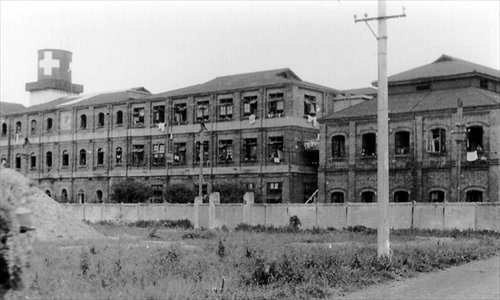
WE walked down to the river front, staggering under our bags, and boarded a tug that took us across the river. It was a ride of only five or six minutes, miles but it seemed like a trip of a thousand miles into a strange and difficult life – a Journey from comparative freedom into imprisonment under harsh Jap rule. Those of us who had. come from Manila were well acquainted with that – miserable food, crowded quarters, and privations of many sorts.
It was because we were Americans that it had to be, and somehow that thought alone sustained us and gave us courage and fight. We could take it! And since it eventually led to my return to America, I can say it was well worth taking.
THE END
Excellent article. Kazumaro Uno was a complex man. Other press individuals were more sympathetic to his situation. Thanks for posting this article.