Got over £6,500,000 to spare? You could buy Reginald Johnston’s Scottish Island…
Posted: September 27th, 2026 | No Comments »In the 1930s Sir Reginald Johnston, former British diplomat and tutor to the last emperor Puyi, bought himself a Scottish Island… Now you can buy it too…it was the ultimate expat return home!!
What You Get…
What expat returning from a few decades in China doesn’t buy themselves a private Scottish island….? Edinburgh-born Reginald Johnston was a diplomat, a private tutor, a professor of Chinese at SOAS, and best selling memoirist (Twilight in the Forbidden City, 1935). So the least you’d expect is Eilean Righ for a little later life r&r.
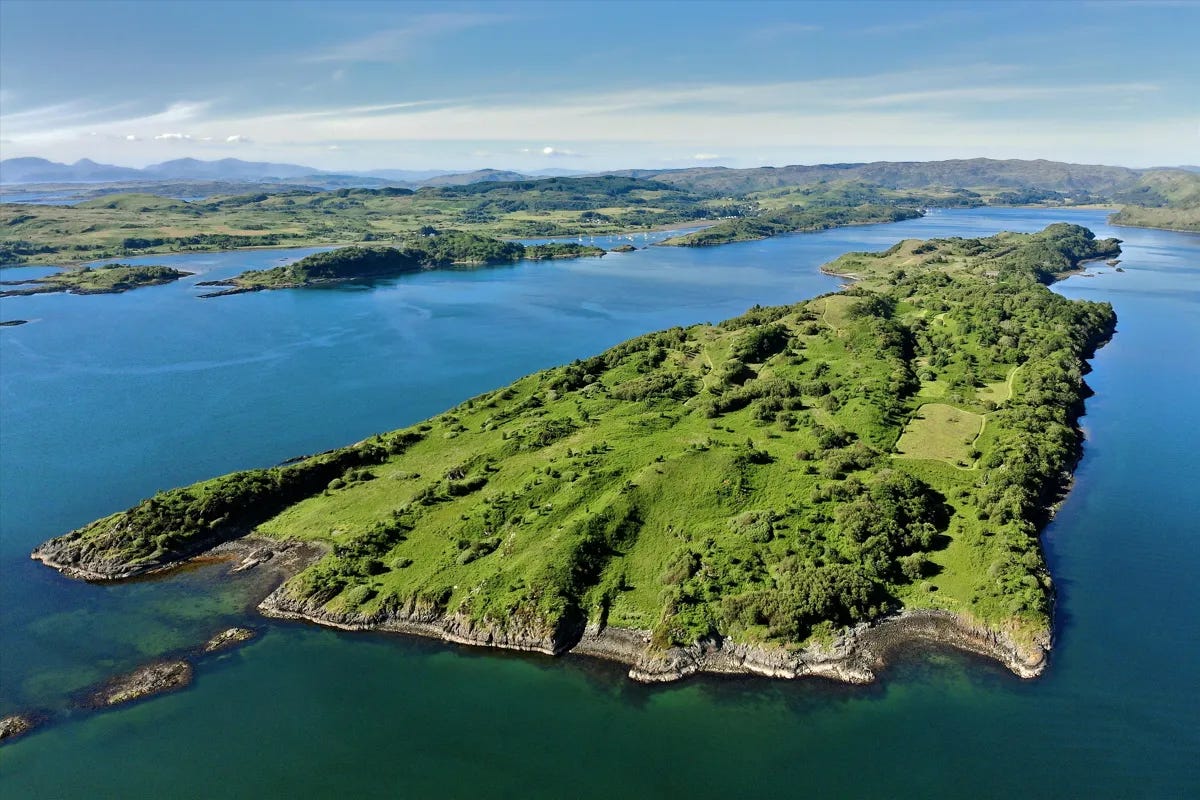
And, if you’ve got over £6,500,000 to spare you too could buy the beautiful Scottish island of Eilean Righ (‘The King’s Island’), Ardfern, Argyll and Bute. It’s a private island situated on Scotland’s beautiful and dramatic west coast set within Loch Craignish.
The details: it’s 261.39 acres, 6,953 sqft and freehold. It’s all mod-cons with an electricity connection serving all the properties, the hangar, boat shed and pontoon via an undersea cable, though the island is historic (and may have been visited by the Vikings) containing not one but two Iron Age forts or “duns”. For convenient access fort he newly returned from China there’s a helicopter hangar and for fun a purpose-built shooting cabin, boathouse and a floating pontoon and deep-water mooring that can accommodate sea-planes. The island can be reached by boat from Ardfern Marina. The house has 7 bedrooms, 5 bathrooms, 4 reception rooms
You may think it would be boring on Eilean Righ but there’s stalking for deer. Wildlife is abundant, with deer, otters, common and grey seals, dolphins and porpoises are frequent visitors along with Golden and White-tailed Eagles. There are magnificent panoramic views towards the Scottish mainland and across the Sound of Jura to the islands of Scarba and Jura.
The full estate agent details are here…
When Johnston Lived There….
After leaving China Johnston served as Professor of Chinese at SOAS University of London between 1931 and 1937. Today his extensive library remains at SOAS as well as a few objects linked to the last emperor (see my substack on that here). He didn’t get on well at SOAS – he disliked teaching, argued with the university authorities and spent most of his time working on his memoir, Twilight in the Forbidden City, which came out in 1935 was a bestseller and rapidly ran through half a dozen reprints. He had been paid reasonably well as a diplomat, had a civil service pension, was paid very well (with little need to actually spend his wages – no rent!) as imperial tutor, a London Uni prof’s salary for a few years, and some decent royalties (yes, royalties were vastly better in those days) from Twilight in the Forbidden City. He was a bachelor and had no children.
Remember he also maintained a decent London house in the well-heeled suburb of Kew. Clearly, although prices may have been a bit more reasonable in 1934 when he purchased Eilean Righ, a private Scottish island was within his means as well as a London house. More recent China ex-pats – read and weep!!!
When Johnston bought Eilean Righ (unlike whoever buys it next) it was a “fixer upper”. Johnston had to renovate the buildings and planted a Chinese style garden complete with poppies and Chinese red paper lanterns that were lit nightly (by his two Chinese servants) while creating a huge library for his enormous collection of Chinese and Buddhist texts (that mostly later went to SOAS). It seems the outbuilding seen below became effectively his private museum to house his collections.
His collection of Chinese art and artifacts was said by the Birmingham News to be worth over £1mn – that’s an astonishing £92mn today and afforded the opportunity to raise a little cash if necessary. Again China ex-pats returning with a couple of scrolls, an abacus and a fake Qing camphor chest, read and weep!!
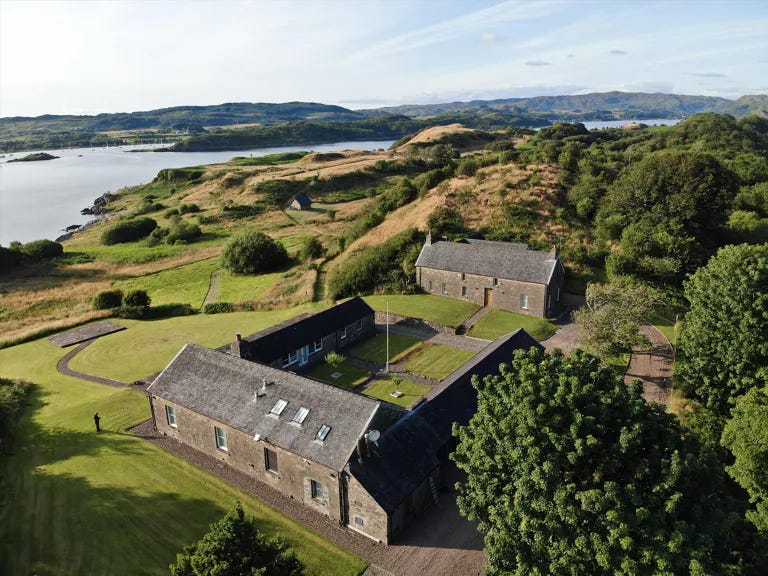
Buddhist statues were apparently housed in a pagoda-like outbuilding – but from what I can see on these pictures that appears to have gone. There were also little imperial yellow-painted punts moored on the foreshore. Anyway, this refurbishment was a costly exercise given the need to ship over materials and builders. The Daily Telegraph reported that he had spent a ‘considerable amount of money’ on the properties and that this was the first time it had been suitable for year round occupation (i.e. through a Sottish winter, which are of course universally atrocious).
That Flag….
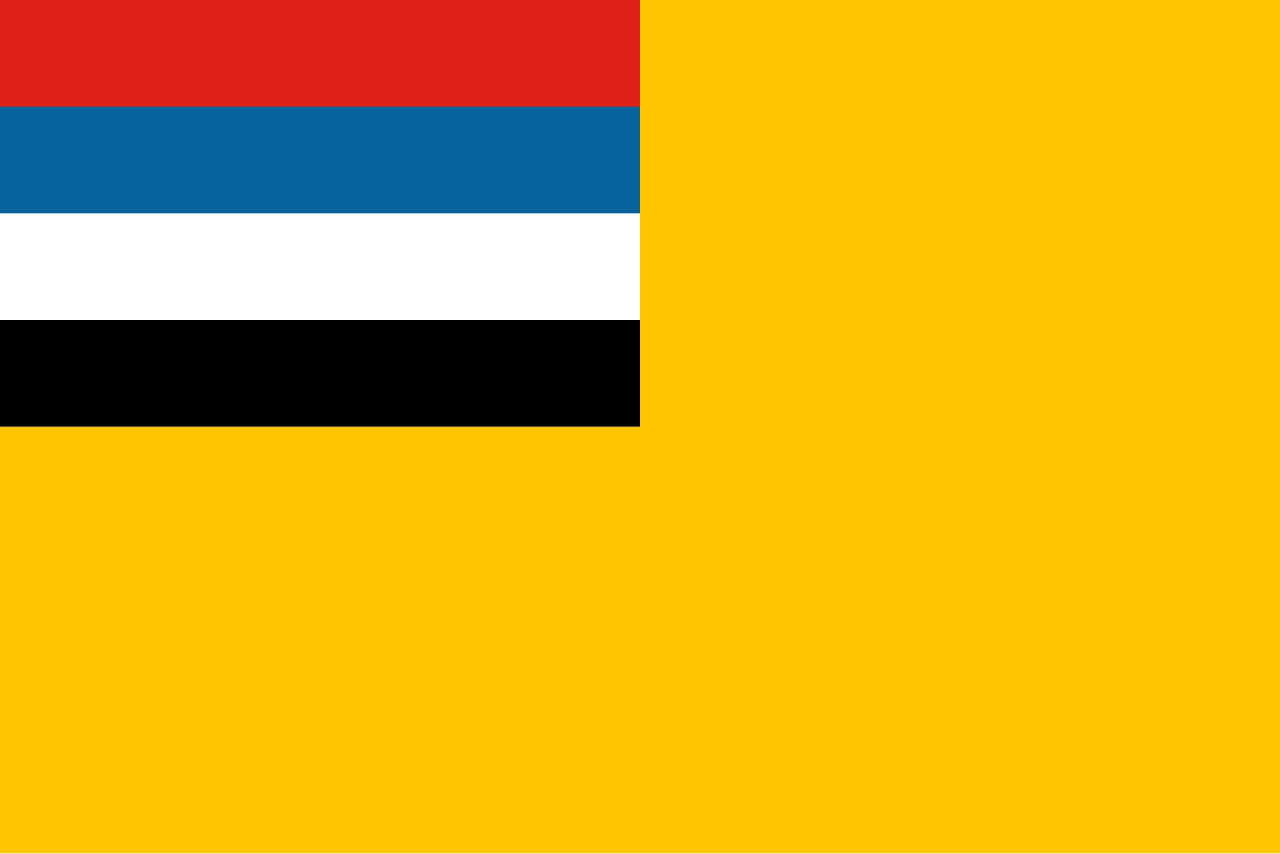
There is some discrepancy among the sources from the time but it seems Puyi – as Emperor of Manchukuo – famously granted Johnston permission to fly the Imperial flag of the puppet Japanese controlled state of Manchukuo on the island, making it quite possibly the only location outside of China and Japan to do so, and derfinitely the only Manchukuo flag in Scotland! However, some other sources say it was the Imperial Flag of China, but this appears to just be confusion by desk editors with all the various “Chinese” flags – Manchukuo, various republican, Beiyang etc.
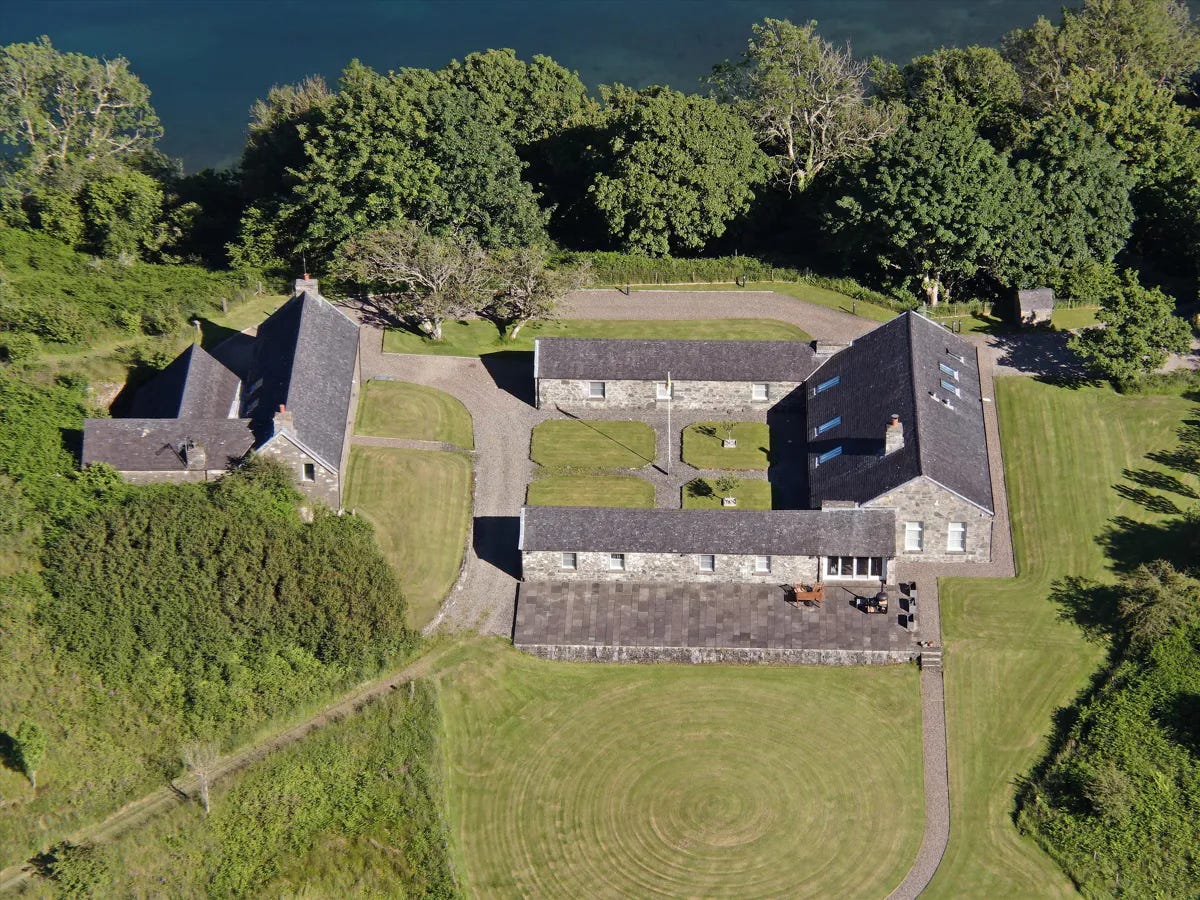
The British government were certainly told it was the Manchukuo flag and asked Johnston repeatedly to take it down as Britain did not officially recognise the Japanese occupation of Manchuria. It seems he didn’t and the government, realising that only a handful of people would ever see the flag anyway, eventually gave up…. an aerial shot of the main residence clearly shows Johnston’s flagpole…
His Last Days…
Sadly Johnston never got to spend much time at Eilean Righ. He had his duties at SOAS and was busy promoting his book on lecture tours. He visited only for short holidays until he finally retired and moved there permanently in June 1937. He clearly spent some time continuing his lifelong hobby of photography (from Johnston we have superb photos of Beijing, Weihai, Tibet and Yunnan) taking pictures of Eilean Righ for his old friend and diplomatic mentor James Stewart Lockhart (who died shortly before Johnston in 1937) and are now in the National Galleries of Scotland collection.
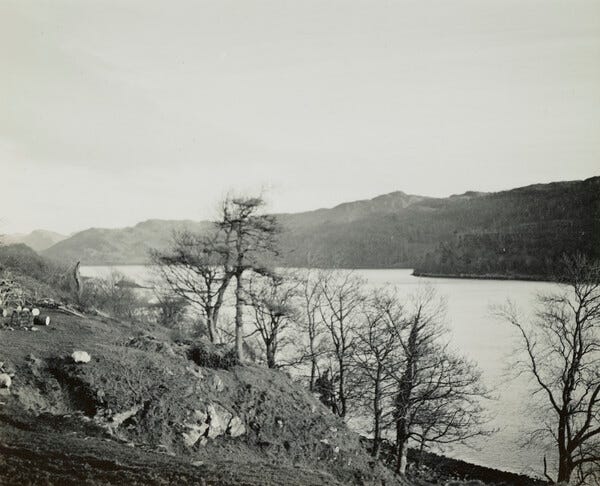
However, it was to be a short sojourn on the island. After a short illness, he died in Edinburgh at just 63. In his will, he requested that no religious ceremony be conducted. In accordance with his wishes, he was cremated. His ashes were scattered on his island and the surrounding loch.
It seems, though I can find no details of them, that two Chinese servants lived on the island to care for the properties. But who they were and what happened to them after Johnston died in 1938 and the property went back on the market I have no idea.
Though he never married Johnston was towards the end of his life in a relationship with a 45-year old divorced London woman called Elizabeth Sparshott (who had a 20-year old daughter). Sparshott is a controversial character – none of Johnston’s oldest and close friends seem to have liked her much.
She had got to know Johnston after his Forbidden City memoir was published and she appears to have become fascinated with him and determined to meet him. Eilean Righ was left to her in Johnston’s will. She put it on the market and around the same time disposed of his effects. This was especially controversial – the library went to SOAS, even though Johnston had wanted it go to the National Trust for Scotland (still, at least it was saved). However, the vast bulk of his papers, letters and many other items – including gifts from Puyi, the Buddhist statues and a large porcelain collection appear to have been destroyed by Sparshott.
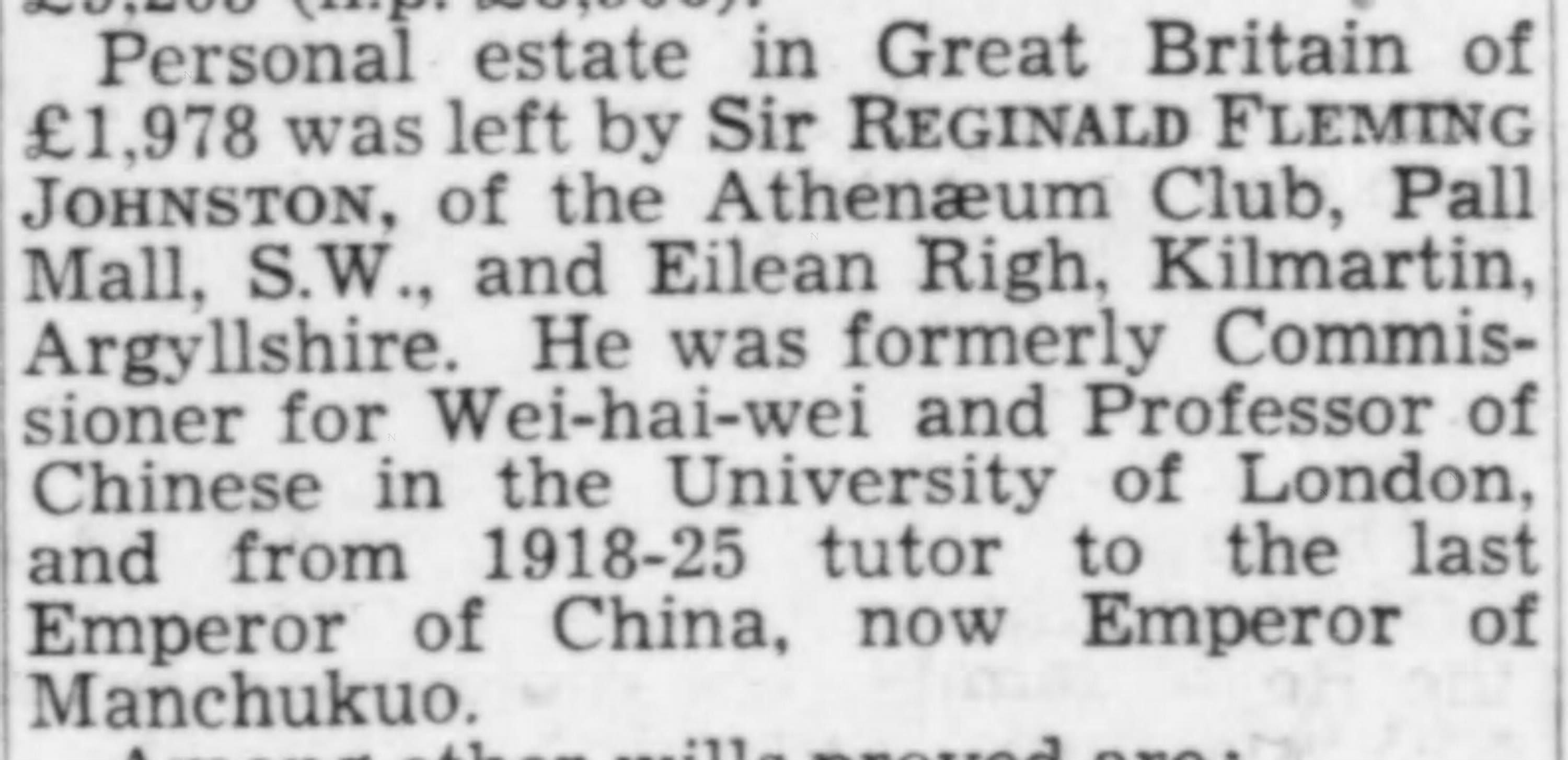
Aside from Eilean Righ, Johnston left remarkably little in cash given his potential wealth (about £173,000 in 2026 money)…
Leave a Reply