This two-day online interdisciplinary conference marks the first year of the British Chinese Studies Network. It is themed around new research on ‘Chinese Britain’ with a focus on the culture and history of East and Southeast Asian and Chinese migrant and diasporic communities in Britain. The conference will draw on research for the forthcoming British Library Exhibition ‘Chinese Britain’, but also aims to foster and publicise existing and new research across literary studies, art history, material culture, social and cultural history, and the social sciences.
This public event is brought to you by The Open University and the University of Liverpool.
ChinaRhymers may like ton especially note the panel on Chiang Yee featuring Anne Witchard, Diana Yeh and Tessa Thorniley….5.30-6.30 17/12/21.
Should you want any of my excellent books, anything from my RAS China series or Bloomsbury Asian Arguments, as well as anything I review or note on this blog you can buy them through links on my Bookshop.org shop (click here to browse). It’s a good way to buy as 10% commission goes to support indie bookshops in the UK rather than vainglorious space flights….
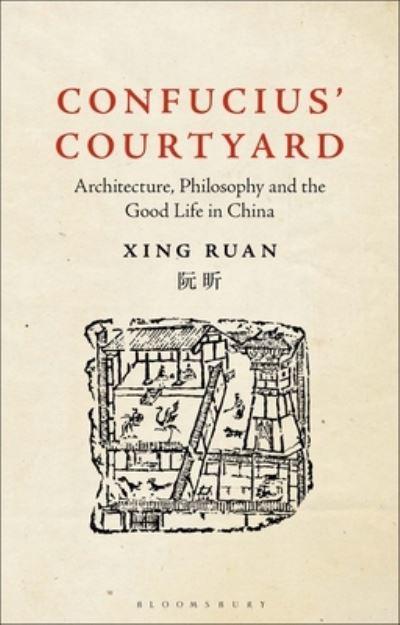
Xing Ruan’s Confucius’ Courtyard traces the history of the Chinese courtyard home….
For more than three thousand years, Chinese life – from the city and the imperial palace, to the temple, the market and the family home – was configured around the courtyard. So too were the accomplishments of China’s artistic, philosophical and institutional classes. Confucius’ Courtyard tells the story of how the courtyard – that most singular and persistent architectural form – holds the key to understanding, even today, much of Chinese society and culture.
Part architectural history, and part introduction to the cultural and philosophical history of China, the book explores the Chinese view of the world, and reveals the extent to which this is inextricably intertwined with the ancient concept of the courtyard, a place and a way of life which, it appears, has been almost entirely overlooked in China since the middle of the 20th century, and in the West for centuries. Along the way, it provides an accessible introduction to the Confucian idea of zhongyong (‘the Middle Way’), the Chinese moral universe and the virtuous good life in the absence of an awesome God, and shows how these can only be fully understood through the humble courtyard – a space which is grounded in the earth, yet open to the heavens.
Erudite, elegant and illustrated throughout by the author’s own architectural drawings and sketches, Confucius’ Courtyard weaves together architecture, philosophy and cultural history to explore what lies at the very heart of Chinese civilization.
I’ve blogged (here and here) as well as written (in my collection Destination Peking) about the earlier incarnation of the Zeitgeist Bookstore, a German communist run booskhop), a branch of the Comintern publisher Münzenberg, on North Soochow Road. It was host to many well known leftists in the early 1930s – Agnes Smedley, Hotsumi Ozaki, Lu Xun and other visitors such as Roger Hollis (the probably “fifth man” and later head of British Intelligence and probably recruited by Soviet Intelligence in the bookshop). That part of North Soochow Road (Suzhou North Road) was cleared for development (Embankment House etc).
However, there are references to a relocated Zeitgeist Bookstore at 425 Bubbling Well Road at the junction with Mohawk Road (Nanjing West Road at the junction with Huangpi Road – as this junction had a cemetery to the south west, the race club to the south east it was probably under what is now the Ciro’s plaza) around March 1932. Certainly it seems that Soviet super spy Richard Sorge visited. It also seems to have managed by the old Zeitgeist’s manager, Irene Irene Wiedemeyer, a German communist married to an early member of the Chinese Communist Party.
Just been rereading Hans-Otto Meissner’s 1955 book The Man with Three Faces about the Soviet spy in China and Japan, Richard Sorge. I’d forgotten about Sorge’s 1937 visit to Peking, which might have made a good chapter in my recent collection Destination Peking. Anyway, Sorge visits to deliver microfilm and see Colonel “Alex” Commander of the Soviet Fourth Bureau’s courier service. He was undercover as a Frankfurter Zeitung jounralist writing an article on Peking.
What interests me of course is that Meissner temptingly mentions Sorge investigating the ‘crowded side streets of Peking’, presumably the hutongs….Anyone got that article?
I’ve been spotting opium references in popular culture with interest for quite a few years now (2020, 2019, 2018, 2017, 2016, 2015, 2014, 2013 & 2012) on just how opium keeps fascinating us.
TV first then – I only had one new opium ref this year (though that wasn’t for not watching a load of tele!!) Opium popped up in Glitch season 3, the Aussie back-from-the-dead show, as Chi (resurrected from the old Gold Rush days) remembers beginning work as a Chinese labourer in Australia after his career as a Chinese opera star ended. Chi it seemed also liked a go on the pipe.
With books i’ll kick off with non-fcition and Joel Dinerstein’s great book The Origins of Cool in Post-war America which, of course, looks at the role drugs played in developing the ‘cool’ in jazz, the movies, literature etc and opium’s role there. Also in non-fiction Raphael Cormack’s Midnight in Cairo tells the story of Egypt’s wild 1920s cabarets and nightclubs where a little opium did appear. There’s also some Cocteau and opium anecdotes in Simon Fenwick’s excellent book about The Crichel Boys and their post-war Doreset literary set. Christopher Othen’s The King of Nazi Paris about collaborationist gangsters in the Nazi-occupied city has a few tantalising details of the dealers of opium and cocaine throughout the period. And Diana S. Kim’s Empires of Vice: The Rise of Opium Prohibition Across South East Asia spanned a number of countries between the 1890s and late 1940s. Finally, Robert Wainwright’s biography of Enid Lindeman, Enid, who lived quite the life of wealth, war and tragedy features some 1930s battles against morphone addiction.
And some novels too – Modifa Mohamed’s The Fortune Men(based on a true story but novelised) recreated Cardiff’s multicultural Tiger Bay of the 1950s and there’s a little opium in the neighbourhood too. Opium popped up among the hobos and Wobblies of Spokane in Jess Walters’s great epic novel The Cold Millions. Opium is being edged out in favour of cocaine in Jon Talton’s City of Dark Corners set in 1930s Phoenix.
Getting a little cozy with CS Woolley’s What Became of Henry Cartwright? Brigadier George Webb-Kneelingroach thought his days of serving his country were through, but with the new initiative in China to stop the Opium trade, the Empire calls on him once again. And finally, the latest in Abir Mukherjee’s Calcutta 1920s detective novels, The Shadows of Men, where opium invariably rears its head.
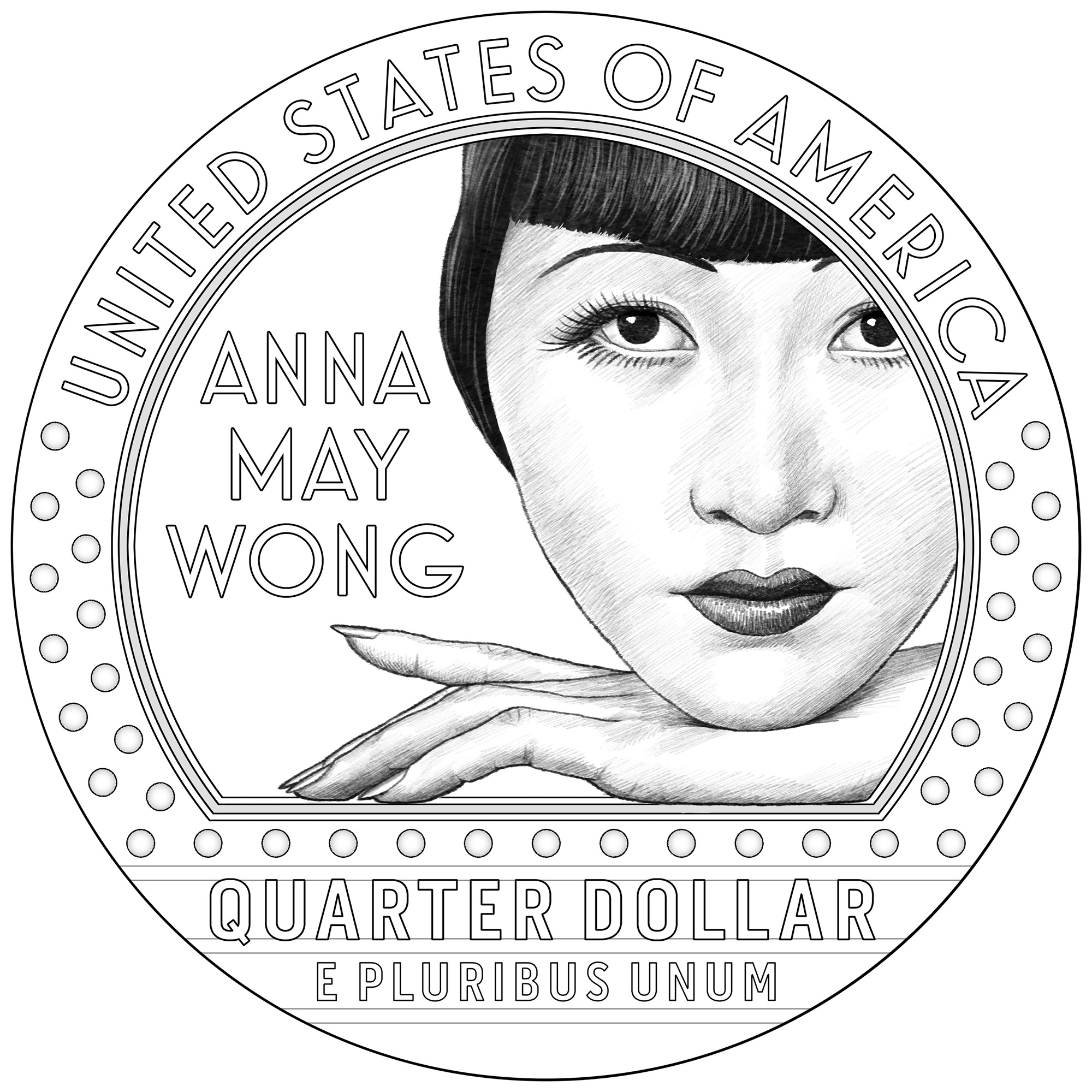
Next year Anna May Wong’s face will be found on American Quarter coins. George Washington on one side, Anna on the other. The image has been sculpted by John P McGraw and designed by Emily Damstra. It’s part of a series of American Women Quarters and will potentially be in your pocket in 2022.
Fine antique and vintage maps from 16th to 20th century
including a collection of city plans of Canton, Hong Kong and Shanghai
Plan of Victoria, Hong Kong c1915
Wednesday 8th December 2021 – 6.30 – 8.30 pm
The exhibition continues until Saturday 8th January 2022 Wattis Fine Art Gallery 20 Hollywood Road, 2/F, Central, Hong Kong Tel. +852 2524 5302 E-mail. info@wattis.com.hk Gallery open: Monday – Saturday 12 – 6pm