The new Mekong Review Novemeber 2021 (issue 25) edition is out now (online globally, by subscription and in various shops) – the best publication still standing on Asian current affairs, writing and culture. As somewhat of a respite to the region’s currently rather dark politics they asked me to write about Britain’s interwar fascination with China, the English Big Beast writers who went, and those who didn’t but still thought about China…
A little flavour….
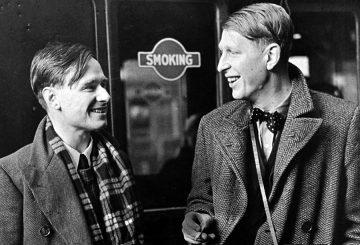
“Between the two world wars, British interest in China was probably at its height. Swift, comfortable ocean liners connected London, Liverpool and Southampton with Shanghai, Tianjin and Hong Kong. London theatregoers thrilled to the orientalism of Oscar Asche’s musical Chu Chin Chow and Hsiung Shih-I’s play Lady Precious Stream. Anna May Wong arrived from Los Angeles to be photographed in the old London Chinatown of Limehouse and then star as the dishwasher turned dancer Shosho in Piccadilly (1929), written by the prolific bestselling author Arnold Bennett. Chinese restaurants became fashionable—T.S. Eliot, Ford Madox Ford and the Sinologist Arthur Waley met often at the New China Restaurant on Regent Street. Regulars at the Shanghai Restaurant on Soho’s Greek Street in the 1930s included the poet William Empson (later to teach at Peking University) and Ezra Pound (known then largely for his 1915 collection of translated classical Chinese poetry, Cathay). China was seemingly everywhere: the Royal Academy’s International Exhibition of Chinese Art in 1935 was packed; there was an outpouring of support for Nationalist China after the Japanese attacks of 1937 and near mass hysteria at the arrival in London Zoo of the first pandas in Britain. China, Chinoiserie, all ‘things’ and ‘matters’ Chinese were, to use contemporary parlance, ‘having a moment’.”
The new issue of the Mekong Review does include a light-hearted piece by me on British “Big Beast” authors and their close or distant relations with China in the 1930s. However, there’s a lot more too….
A thread of both resistance and disappointment runs through this issue of Mekong Review, illustrating how much has changed across the region in the six years since this publication first appeared on newsstands. Democracy and openness have been under relentless pressure across the region: in Hong Kong, the Philippines, Myanmar, Cambodia, Thailand and elsewhere. China has retreated into a threatening neo-Maoism and India into religious bigotry. Behind it all the climate emergency and environmental degradation threaten everyone.
Amitav Ghosh, the Indian writer who has emerged as a key thinker on climate, colonialism and the consequences of ignoring our relationship with nature, discusses his new book, The Nutmeg’s Curse: Parables for a Planet in Crisis. The Spice Islands were once what Ghosh calls ‘the fulcrum of world trade’, enriching the Netherlands at the cost of people’s lives. Colonial violence is embedded in the memories of those who live in what is now a remote part of Indonesia, but it is rarely told. And when it is told, it is unclear if it makes a difference.
The forgotten stories of South Vietnam, a nation built up and then abandoned by the United States, are the subject of an essay by Anthony Morreale. While the literature of the victors from the North has been translated and admired in the past few decades, that of the South has been mostly forgotten, a lonely memory for a diminished number of the Vietnamese diaspora. ‘Whatever the cause, most contemporary Vietnamese literary critics agree that South Vietnam produced some of the best Vietnamese literature ever written, far better than what was coming out of the North at that time.’ Greater freedoms in the South created an environment in which writing was not just yoked to the cause of war; instead, it dug into the stories of the postcolonial world.
Politics in Cambodia, the Philippines and Thailand are much like Tolstoy’s families—all unhappy in their own ways. Colin Meyn examines the turn towards authoritarianism of Cambodia and the shaky prospects for Hun Sen’s planned dynastic succession. Richard Heydarian writes of the ‘murderous populism’ under Rodrigo Duterte in the Philippines. Applying both humour and violence in equal measures, Duterte is oblivious to taboos, according to a new study by Vicente L. Rafael, a Philippine-born historian at the University of Washington. Duterte nonchalantly jokes about rape and murder, describing the killing of drug dealers as ‘beautiful’. It’s a language the world also knows from Trump, Putin and their ilk. In Thailand, King Bhumibol made a point of never smiling; there were few shows of public humour, even of the black Duterte variety. Wasana Wongsurawat examines how the king’s interventions in politics still haunt Thai politics, buttressing a political order, external to the constitution, that keeps the monarchy and conservative forces in power.
Suhasini Patni profiles Meena Kandasamy, a Tamil writer whose latest book, The Orders Were to Rape You, reveals the stories of women who took up arms against the Sri Lankan state during the long civil war there. The role of women in war has come to the fore in the works of a number of women writing about Sri Lanka and other conflicts. Their politics, voices and opinions are brought out in Kandasamy’s works with their full intent; they are no longer writers of laments or passive victims of violence but participants in the struggle. Three Tamil poets translated in the book ‘embody a radical departure from convention’.
There may be resistance, but there has been a lot of disappointment about the retreat of democracy in so much of Asia and the violence that has been inflicted. Lok Man Law captures the exhaustion and sadness of Hong Kong as repression deepens and many people move towards internal exile, the state in which any diversion from political reality is welcome. ‘When you accidentally see the news on a TV in one of the old-style neighbourhood cafés, every word and image seems to scrape your skin raw and make your scalp prickle.’ Prison, emigration or internal exile are the options as democracy is choked.
There are birds in Myanmar and Cambodia, life in Salt Lake near Kolkata, Australia’s fearful relationship with China, and poetry from Thailand, India and Hong Kong. Debut novels are featured from Emma Larkin and Avni Doshi. Anthony Tao laments the loss of street food in Beijing as vendors are swept away in the name of hygiene and pollution control. Far too many aspects of our lives are going the way of the Henanese vendor of grilled meat: ‘One day, he wasn’t there—and he’s never been since.’
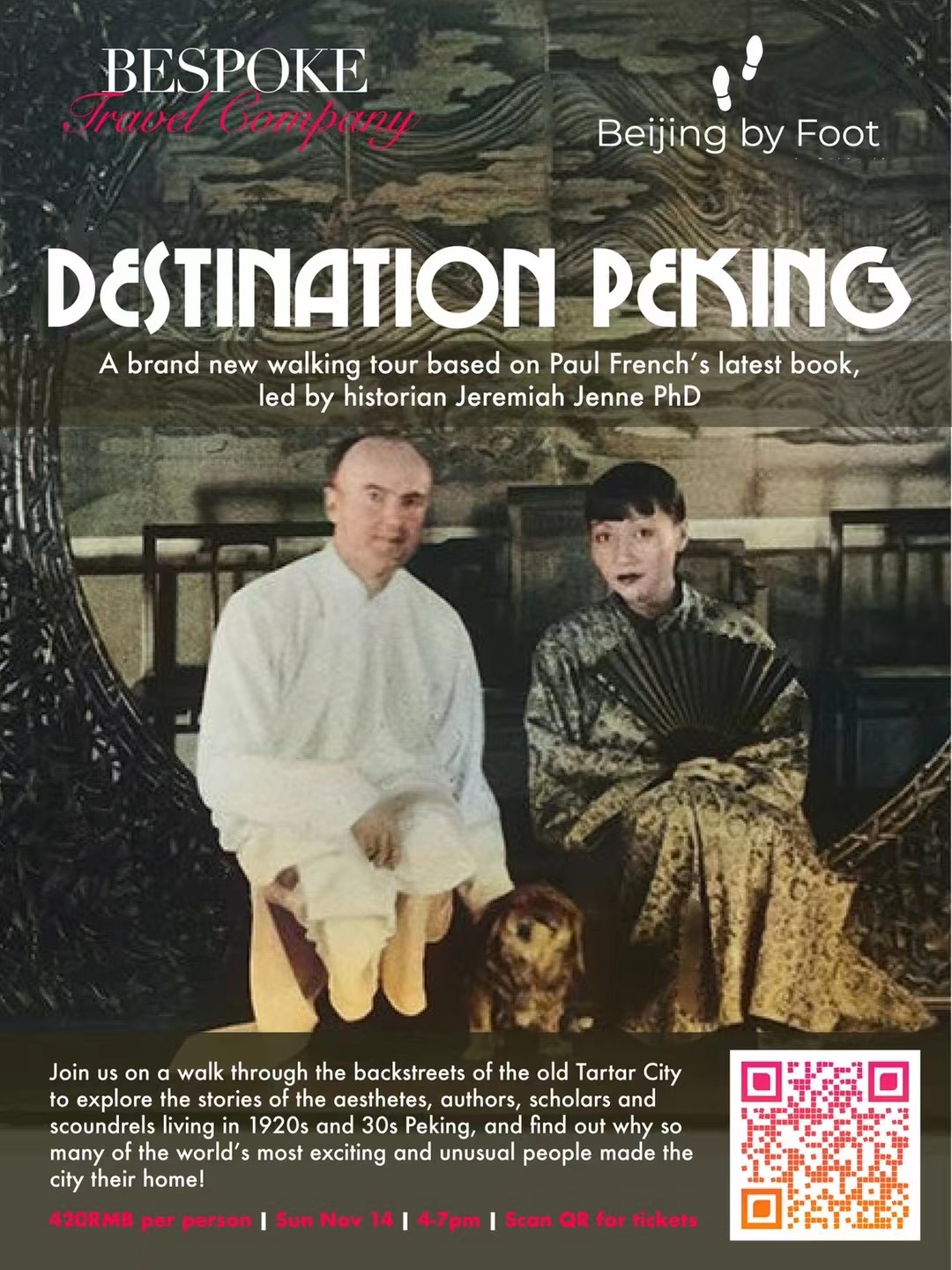
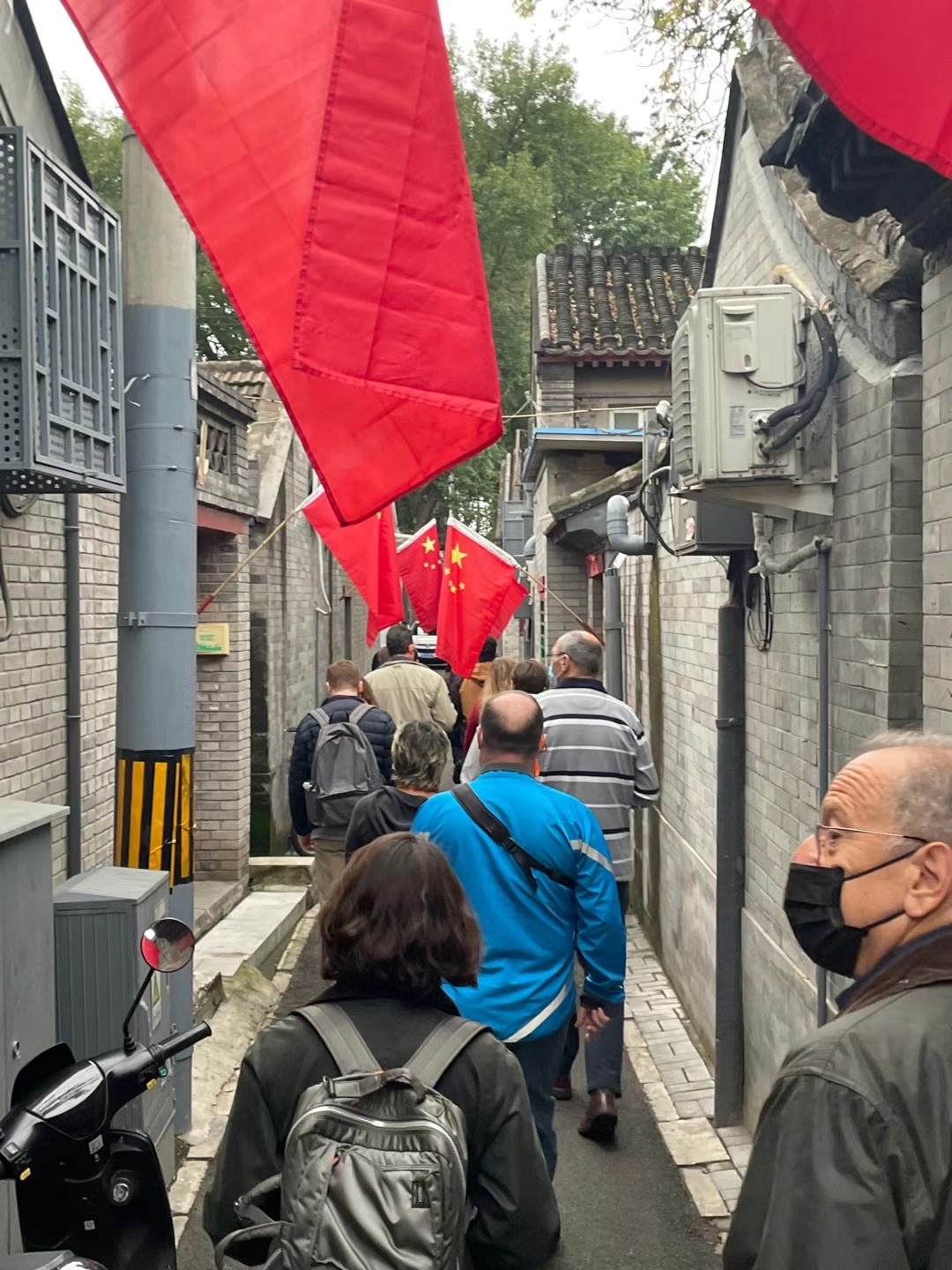
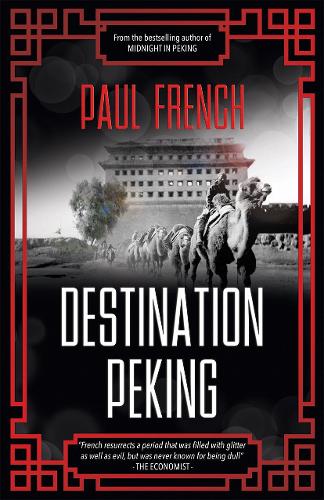
The Destination Peking walking tour is back this November 14, organised by Bespoke Beijing and led by Jeremiah Jenne. Aesthetes, Authors, Scholars & Scoundrels, all drawn from the pages of my recent collection from Blacksmith Books, Destination Peking. Booking via QR code below….
Another in my occasional series on old Shanghai signage (just put ‘signage’ in the search box to see more – trolleybus signs, road signs, Fire Brigade, Public Works Department, telegraph poles, & SMP “No Waiting”) – this one a car (with the super stylish Elsie Lee Soong posing in front of it) in 1937 displaying plates for both the French Concession (the F plate), the International Settlement (below it) and the Chinese districts of Shanghai (behind Elsie) too.
and just to show that there were variations – here’s a car approaching the Garden Bridge from the south side – it displays a Chinese Districts plate on the left and an International Settlement plate on the right – no Frenchthown plate
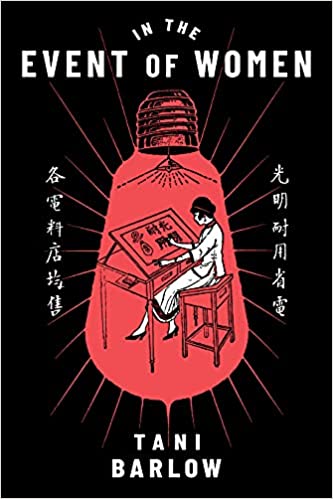
Tani Barlow’s work on women in Republic China has long been the gold standard so a new book is most welcome – In the Event of Women.
In the Event of Women outlines the stakes of what Tani Barlow calls “the event of women.†Focusing on the era of the late nineteenth century through the mid-twentieth century’s Cultural Revolution, Barlow shows that an event is a politically inspired action to install a newly discovered truth, in this case the mammal origins of human social evolution. Highbrow and lowbrow social theory circulating in Chinese urban print media placed humanity’s origin story in relation to commercial capital’s modern advertising industry and the conclusion that women’s liberation involved selling, buying, and advertising industrial commodities. The political struggle over how the truth of women in China would be performed and understood, Barlow shows, means in part that an event of women was likely global because its truth is vested in biology and physiology. In so doing, she reveals the ways in which historical universals are effected in places where truth claims are not usually sought. This book reconsiders Alain Badiou’s concept of the event; particularly the question of whose political moment marks newly discovered truths.
As appeared in The Times, 1948 – A reasonably pricey 21s in 1948 which perhaps indicates that people were willing to pay for their new Chiang Yee book.
Translated by Paul Bevan this comic novel, The Adventures of Ma Suzhen, was written during a highpoint in the popularity of xia “knight-errant” fiction. It is an action-packed tale of a young woman who takes revenge for her brother, Ma Yongzhen, a gangster and performing strongman, who has been murdered by a rival gang in China’s most cosmopolitan city, Shanghai. After publication of the book in 1923, the character of Ma Suzhen appeared on stage, and subsequently in a film made by the Mingxing Film Company. The book version translated here, displays a delightful combination of the xia and popular“Mandarin Ducks and Butterflies” genres, with additional elements of Gong’an “court case” fiction. The translation is followed by an essay that explores the background to the legend of Ma Suzhen – a fictional figure, whose exhilarating escapades reflect some of the new possibilities and freedoms available to women following the founding of the Chinese Republic.