The Midnight in Peking Walking Tour Returns this August
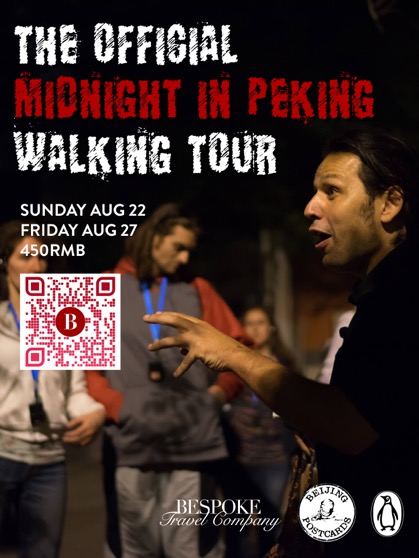
Posted: August 11th, 2021 | No Comments »The official Penguin China/Bespoke Beijing Midnight in Peking walking tour is back for two new tours this August…
All things old China - books, anecdotes, stories, podcasts, factoids & ramblings from the author Paul French
The official Penguin China/Bespoke Beijing Midnight in Peking walking tour is back for two new tours this August…
WHAT: “Imperialism & Internationalism: Xiamen, Treaty Port Case Study”, an RASBJ online talk by James Halcrow followed by QA
WHEN: Sept. 1, 2021, Wednesday19:00-20:00 PM Beijing Standard Time
WHERE AND HOW TO JOIN: This event is free and exclusively for members of RASBJ. If you know someone who wants to join the RASBJ in order to attend this talk, please ask them to sign up via our website at https://rasbj.org/membership/ at least 48 hours before the event.

MORE ABOUT THE EVENT: Amoy (Xiamen 厦门) was one of the five original ports opened to Western habitation and trade in late imperial China during the 1840s. It hosted a British Concession from 1844 to 1930 and an International Settlement on nearby Kulangsu Island (Gulangyu鼓浪屿) from 1903 to 1943. The treaty port functioned as a key site of international competition across the treaty port century from 1843 to 1943. James Halcrow examines the historical development of the treaty port during the nineteenth century, using Amoy as a case study, as it had a long history of prior engagement and communication with Western and non-Western traders, missionaries, and merchants before the commencement of the First Opium War (1839-1842).
MORE ABOUT THE SPEAKER: James Halcrow is a doctoral candidate at the University of Auckland (New Zealand). After spending some time living in Shanghai to study Mandarin, he returned to New Zealand in 2014 to complete a Master thesis on the Opium Wars and began his doctoral research in 2020. The focus of his research is Gulangyu island, known for its pre-Liberation architecture and listed as a UNESCO World Heritage site in 2017.
The Hong Kong Free Post reports the loss of one of the last of the iconic Hong Kong corner buildings, Eiver House, r as part of the redevelopment of To Kwa Wan. Terribly sad.
I won’t steal any of the excellent pictures, but rather point you to their article here… and point you towards Michael Wolf’s excellent book of photographs of corner houses in Hong Kong (here).

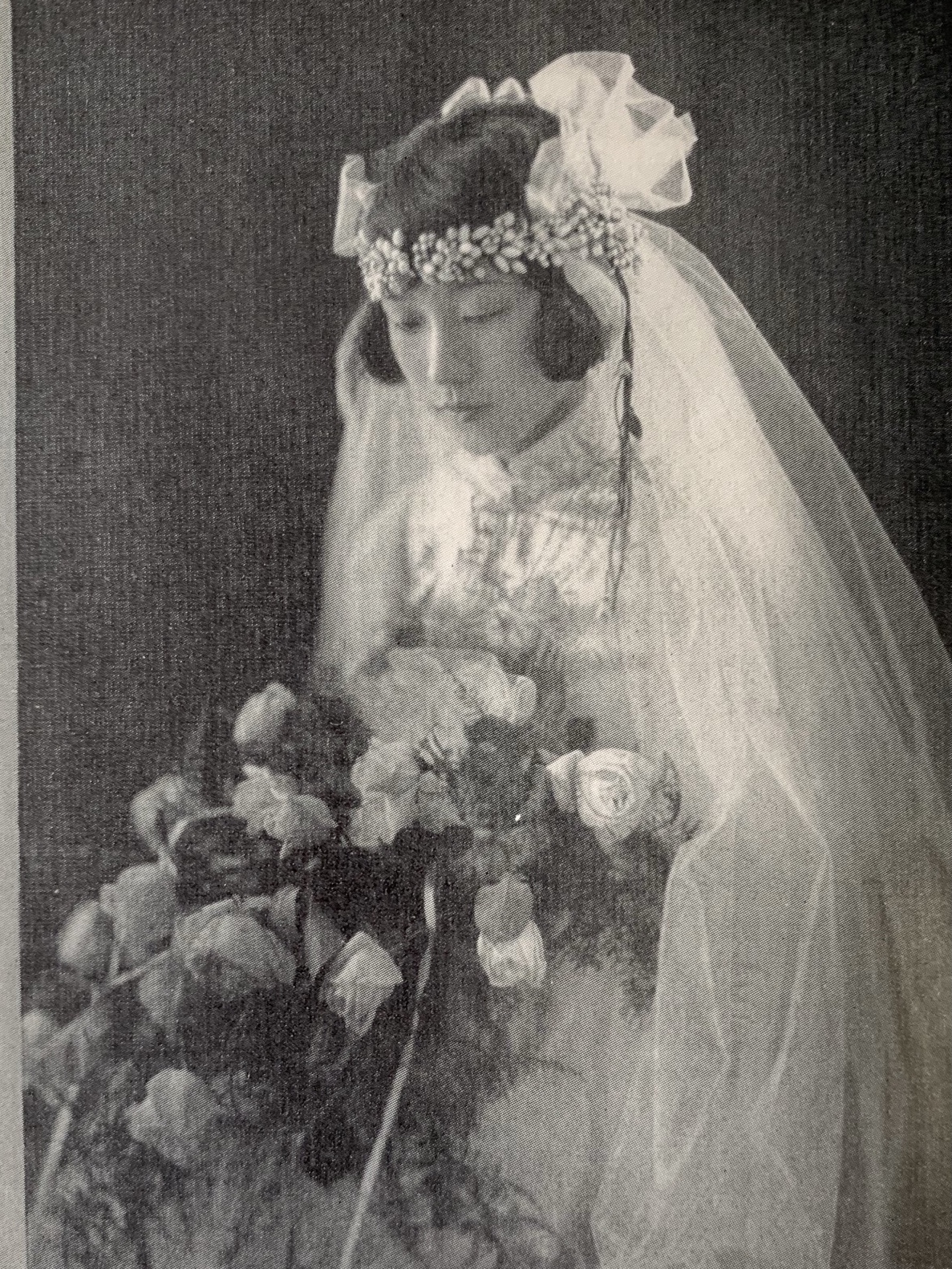
Just when the trend for western style wedding dresses and portraits started in Shanghai is interesting. Here is a 1928 portrait by the famous Shanghai photographic studio of Sanzetti….
Talking about Destination Peking (Blacksmith Books) with the Royal Asiatic Society Shanghai – a host of foreigners in Beijing inc Robert Byron, Desmond Parsons, Bertha Lum, Barbara Hutton Wallis Simpson & Harold Acton et al – click here for youtube link…

Below are a series of photographs of what i believe is the courtyard home at #1 Hsien Yu Hsiang Hutong (or Fresh Fish Alley). The photos were taken in the 1930s by Orre Nobles (more below). The adddress had interesting strong of tenants starting with Harry Hussey, a Canadian architect (though studied in Chicago) who worked in Peking, Tientsin and elsewhere from around 1911 designing buildings for the YMCA in China, most of which are in what some have called the “Chinese Revival” style (really just a spin on the “Colonial Revival” style in the USA). He also designed the Peking Union Medical College (PUMC), which of course still stands (with various additions and subtractions over the years) just off Wangfujing. Hussey was not universally popular – his design for PUMC was subject to some imposed revisions by the Peking authorities (notably the addition of traditional eaves on the western style buildings, as per the recommendation of the diplomat-scholar ETC Werner) – especially with other foreign architects (notably the Americans Murphy and Dana who thought him unethical and overly powerful due to having Rockefeller backing – PUMC being Rockefeller financed).
After Hussey it seems the rent was taken on by the Australian-born HJ (Harold) Timperley, of the Guardian. Timperley had arrived in China in 1928 and set up a small agency which translated and interpreted articles from the Chinese press while working for the Manchester Guardian. Timperley claimed that before him #1 Hsien Yu Hsiang Hutong, “had been a famous haunt of newspaper folks.â€Â He actually didn’t stay there long, he was to be largely Shanghai-based but lived for a time in Peking, leaving in about 1930. Then the lease moved to the Minnesota-born but Seattle-based printmaker, painter, designer and illustrator Orre Nobles, who had a contract in China with the Fette Rug Co. desiging rugs to be made in Peking and sold in America.
Nobles took these photos during his tenure from about 1930-1931 and then handed the rent book over to Thomas Handforth who is now best remembered for his children’s book Mei Li that was based on his experiences of China (and a real girl he met there) and has remained (at least until recently) a perennial favourite children’s book. It won the Caldecott Medal for illustration. While there Handforth sub-let rooms briefly to a sojourning English landscape artist Derek Hill and the newly arrived in town Harold Acton.
For those who like their hutongs and compound homes tastefully decorated – feast your eyes….


Getting that old Shanghai office furniture thing just right….you need Chen Lien Chong for all your needs from safes and vaults (hey, it’s a high crime city!) to, as you can see here, a rather nice blackwood Captain’s Chair. A small mystery is the office address – I don’t know a Peninig Road, either in the pre-war road names or the post-war (the variius changes between 1943 and 1949) – but there was a Penang Road (now Anyuan Road) and the ‘Eastern’ end would have been up towards the Suzhou Creek. Their factory was on Honan Road (Henan Road now) and if anyomne knows where Kun Luen Road was (or was previously called pre-war) do let me know.

Talking Shanghai, art, biennales & cultural capital ambitions with Jenny Lin, author of Above Sea: Contemporary Art, Urban Culture, and the Fashioning of Global Shanghai (Manchester University Press) for the China-Britain Business Council Focus mag this month. Click here to read.
