The ever-pioneering Koryo Studios and Nick Bonner have a new project (sadly tours and many other events are off the agenda for some time now and some time to come). They’ve commissioned a North Korea photographer Kim Gwang Hun to shoot the DPRK’s best known actors and actresses to visit the Pyongyang film studios and recreate some of their most famous scenes. See the shots here – and, if you like them and/or want to help out Koryo at this trickiest of times, they’re for sale too. Click here
Small House at the Forefront (2013). Actor Choe Yong Ho, age 43: “My wife knows that I am often in character for a period of time, even at home!”
Regular readers will know I also write a fortnightly column for crimereads.com called Crime & the City – a different city every two weeks and the best crime writing from and about the place. The latest happens to be on an Asian city and so many interest China Rhyming readers – Kathmandu and Nepal. Click here to read.
Readers of my work will know I’m always keen to find evidence of the foreign underbelly of China in the first half of the twentieth century. Also, given the infamous role of Shanghai being well established, I’m keen to find examples of the underbelly of Peking, which is far less well researched.
Francis Rose is, admittedly, not always a reliable narrator, but he did visit Peking around the time of the Japanese occupation in 1937 and he did record his visit quite extensively in his memoir Saying Life (1961). After the Japanese attack on the city in the summer of 1937 many foreigners checked into Peking’s major hotels, including a rather run bunch (if Rose can be believed) in the Wagons Lits…
‘The hotel was full of that rabble of wealthy men who only appear in neutral places during a war. dishonest Chinese politicians, Japanese spies, gangsters, and beautiful Russian women mixed with army deserters who hoped to get money and work when the Japanese entered (Peking), together with elderly former diplomats from countries that no longer existed. Millions and millions of dollars were discussed over drinks, and a lot of hard cash was spent.’
The Grand Hotel des Wagons Lits was, after the Grand Hotel on Chang’an Avenue, the best hotel in Peking. It was also handy for the railway station at Chienmen (Qianmen) and the Legation Quarter, originally built in 1905 by the Compagnie Internationale des Grands Hotels. The better known later version of the hotel was built in 1904 on the same site in the Flemish Gothic style,. Unlike the Grand Hotel it was only a couple of floors though with incredibly long corridors. It was destroyed after 1949 in the Maoist ‘redevelopment’ of the area.
And what a breakfast menu (from 7-10am). I must admit i’d probably order it all except the mutton chop, which seems a little extreme to me as a breakfast item!
Thy Phu’s Warring Visions from Duke University Press came out this March…
In Warring Visions , Thy Phu explores photography from dispersed communities throughout Vietnam and the Vietnamese diaspora, both during and after the Vietnam War, to complicate narratives of conflict and memory. While the visual history of the Vietnam War has been dominated by American documentaries and war photography, Phu turns to photographs circulated by the Vietnamese themselves, capturing a range of subjects, occasions, and perspectives. Phu’s concept of warring visions refers to contrasts in the use of war photos in North Vietnam, which highlighted national liberation and aligned themselves with an international audience, and those in South Vietnam, which focused on family and everyday survival. Phu also uses warring visions to enlarge the category of war photography, a genre that usually consists of images illustrating the immediacy of combat and the spectacle of violence, pain, and wounded bodies. She pushes this genre beyond such definitions by analyzing pictures of family life, weddings, and other quotidian scenes of life during the war. Phu thus expands our understanding of how war is waged, experienced, and resolved.
A slight alternative on the usual Carl Crow maps of Shanghai over the year. This one is from Crow’s publication The Shanghailander in December 1934. The map is familiar but this one, as seen lower right bottom, is sponsored by the Dollarsteamship Lines/American Mail Line – a long term great customer of Carl Crow Advertising Inc….
Tigers came to Hong Kong. They preyed on pigs, chickens, cattle and deer. They sometimes killed people. They came to Hong Kong most years through to the end of the 1950s, and possibly into the 1960s. As long as there were South China tigers in the wild, Hong Kong saw some of them.
They stopped coming when they were on their way to extinction in their homeland across the border. Not many people know this, and not many people believe it to be true. But it is true, tigers came. And this is the first written history of the Hong Kong tiger.
There’s also a great interview with Saeki on the RTHK3 Hong Kong Heritage podcast – here
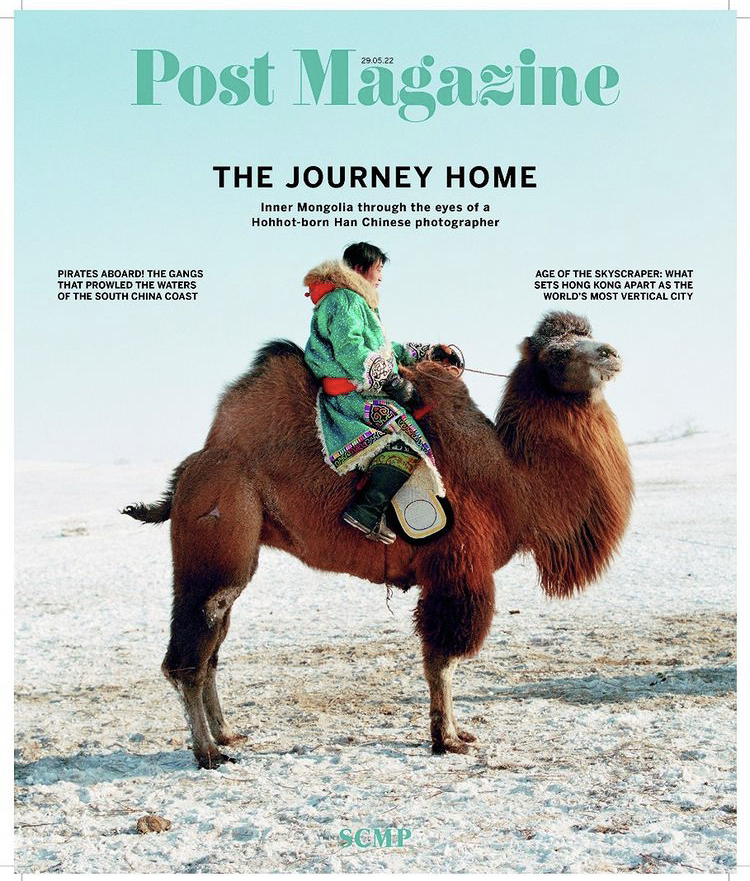
My long read for the South China Morning Post weekend magazine on the development of the so-called ‘Passenger Ploy’ (the word hijacking hadn’t quite come into common parlance in 1922) developed by Chinese pirates along the coast from Hong Kong and Macao, up to Canton and as far as Shanghai…Read the article here…