Mysterious Old Shanghai Tales, 1925
Posted: May 28th, 2022 | No Comments »Came across this the other day…thes tantalising little tales of tragedy in old Shanghai often appear and go into the long list to be further investigated…

All things old China - books, anecdotes, stories, podcasts, factoids & ramblings from the author Paul French
Came across this the other day…thes tantalising little tales of tragedy in old Shanghai often appear and go into the long list to be further investigated…
Sir Robert Ho Tung (1862–1954) is a compelling figure in Hong Kong history – now a new bio available here. He is regularly portrayed as the colony’s greatest philanthropist and wealthiest man of his day, the first Chinese to live on the Peak, and, at the end of his life, the ‘Grand Old Man of Hongkong’. The illegitimate son of a Chinese mother and European father, he was highly sensitive about his mixed heritage though he consistently made the most of his fate. He was a man perfectly in tune with his place and time, his success driven as much by his entrepreneurial talents as by his being Eurasian. This book shows him in all his immense variety—clerk with the Imperial Maritime Customs, chief compradore of Jardine Matheson, financial wizard, husband and lover, patriarch of a large family of five sons and eight daughters, loyal British subject but also, paradoxically, Chinese patriot. China’s president Yuan Shikai awarded him the Order of the Excellent Crop, and King George V knighted him.

May Holdsworth’s thoughtful and deftly written account of the life is the first full-length biography in English. Given unique and unprecedented access to family and personal papers, including letters, diaries, notes, and photographs, she offers a nuanced perspective on a public but also private man. Her book will be a rich resource for historians and general readers interested in the men and women who played a key part in the shaping of nineteenth- and early twentieth-century Hong Kong.
May Holdsworth is a writer based in Hong Kong. Her previous books include Foreign Devils: Expatriates in Hong Kong, and The Palace of Established Happiness: Restoring a Garden in the Forbidden City. She is co-editor, with Christopher Munn, of the Dictionary of Hong Kong Biography (HKUP, 2012), and co-author with him of Crime, Justice and Punishment in Colonial Hong Kong: Central Police Station, Central Magistracy and Victoria Gaol (HKUP, 2020).
Just found this 1924 story – smuggling opium to SanFran – a way to get some cash when arrivng in the US. Normally these stories got a few lines. But the 1939 case of opium smuggler Seto Gin got big coverage – why? My RTHK3 podast The Lady From Hong Kong (all 4 episodes here)…

This talk will explore contemporary different perceptions and constructions of Mao’s China and the Cultural Revolution, with a particular emphasis on material and visual culture. It draws on British popular culture sources to consider how China was constructed in the 1960s and 70s, on the one hand, as a ‘problem’ nation and a danger to world peace, and on the other hand, as an inspiration for the British left, which saw the PRC as constructing alternative socialist modernity. Both supporters and critics often drew on the same material culture to demonstrate these opposing positions, and this talk looks particularly at the Mao suit (中山服 zhongshan fu). The Mao suit was an object capable of embodying, for China’s critics, the totalizing nature of the communist state, in which the masses were reduced to identical ‘blue ants’, but also conversely, for China’s supporters, the anti-capitalist and militant nature of the regime so appreciated by these admirers. This talk will consider the role of material and visual culture in shaping perceptions of Chinese Communism at this crucial moment in its history.
You can register for the zoom talk here

Emily Williams joined XJTLU in Suzhou in 2018. She is a cultural historian of modern China, with a particular interest in Maoist material culture and collections of so-called ‘red relics’ in contemporary China. She received her Ph.D. from Birkbeck College, University of London in 2016, and has taught at Birkbeck College, Christie’s Education London, and the School of Oriental and African Studies, London.
Rereading Babel’s Odessa Stories at this time of peril for the city reminded of Odessa’s role as a great cosmopolitan international port akin to Shanghai in so many way…obviously a thought also occured to Jarrod Tanny in his great history of the city, Rogues & Schnorrers….

I reviewed debut novelist Grace D Li’s Portrait of a Thief which tells the (fictional) tale of a bunch of young Asian Americans staging art heists to return China’s looted art…in the South China Morning Post weekend magazine here…

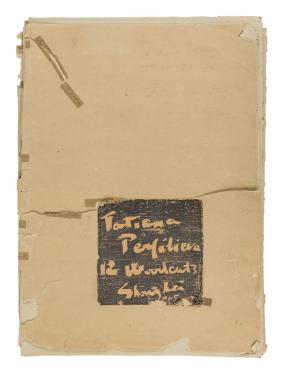
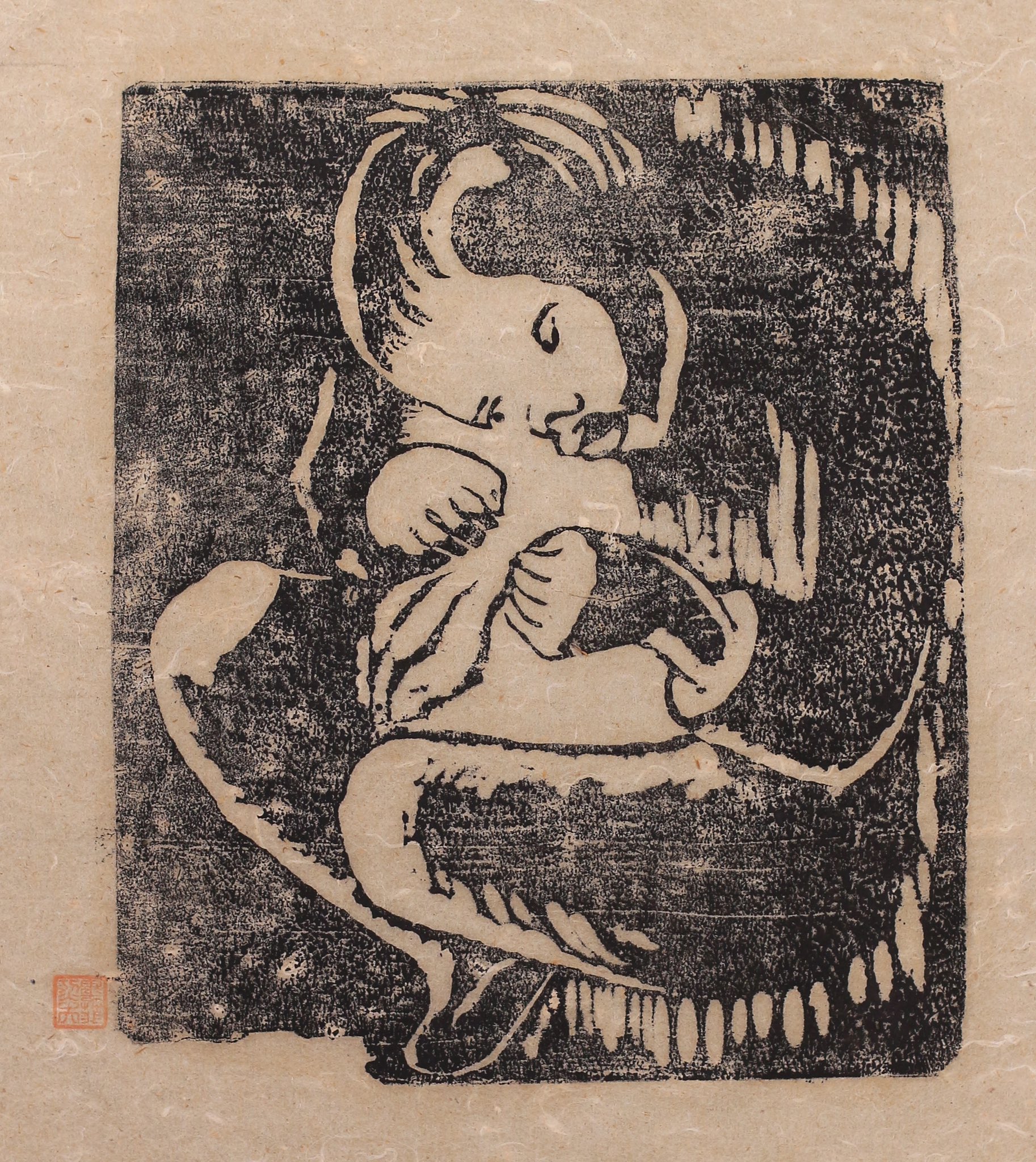
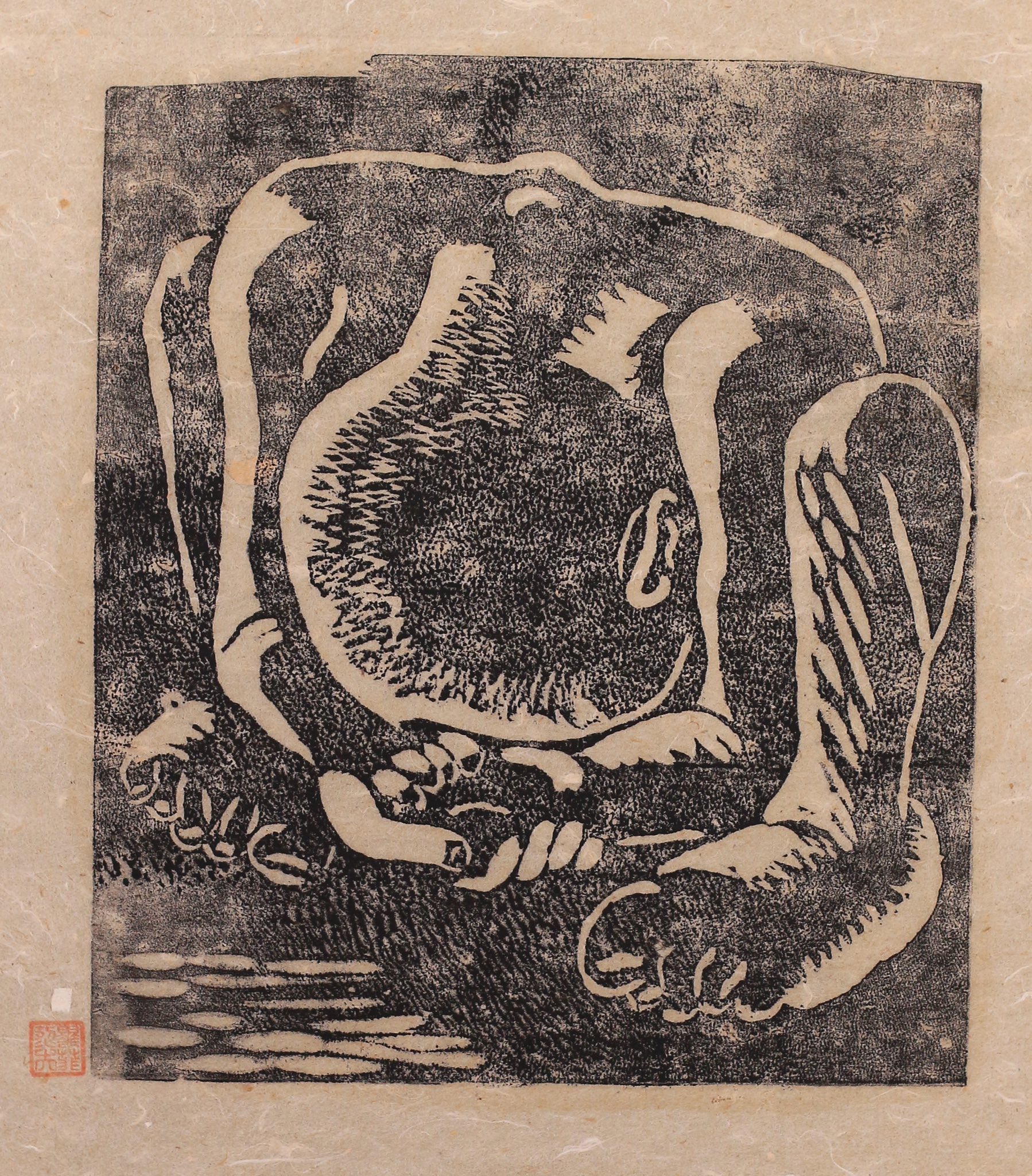
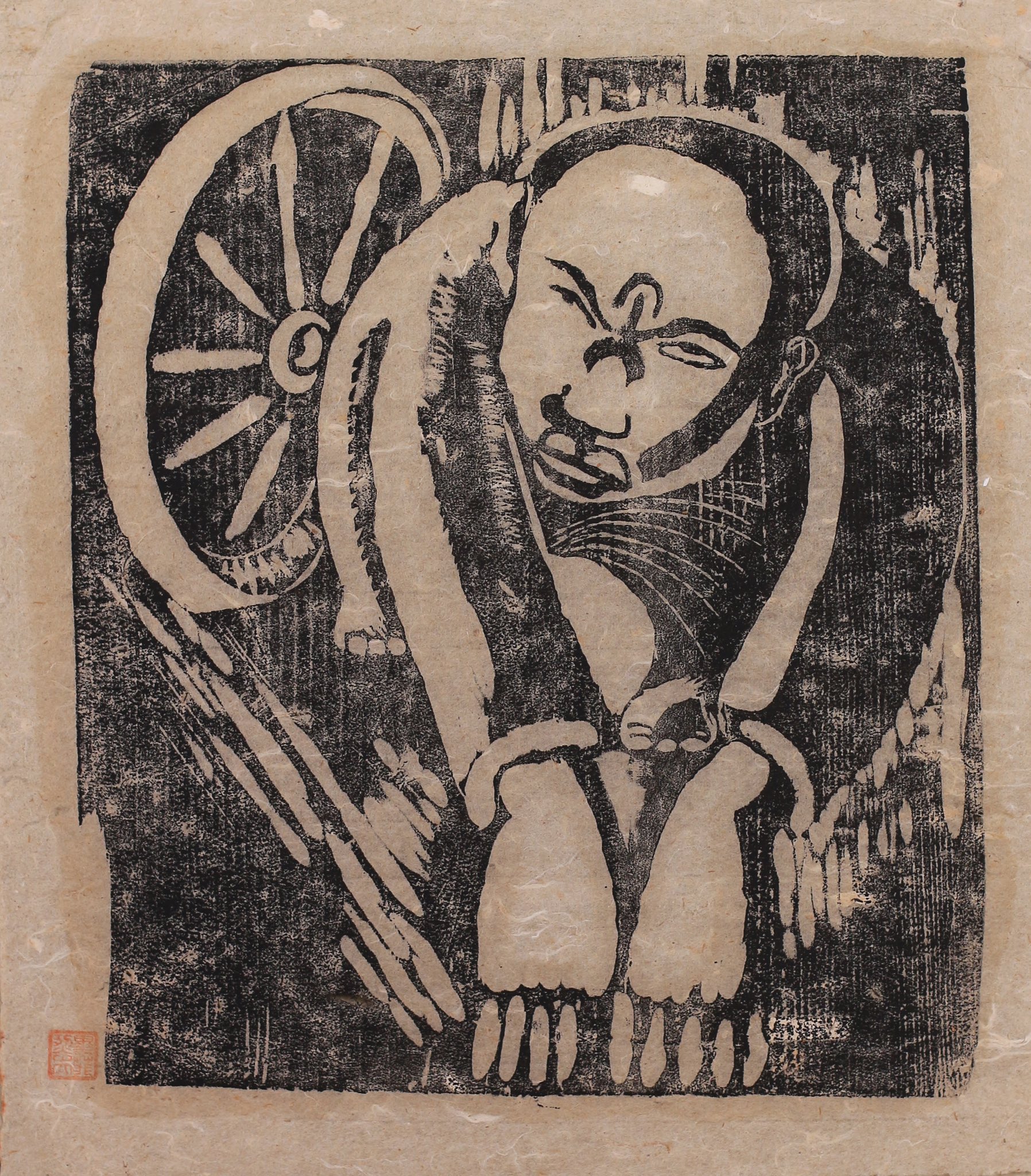
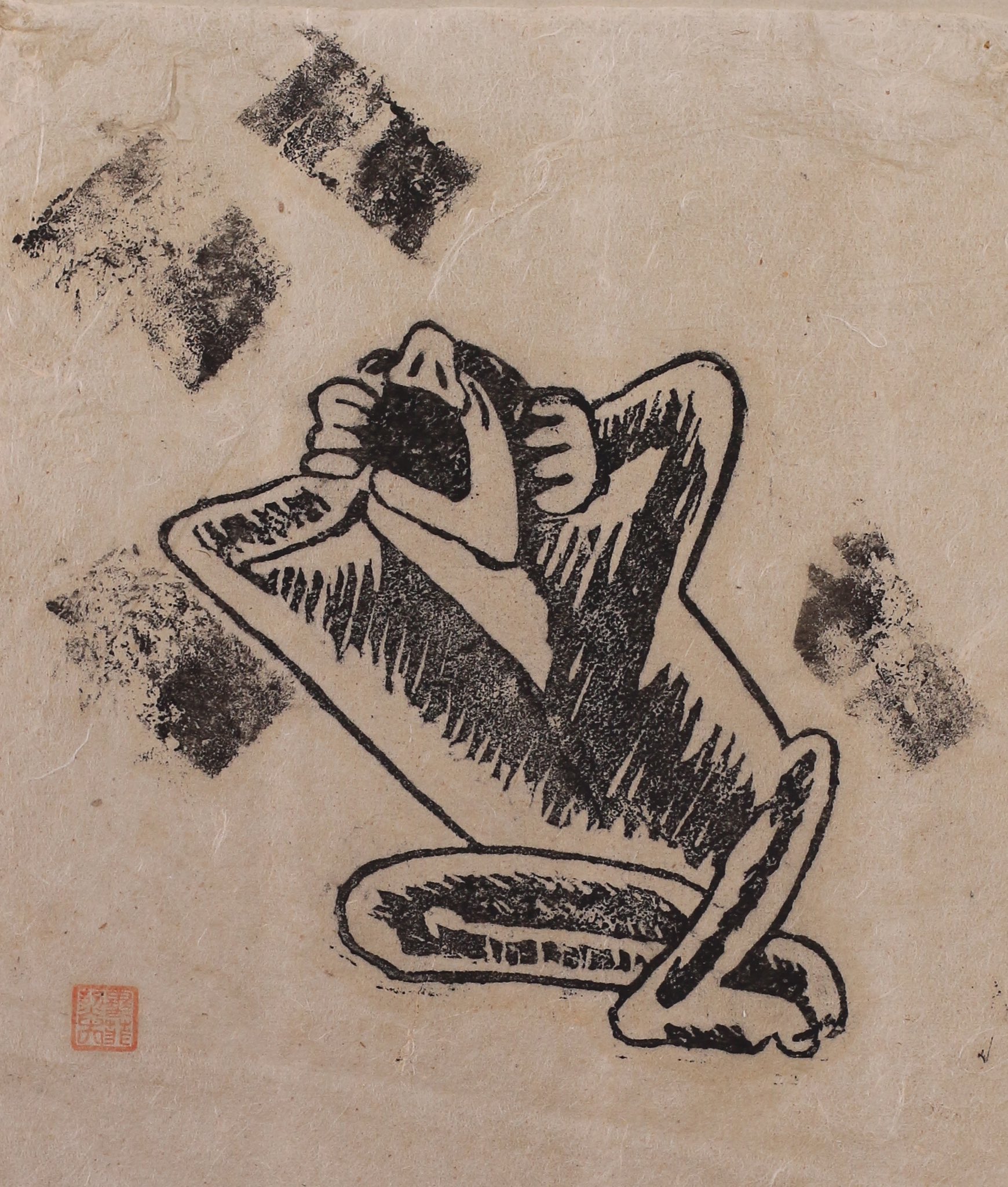
Apparently, Tatiana Perfitieva was a Jewish Russian emigre in Shanghai. During the war she produced a number of startling woodcuts that show the anguish and horror of the conflict in China. They are woodcut plates on rice paper, tipped to thick backing paper, signed in pencil by the artist, along with a Chinese chop in red. I am afraid I know nothing else about the artist, her background or experiences in China, so any information welcome….
30 June will mark two years since China passed its draconian national security law on Hong Kong. In our latest issue, Evan Fowler looks at ‘the regression of Hong Kong’s freedoms under Beijing’s rule’ but also the deep-standing inequality that has always plagued the city state. In his review of Mark L. Clifford’s Today Hong Kong, Tomorrow the World: What China’s Crackdown Reveals about Its Plans to End Freedom Everywhere, Fowler highlights both the colonial underpinnings where ‘London and Beijing are shown to be distant masters, with Hong Kong and its people perpetual colonial subjects’ and an elite who, ‘highly sensitive to where power lies, have seamlessly switched to serving their new masters.’ What has been lost, ultimately, are more freedoms.

Where do diminishing freedoms leave artists? An interview with the indomitable Chinese writer Yan Lianke might offer some hope. Once a soldier and propagandist, Yan is now one of China’s most controversial and celebrated writers. Despite the censorship of his work within his own country, he says: ‘I am glad that I became a professional writer, which has meant no longer having to live a life in which I am one person by day and another person by night.’
Why does Singapore remain so stubbornly attached to the death penalty? Ken Kwek profiles the journalist Kirsten Han, who lives a second life as an anti-death penalty campaigner. As much as her work focuses on legislative change, it’s a job that entails the gruelling emotional labour of ‘offering solace to those dreading an imminent execution.’ And it has carried no small price for Han whose ‘willingness to criticise laws she views as regressive or unjust within a climate of growing authoritarianism has repeatedly placed her in the crosshairs of powerful figures.’
| Also in this issue, Rowena Abdul Razak offers a tribute to her extraordinary uncle: a Penang boy who grew up to be a couturier in Paris. Greg Lockhart reviews a book on Australian foreign policy since the Second World War. Thomas A. Bass considers the role of photography in the Vietnam War. Yuan Yi Zhu ponders the usefulness of China’s aggressive brand of diplomacy in his review of China’s Civilian Army: The Making of Wolf Warrior Diplomacy. Rhoda Feng tells the remarkable story of the development of the Chinese typewriter. Ally Le reviews the long-awaited translation of Chinatown by the Vietnamese novelist Thuận. Xu Xi on the quinessential Hong Kong writer Dung Kai-cheung. |
| And for those who remain home-bound, Khan Sokummono meanders through Phnom Penh’s hidden laneways in search of a book while Pim Wangtechawat speeds through Bangkok’s sois to introduce a new love to a favourite delicacy, Nick J. Freeman takes a ride on the new train line linking China to Laos, while Sam Vincent takes us to his farm in Australia. |
| Plus, poetry by Abrona Aden and Anthony Tao and a short story by Calvin Godfrey. |