Posted: October 16th, 2016 | No Comments »
I wouldn’t even suggest anybody set out to look for this village now – long, long gone – but just about there in 1945 when Edward Ward passed by on the river and took this picture for his book Chinese Crackers (1949).

Posted: October 15th, 2016 | No Comments »
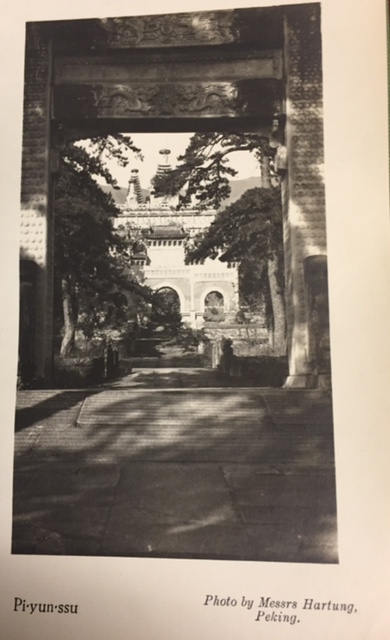
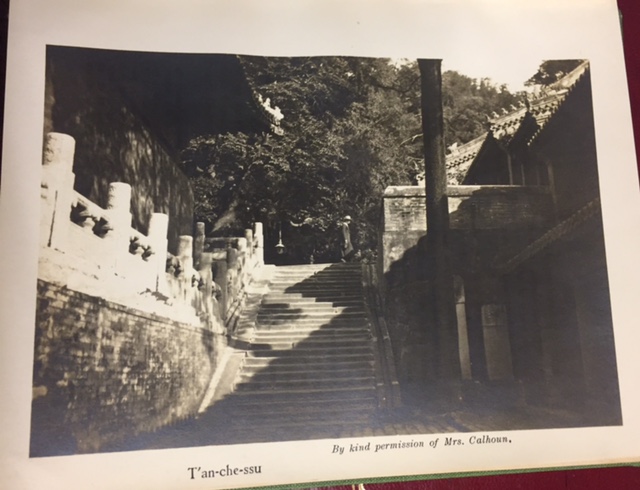
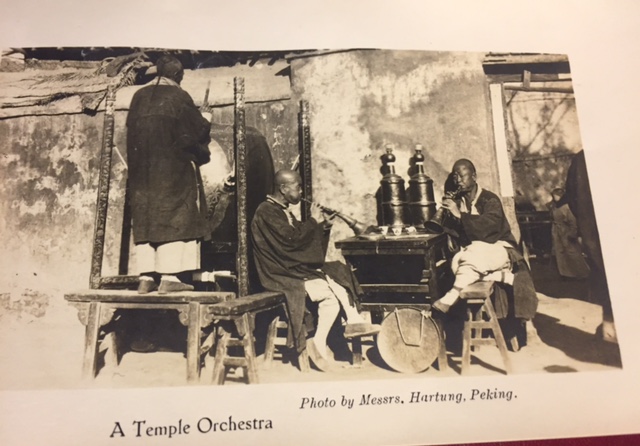
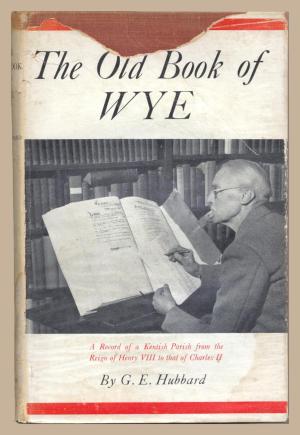
Gilbert Ernest Hubbard’s The Temples of the Western Hills is a lovely classic published in 1923 by La Librairie Francaise of Peking and Tientsin. Hubbard (1885-1951) was a British diplomat, mostly in the Near and Middle East. Following a spell at the Foreign Office he became Private Secretary to Sir Hamar Greenwood, Secretary of State for Foreign Affairs, subsequently taking up the position of First Secretary at the British Legation in Peking. He then acted as diplomatic agent to the Hong Kong and Shanghai Bank (HSBC) before becoming Far Eastern Research Secretary at Chatham House (I bet they don’t have that job title anymore, more’s the pity), followed by a second spell at the Foreign Office during the Second World War. During his Peking time he clearly took an interest in the Temples of the Western Hills. In retirement he wrote local history of the area in Kent where he settled (hence the cover below which is the only picture I have of him, obviously some years after his Western Hills adventures). The Librairie Francaise was, I think, the imprint of Henri Vetch in Peking (who I’ve blogged about before).
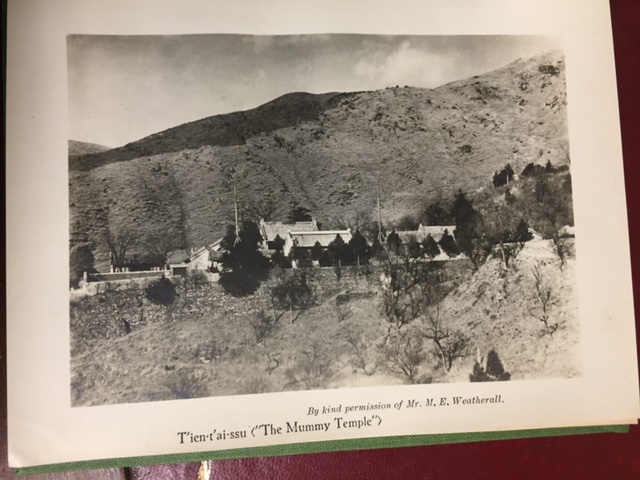
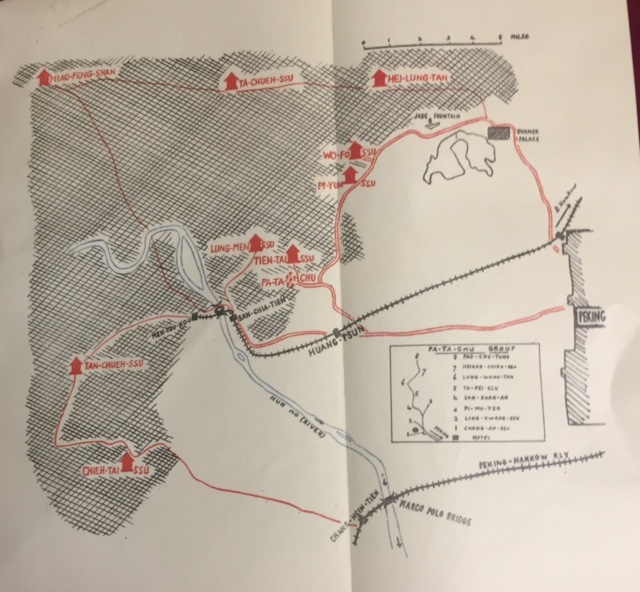
Here are some pictures from the book and a useful map of the temples – some modern day Beijinger may care to tell me which, if any, have survived? You’ll note that two of the pictures below are from the famous German-run Hartung’s photographic studio, which was in the Legation Quarter and in the 1930s employed Hedda Morrison as manageress. Additionally one is by Mrs Calhoun, who is Lucy Calhoun, former wife of the American Ambassador who returned, after his death, to Peking to run a popular and charming guest house in a siheyuan courtyard house. Mr ME Weatherall who took pone of the pictures was a long term employee with the Maritime Customs in Peking.
Posted: October 14th, 2016 | No Comments »
I’ve blogged repeatedly about the ongoing destruction to the Rue du Consulat (Jinling Road) area of Shanghai’s former French Concession. In my opinion the planned tearing down of much of the street, even if some facades are kept, is especially criminal as it is the last extant colonnaded street in the former French Concession. But Shanghai’s disastrously panned gentrification by bulldozer strategy (courtesy of the alliance of Communists and property developers) respects nothing historic or beautiful.
Here though is a picture I believe to have been taken on the Rue du Consulat around 1945/46 – i.e. the Rue du Consulat survived war and the Japanese but doesn’t look likely to survive the CCP!

Posted: October 13th, 2016 | No Comments »
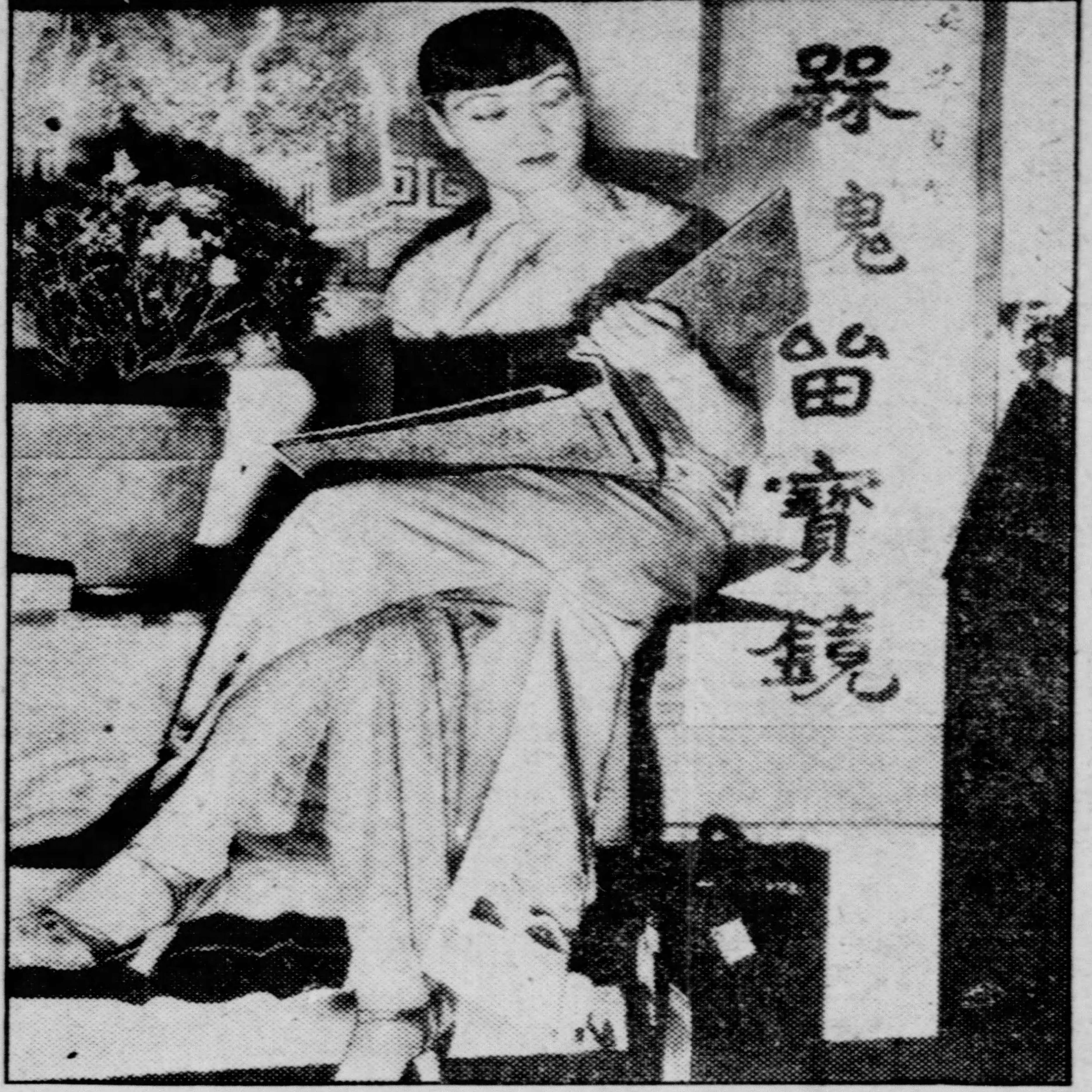
This picture of Anna May Wong ran in numerous US newspapers in early 1937.
If you think Anna May looks rather melancholy and a little sad in this picture you’d be right. She was fed up – with Hollywood and America. After not being cast in the Hollywood adaptation of Pearl Buck’s The Good Earth (German actress Luise Rainer got the part she wanted) she went to China for a year. But that wasn’t all great either as she met with many fans but also some protests about parts she’d played previously that some felt cast China and the Chinese in a poor light. When this photograph was released Anna May told the papers she was unhappy, thought it unlikely Hollywood would ever give her any positive or challenging roles and that she wanted to go back to China. Fortunately she didn’t, as several months later the Japanese invaded.
Posted: October 12th, 2016 | No Comments »
Women of the Chinese red Cross Medical Relief Corps (CRCMRC) pictured in World War Two…some severe bobs and rather jaunty caps in full effect….

Posted: October 11th, 2016 | No Comments »
Here a map indicating where China’s famous ‘400 million’ were concentrated in 1926….

Posted: October 10th, 2016 | No Comments »
In January 1937 the Nationalist Peking authorities launched a crackdown on opium – arresting dealers and parading addicts through the streets. The campaign included naming, shaming, forced institutionalizing, imprisonment and public execution for some (though not as many as originally suggested by the Nationalists or alluded to in the captions below – added by the American newspapers and/or AP). ‘Death to all addicts’ didn’t happened but many, hearing this, did seek ‘the cure’ – inevitably Peking’s hospitals and sanatoria (that look fairly bleak places) could not cope with the number of dopers who showed up seeking treatment. This time around it seems foreign dopers (of whom there were quite a few hid away around town) were not targetted.


Posted: October 9th, 2016 | No Comments »
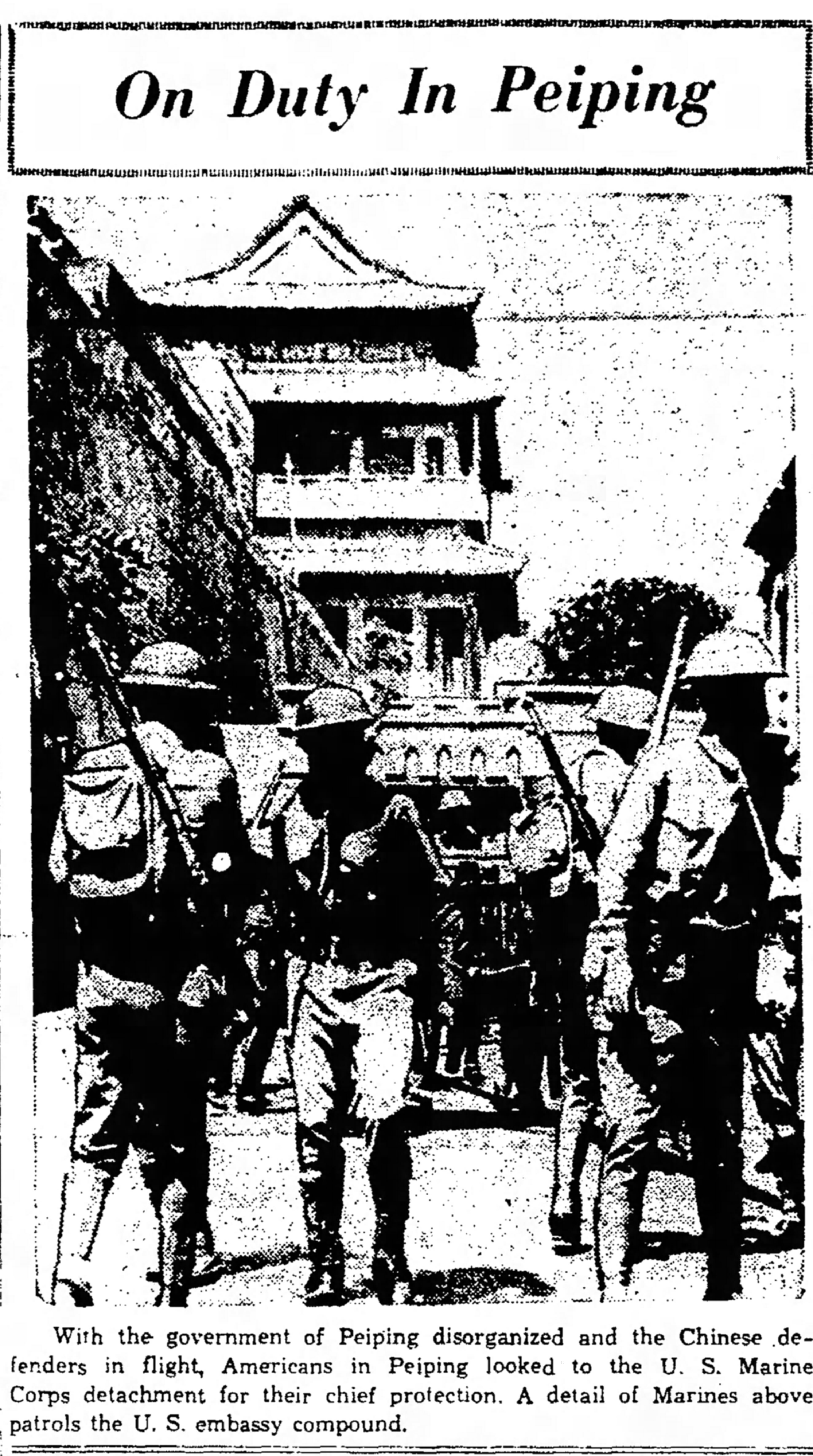
Japan invaded Peking in July 1937 but around 1,300 American citizens were left in Northern China. Most, without homes in Peking itself stayed in tents and temporary accommodation in the American Legation compound. The Compound, adjacent to what is now Tiananmen Square at the western end of the Legation Quarter, was protected by patrolling Marines in late July 1937….