Posted: April 21st, 2016 | No Comments »
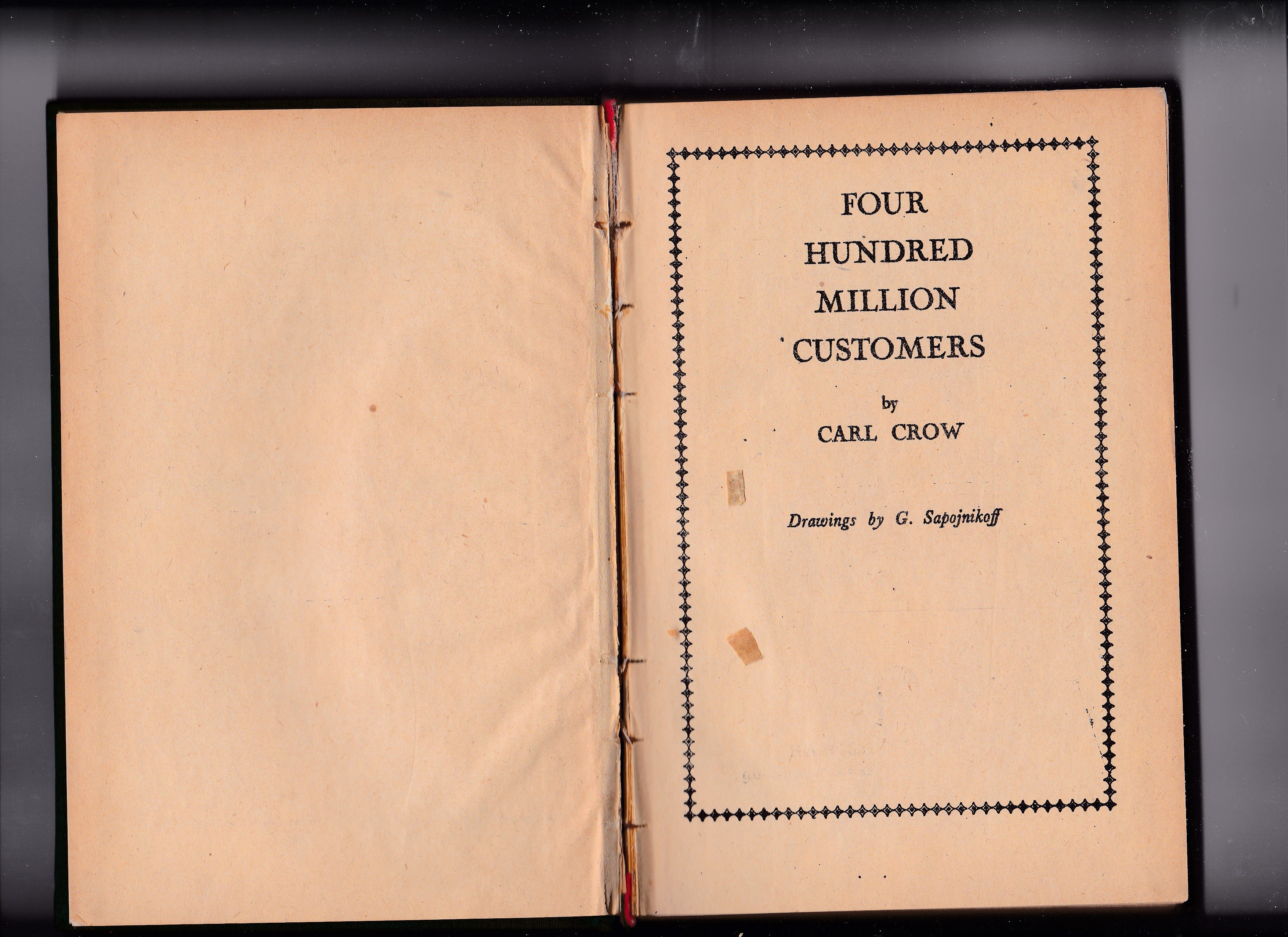
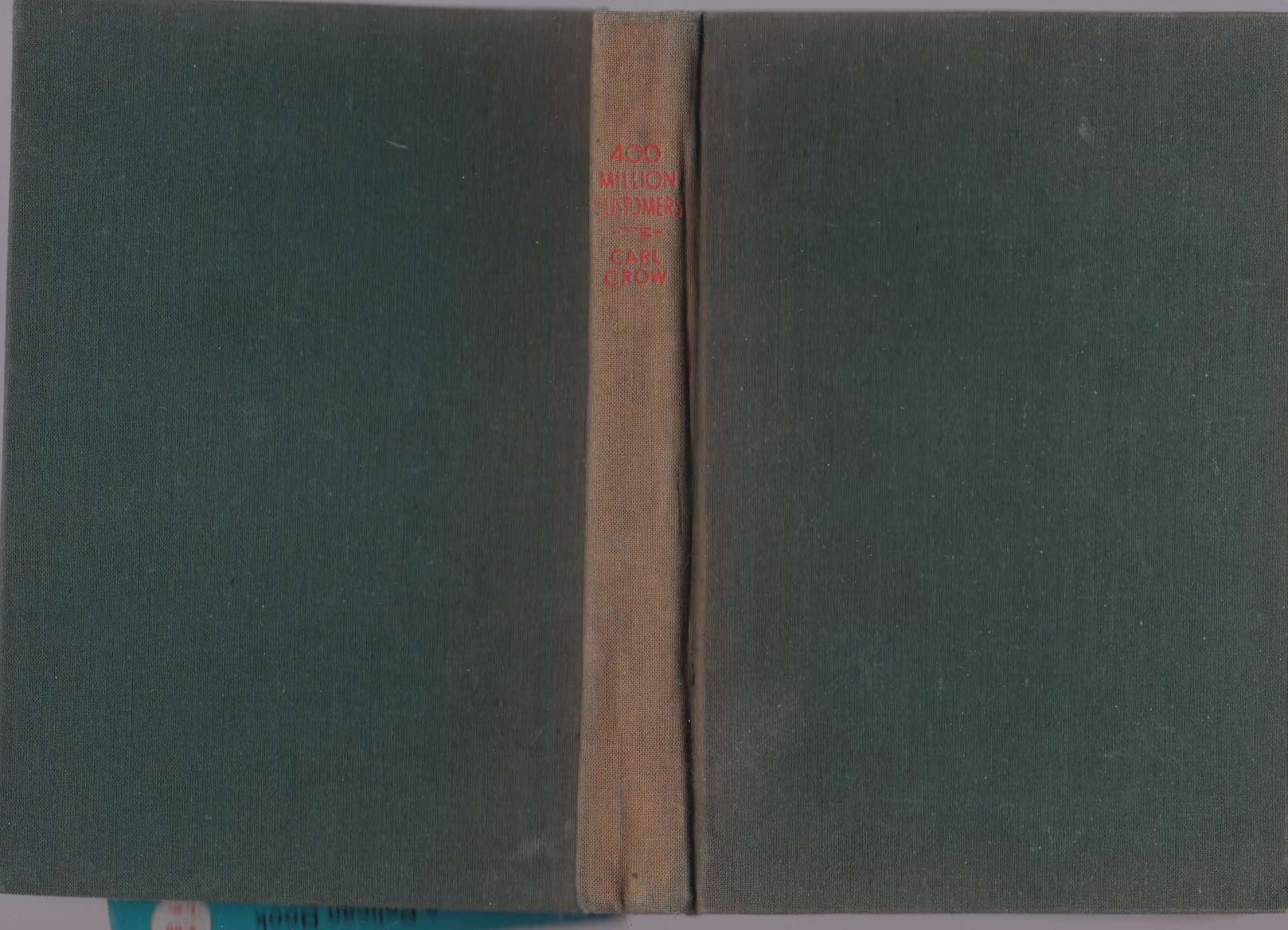
My thanks to bookdealer Joe McKernan for sending through some pics of this seemingly rare, and slightly mysterious, edition of Carl Crow’s 400 Million Customers. Perhaps someone out there knows a bit more…??
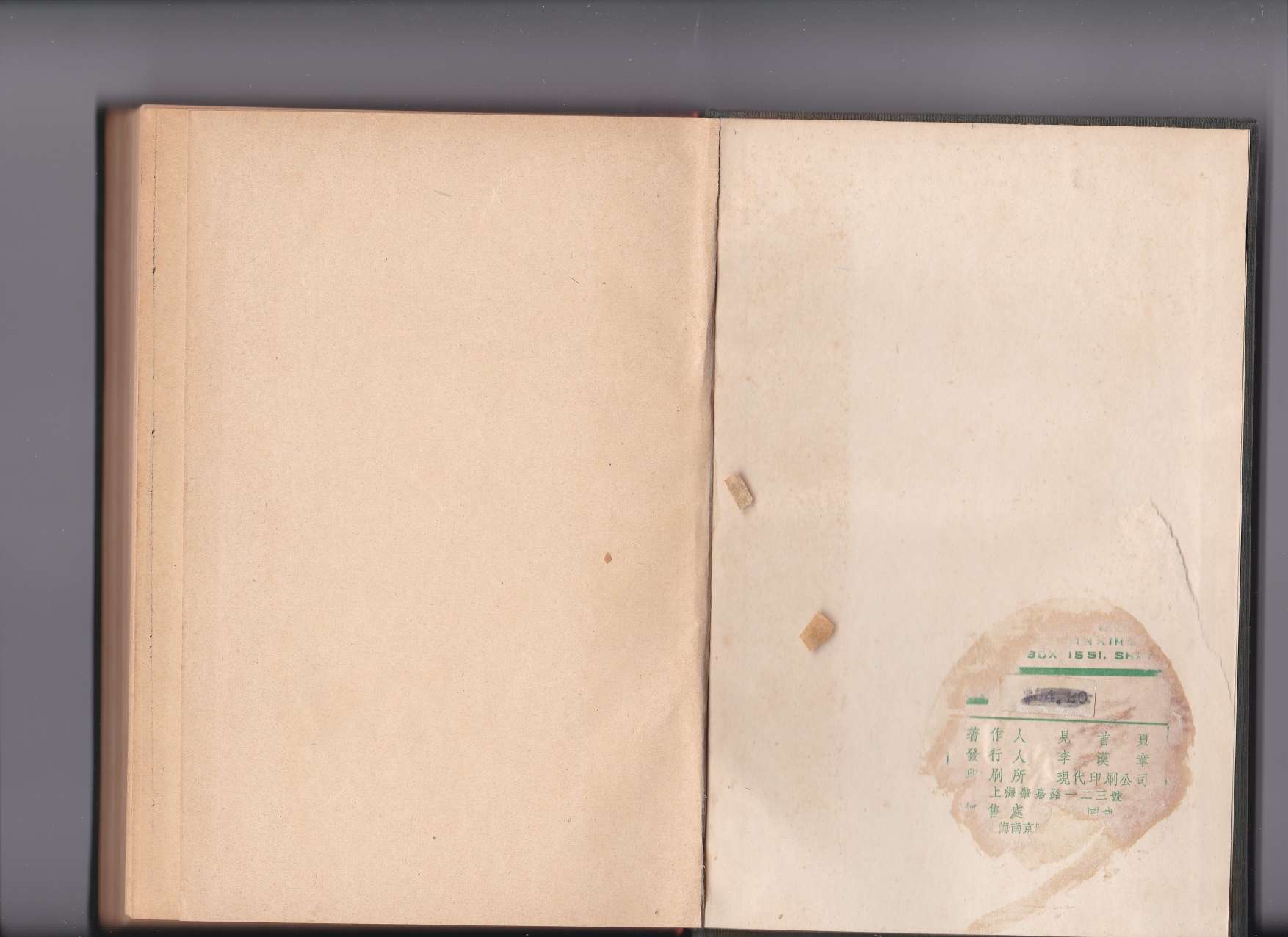
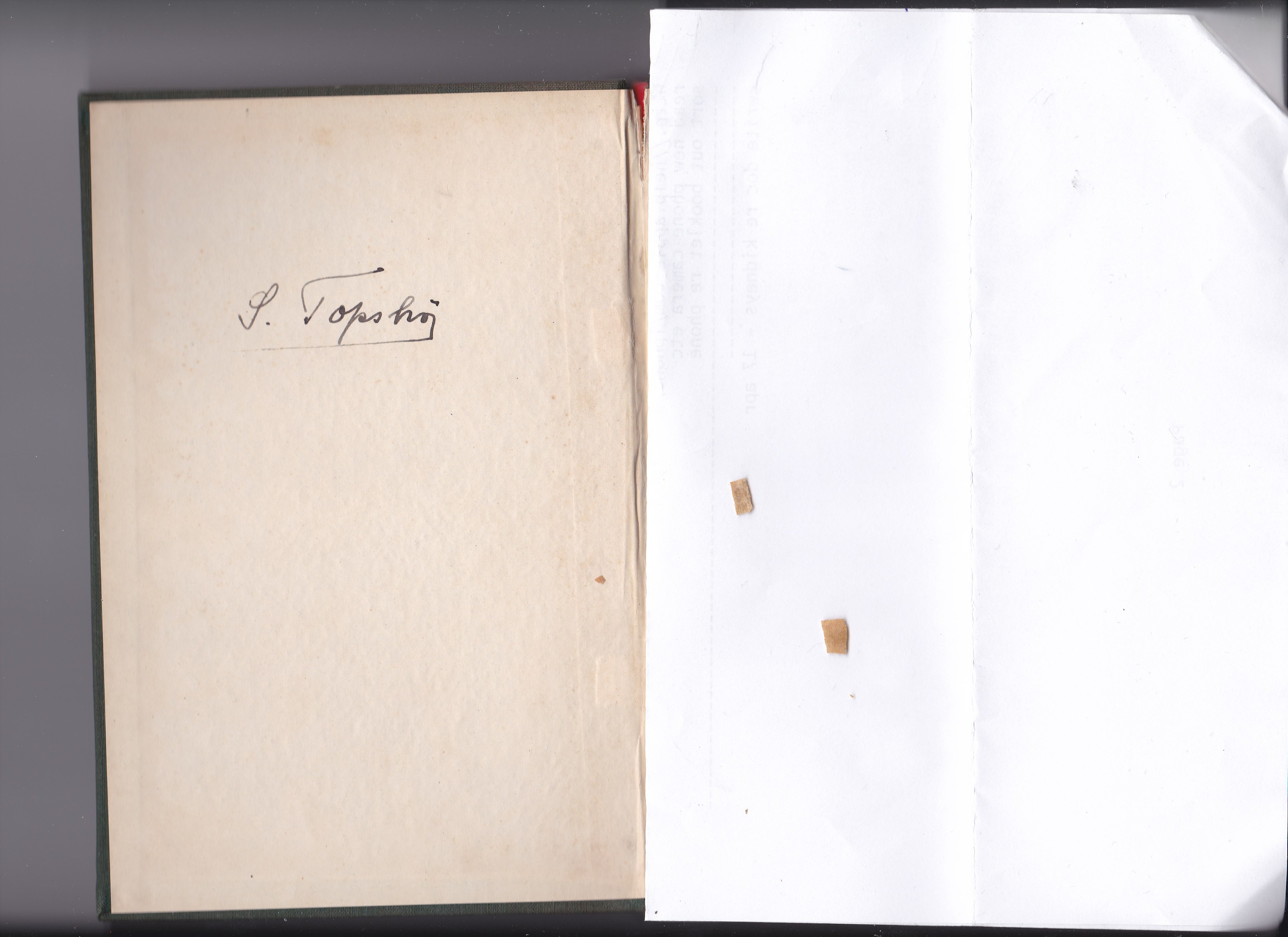
My best guess is that it is a print copy made in Shanghai shortly after the book’s initial publication (1937). According to the torn sticker in the book it was printed by a firm called Li Hanzhang, a firm I do not know (though possibly a derivation of the name of Li Hongzhang’s, China’s self-strengthening movement leaders, brother?). Their offices appear to have been located at 123 Huajia Road in Shanghai, which I cannot locate (there is a Hua Jia Road but it’s out in the Songjiang Industrial Estate and, I assume, of more recent construction and naming). The publisher also appears to have a branch in Nanking (Nanjing). The book was printed by The Modern Printing Company of Shanghai. It is a straight reprint of Crow’s 400 Million right down to the same page numbers, dedication and illustrations by George Sapojnikoff (aka “Sapajou”). The cost was $4.20 (i assume Chinese dollars pre-1949) and about right for a book at that time I think. The book was previously owned by someone who signed it, but I can’t make that signature out I’m afraid.
Any ideas, leads? I’d love to know…
Posted: April 20th, 2016 | 1 Comment »
Interesting news that a hotel group is developing a hotel in a shikumen – press release here, indeed in the largest remaining cluster in the old French Concession. While the press release contains rather a lot of bluster about the buildings and a few inaccuracies as to their date and origins (while making no mention of course of the fact that this project is only rare because of the mass destruction of Shanghai’s traditional architecture) it does note that the original builder of the development was the French company Fonciere et Immobiliere de Chine. The project, Jian Ye Li, is a 463,000 square foot redevelopment project (basically encompassing the French Concession’s largest remaining cluster of shikumen) that began in 2011 and overseen by Portman, who Shanghai architecture fans will probably know with some stomach churning.
Though described in the release as a ‘landmark of the 1930s’ the buildings were constructed, as with most shikumen, in the 1920s. As the development was in the French Concession the architect was French and the financier also French, Fonciere et Immobiliere de Chine. With the large-scale destruction of shikumen in Shanghai Jian Ye Li became a “historical preservation site” (in the case of Shanghai this does not mean preserving the former residents of course but “repurposing” their former homes and shops into high end redevelopments – residents from the Jian Ye Li site were relocated and compensated but there was resistance to both relocation areas and compensation amounts predictably). The site is on the far western side of the former French Concession, just off Hengshan Road (formerly Avenue Petain) by Jianguo Road West (formerly Route Frelupt) and not far from Xujiahui (formerly Siccawei). These properties were well built in general though had, as with most shikumen, deteriorated in recent decades (no room here to go into all the myriad reasons for that) though were hardly “squalid” as described by one property market analyst. There’s a property industry assessment of the project here that rather glosses over this aspect of the development – indeed seems to only worry that unhappy former residents protesting might be a bad thing and considered, “how this might affect the marketability of the residential units and leasing of the retail space.”
And so to the developer. There’s a rather detailed description of the Jian Ye Li development in Hanchao Lu’s Beyond the Neon Lights:Everyday Shanghai in the Early Twentieth Century. Fonciere et Immobiliere de Chine were big in Shanghai development in the 1920s, in the 1920s their share listing was greater than that of many of the other major players such as Asia Realty, Cathay Land and Metropolitan Land. They were, in capitalisation terms, the largest of the major developers in Frenchtown alongside Credit Fonciere d’Extreme-Orient. The company was established in Shanghai in 1920 with 2,000,000 taels ($2,800,000) in capital. As well as their own properties in the concessions they managed those of the International Savings Bank. Their main offices were at, the rather prestigious, number 7 Avenue Edward VII (Yanan Road now). BTW:Â there is a company called Fonciere et Immobiliere de Chine, still in existence; but I’m not sure they’re related as that appears to have been established in 1959.


Posted: April 19th, 2016 | 3 Comments »
Remarking yesterday on the foiled 1935 kidnapping of K.A.L. Suez in Shanghai, I noted that he was employed by Bills Motors, a Ford, Lincoln-Zephyr and Mercury dealership in the city who also dealt in Fiat trucks. So perhaps a little more…they were headquartered at 615 Avenue Foch (now Yanan Road) but with a branch in Frenchtown too. they were pretty swank with nice showrooms and fancy offices. As I’m away from Shanghai perhaps some flaneuring Shanghailander type can track the building down from the below and see if it still stands. The picture at bottom is after the war when the place appears to be shuttered and closed. The company was run by Freddie P. Bills. Bills, I think, returned to the USA during World War Two and shortly after the liberation of the city the company was looked after by a certain George Bourne. I believe Bourne was ex US Navy and treasurer of the American Legion in Shanghai but had been secretary and treasurer of the firm before the war. Bourne was married to Maurine and they lived in the French Concession where their kids attended the American School. Bourne’s wife and children left Shanghai for Berkeley in 1941.
The Bills Motors staff were an interesting bunch apart from Bills, Bourne and Suez, C. R. Shekury ran XU8CR, a ham radio station that allowed people to keep in touch in Shanghai. Shekury was praised for keeping the station up and running allowing people to get messages to loved ones and relatives in Shanghai after the Japanese invasion. Charitable chaps too, they made a regular donation to the Red Cross in Shanghai. Chester V. Manney was also a veteran executive of the firm, who had worked for Shanghai’s Hudford Motors in the 1920s, and an active mason in Shanghai. Manney married Mary A. Selezneff of Manila on New Year’s Eve 1929 and also worked in Hong Kong for Dodge & Seymour, a New York firm that sold cars and trucks all over Asia.


Posted: April 18th, 2016 | No Comments »
In 1935 Shanghai was in the grip of a kidnapping surge as the city’s economy slumped suddenly…this attempted kidnapping in Frenchtown however went very wrong…one Sikh watchman wounded; one gangster dead…The kidnapee “Kal” (actually his initials were K.A.L. – Kyeuyoong Albert L.)Â Suez went on to be quite a useful chap during the war developing a version of a flatbed truck that could withstand the terrible road conditions in Free China in 1941 and allowed guerillas to transport weaponry around the country. Suez was a lifelong motor guy – he’d worked as the Chinese sales manager and engineer for the Motor Management & Finance Co. in the city before becoming a manger at the A. F. & R. Service Co. At the time of the attempted abduction Suez was 30-years-old and Head Salesman for Bills Motors, a Ford representatives, in Shanghai. He also spent some time in the late 1930s living in Hong Kong, residing on Queens Road Central, after the Japanese invasion of mainland China.
Suez, was successful enough to have a chauffeur and was also a graduate of the University of Michigan (class of 1932). Digging a little deeper it seems Suez was a victim of mistaken identity, according to the French Surete in Shanghai. The kidnappers had been looking for another man who happened to live in the vicinity of where his car pulled up for a stop. Unlucky, but then rather lucky.

Posted: April 17th, 2016 | No Comments »
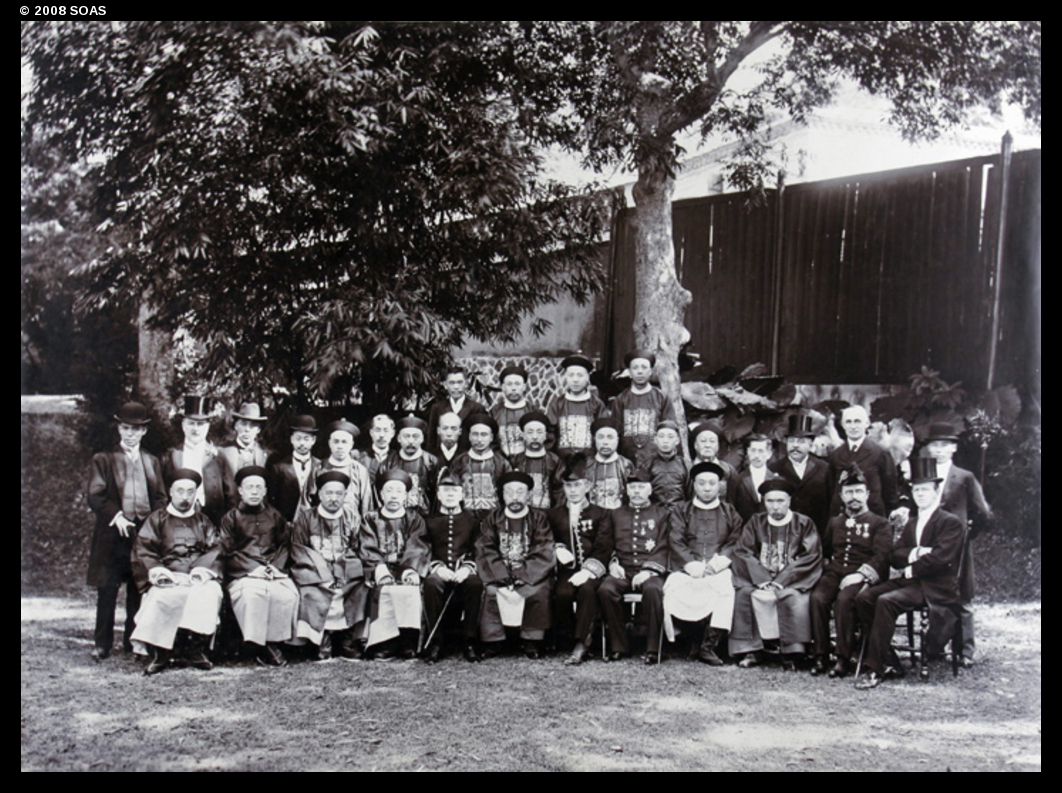
Readers of my book Midnight in Peking will be fully aware of who ETC Werner was – the father of the murdered girl Pamela Werner, killed in 1937 Peking. Here is a picture of Werner, while serving as a consul…he is front row, fifth from left with full dress and sword….
Posted: April 16th, 2016 | No Comments »
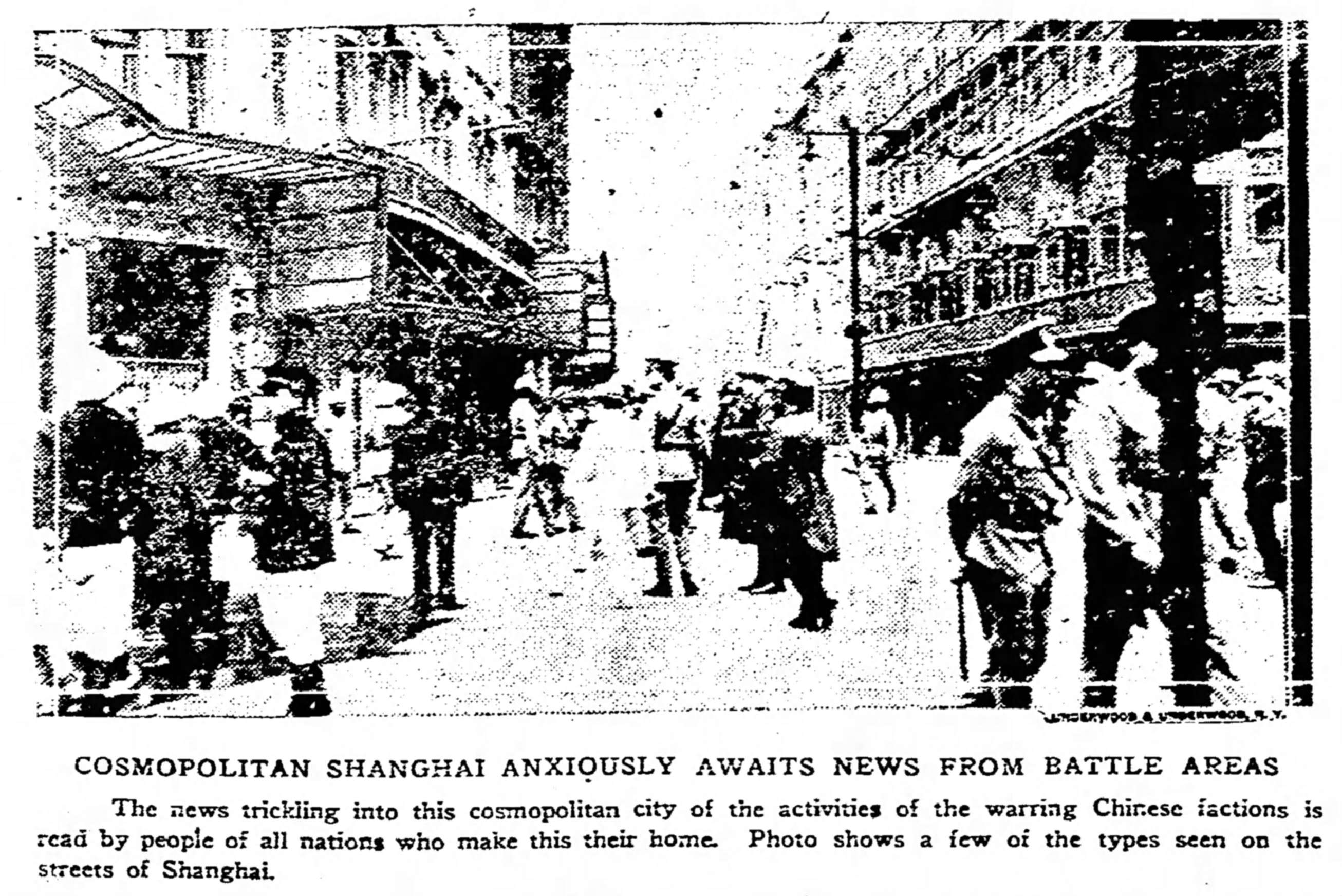
On March 21–22, 1927, KMT and CCP union workers led by Zhou Enlai and Chen Duxiu launched an armed uprising in Shanghai, defeating the warlord forces of the Zhili clique. The victorious union workers occupied and governed urban Shanghai except for the International Settlements prior to the arrival of the NRA’s Eastern Route Army led by Generals Bai Chongxi and Li Zongren.
This picture, relayed back to the world’s media, shows the heavy police and army presence on a Shanghai street in the wake of the uprising…
Posted: April 15th, 2016 | No Comments »
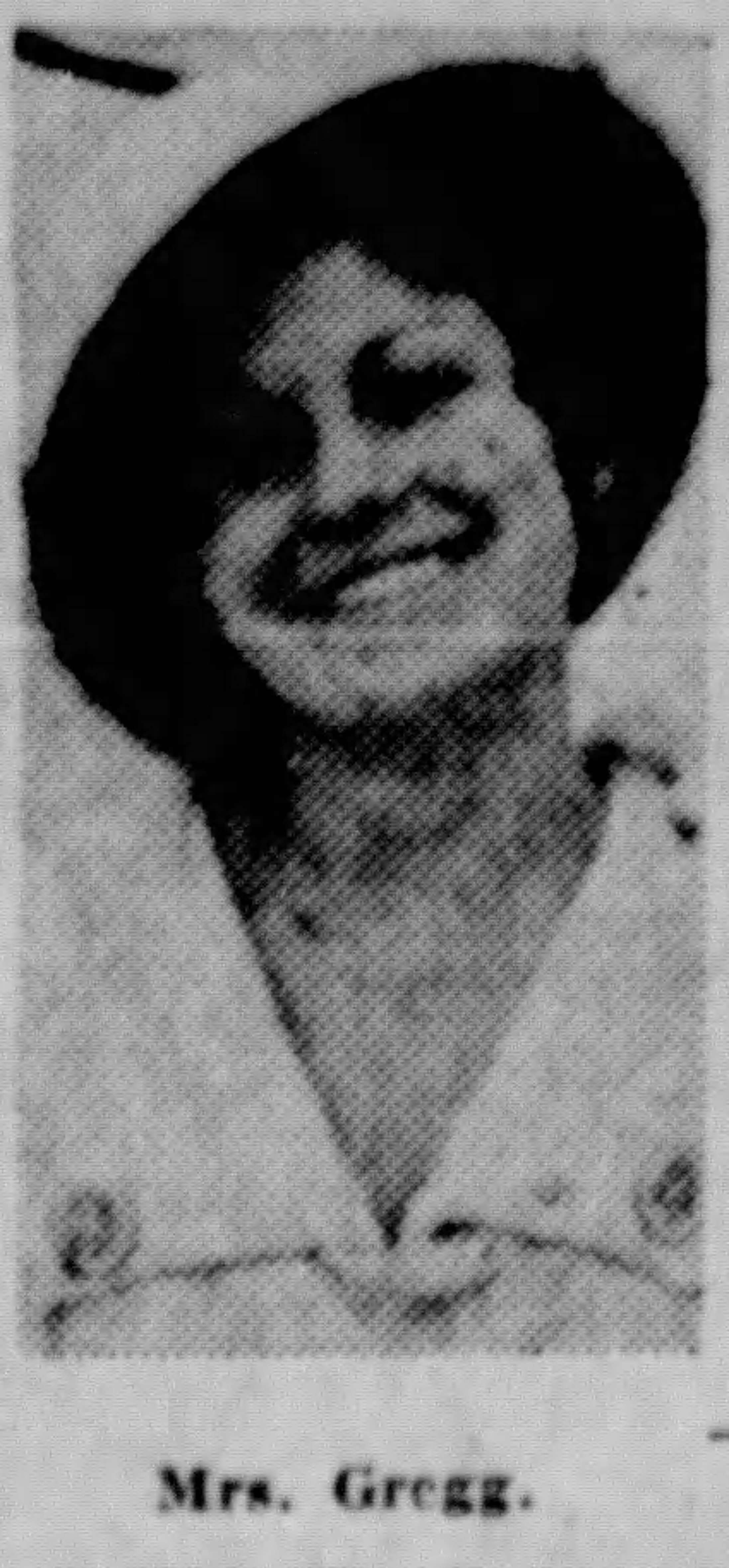
In April 1933 Ms Dorothy Mabry of San Antonio, Texas married Lieutenant Otis Cockerill Gregg Senior of Wayne, Nebraska in Shanghai. Otis was, at the time, serving aboard the Houston as a naval aviator, the flagship of the US Asiatic Fleet, stationed out of Shanghai. Apparently they honeymooned in Japan to see the cherry blossom. A year later the Gregg’s rotated out of Shanghai to Pensacola. They remained married for 62 years and had three sons, ten grandchildren and thirteen great grandchildren. The picture of herself Dorothy sent from Shanghai to Otis’s local paper The Lincoln Star (Nebraska) caught my eye as she looks so happy…
Posted: April 14th, 2016 | No Comments »
A lovely collection of photographs of Singapore’s Tai Thean Kew Chinese circus from Adele Wong, whose ancestors founded the circus in the 1920s…should be on your coffee table!
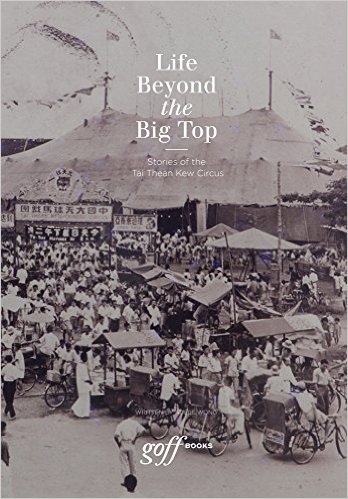
Life Beyond the Big Top is a photo book that captures the history of the Tai Thean Kew Circus, a once-great Chinese circus established in Singapore in 1929. Adele Wong’s ancestors founded the circus, and through her eyes we get a glimpse of an almost five-decade-long performing career
Life Beyond the Big Top is a photo book that captures the history of the Tai Thean Kew Circus, a once-great Chinese circus established in Singapore in 1929. The collection of old photographs and suriving props and costumes that makes up this visual documentation belongs to Sze Ling Fen and Wong Fu Qi, lead performers of the circus. Sze Ling Fen’s progenitors founded the circus, and through her eyes we get a glimpse of an almost five-decade-long performing career. Authored by their granddaughter, Adele Wong, be invited to visit her grandparents, listening and looking as the story about the humble beginnings of a pioneering, family-run Chinese circus unfolds.
Be transported to a front-row seat, viewing the dazzling circus acts and astounding animals at the peak of the circus success, before running offstage to join the circus folks in their nomadic lives and private adventures as they travel around the region. Discover the evolution of live performance shows after the end of the circus as these performers adapt their skills to changing demands. Finally, reminisce as we return to their present-day retirement and rummage through their collection of old performing items and costumes.