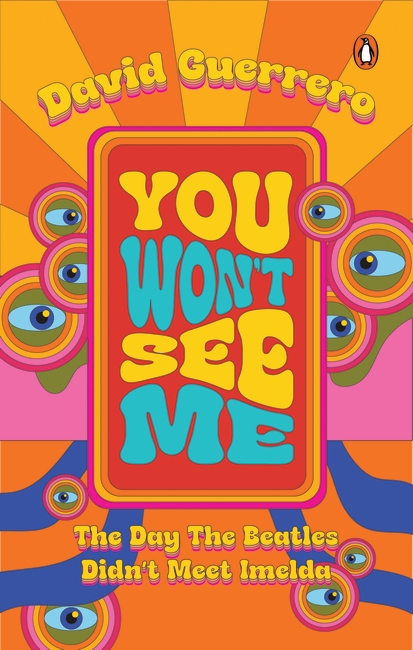
The Beatles, on what would be their final world tour, arrived in a place unlike any other. The Philippines was home to America’s biggest military bases in the region at a time when Vietnam was ramping up to its height. The Marcoses were photogenic, and on the surface at least, poster children for democracy: Ferdinand and Imelda were dubbed the ‘Jackie and JFK’ of Asia, by Life Magazine. The Beatles management saw the tour as a lucrative opportunity to open up new markets.
At some point before their arrival invitations were sent directly and via the local promoter, to lunch at the Presidential Palace. Whether those invitations were responded to or not is disputed. But when escorts arrived to get the band on the morning of July 4, 1966, their manager, Brian Epstein, refused to go. This did not go down well. Over 300 people, including Imelda and her family, were left standing on live TV.
Despite two large and successful concerts, official displeasure left the Beatles fearful for their security and desperate to leave. A torrid time at the airport at the hands of Palace guards left them swearing never to return – and determined to end their touring career. Initially, the band distinguished between the fans and the officials but later they all got lumped together into one ‘bad’ experience. The Beatles went on to greater creative heights as a studio-based band. The country, so little known in the West, became defined by the story.
Ask yourself – have I got all 5 “China Revisited” concise historic reprints of travel writing on Hong Kong, Macao & southern China ranging from the Victorian era to the 1930s complete with illustrations, annotations & introductions? And if not, why not? And how soon can I get them from Blacksmith Books, Bookazine or my kocal independent bookshop? Christmas is coming!! Remember the China Hand in your life….
Out now from NYRB Classics – Time Tunnel: Stories and Essays by Eileen Chang, translated from the Chinese by Karen S. Kingsbury and Jie Zhang…
Time Tunnel offers a new selection of stories and essays, some translated for the first time into English, drawn from every stage of the career of the great Chinese writer Eileen Chang, from her debut in Japanese-occupied Shanghai through her flight, following the Revolution, to Hong Kong and America, to her last years as a bus-riding flaneuse on the highways and byways in Los Angeles.
“Genesis,” left out of the two volumes of stories with which Chang made her name in the 1940s, shows her transfixing eye for visual detail and aptitude for brilliant verbal description, even as it looks forward to the improvisatory, open-ended approach to narrative she developed in later years. “Blossoms Afloat, Flowers Adrift” addresses the perils and uncertainties—the vertigo—of exile, while in the late masterpiece “Those Old Schoolmates They’re All Quite Classy Now,” Chang looks back across the better part of a lifetime to the world she came from and the changes that have come with the years.
Essays like “Return to the Frontier” and “New England Is China,” both written in English, broaden our wonder at the effervescent and melancholy genius of a transformative modern writer.
Don’t have a date for this leaflet that outlines Macao’s history as a Portuguese colony – probably 1950s or 60s. It does, like the guidebook posted yesterday, contain a George Smirnoff painting, this time of Sao Domingos Church….
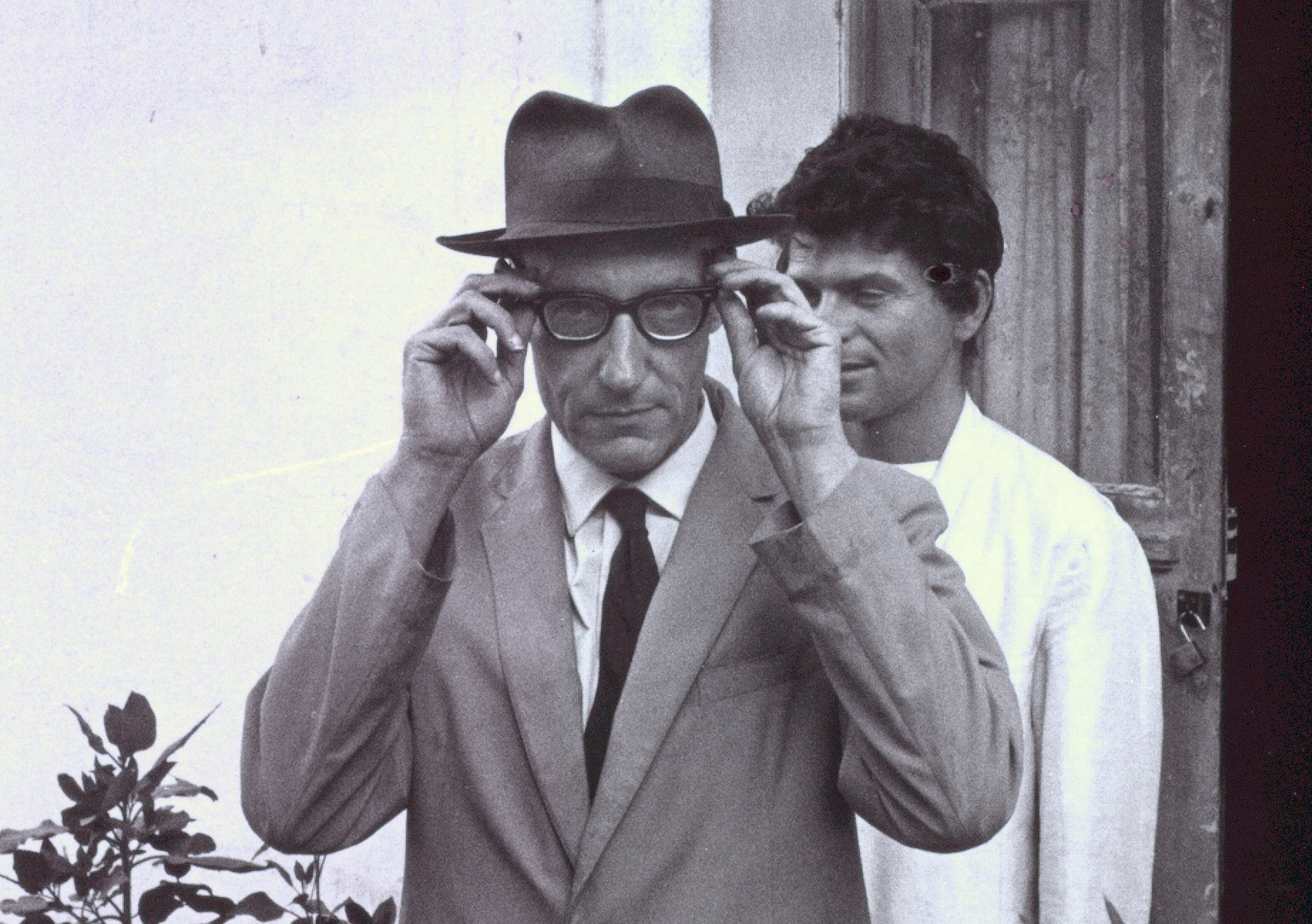
William S Burroughs, primary figure of the Beat Generation, modernist/post-modernist writer, a massive influence on both underground and popular culture and literature – and a man who like Interzones. Indeed his collection of short stories and other early works from 1953 to 1958 is called Interzone, and is the product largely of the time he spent living in the International Zone of Tangiers. He had already written Junkie, he had already killed his first wife in Mexico City and then drifted through South America. he then headed to Tangier, inspired by Paul Bowles’s writing. He spent four years there working on the fiction that would later become Naked Lunch, as well as attempting to write commercial articles about Tangier.
John Hopkins was a young American also trying to write in Tangier. He met Burroughs, as well as Bowles and other Tangier-ites (Tangerines) in the International Zone in the in the 60s when Burroughs was bouncing between London, New York, Paris and Tangiers. Hopkins was obsessed with Tangiers an d Burroughs as well as Paul and Jane Bowles and others that comprised “literary Tangier”. Hopkins recalls one conversation in his memoir The Tangier Diaries:
‘Burroughs, monkish in his black suit and skull cap, moaned, “If this were the 1930s, I’d be in Shanghai.” Paul Bowles replied: “Tangier is out of the mainstream. It’s a backwater. It has changed less than most places, or is changing more slowly.” Grumbled Burroughs: “Tangier wins by default.”
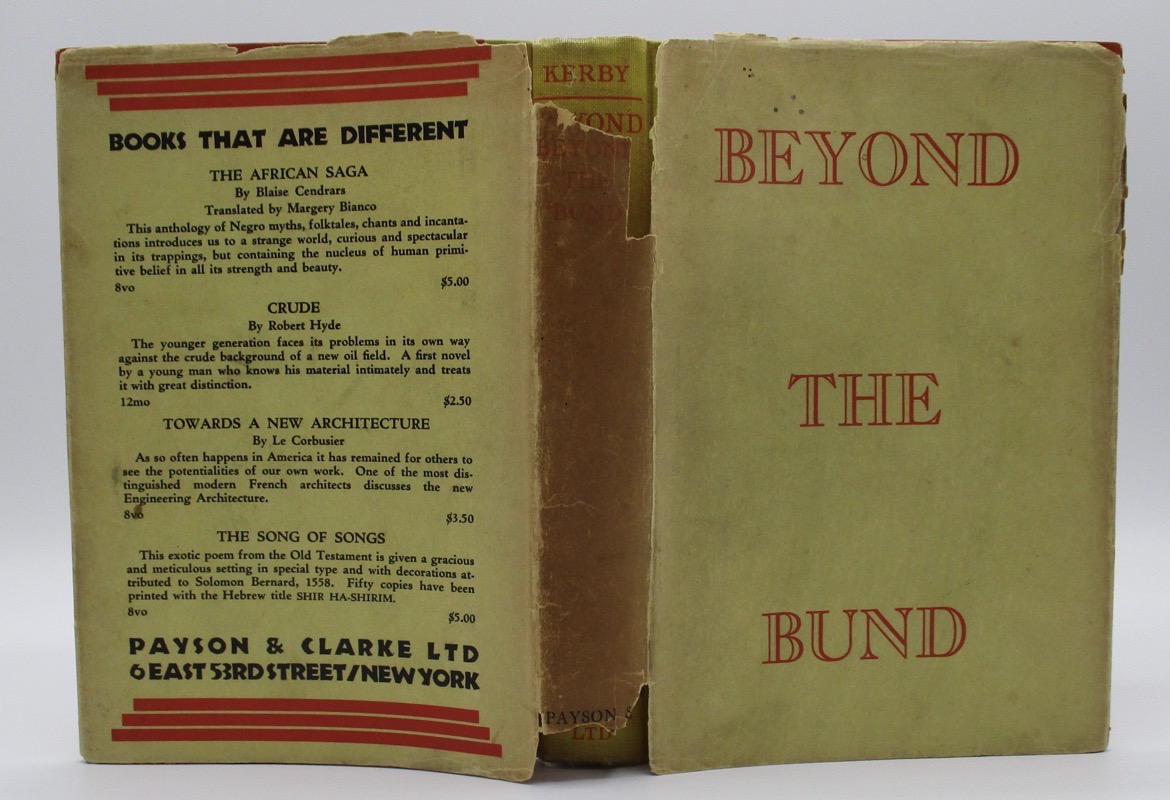
Philip Kerby‘s Beyond the Bund (you can download the whole book as a pdf here), published in 1927 by Payson & Clarke. Kirby was the husband of Kate Kerby, mentioned yesterday, and her book An Old Chinese Garden’s dedicatee. I know little about the Kerby’s except that they must have lived in Shanghai (Kate’s publisher was based in Shanghai) and were most probably Americans (Philip’s publisher was American). The New York Times quite liked it…. but The New Yorker thought it “dullish”.
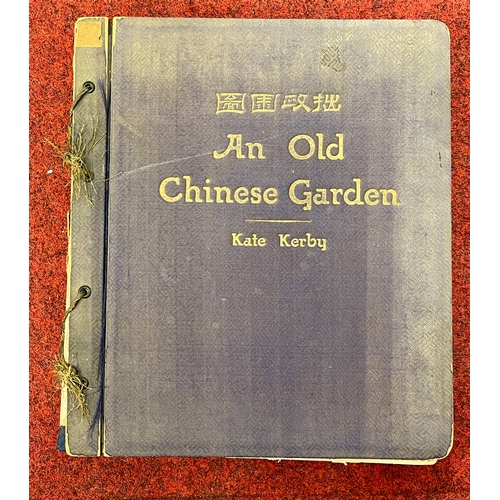
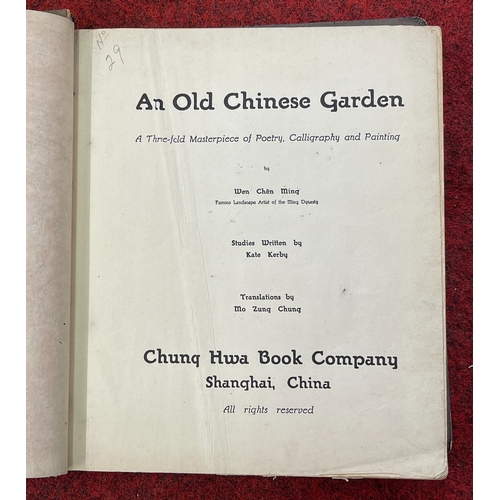
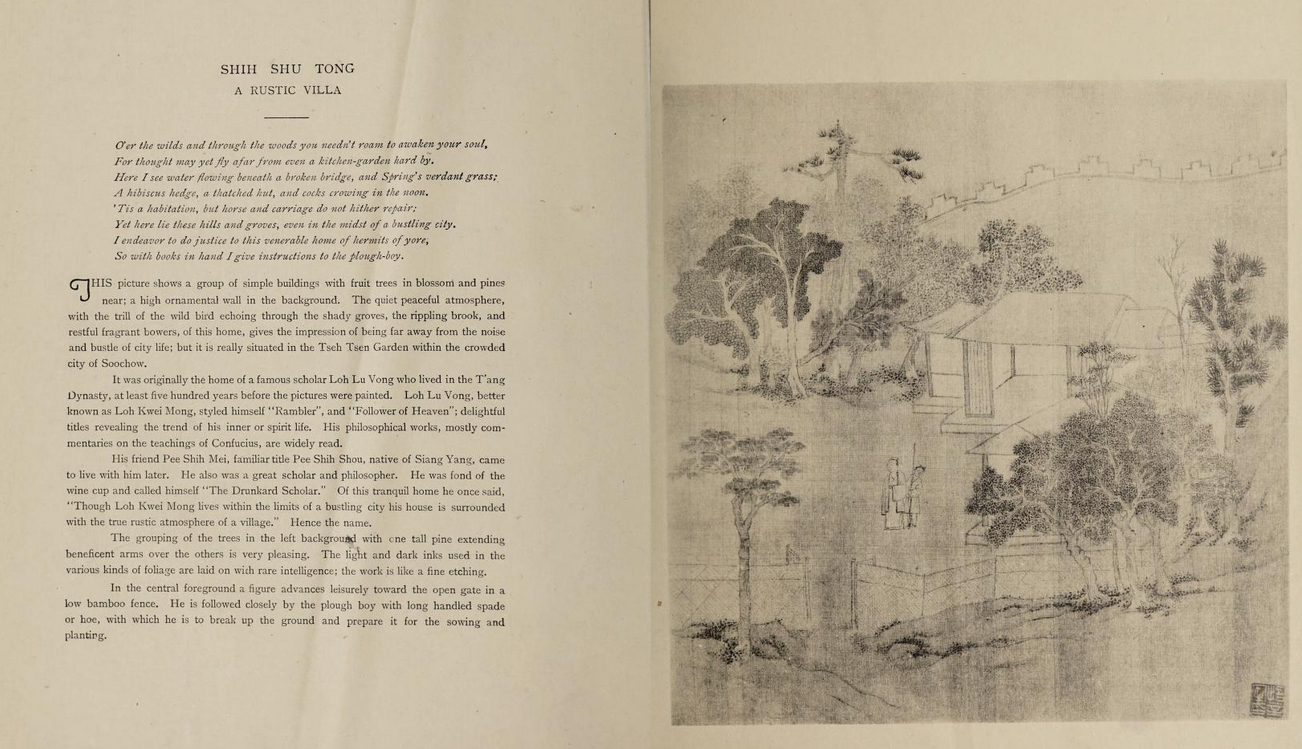
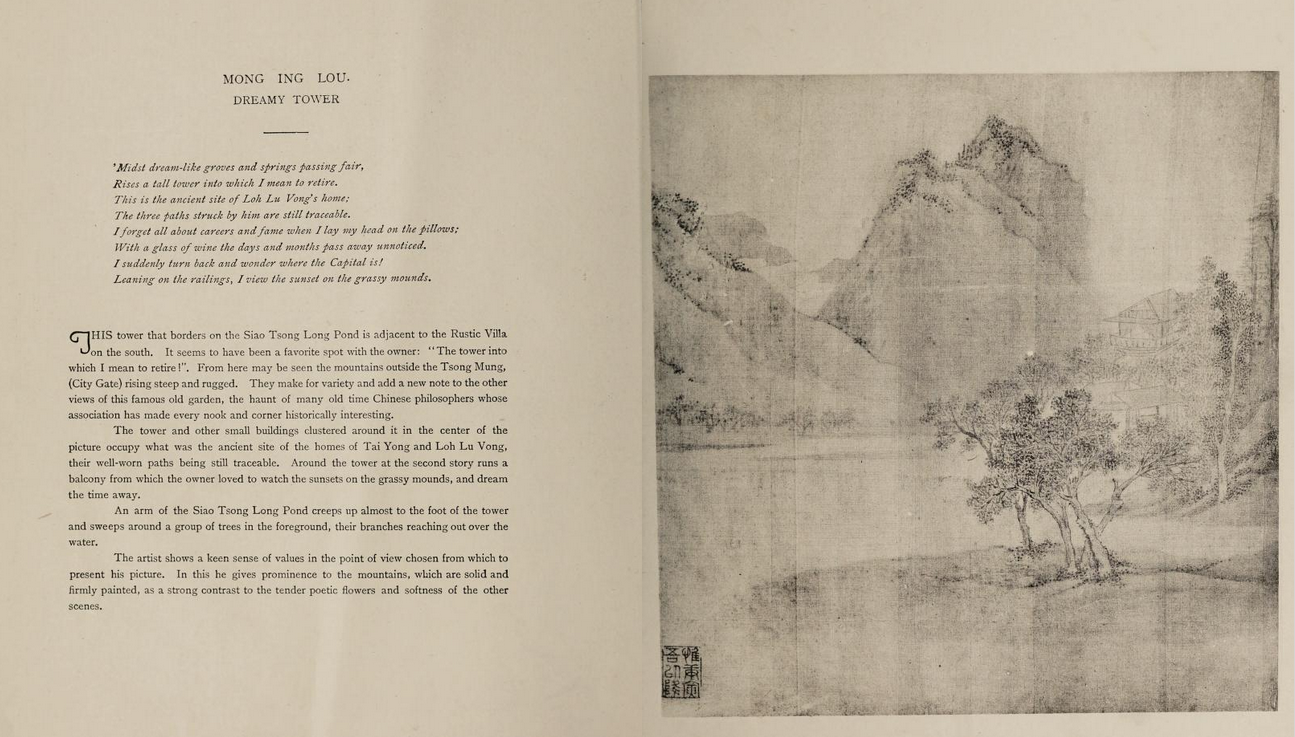
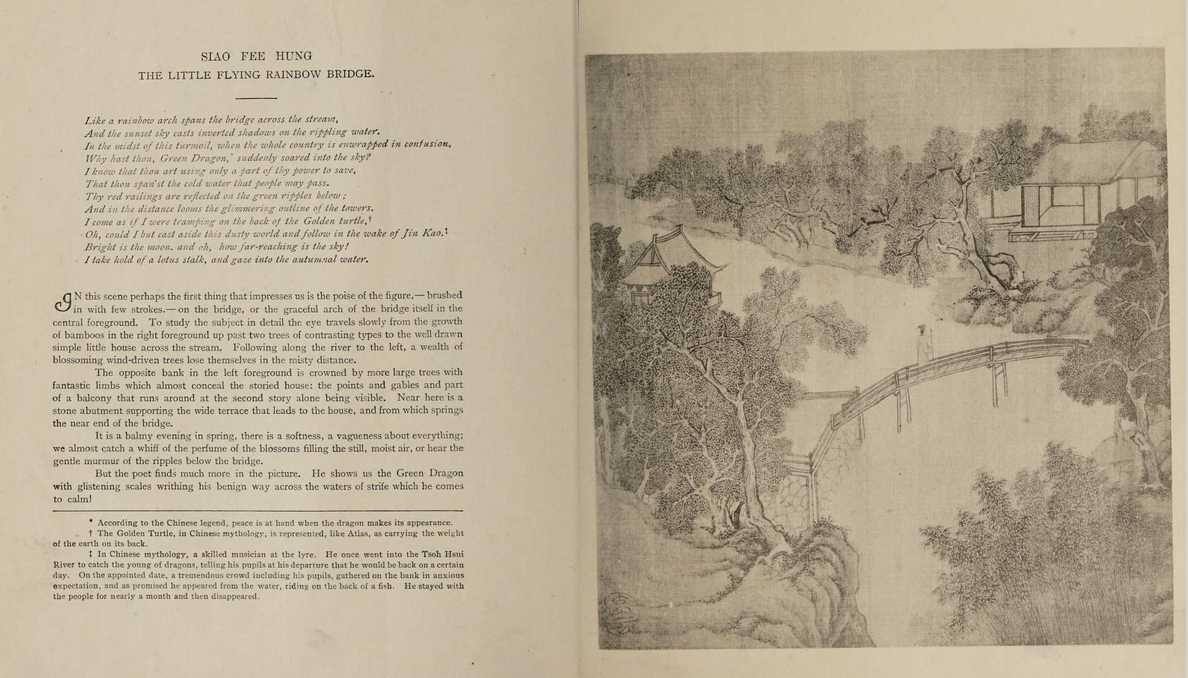
An Old Chinese Garden – a 3-fold work of poetry, calligraphy and painting – Calligraphy and Painting by Ming dynasty artist Wen Chen Ming (Wen Zhengming); studies written by Kate Kerby; translations by Mo Zung Chung published by Chunghwa Book Company, Shanghai, China, 1923. You can see the whole book online here… The book blends Chinese aesthetics with Western scholarship. Chunghwa Publishing of Shanghai was a large publishing concern (along with the Commercial Press and Kelly & Walsh) in Shanghai in the first decades of the twentieth century. I’m afraid I do not know who Kate Kerby was except she dedicates the book to her husband Philip Kerby, the author of 1927’s Beyond the Bund (see tomorrow’s post)? Art historian Craig Clunas tells me the original Wen Chen Ming album reproduced in An Old Chinese Garden is now considered “lost” – unless anyone has it in their attic?
Some pages from Edward Sheldon Wilkinson. Shanghai Birds: A Study of Bird Life in Shanghaiand the Surrounding Districts. Shanghai: North-China Daily News & Herald Limited, 1929…